
Review · TAHITI
Whale watching DE Humpback West Coast of Tahiti
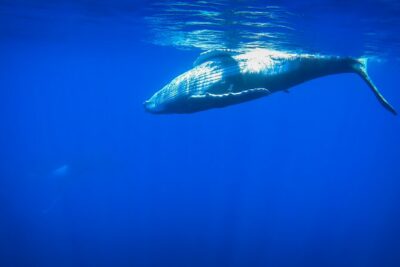
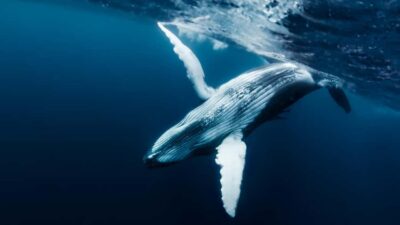
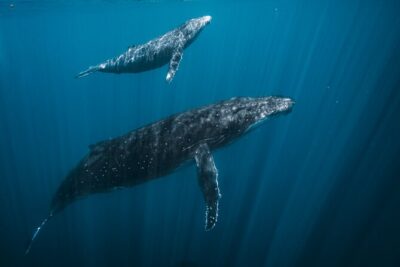
Humpback whales gather in Tahiti’s warm Pacific waters to breed, give birth, and raise their young. This four-hour trip from Puna’auia offers a real chance to see several groups, hear a young male singing, and possibly enter the water near a whale and calf.
I like the small maximum group of eight, which keeps the boat more personal and makes it easier to hear the guide. I also like that Jordan and Romuald combine whale watching with sensible safety rules, equipment, drinks, snacks, and clear limits on who may enter the water.
The main drawback is simple: nothing is guaranteed. Whales may not appear, and even a successful sighting does not promise a swim. The launch is allowed only under suitable conditions and local regulations, so book this for the chance to meet whales, not for a fixed script.
Key points to know before booking
- Early start: Meet at 3 Pontons Taapuna in Puna’auia at 7:30 am for a trip lasting about three to four hours.
- Small boat group: The maximum is eight people, with no more than six swimmers and one guide in the water at a time.
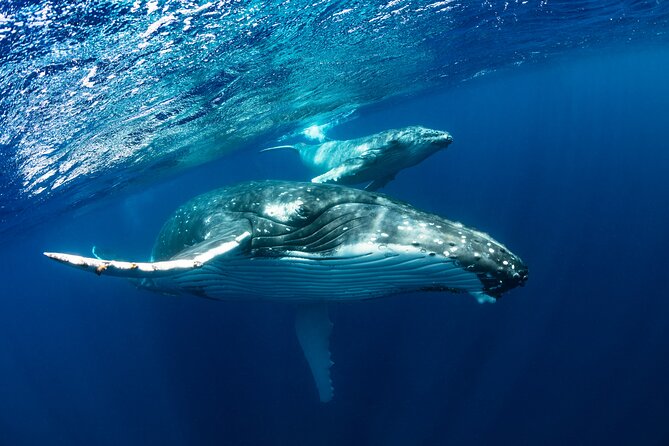
- Possible whale encounter: You may see groups of humpbacks, mothers with young, or a singing male, but sightings are not guaranteed.
- Strict water-entry rules: You must swim at least 200 meters without help and feel calm in open ocean around very large animals.
- Family limits: Children under 12 cannot enter the water with whales. Ages 12 to 17 need parental permission.
- Included extras: A guide, safety gear, snorkeling equipment, bottled water, coffee or tea, and snacks are included.
Meeting Tahiti’s humpbacks off Puna’auia
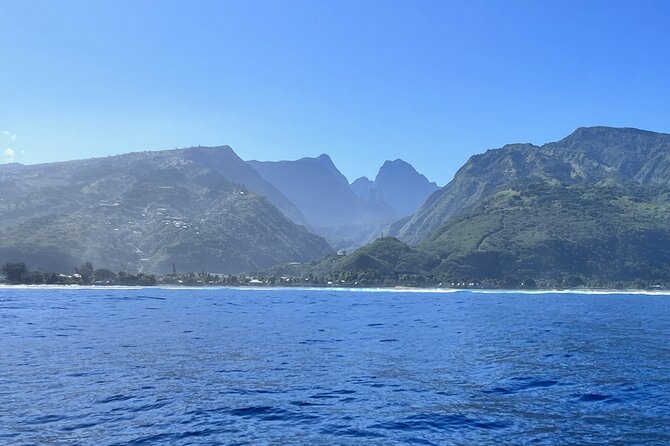
Your morning begins at 3 Pontons Taapuna in Puna’auia, on Tahiti’s west coast. The scheduled start is 7:30 am, and the activity returns to the same meeting point after roughly four hours.
That early departure matters. Whale watching is not a museum visit with a fixed display. The crew must spend time searching, judging sea conditions, and approaching animals carefully. A morning start gives you a useful block of time before the day gets away from you.
The boat is locally built and set up for this kind of marine observation. The group limit is eight people, which is a strong feature at $167.34 per person. You are not paying for a large boat with dozens of people competing for a view. You are paying for a small outing, a captain, a guide, safety equipment, and the possibility of a rare encounter in open water.
Pick-up is not included, though it may be available on request. Confirm that point before booking, especially if you are staying far from Puna’auia. You should also allow time to reach the pontoon without rushing, since the meeting point is specific and the start is early.
More Humpback Whale Tours in French Polynesia
- Swim with humpback whales
★ 5.0 · 224 reviews - Humpback whale watching and marine life in Moorea
★ 5.0 · 199 reviews - Private tour observing and swimming with humpback whales in Moorea
★ 5.0 · 126 reviews
What the four-hour trip is really like
The outing generally lasts three to four hours. The exact rhythm depends on where the whales are and how the ocean behaves, but you can expect a period of searching, watching, listening to explanations, and moving carefully around the animals.
Humpbacks come to the southern Pacific from Antarctic waters during the warmer season. They use these waters to breed, give birth, and raise their young before beginning the return migration toward Antarctica. The stated observation period runs from July 20 through November 20, subject to approval from DIREN, French Polynesia’s environmental authority.
The information supplied also describes October as a time when humpbacks gather before the return migration later in November. That makes the season especially appealing for people hoping to see more than a distant blow, though no date guarantees a particular kind of encounter.
The crew explains the species and its behavior during the trip. That turns a simple boat ride into a better lesson in reading the sea. You may learn what the crew is watching for, why an approach is made slowly, and why the boat sometimes waits rather than chasing an animal.
The approach rules are not optional. French Polynesia regulates how marine mammals are observed, and the crew follows a defined observation and approach procedure. This is good for the whales and good for you. A respectful encounter may feel less dramatic than a reckless close approach, but it gives the experience a more responsible foundation.
The chance to see a mother, calf, or singing male
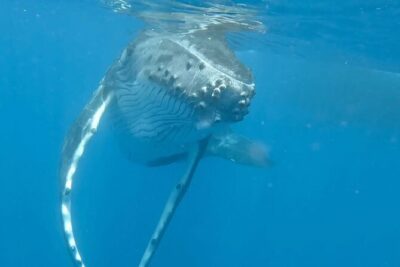
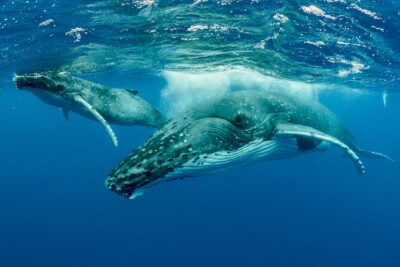
Past outings with this operator have included several groups of humpbacks, a whale and its young, and a young male heard singing early in the season. Those are memorable possibilities, but they should not be treated as promises.
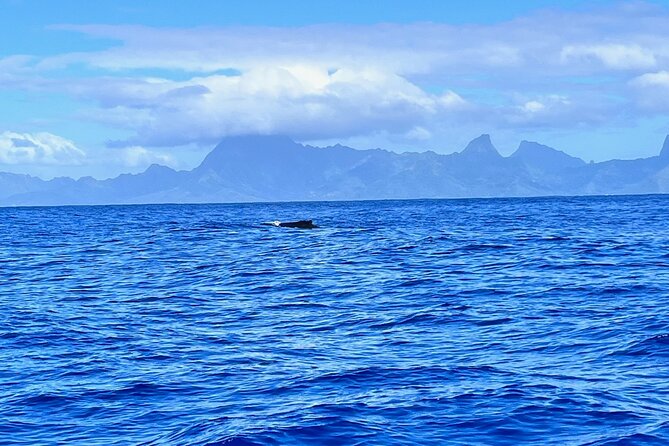
A whale may surface close enough for a powerful look, then disappear. You could see a group at a distance, watch a back roll through the water, or spend much of the outing searching. The description is careful about this point: sightings are not guaranteed.
That uncertainty is part of the value and part of the risk. If you need a guaranteed attraction for a particular morning, this is the wrong kind of activity. If you can appreciate a marine encounter on nature’s timetable, the possibility is compelling.
The presence of young whales can make the experience especially moving, but it also calls for patience. A mother and calf are not a performance. The boat may need to keep its distance, and the crew may decide not to approach further even when the animals are visible.
When you may enter the water
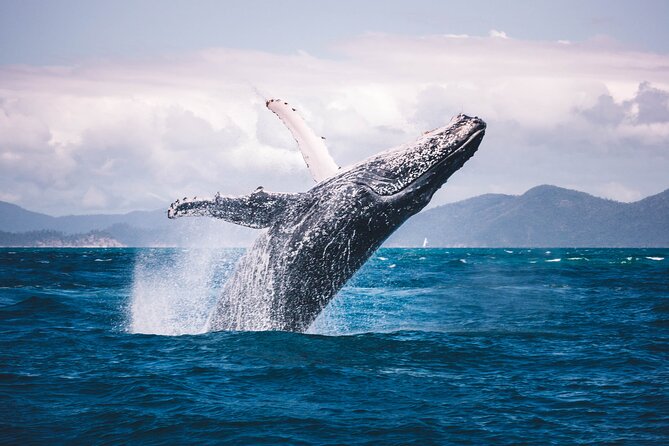
The most exciting part of the outing may be the chance to enter the water near the whales. But the launch is not automatic, and it is not offered simply because you have booked the trip.
The crew decides based on the conditions, the behavior of the animals, and the rules in force. An observation period and approach procedure apply in French Polynesia. Even with whales nearby, the crew can decide that everyone should remain on board.
To participate, you must be able to swim at least 200 meters without assistance. You also need to be comfortable in a natural ocean setting and able to stay calm around marine mammals weighing from one to 30 tonnes.
That last point deserves plain attention. This is not a shallow-water petting experience. A whale is large, powerful, and unpredictable. If you tend to panic in open water, choose the observation option instead. The crew is free to act in the best interests of everyone on board.
The maximum in-water group is six swimmers plus one guide. That limit helps keep the water entry controlled and gives the guide room to monitor the group. It also means that being on the boat is a normal part of the experience, not a lesser version of it.
Same water, a different way to meet the whales:
- Swimming with Whales in Moorea (Half Day tour)
★ 4.5 · 264 reviews - Whale Tour – Observe and swim with whales
★ 5.0 · 257 reviews - Whale Watching Tours in Bora Bora
★ 4.5 · 250 reviews - Half day whale tour 4h00
★ 4.5 · 181 reviews
Rules for children and non-swimmers
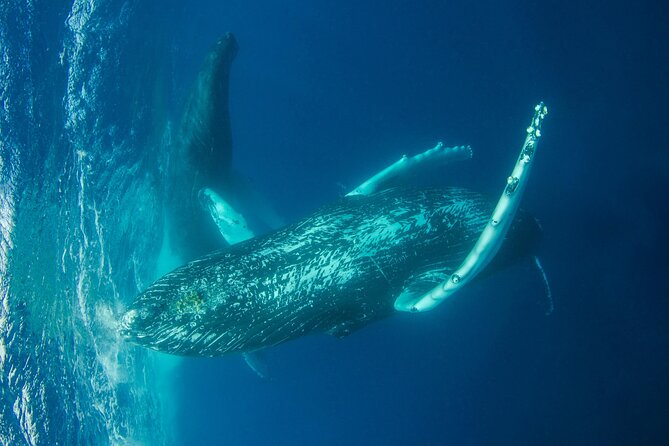
Children under 12 cannot enter the water with the whales. They may still participate as observers from the boat, which gives families a way to join the outing without bending the safety rules.
Ages 12 through 17 require parental authorization for a launch. Adults who do not swim, or who prefer simply to watch, remain on board. That arrangement is worth discussing with your family before you book. A child may imagine a swim while the actual conditions require everyone to stay dry.
The physical-fitness requirement is moderate, but the water-entry rules are specific. You should be honest about your swimming ability and confidence. If you have a temporary injury, reduced mobility, or another special need, tell the operator in advance. The crew will try to adapt the welcome where possible, but the provided information does not promise that every need can be accommodated.
Jordan, Romuald, and the small-boat advantage
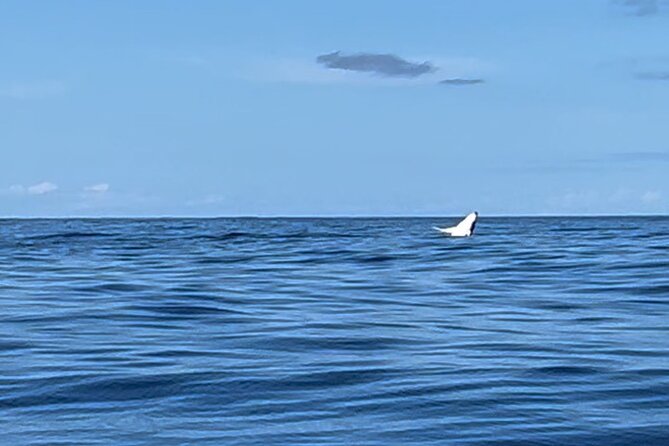
Jordan and Romuald are named as members of the crew associated with the most praised outings. Their role is more than steering toward a whale. The crew welcomes you, explains what you are seeing, manages the boat, and handles safety equipment and water-entry decisions.
A small group helps here. With a maximum of eight people, you have a better chance of hearing explanations and asking a question without shouting across a crowded deck. It also makes the outing feel less like a mass departure and more like a guided search.
The boat is described as comfortable and locally built for activities of this kind. That does not mean you should expect luxury seating or a climate-controlled cabin. It means the vessel is arranged for marine observation and possible snorkeling, with safety equipment available.
Coffee or tea, bottled water, and snacks are included. These are modest extras, but they matter on an early trip that can run for four hours. You will not need to plan the morning around finding food immediately after the boat returns.
Is $167.34 a fair price?
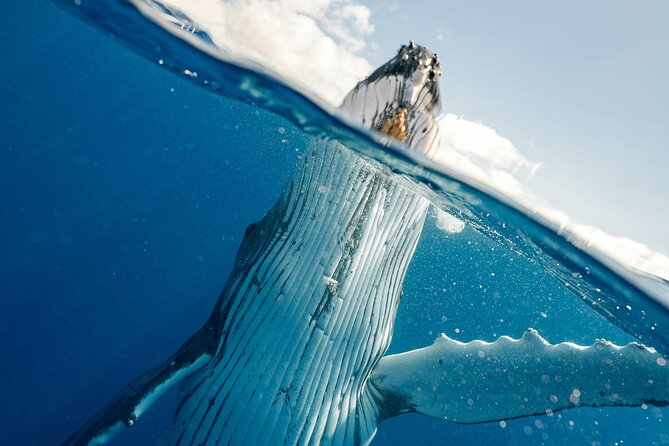
At $167.34 per person, this is not the cheapest way to spend a morning in Tahiti. The value depends on what you want from the outing.
The price covers a small group, a guide and captain, safety equipment, snorkeling gear, drinks, snacks, and about four hours on the water. If the conditions produce a close whale encounter or a carefully managed water entry, the cost can feel reasonable for a rare experience.
The value is less certain if you are mainly seeking a guaranteed sightseeing cruise. The operator cannot guarantee whales, and the launch is neither mandatory nor systematic. You are paying for skilled searching and a legitimate chance, not a guaranteed photo opportunity.
I would compare the price with the group size rather than with a basic boat ride. Eight people is a useful limit, particularly when only six swimmers can enter the water at once. If a larger boat trip costs less, check how many people share the deck and whether snorkeling equipment, refreshments, and a guide are included.
The activity is commonly booked about 18 days ahead. That suggests you should not leave it until the last moment if the date matters to your plans. Confirmation is normally issued at booking, although bookings made within one day of departure are confirmed as soon as possible and remain subject to availability.
Weather, cancellation, and practical planning
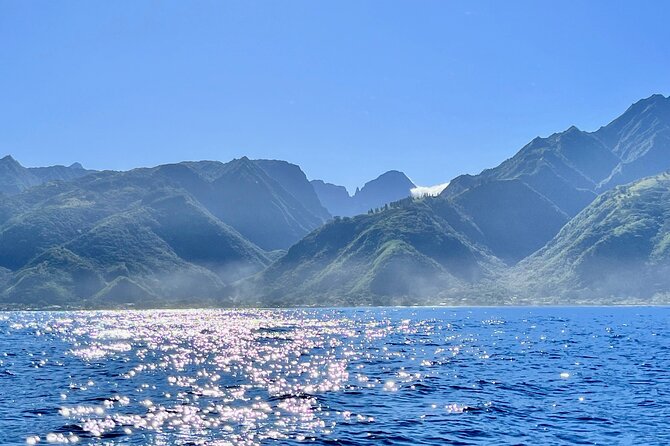
This experience depends on good weather. If poor weather forces a cancellation, you are offered another date or a full refund. The same applies if the minimum number of people is not met, with the choice of another date, another experience, or a refund.
You can cancel for a full refund up to 24 hours before the local start time. Inside that 24-hour window, the payment is not refunded and changes are not accepted. Keep the local time in mind if you are booking from another country.
Wear what you would normally choose for a boat trip and bring a sensible attitude toward changing conditions. The supplied information does not specify clothing or personal items, so confirm any equipment questions with the operator rather than assuming something is provided.
The activity ends back at the meeting point. Since pick-up is only possible on request, arrange your own transport unless the operator confirms otherwise.
Who should book this whale trip?
I would recommend it to you if you care more about a careful encounter than a guaranteed result. It suits adults and older children who can handle an early start, open water, and a few hours of waiting and searching.
It is also a good match for confident swimmers who want the possibility of entering the water, provided they understand that the crew may say no. Non-swimmers can still come as observers, but they should be comfortable with the possibility that the boat remains the main viewing platform all morning.
Families need to read the age rules closely. Children under 12 cannot launch, and minors from 12 to 17 need parental authorization. If your family wants everyone in the water together, this outing may not fit.
I would be more cautious if you have limited mobility, a temporary injury, or strong anxiety around large animals. Tell the operator before booking so the crew can discuss what is practical. The crew may adapt the welcome, but safety decisions remain with them.
Should you book it?
Book this experience if you want a small, carefully managed search for Tahiti’s humpbacks and can accept nature’s uncertainty. The strongest reasons are the eight-person limit, the experienced crew, included equipment and refreshments, and the genuine possibility of seeing groups, mothers with young, or a singing male.
Skip it if your schedule cannot tolerate weather changes, if you need a guaranteed whale sighting, or if you are counting on entering the water. The best way to approach this trip is to value the search itself. A whale encounter may become the morning’s defining memory, but the responsible choice may also be to watch quietly from the boat.
FAQ
Where does the whale-watching tour start?
It starts at 3 Pontons Taapuna in Puna’auia, Tahiti.
What time does the tour begin?
The scheduled start time is 7:30 am.
How long does the activity last?
The average duration is about three to four hours, with the tour ending back at the meeting point.
How many people can join?
The maximum group size is eight people.
Are whale sightings guaranteed?
No. Whale observations are not guaranteed.
Is entering the water with whales guaranteed?
No. The launch is optional, not systematic, and depends on conditions, animal behavior, and applicable regulations.
What swimming ability is required for a launch?
You must be able to swim at least 200 meters without assistance and feel comfortable in a natural ocean environment.
Can children enter the water with the whales?
Children under 12 cannot enter the water. Ages 12 to 17 may launch only with parental authorization.
What is included in the price?
A guide, safety equipment, bottled water, coffee or tea, snacks, and snorkeling equipment are included.
Can I cancel for a full refund?
Yes. You can cancel at least 24 hours before the local start time for a full refund. Cancellations within 24 hours are not refundable.
Just added around French Polynesia
- Tahiti, land of whales: a unique experience!★ 5.0 · 11 reviews
- Observe and Swim with Whales in Tahiti★ 4.5 · 14 reviews
- Whale Watching Activity★ 5.0 · 8 reviews
- Whale watching DE Tahiti Peninsula★ 5.0 · 12 reviews
- Whale watching in the calm of the peninsula with Tātahi tours★ 5.0 · 6 reviews
- 4 Hours of Humpback Whale Watching in Tahiti★ 5.0 · 36 reviews
- Half Day Whale Watching in a Small Shared Group★ 5.0 · 33 reviews
- Whale watching and snorkelling in Moorea★ 5.0 · 64 reviews
Tahiti Whale Watching Tours, compared.
Guided Small Group Whale Watching and Swim Tour Tahiti
Read our review →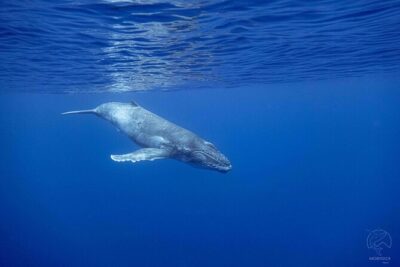
Whale watching on the preserved and quiet coast of Paea (Pk26)
Read our review →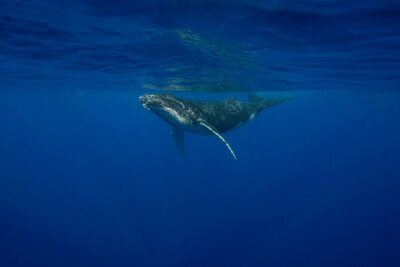
Half Day Whale Watching in a Small Shared Group
Read our review →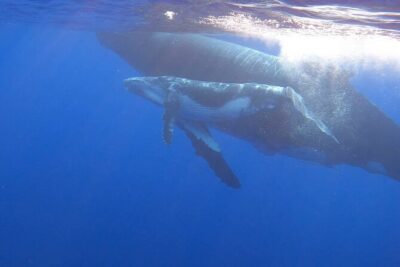
Browse the lists this tour appears in