
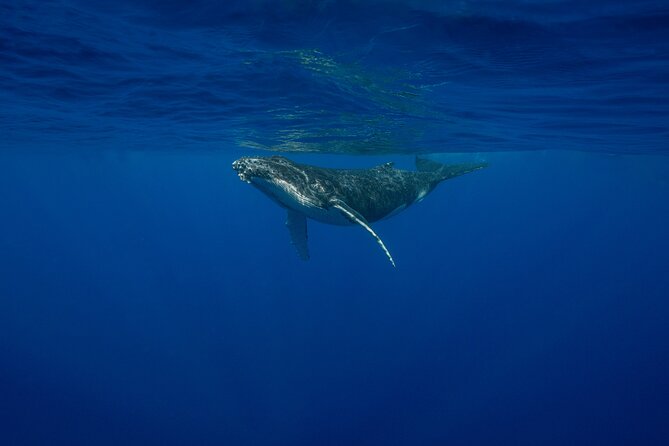
Review · TAHITI
4 Hours of Humpback Whale Watching in Tahiti
Tahiti’s humpback whales are the main event, but the hydrophone may be the most memorable surprise. As you search the ocean, you may hear whale song beneath the boat while your naturalist guide explains what the animals are doing. I like the small maximum group of 12 and the team’s firm focus on animal welfare.
I also like that watching starts from the boat, with any in-water observation treated as a careful, conditional bonus. The drawback is simple: whale sightings and snorkeling are never guaranteed. Choppy water, sharks, whale behavior, or weather can keep you on board for the entire four hours.
Key points to know before you go
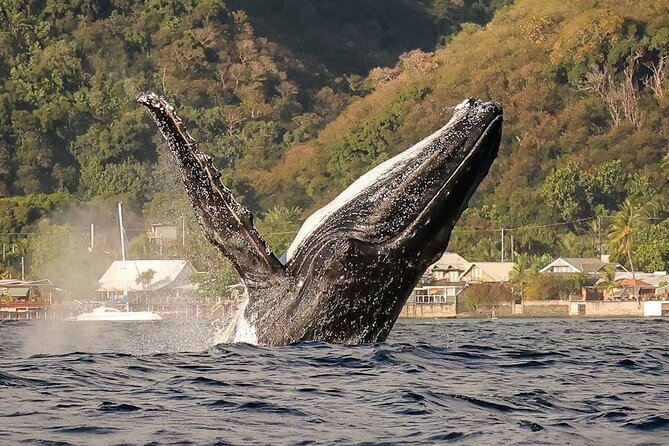
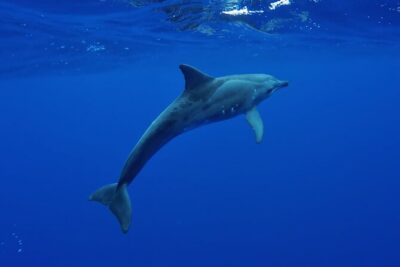
- Humpback whales are the focus: You may also see dolphins, sea turtles, or other cetaceans during the ocean search.
- A hydrophone is on board: You can listen to whale song as well as watch for blows, tails, and movement at the surface.
- Snorkeling is optional but conditional: You need snorkeling experience, and the guide makes the final call based on safety, weather, sea conditions, and whale behavior.
- Small-group setting: The boat holds a maximum of 12 participants, giving you a better chance to hear the guide and get a clear view.
- Children under 10 stay on the boat: The child rate applies to children under 10, and in-water observation is not available to them.
- Plan around nature, not a timetable: The trip lasts about four hours, but whales do not appear on command, and an encounter may be brief or distant.
Four hours in Tahiti’s whale country
This is a dedicated ocean search, not a quick sightseeing cruise with a possible whale sighting tacked on. You meet at C97M+HW in Puna’auia, then spend about four hours with a specialized guide and boat crew looking for humpback whales.
The setting matters. Tahiti gives you dramatic scenery from shore, but the whales are offshore, where the view becomes wide and open. You are not moving from one fixed attraction to another. The interest comes from scanning the water, watching for a blow, and waiting for the guide to read the animals’ behavior.
That can feel thrilling when a whale surfaces close by. It can also feel slow when the sea is quiet. I would book this with the right mindset: you are paying for skilled searching, interpretation, and time on the water, not a guaranteed wildlife performance.
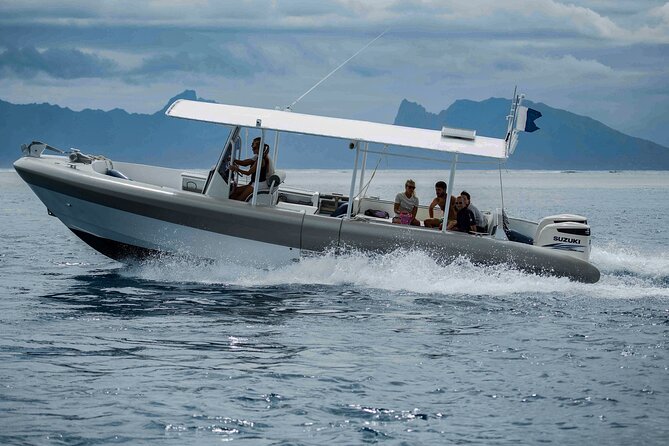
The boat is described as spacious, which is useful during a four-hour outing. You should have room to move your sightline, listen to the briefing, and watch the water without being packed shoulder to shoulder. The maximum group of 12 keeps the experience more personal than a large sightseeing boat.
More Humpback Whale Tours in French Polynesia
- Swim with humpback whales
★ 5.0 · 224 reviews - Humpback whale watching and marine life in Moorea
★ 5.0 · 199 reviews - Private tour observing and swimming with humpback whales in Moorea
★ 5.0 · 126 reviews
The briefing sets the tone
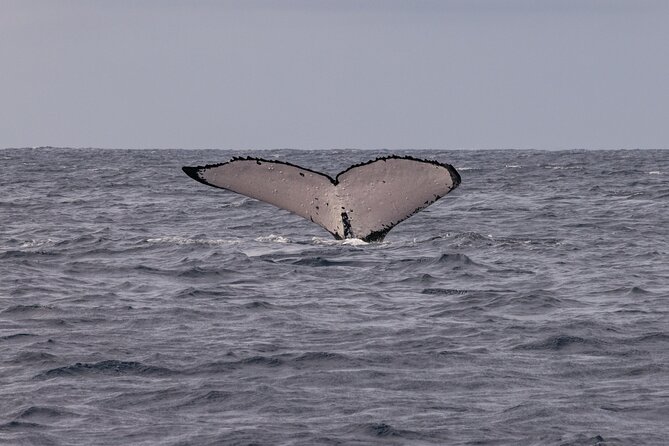
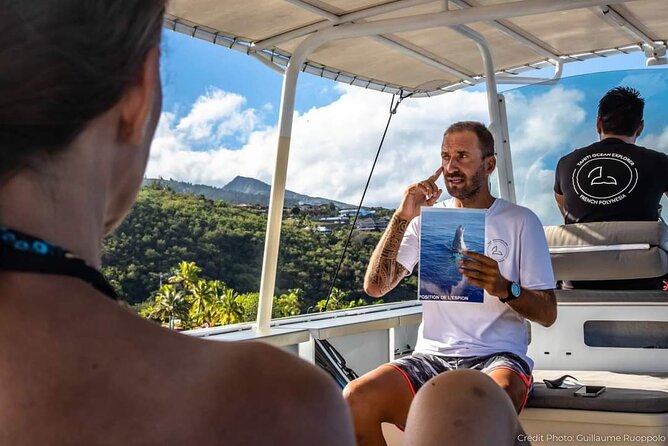
The trip begins with information about humpback whales, their environment, and the rules for approaching them. This is more than a formality. The guide uses the briefing to explain why the boat may stop short, wait quietly, or leave an area instead of pushing closer.
The company works with local cetacean conservation associations and marine biologists. That connection gives the activity a useful scientific purpose. Your observations may contribute to wider knowledge of the species, while the guides keep the focus on respectful behavior.
I particularly value the fact that the guide controls the approach. If a whale changes direction, becomes unsettled, or behaves in a way that makes an encounter unsuitable, the group does not get to vote on what happens next. The naturalist guide has the final say.
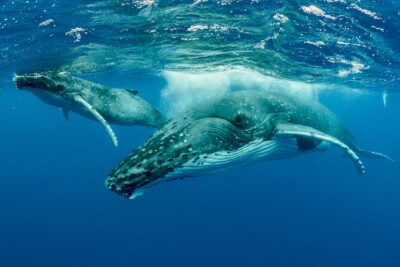
This approach may frustrate anyone expecting a close-up photograph at any cost. It is also the correct way to handle a wild animal. The best encounter is not necessarily the closest one. A mother and calf, for example, need more space and care than a lone whale moving calmly through the water.
Searching from the boat
The first stage of whale watching happens from the boat. Guides look for surface signs such as blows, backs, tails, and changes in the water. They also interpret behavior, which helps you understand why the boat may follow a whale for a while or wait in one place.
The strongest praise for this experience centers on the guides. Luo, also referred to as Lou, is singled out for her friendly manner, clear explanations, and willingness to help participants get good sightings and photographs. Julien and Bastien are also named as part of the team, with particular praise for their explanations, whale-finding efforts, and calm handling of the trip.
That human element matters. Whale watching involves long stretches when nothing obvious happens. A good guide turns that waiting into useful time by explaining what you are seeing and what might happen next. You may learn to spot a distant blow or understand why a whale surfaces in a particular pattern.
Past outings have included sightings of a mother and calf, groups of whales, and whales at a distance near the end of the season. Another successful outing involved several groups, including a mother with a young whale. These encounters show the range of possibilities, but they do not promise that your trip will follow the same pattern.
You may see only a few blows and a tail. You may see whales swimming at a distance. You may have a close encounter. All three outcomes are realistic for a wild-animal excursion.
The hydrophone adds another sense
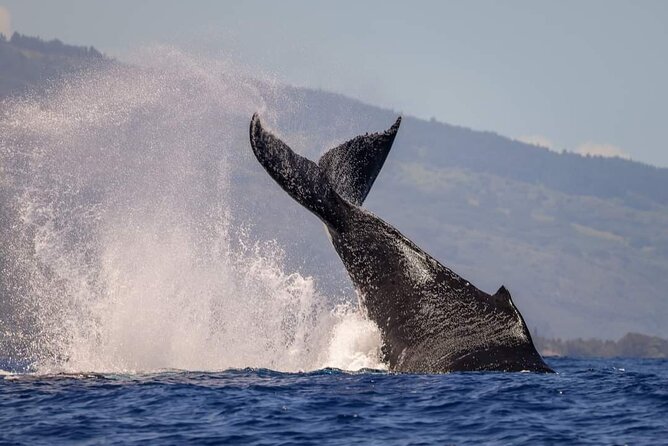
The boat carries a hydrophone, allowing you to listen for whale song beneath the surface. This is one of the strongest reasons to choose this outing instead of a basic boat ride.
Whale watching is usually a visual game. You stare at the sea, wait for movement, and hope your eyes are pointed in the right direction when an animal surfaces. The hydrophone gives you another way to connect with what is happening below the boat.
The sound can also change the mood of the search. A quiet sea is not necessarily an empty sea, and hearing whale song reminds you that the animals may be nearby even when they are hidden below the surface. Your guide can provide context about the whales and their environment while you listen.
There is no promise that you will hear song on every trip. The available information confirms that a hydrophone is on board, not that whales will always vocalize within range. Still, it is a meaningful piece of equipment and a strong feature for anyone interested in marine life rather than photographs alone.
Same water, a different way to meet the whales:
- Swimming with Whales in Moorea (Half Day tour)
★ 4.5 · 264 reviews - Whale Tour – Observe and swim with whales
★ 5.0 · 257 reviews - Whale Watching Tours in Bora Bora
★ 4.5 · 250 reviews - Half day whale tour 4h00
★ 4.5 · 181 reviews
Snorkeling near whales is a bonus, not the plan
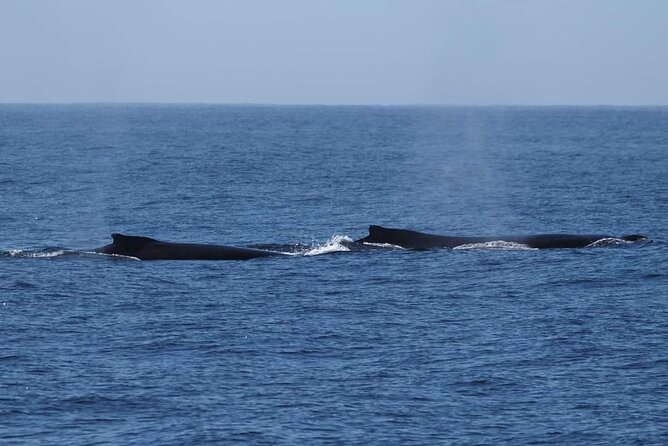
If whale behavior and sea conditions allow, the group may observe whales in the water while snorkeling. You must have snorkeling experience, and the guide decides if the launch is safe and appropriate.
This rule is important. You are not buying a guaranteed swim with whales. You are buying a boat-based whale-watching trip that may include an in-water observation when several conditions line up.
The guide considers the whales’ behavior, sea conditions, and general safety. A whale that is calm and moving predictably may allow a different approach from a whale that is stressed, changing direction, or traveling with a calf. Rough water can also end the possibility, even if whales are present.
The experience may be especially appealing to confident snorkelers who understand that wildlife encounters require patience and restraint. It is not a good fit if your main goal is to enter the water regardless of circumstances.
Children under 10 do not take part in the in-water observation. They can watch from the boat under the child rate, but the activity specifies that their observation is by boat only. Families should explain this clearly before booking so young participants do not expect a whale swim.
When the sea changes the plan
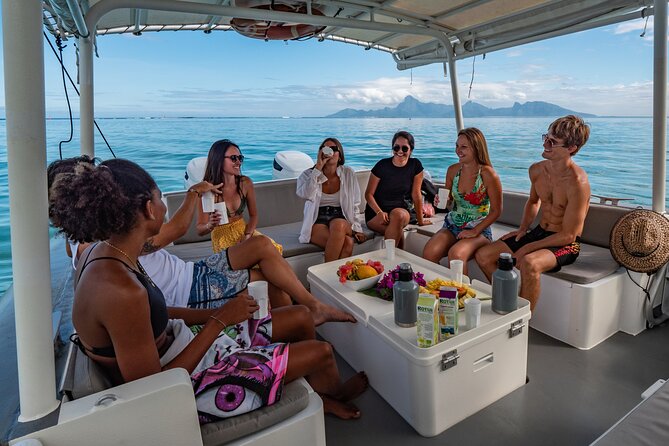
One outing may produce a wonderful encounter, while another may involve hours of searching and no water entry. That is not a contradiction. It is the basic reality of this activity.
One disappointing outing involved several hours of searching, followed by no snorkeling because five large predatory sharks were circling the boat. That decision protected the group, even though it meant the main hoped-for activity could not happen.
The same principle applies to rough water. Choppy conditions can make the boat ride tiring and can rule out an in-water launch. If you are prone to seasickness, you should think carefully before committing to four hours at sea. The tour requires a moderate level of physical fitness, and the ocean will not always be gentle.
Poor weather can also cancel the trip. If that happens, you are offered another date or a full refund. The same applies if the minimum number of participants is not reached. These safeguards help, but they do not make the ocean predictable.
What the $127.54 price buys you
At $127.54 per person, this is not the cheapest way to spend a morning in Tahiti. The value depends on what you want from the outing.
You are paying for roughly four hours on the water, a small group capped at 12, a spacious boat, trained naturalist guidance, a hydrophone, and a conservation-minded approach. If you enjoy wildlife interpretation and want time devoted specifically to whales, the price is reasonable compared with a short, crowded cruise.
The value is less certain if you need a guaranteed close encounter. No responsible operator can promise that, and the experience makes clear that sightings, launches, and close approaches are not systematic.
I would also count the quality of the decision-making as part of the price. A guide who refuses an unsafe approach or cancels snorkeling near sharks is doing the job properly, even when that choice is disappointing in the moment.
The activity is often reserved well ahead of time, with an average booking lead time of 61 days. That suggests you should plan early if this is a priority, especially during a limited whale-watching period. Confirmation arrives within 48 hours of booking, subject to availability.
Who will enjoy this trip most
I would recommend this outing to you if you value wild-animal encounters, patient searching, and clear explanations. It suits confident snorkelers who are happy to treat water entry as an extra rather than the central promise.
It is also a good choice if you want a smaller group. Twelve people is still enough for a lively outing, but it is far more manageable than a large boat where the guide’s voice and the best viewing spots may be harder to reach.
Families can book, but children under 10 will remain on the boat. Anyone with only modest snorkeling ability should not count on entering the water, since experience is mandatory and the guide controls the decision.
I would hesitate to recommend it if you dislike open-water conditions, want a tightly timed itinerary, or will be upset by a distant sighting. The trip asks you to accept uncertainty. In return, you may get a mother and calf, a close face-to-face moment, or the strange pleasure of hearing whales sing beneath the boat.
Practical details for a smoother outing
The meeting point is in Puna’auia at C97M+HW, and the activity returns to that same point. It is near public transportation, which helps if you are arranging your own way there.
Bring a patient attitude and plan for the full four hours. The whale search may include quiet stretches, and the sea can become choppy. The published guidance calls for moderate physical fitness, so consider how comfortable you are spending that length of time on a boat.
Free cancellation is available if you cancel at least 24 hours before the local start time. Changes or cancellations inside that window are not accepted for a refund. Weather and minimum-participant cancellations are handled differently, with a new date or refund offered.
The mobile ticket makes entry simple, but the more important preparation is mental. You are joining a wildlife search, not visiting an aquarium. The guide may work hard and still have only a few sightings to show for the day.
Should you book the Tahiti whale-watching trip?
Book it if you want a serious, small-group search for Tahiti’s humpback whales, especially if whale song, conservation, and naturalist guidance matter to you. The strong 4.8 rating and 92 percent recommendation fit the best parts of the experience: friendly guides, useful explanations, a comfortable boat, and memorable sightings that can include mothers and calves.
Do not book it expecting a guaranteed swim or close photograph. The guide may keep you on board because of rough water, sharks, whale behavior, or simple lack of opportunity. At $127.54, the trip offers good value for a respectful four-hour wildlife outing, but only if you accept that nature gets the final word.
FAQ
How long does the whale-watching trip last?
The activity lasts approximately four hours.
Where does the tour meet?
You meet at C97M+HW in Puna’auia, French Polynesia. The activity ends back at the same meeting point.
How many people can join the boat trip?
The maximum group size is 12 participants.
Is snorkeling included?
In-water observation may be possible if whale behavior and sea conditions allow. Snorkeling experience is mandatory, and the naturalist guide decides if entering the water is safe and appropriate.
Are whale sightings guaranteed?
No. Whale sightings, close approaches, and in-water launches are not guaranteed or systematic.
Can children join the experience?
Yes. The child rate applies to children under 10 years old, but children in that age group can observe only from the boat.
What other animals might I see?
You may also see dolphins, other cetaceans, or sea turtles during the ocean trip.
What happens if the weather is poor?
If poor weather causes the activity to be canceled, you are offered a different date or a full refund. If the minimum number of participants is not reached, you are offered a different date or experience, or a full refund.
Just added around French Polynesia
- Tahiti, land of whales: a unique experience!★ 5.0 · 11 reviews
- Observe and Swim with Whales in Tahiti★ 4.5 · 14 reviews
- Whale Watching Activity★ 5.0 · 8 reviews
- Whale watching DE Humpback West Coast of Tahiti★ 5.0 · 3 reviews
- Whale watching DE Tahiti Peninsula★ 5.0 · 12 reviews
- Whale watching in the calm of the peninsula with Tātahi tours★ 5.0 · 6 reviews
- Half Day Whale Watching in a Small Shared Group★ 5.0 · 33 reviews
- Whale watching and snorkelling in Moorea★ 5.0 · 64 reviews
Tahiti Whale Watching Tours, compared.
Guided Small Group Whale Watching and Swim Tour Tahiti
Read our review →
Whale watching on the preserved and quiet coast of Paea (Pk26)
Read our review →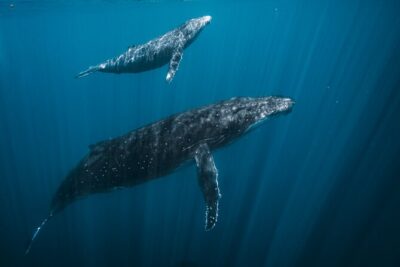
Half Day Whale Watching in a Small Shared Group
Read our review →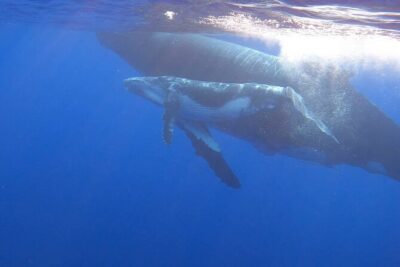
Browse the lists this tour appears in