
Review · MOOREA
Swimming with Whales in Moorea (Half Day tour)
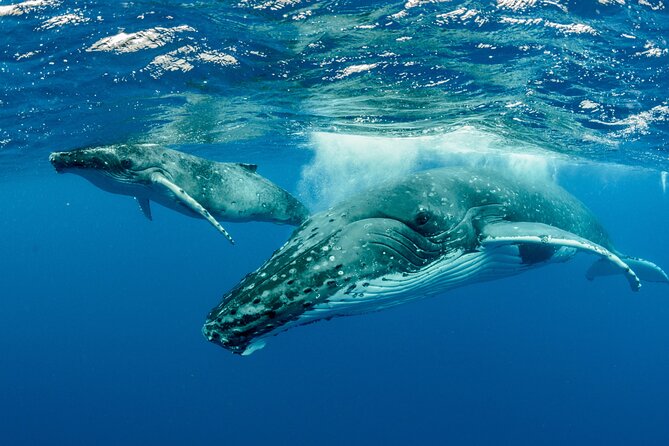
A mother humpback and calf gliding past you in clear Polynesian water is the great prize here. Whale encounters are never guaranteed, but when conditions cooperate, this four-hour Moorea Expedition trip can deliver one of the rarest wildlife experiences in French Polynesia. You may also see dolphins, stingrays, sharks, and turtles.
I like the small maximum of six swimmers per boat, which gives the crew room to watch each person in the water. I also like the serious approach to whale welfare and safety. Guides such as Johnny, Joe, and Laura have been praised for clear instructions and good judgment around the animals.
The catch is simple: you need strong swimming skills and snorkeling experience. Choppy ocean conditions can make the outing tiring, and a slow whale day may mean more time waiting from the boat than swimming beside a whale.
Key points to know before booking
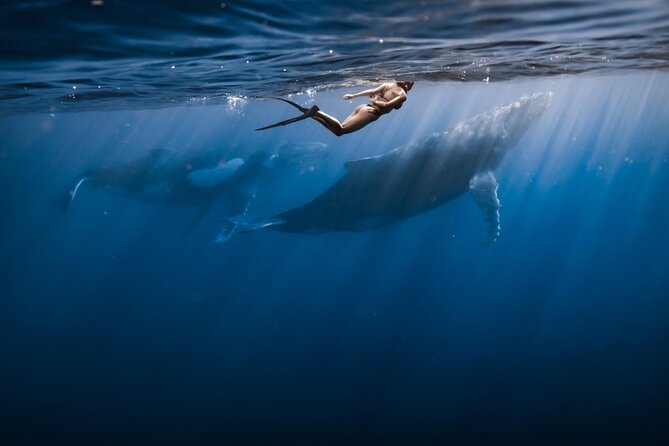
- Six-person maximum for whale swimming: From 2025, no more than six people per boat may enter the water with humpback whales.
- Seasonal whale encounters: The main whale season runs from July through late November, with conditions and animal behavior shaping the day.
- Open-water fitness matters: You should be comfortable using a mask and snorkel, swimming in the sea, and moving promptly when instructed.
- Wetsuits can change your comfort: French law requires a life jacket for whale swimming unless you wear a shorty or full neoprene wetsuit.
- Other marine life may save the day: Dolphins, stingrays, blacktip sharks, and turtles may appear even when whales do not.
- Bring your own photo plan: A GoPro is useful, and you should not assume professional underwater photos are included.
Why this Moorea whale trip feels different
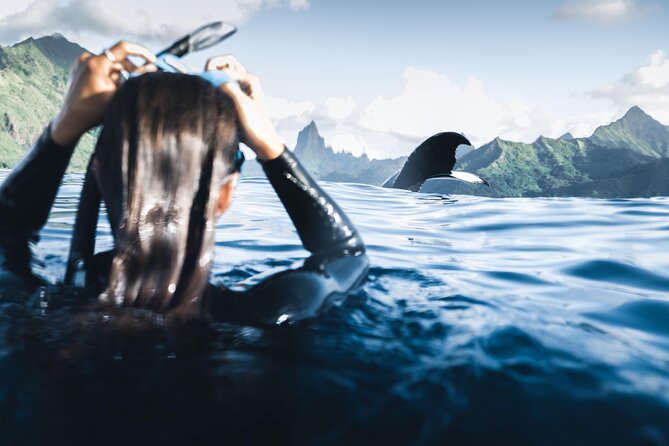
This is not a simple boat ride to a scenic reef. The goal is to find humpback whales in open water and, when conditions and animal behavior permit, enter the sea with them. That makes the experience thrilling, but also unpredictable.
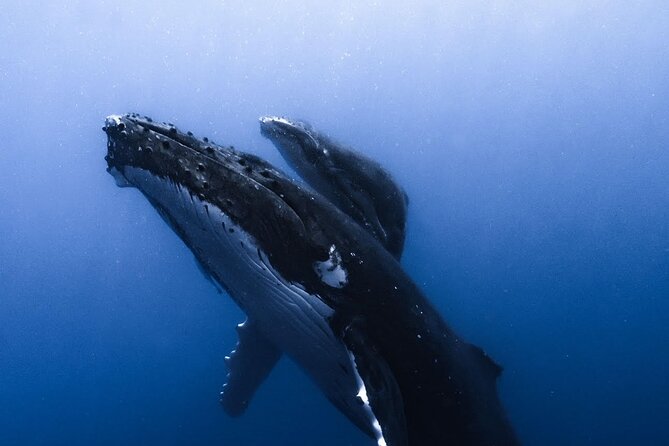
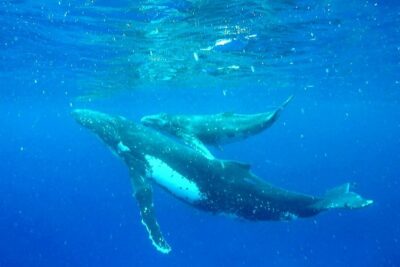
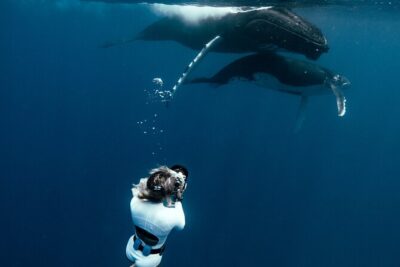
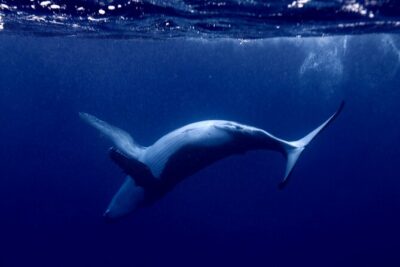
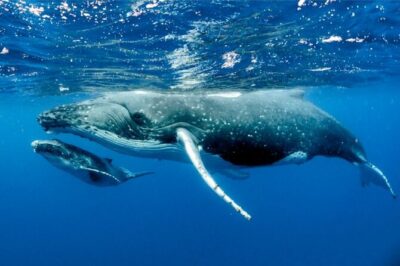
The best encounters described from this operation involve a mother and calf resting or moving slowly near the surface. You may float above them, watch one pass beneath you, or see a whale rise from the blue water nearby. The most memorable moments are not guaranteed on a timetable, which is part of the bargain with wild animals.
The boat can also become a useful viewing platform. If you cannot get into the water, or if the sea feels too rough, you can watch whales from aboard. That is a meaningful option, although this particular trip is designed mainly for strong swimmers. If you already know you want to stay dry, the operator also offers a non-swimming tour.
I like that the crew’s main job is not simply to get you close. They must judge whale behavior, ocean conditions, distance, and the group’s swimming ability at the same time. That careful pace helps protect both you and the animals.
More Half-Day Whale Watching in French Polynesia
- Half day whale tour 4h00
★ 4.5 · 181 reviews - Half Day Small Group Whale Watching
★ 5.0 · 88 reviews - Half-Day Humpback Whales Encounter in Moorea
★ 5.0 · 41 reviews
Four hours on the water around Moorea
The tour begins at Moorea Expedition in French Polynesia and ends back at the same meeting point. Pickup is offered, which is useful if you are staying elsewhere on Moorea and do not want to arrange your own ride. The stated duration is about four hours, giving the crew time to search, make one or more water entries, and visit other marine areas if appropriate.
The exact order changes with the day. A typical outing begins with a safety briefing and a discussion of how to use the mask, snorkel, flotation equipment, and life jacket. Listen carefully. Once you are in open water, the guide may need you to move together, stay aware of the people around you, and follow instructions quickly.
The boat then searches for signs of whales. You might wait for a while, see animals from the boat first, or get several chances to enter the water. One outing produced three water entries, while another involved two encounters with a mother and calf. Those repeat entries are a major advantage of a half-day trip when the animals remain in a suitable area.
There is no fixed guarantee of how much time you will swim. Whales may move away, rest below the surface, or behave in a way that makes entry unsafe. The crew may also decide that boat viewing is the right choice. That is frustrating if you have imagined nonstop swimming, but it is the correct approach for a wildlife experience.
Meeting humpback whales in their seasonal waters
The primary focus is humpback whales present around Moorea from July through late November. The timing matters. A trip near the end of the season can still produce excellent sightings, but no month guarantees a water encounter.
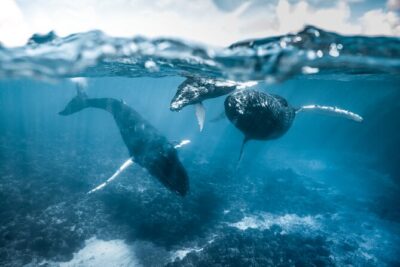
Several of the strongest experiences involve mothers and calves. A calf may stay near its mother, giving you a chance to watch two animals move together. You might see a whale pass directly below, surface in front of the group, or remain nearby before heading into deeper water.
The distance can feel surprisingly close, but the guide’s responsibility is to keep the encounter safe and respectful. You should not treat the whale like a tame animal or expect it to perform. The best moments often happen when the group stays calm and lets the whale choose its own path.
This is also why patience matters. A crew may spend time positioning the boat and waiting for the right moment instead of rushing everyone into the water. Bring a positive attitude and accept that the sea sets the schedule.
If whales do not appear, the experience is not automatically empty. One outing produced dolphins in rough conditions, and other marine life can include stingrays, blacktip sharks, and turtles. Those sightings are not a substitute for a humpback, but they can make the day worthwhile.
What swimming beside the whales requires
The water entry is the part you should assess most honestly. The operator requires strong swimming ability and snorkeling experience. You need to feel comfortable wearing a mask and snorkel in open ocean, not just floating in a calm resort lagoon.
Conditions may range from easy to moderate, but the effort can increase when the sea is choppy or the whales are moving. You may need to swim promptly from the boat toward the guide, keep track of your position, and remain alert to other people and animals.
Several participants have described open-water swimming as challenging, even when the encounter itself was superb. If you are a slow swimmer, become anxious away from shore, or rarely use a snorkel, this is not the place to test your skills for the first time.
Flotation devices and snorkeling equipment are available aboard. Life jackets are carried on the boat, and French law requires them for whale-swimming tours unless you are wearing a neoprene wetsuit. A shorty or full wetsuit can exempt you from that requirement, and it may also provide warmth and a more comfortable swim.
Wetsuits are available to rent through a third party, but you should contact the operator for current details. If avoiding a life jacket is important to you, arrange the wetsuit before departure rather than assuming one will be waiting.
More Half-Day Whale Watching in Moorea
- Whale watching 6 people half day
★ 5.0 · 38 reviews - Private Half Day Whale Watching Tour
★ 5.0 · 18 reviews - Half Day Private Whale Watching in Moorea
★ 5.0 · 10 reviews - Half day whale watching – Without launch
★ 5.0 · 8 reviews
A small boat, a small group, and personal attention
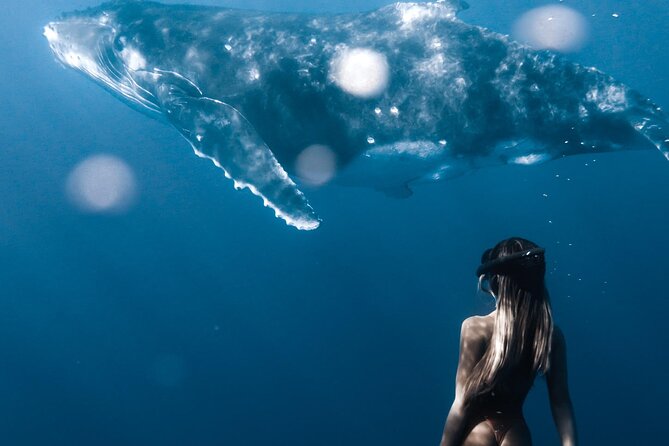
The maximum of six participants is one of the strongest features. A small group means less crowding on the boat and fewer people trying to reach the same guide in the water. It also gives the crew a better chance to monitor individual swimming ability.
The boat is not described as a large sightseeing vessel, so you should expect a more intimate setup. That can feel pleasant when the sea is calm, but a smaller boat may also feel more exposed in rough water. If you are prone to seasickness, take that seriously. One useful tip from the experience is to take a seasickness tablet before departure, not after you begin feeling ill.
The crew’s handling of the group has received strong praise, especially around safety and whale behavior. Guides have included Johnny, Joe, Laura, and Joe has also been associated with underwater guidance and photography support. Because staffing can change, do not book on the assumption that a specific guide will lead your trip.
English and French are used. The instruction quality appears important, since the water work depends on understanding signals and moving together. Still, if you speak only English, confirm how bilingual communication will work if that matters to you. One English-speaking participant felt left out during casual conversation when most of the group spoke French.
How the crew handles whale welfare
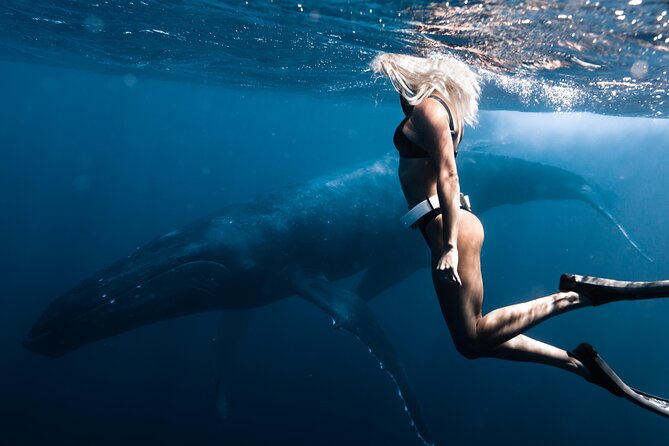
A good whale encounter depends on restraint. The guides must balance your wish for a close view with the need to avoid stressing the animals. The strongest reports describe guides who waited, kept a safe distance, and followed the whales rather than forcing contact.
That approach may mean fewer minutes in the water, but it protects the quality of the experience. A mother and calf should never be treated like an attraction under human control. You may be asked to stay together, avoid sudden movement, or return to the boat when the animal changes direction.
The crew and captain also need to read the ocean. A captain may reposition the boat several times before finding a safe place to enter. That work is easy to overlook from the passenger seat, yet it can be the difference between a calm encounter and a tiring, poorly timed swim.
This is one reason I consider the small group worthwhile. The crew can focus on six people instead of managing a crowded boatload. It does not make nature predictable, but it gives the operation a better setup for careful decisions.
Dolphins, rays, sharks, and turtles
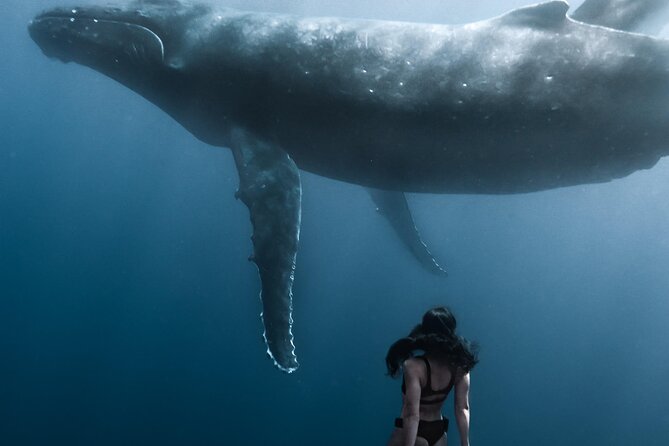
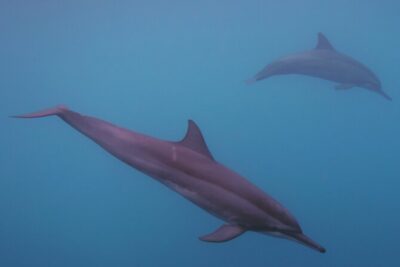
Moorea’s water can offer more than humpbacks. Depending on the day, you may encounter dolphins, stingrays, blacktip sharks, or turtles. Some outings have ended with a swim near rays and small sharks after the whale search.
These animals add variety, but keep your expectations in the right order. The trip’s stated main objective is swimming with humpback whales during the season. Other sightings are possible extras, not guaranteed replacements.
Dolphins can be a welcome result when whales stay distant, especially because they add movement and energy to the day. Stingrays and blacktip sharks may sound intimidating, but the guides will set the rules for safe viewing. You should follow those instructions closely and avoid turning a wildlife encounter into a chase.
The changing mix of species also gives the guide a chance to explain marine life. Some people have praised the crew for clear information about whales and other animals, while one less enthusiastic assessment wanted more biological and scientific detail. If natural-history interpretation is central to your choice, ask how much explanation the guide normally provides in your language.
What the $305.30 price buys you
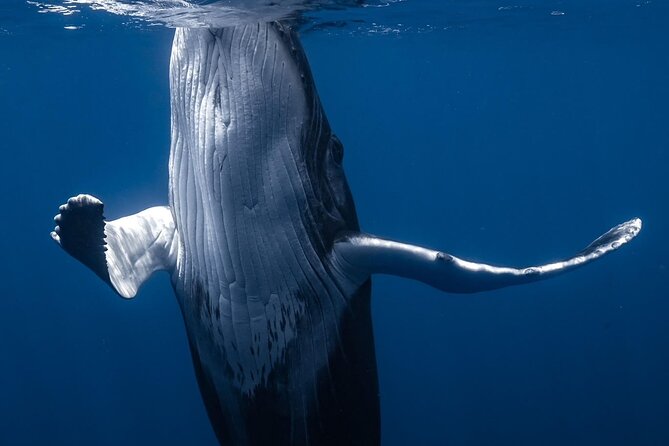
At $305.30 per person, this is an expensive half-day. You are paying for a specialized wildlife outing, a small group, a captain and guide, snorkeling equipment, flotation gear, bottled water, and the chance to enter the ocean near one of the largest animals on Earth.
The value depends almost entirely on your expectations. If you require a guaranteed whale swim, the price will feel risky because no responsible operator can promise animal behavior or calm seas. If you see the fee as payment for time, expertise, boat access, and a carefully managed chance to encounter wild whales, it is easier to justify.
The six-person limit adds real value. A cheaper boat with a large crowd may offer less room, less personal direction, and a poorer view once everyone reaches the water. Here, the small format is especially useful for people who want close supervision while snorkeling.
The price does not include sunblock or towels. Bring both. Bottled water is included, but you should plan your own clothing, swimwear, and protection from the sun. Underwater photos may be available on some outings, but the reports are inconsistent, so bring a GoPro if recording the experience matters to you.
Who should book, and who should choose another outing
I would recommend this trip to confident snorkelers who are comfortable in open water and understand that wild whales set the schedule. It suits nature lovers who value a small boat, direct guidance, and responsible animal encounters more than a guaranteed number of minutes in the sea.
It is also a good fit if you can stay patient. You may have a spectacular morning with several water entries, or you may spend much of the time watching from the boat because of conditions and animal behavior. The tour’s 4.7 rating from 264 ratings and 90 percent recommendation figure suggest a strong overall record, but they do not remove that basic uncertainty.
I would choose another activity if you are not a strong swimmer, dislike boats in choppy conditions, or want a relaxed reef snorkel. Non-swimmers can remain aboard, but this is still built around people who want to swim with whales. For a dry experience, book the operator’s non-swimming option instead.
Book at least 24 hours ahead if you want the flexibility of a full refund. Cancellations inside 24 hours are not refunded, and weather or minimum participation can force a change or cancellation. If that happens, you are offered another date or a full refund.
Should you book the Moorea whale swim?
Book it if swimming beside a humpback is high on your Moorea wish list and you are genuinely strong in open water. The combination of a six-person limit, careful guides, and possible encounters with mothers and calves makes this a serious option rather than a routine boat excursion.
Go in with realistic expectations. Pack a wetsuit if you want to avoid the required life jacket, bring seasickness medicine and a towel, and carry your own camera. Most important, accept that the best whale encounter is one where the animals remain calm and unbothered. If you can handle the uncertainty, this half-day outing has the power to become the defining memory of your time in Moorea.
FAQ
When is the whale swimming season in Moorea?
The main humpback whale season for this experience runs from July through late November. Sightings and water entries still depend on weather, sea conditions, and whale behavior.
How many people can join the whale swim?
From 2025, government regulations allow only six people per boat to swim with humpback whales. The activity also lists a maximum of six participants.
Do I need strong swimming skills?
Yes. You need strong swimming ability and snorkeling experience. Open-water conditions can make the swim easy to moderate on some days and more demanding on others.
Can non-swimmers join?
Non-swimmers can remain on the boat and watch the scenery and marine life. The operator also offers a separate non-swimming tour.
Is snorkeling equipment provided?
Yes. Snorkeling equipment and flotation devices are available on board. Bottled water is also included.
Do I need to bring a wetsuit?
A wetsuit is not listed as included, but it can help you avoid the life jacket requirement. French law requires life jackets for whale swimming unless you wear a shorty or full neoprene wetsuit.
What should I bring?
Bring sunblock and a towel, since neither is included. A seasickness tablet may help in choppy conditions, and a GoPro is useful if you want your own underwater photos.
What happens if bad weather cancels the tour?
If poor weather causes cancellation, you are offered a different date or a full refund. The same options apply if the minimum number of participants is not reached.
More Swim with Whales Experiences in Moorea
- Sacred Experience Swimming with a Whale in Moorea
★ 5.0 · 46 reviews - Private boat tour to swim with whales and sharks
★ 5.0 · 4 reviews - Watch and Swim with Humpback Whales in Moorea
★ 5.0 · 3 reviews
More Swim with Whales Experiences in French Polynesia
- Whale Tour – Observe and swim with whales
★ 5.0 · 257 reviews - Swim with humpback whales
★ 5.0 · 224 reviews - Private tour observing and swimming with humpback whales in Moorea
★ 5.0 · 126 reviews - WHALE TOUR – Watching and Swimming with Whales
★ 5.0 · 52 reviews
Just added around Moorea
- Whale watching and snorkelling in Moorea★ 5.0 · 64 reviews
- Whale watching 6 people half day★ 5.0 · 38 reviews
- WHALE TOUR – Watching and Swimming with Whales★ 5.0 · 52 reviews
- Snorkeling Lagoon Cruise and Whale Watching in Moorea★ 5.0 · 2 reviews
- Whale Watching Moorea (non-swimming)★ 4.0 · 12 reviews
- Watch and Swim with Humpback Whales in Moorea★ 5.0 · 3 reviews
- Sacred Experience Swimming with a Whale in Moorea★ 5.0 · 46 reviews
- Shared Whale Expedition★ 5.0 · 34 reviews
Moorea Whale Watching Tours, compared.
Humpback whale watching and marine life in Moorea
Read our review →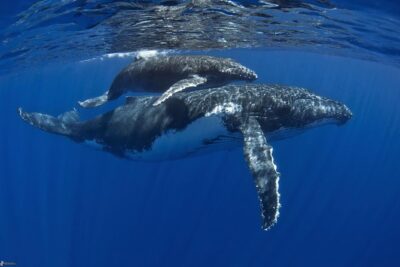
Private tour observing and swimming with humpback whales in Moorea
Read our review →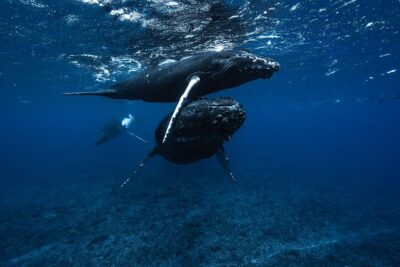
Browse the lists this tour appears in