Review · MOOREA
Humpback whale watching and marine life in Moorea
Seeing a humpback whale glide beneath a small boat is impressive enough. Swimming near one is a much bigger thrill, but it is never promised. Pacifik Attitude spends about three hours searching Moorea’s waters for whales, dolphins, turtles, rays, sharks, and reef fish, with guides explaining what you see and how to approach wildlife carefully.
I like the strong focus on respectful encounters and the chance to hear whale song through a marine microphone. I also like the small-boat feel reported on some outings, with as few as eight people, plus guides such as O’Neil, Doris, Mata, and Chewy who combine safety instructions with clear explanations.
The main caution is simple: nature sets the schedule. Rough seas can prevent a swim, whales may remain far from the boat, and sightings are not guaranteed. The experience costs $327.95 per person, so it makes the most sense if whale watching is one of your top Moorea priorities.
Key points before you book
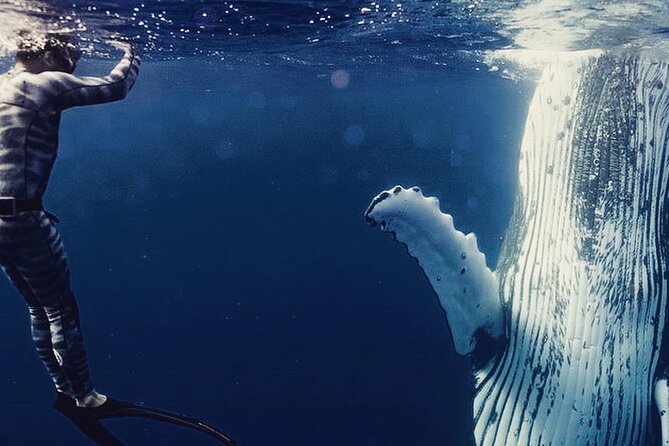
- Whale season runs from July 20 to November 20: This is the permitted period for humpback whale watching in French Polynesia.
- Swimming with whales is not guaranteed: You may watch from the boat, hear whale song, or see whales at a distance without entering the water.
- Three hours can bring a wide range of wildlife: Past outings have included spinner dolphins, melon-headed whales, turtles, stingrays, reef sharks, and many fish.
- Early departures can help with sea conditions: The 5 a.m. trip has produced calm water and sunrise whale encounters, though weather can change.
- The guides emphasize respectful behavior: Safety briefings and explanations about whale behavior are central to the outing.
- The meeting point changes with the season: From December through July, meet at Hauru Public Park Parking. From August through November, meet at Pacifik Attitude.
Moorea’s humpback season and the real promise
Pacifik Attitude’s main goal is to bring you close to Moorea’s marine life without treating the ocean like a show staged on demand. Humpback whale watching is permitted in French Polynesia from July 20 through November 20, which gives this outing a clear seasonal window.
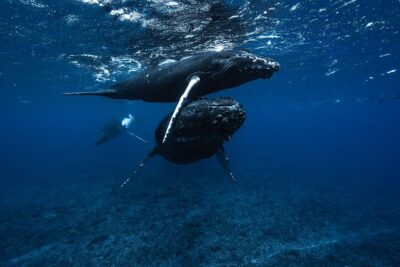
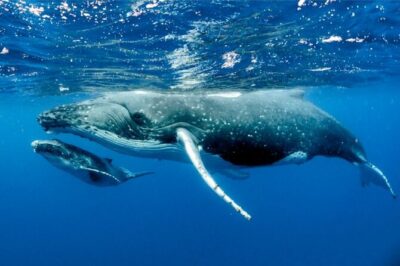
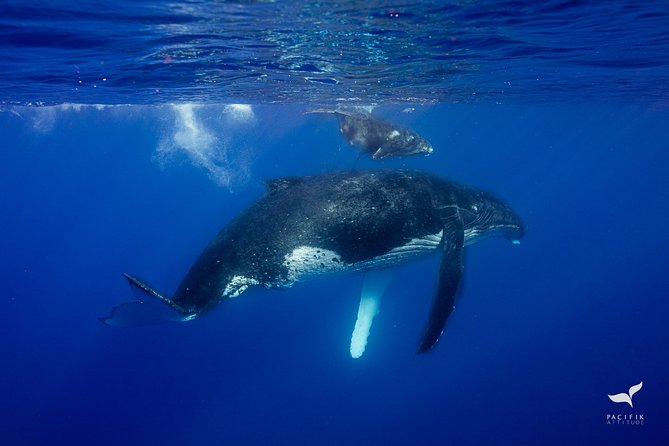
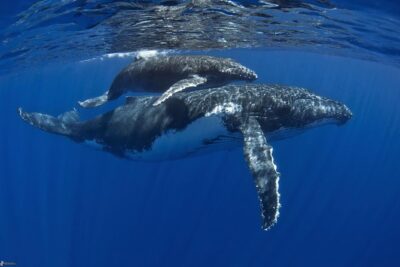
That timing matters. If you visit outside those dates, this is not the right product for whale watching. From late July into November, you have the chance to look for humpbacks, including mothers with calves and lone juveniles. You might also hear a male singing below the surface. One particularly striking account describes the sound being felt through the water even when the whale was too deep to see well.
The boat heads toward areas where whales may be present, then waits and watches. The crew may use a marine microphone to help locate singing whales. This is not a guaranteed appointment with a whale. You may see a back or tail, watch a mother and calf resting, or spend time searching before anything appears.
That uncertainty is part of the value, but it is also the biggest point to understand before paying $327.95. You are paying for a skilled search, a small marine setting, safety guidance, and the possibility of an extraordinary encounter. You are not buying a guaranteed swim.
More Humpback Whale Tours in French Polynesia
- Swim with humpback whales
★ 5.0 · 224 reviews - Private tour observing and swimming with humpback whales in Moorea
★ 5.0 · 126 reviews - Swim in Moorea with Humpback Whales and More
★ 5.0 · 42 reviews
What the three-hour outing feels like
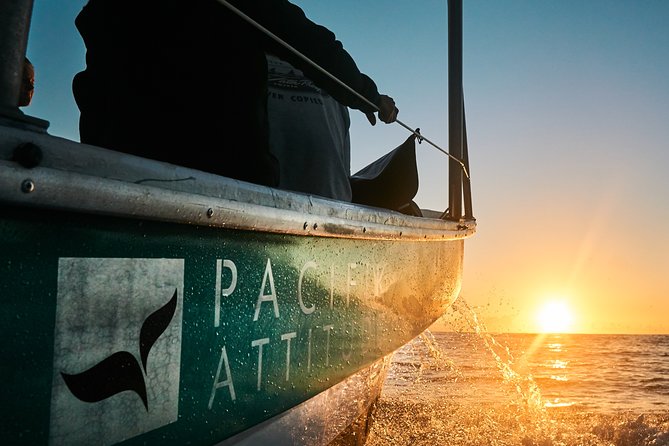
The experience lasts about three hours, which is long enough to search several areas without taking up an entire day in Moorea. The crew gives safety instructions before asking anyone to enter the water. That briefing is especially important because conditions can change quickly and because a whale encounter requires restraint, patience, and attention to the guide.
The exact crew varies. Names connected with the experience include O’Neil, Doris, Mata, Chewy, and several captains. O’Neil is often described as leading the snorkeling portion, while Doris has handled safety briefings and explanations. Captain Chewy has worked with both Mata and Doris on different trips. You should not assume a particular person will operate your departure, but the named crew members reflect the hands-on style you can expect.
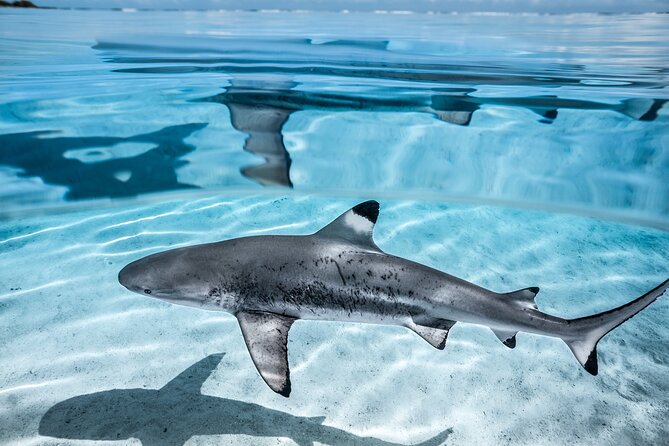
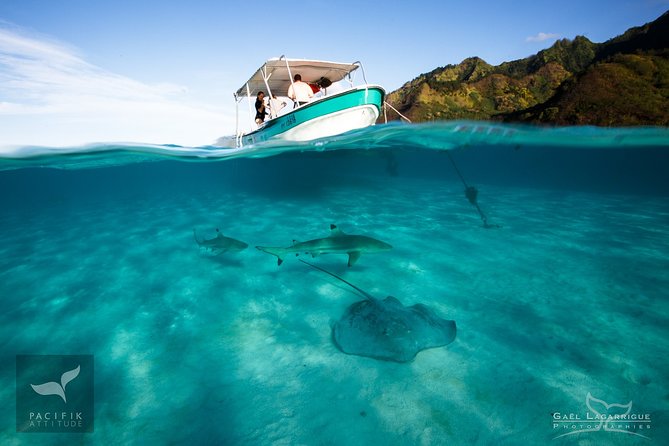
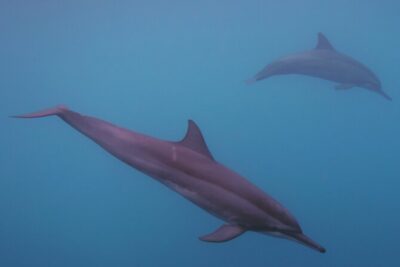
The outing may include more than whales. Spinner dolphins have appeared along the way, as have melon-headed whales, turtles, stingrays, reef sharks, and schools of fish. That variety gives the trip a useful safety net. Even if the humpbacks stay distant, you may still spend the morning around a lively collection of sea life.
One outing also included lunch on board, described as a meat or vegetarian quiche with pineapple. Treat this as a possible feature rather than a firm promise for every departure, since the supplied information does not establish a standard meal menu. Still, it suggests the crew may provide a simple snack or meal on certain trips.
Watching whales from the boat
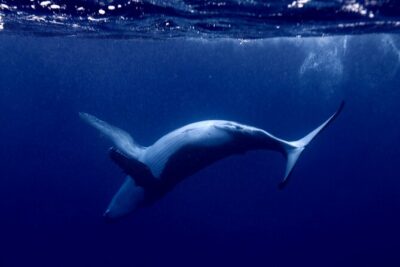
The boat is your first viewing platform, and it may be the best one when the sea is rough. Whales can be seen surfacing, resting, moving together, or showing more active behavior such as breaching and tail slapping. A mother and calf have been seen sleeping before becoming more active, offering a reminder that whale watching is often quiet before it becomes dramatic.
The guides explain whale behavior and try to position the boat respectfully. That point matters. The goal is not to chase an animal until it performs. Instead, the captain looks for a suitable position, and the guide helps you understand what the whale is doing.
You might hear a whale before you see it. A marine microphone can pick up song from below, and that sound may become the most memorable part of the trip. It gives you a sense of the animal’s presence even when visibility is limited.
The boat can also get you close enough to notice details that a distant shore-based view cannot provide. You may see a blow, the curve of a back, a fluke rising from the water, or a calf staying near its mother. But conditions can work against you. Wind and swell can make distant animals hard to spot, and one account describes choosing not to swim out because the sea was too formed.
Swimming near humpback whales
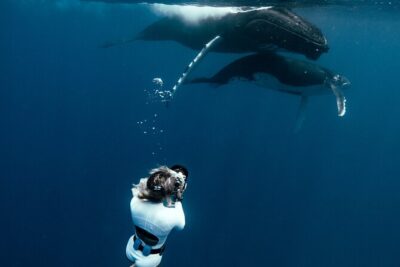
The swim is the part most people have in mind, but it comes with strict limits. You may be allowed into the water only when the captain and guide judge the conditions and whale behavior suitable. Even then, the whales decide how close they come.
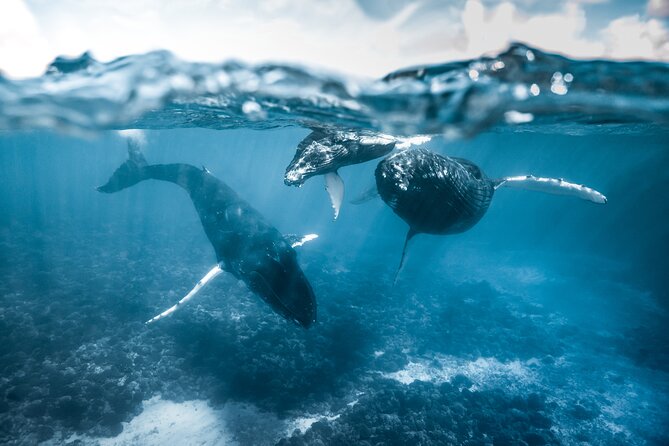
Some encounters have lasted around 25 minutes with a lone juvenile. Others have involved two whales or a mother and calf. A curious young whale may approach, while another animal may keep its distance. You could enter the water and watch from far away, or remain on the boat if the sea feels too rough.
That range of outcomes is not a flaw in the operation. It is the nature of wildlife watching. The strongest part of this experience is the chance to share water with an animal that is free to leave at any time. The weakest part, from a value standpoint, is that you could pay the full price and never swim with a whale.
A moderate level of physical fitness is required. Children may board from age five, but the supplied information does not say that every five-year-old should swim with whales. If you are bringing a child, consider the child’s comfort in open water, boat movement, and following instructions. A non-swimmer can still take part in the boat ride, and one outing specifically included a non-swimmer who received help from the crew.
More Humpback Whale Tours in Moorea
- Half-Day Humpback Whales Encounter in Moorea
★ 5.0 · 41 reviews - 4 Hour Private Humpback Whales Encounter in Moorea
★ 5.0 · 6 reviews - Watch and Swim with Humpback Whales in Moorea
★ 5.0 · 3 reviews
Dolphins, turtles, rays, and reef fish
Moorea’s marine life can make the trip worthwhile even before a humpback appears. Spinner dolphins have been seen during the run to deeper water. Turtles, stingrays, reef sharks, and many fish have also featured in outings.
This variety changes the mood of the morning. Instead of staring at an empty horizon for three hours, you may move between open-water searching and shorter wildlife encounters. A turtle or stingray may not replace a whale, but it adds context. You begin to see the ocean as a connected system rather than a single-animal attraction.
The crew’s conservation message fits this setting. Pacifik Attitude presents each species as part of a larger balance, and the guides explain why careful behavior matters. The emphasis is on observing rather than forcing contact. That is good practice for a wildlife tour, particularly one involving a large and powerful animal.
The snorkeling portion also gives you a chance to see fish and reef life at closer range. The supplied information does not identify specific reef sites or promise a particular fish list, so you should think of this as a possible part of the marine-life search rather than a separate reef excursion with a fixed route.
Early morning departures and meeting points
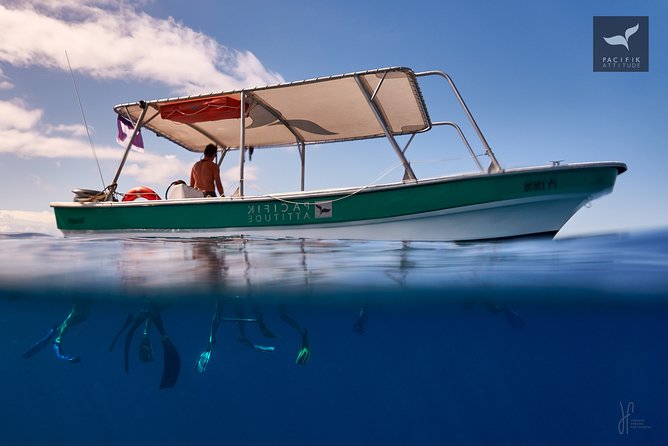
A 5 a.m. departure can be a smart choice if you can manage the early start. One outing at that hour had very calm water and produced a sunrise encounter with a juvenile whale. Calm conditions can make the ride more comfortable and the water easier to watch, but an early departure does not guarantee better sightings.
The stated opening hours begin at 5:30 a.m. for the general period from July 15, 2022 through July 19, 2026. From July 20 through November 20, 2026, the hours begin at 5 a.m. These dates are unusually specific, so check your confirmation carefully rather than relying on a general schedule.
The meeting place changes with the season:
- From December through July, meet at Hauru Public Park Parking.
- From August through November, meet at Pacifik Attitude.
That change is easy to miss. The whale season overlaps August through November, when the Pacifik Attitude location is used. Confirm the exact meeting instructions after booking, since the booking confirmation is subject to availability and may arrive within 48 hours.
There have been occasions when a partner operator handled the boat instead. Pacifik Attitude works with Moorea Moana Tours, and weather or boat issues can lead to a cooperative replacement rather than a cancellation. This may be practical, but it can also create confusion if you arrive expecting one name and see another. Read the final instructions closely.
Sea conditions, comfort, and group size
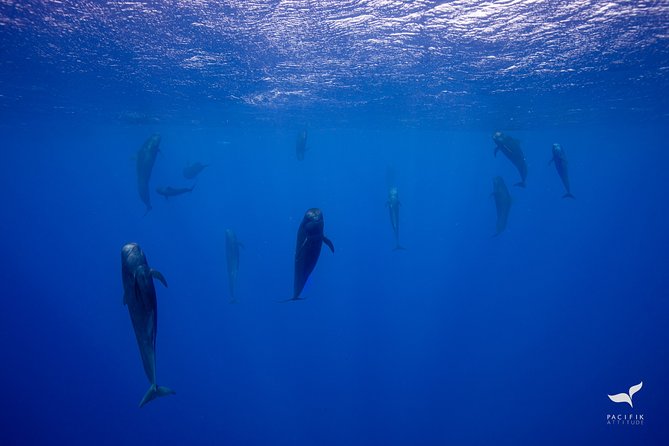
The ocean can be calm at sunrise and rough later, or the reverse. Several accounts point to strong swell as a real factor. The captain’s boat handling becomes important in those conditions, but even a capable captain cannot make a rough sea feel flat.
If you are prone to seasickness, the early trip may be more appealing, though no departure guarantees calm water. Bring the precautions you normally use for boat travel. The supplied information does not list a specific boat design, seating arrangement, or restroom, so do not assume the comfort of a larger vessel.
Group size can vary. One especially favorable outing used a boat for eight people, a size that allows easier access to the guide and a clearer view around the sides. Another account describes a large group being split into two groups, showing that the operation can feel different from one date to another.
That variation matters at this price. A small group makes the experience feel more personal and gives the guide more control over people entering the water. A larger group can mean more waiting and less room at the viewing rail. Ask about the expected group size if that is a deciding factor for you.
Is $327.95 a fair price?
At $327.95 per person, this is an expensive half-day activity. I would not choose it as a casual add-on if your budget is tight or if you only have one day in Moorea and want a broad mix of activities.
The price becomes easier to justify if you specifically want a respectful humpback encounter and understand that the payment covers effort, equipment, boat time, captain skill, and the search itself. A whale may be nearby but out of sight. The crew may spend much of the outing locating animals, interpreting behavior, and deciding whether a swim is safe.
You also have the chance to see several other species, and some trips include food on board. Still, those extras should not be the main reason you book. The central value is the possibility of seeing or swimming near humpbacks in their natural setting.
The 97 percent recommendation rate and 4.9 rating from 199 ratings point to consistently strong satisfaction, but the lower scores reveal the key risk: a substitute operator, divided groups, rough conditions, or whales that remain too far away can change the day. I would book it for the possibility, not the certainty.
Who should book this Moorea whale tour?
This outing suits you if whales are high on your Moorea list, you can handle a three-hour boat trip, and you are comfortable with nature setting the terms. It is also a good fit if you want guides who explain behavior and place limits around wildlife contact.
It may suit families with children age five and older, provided the child can manage the boat and follow safety instructions. It can also work for a mixed group with a non-swimmer, since you do not have to enter the water to take part.
I would hesitate if you need a guaranteed swim, dislike open-water uncertainty, or become uncomfortable in rough seas. I would also think twice if you want a fixed sightseeing route, a guaranteed small group, or a highly predictable meal plan.
Book at least 24 hours ahead if your plans are firm. You can cancel for a full refund up to 24 hours before the start time, while cancellations or changes inside that period are not accepted for a refund. Poor weather or too few bookings may cause the operator to offer another date or a full refund.
Should you book it?
Yes, if you see the $327.95 as payment for a chance to meet wild humpbacks rather than a ticket guaranteeing a swim. The strongest elements are the careful approach, marine-life variety, clear safety focus, and the possibility of hearing song or watching a mother and calf at close range.
Choose the earliest suitable departure if calm water matters to you, confirm the seasonal meeting point, and keep your expectations flexible. If the whales remain distant, the morning can still include dolphins, turtles, rays, sharks, and reef fish. If the conditions line up, you may share the water with one of the ocean’s most memorable animals.
FAQ
When is humpback whale watching allowed in Moorea?
Humpback whale watching is allowed in French Polynesia from July 20 through November 20.
How long does the Pacifik Attitude tour last?
The experience lasts approximately three hours.
Is swimming with the whales guaranteed?
No. Swimming with whales depends on sea conditions, whale behavior, and the captain and guide deciding that entering the water is appropriate. You may only watch from the boat or see whales at a distance.
Where is the meeting point?
From December through July, the meeting point is Hauru Public Park Parking. From August through November, it is Pacifik Attitude.
What is the minimum age for children?
Children may board from age five.
What happens if the tour is canceled because of weather?
If poor weather cancels the experience, you will be offered another date or a full refund. A full refund is also offered if the minimum number of participants is not reached and the experience is canceled.
Just added around Moorea
- Whale watching and snorkelling in Moorea★ 5.0 · 64 reviews
- Whale watching 6 people half day★ 5.0 · 38 reviews
- WHALE TOUR – Watching and Swimming with Whales★ 5.0 · 52 reviews
- Snorkeling Lagoon Cruise and Whale Watching in Moorea★ 5.0 · 2 reviews
- Whale Watching Moorea (non-swimming)★ 4.0 · 12 reviews
- Watch and Swim with Humpback Whales in Moorea★ 5.0 · 3 reviews
- Sacred Experience Swimming with a Whale in Moorea★ 5.0 · 46 reviews
- Shared Whale Expedition★ 5.0 · 34 reviews
Moorea Whale Watching Tours, compared.
Swimming with Whales in Moorea (Half Day tour)
Read our review →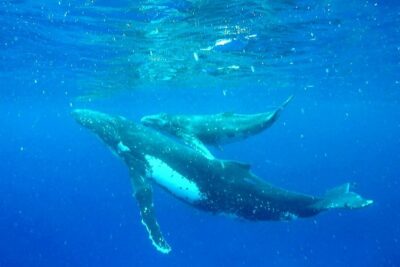
Private tour observing and swimming with humpback whales in Moorea
Read our review →