
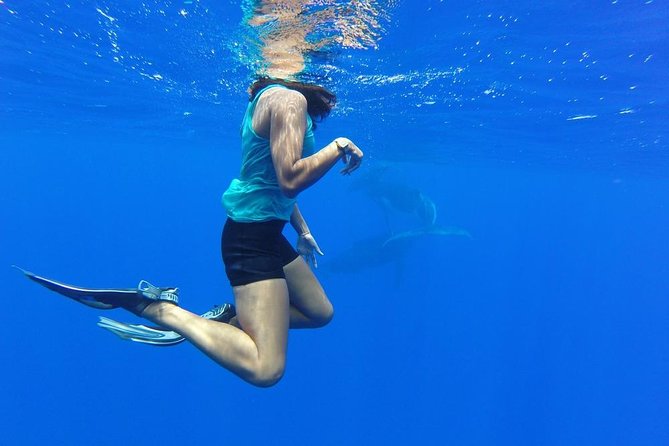
Review · FRENCH POLYNESIA
Whale Watching Tours in Bora Bora
The most remarkable part of this Bora Bora excursion is that it takes you beyond a pretty lagoon and into the open ocean, where humpback whales may surface, sing, or move alongside the boat. I like the six-person maximum and the directional hydrophone, which lets you hear whale song rather than simply scan the water. The catch is simple: wildlife sets the schedule, not the captain.
I also like the serious approach to swimming. Simon and his team explain how to behave around protected whales and will not treat the ocean like a swimming pool. Still, you need strong swimming skills, comfort in open water, and a willingness to accept that you may spend 3.5 hours searching without entering the sea or seeing a whale.
Key points at a glance
- Small group of up to six: You get more room on the boat and closer attention during the safety briefing.
- Open-ocean whale watching: The trip leaves the sheltered lagoon environment and can involve waves, swell, and long swims.
- Swimming is never guaranteed: The crew decides based on whale behavior, weather, sea conditions, safety, and local rules.
- Simon’s 15-plus years of experience: He leads the operation with a strong focus on respectful whale encounters.
- Directional hydrophone onboard: You may hear humpback songs even when the animals are difficult to spot.
- Boat viewing remains an option: You can stay onboard if the sea feels too rough or swimming is not right for you.
A 3.5-hour search beyond Bora Bora’s lagoon
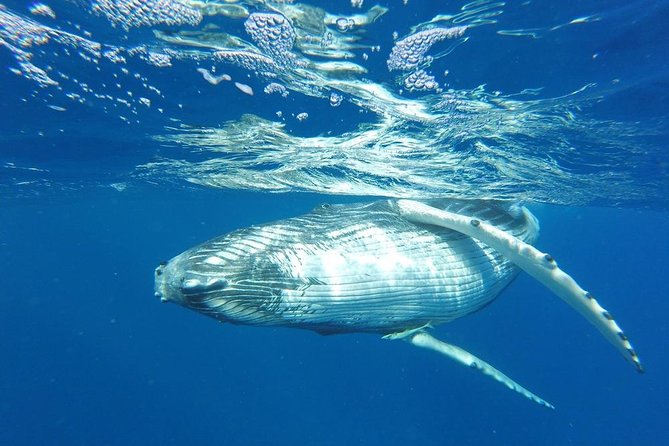
This is not a quick sightseeing cruise with a whale-shaped promise attached. Tohora Bora Bora takes you into the marine environment where humpback whales migrate to give birth and reproduce. The trip lasts about 3 hours and 30 minutes, and much of that time may be spent watching, listening, waiting, and repositioning the boat.
That format matters. Whales do not appear on command, and the crew cannot guarantee a sighting, close approach, or swim. The trip is best understood as a serious wildlife outing, not a scheduled performance.
The boat is led by a captain and guide, with Simon often taking the lead. The company has more than 15 years of experience approaching and observing humpback whales around Bora Bora. That experience is useful because the hard part is not simply finding a whale. The crew must read its movement, judge the sea, and decide when an approach is safe and respectful.
You may see other ocean life along the way. Past outings have included flying fish, tuna, large swells, and waves breaking near the reef. Those details do not replace whales, but they remind you that the trip is about the open sea itself, not only a single target species.
A few more whale trips around French Polynesia worth a look
- Swimming with Whales in Moorea (Half Day tour)
★ 4.5 · 264 reviews - Whale Tour – Observe and swim with whales
★ 5.0 · 257 reviews - Swim with humpback whales
★ 5.0 · 224 reviews
Starting with a briefing and a clear choice
Expect the outing to begin with instructions about swimming, safety, distances, and conduct around the whales. Pay attention. The rules are not decorative, and the crew expects you to follow them quietly and carefully.
The launch option means you may enter the sea if the situation is suitable. It does not mean you will definitely swim with a whale. You may be asked to swim more than 100 meters in open water, sometimes in moving seas, so the physical demand is real.
You can also remain on the boat. This is an important part of the design, not a second-rate alternative. One person may decide the water is too rough while others enter, or the whole group may watch from the deck as a whale surfaces nearby.
I would be especially careful here if you are only comfortable in calm, shallow water. You need good physical fitness and ease in the sea. A strong pool swimmer may still find open-water conditions tiring, particularly when there is swell or when the boat is moving away from the reef.
Searching for humpback whales in the open sea
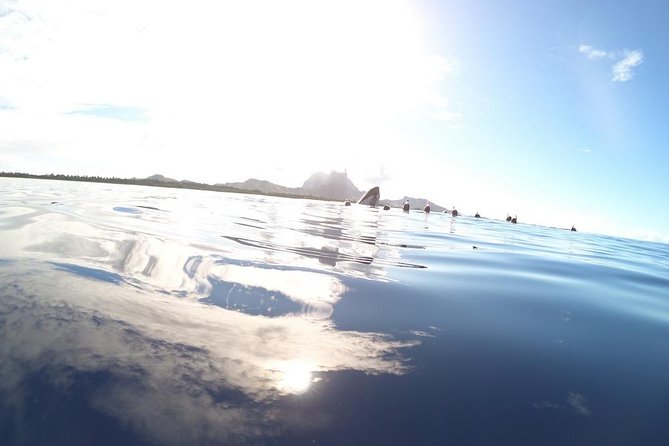
Once the boat reaches the observation area, the pace can become patient and uncertain. You might spend time scanning for a blow, watching the surface for movement, or waiting for the animal to settle before the boat approaches.
This is where Simon’s experience and persistence can make a difference. The crew may continue searching beyond the planned time when conditions allow and when there is a reasonable chance of finding whales. That effort has limits, of course. A longer search cannot turn an empty sea into a guaranteed encounter.
When whales are located, the next step depends on their behavior. They might surface briefly, travel near the boat, or remain in one area for a longer period. A favorable encounter can last minutes or more than an hour, but there is no fixed pattern.
The best advice is to keep your expectations flexible. You may see several whales and enter the water more than once. You may see a whale from the boat but decide not to swim. You may hear songs through the hydrophone and never get the close encounter you imagined. All three outcomes fit the nature of wild whale watching.
Hearing whale song through the directional hydrophone
The hydrophone is one of the tour’s most appealing details. It is designed to pick up underwater sound and gives you a chance to hear humpback songs while searching.
That changes the experience. Instead of staring at an empty horizon, you can listen for signs of activity beneath the surface. The sound does not guarantee that a whale will appear beside the boat, but it makes the waiting more meaningful.
I particularly like this feature for anyone who values the natural encounter itself rather than only a photograph. A whale surfacing is exciting, but sound can give you a better sense of the animal’s presence and the distance between your world and its underwater one.
The equipment also fits the company’s stated focus on observation rather than spectacle. You are not simply chasing a large animal for a close view. You are being asked to pay attention to what is happening around and below you.
Same water, a different way to meet the whales:
- Humpback whale watching and marine life in Moorea
★ 5.0 · 199 reviews - Half day whale tour 4h00
★ 4.5 · 181 reviews - Private tour observing and swimming with humpback whales in Moorea
★ 5.0 · 126 reviews - Respectful whale excursion to Tahiti in 4h30
★ 4.5 · 123 reviews
Entering the water, when the conditions are right
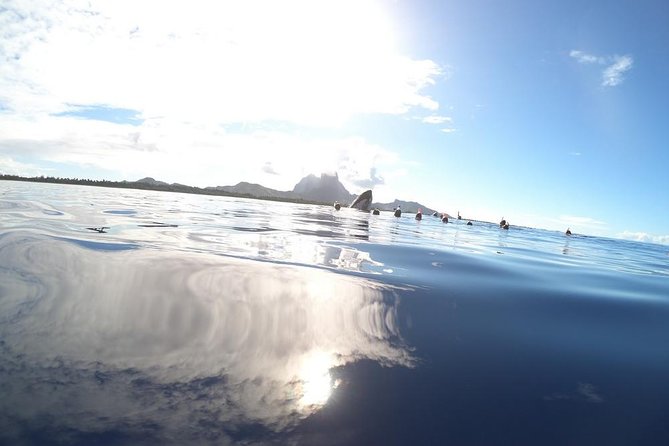
The swimming part is the tour’s biggest attraction and its biggest source of misunderstanding. If the crew judges that a whale can be approached safely and responsibly, you may enter the water. You could then swim a considerable distance while keeping calm, quiet, and aware of instructions.
The encounter depends on the whale. It may change direction, move away, remain submerged, or approach the boat differently than expected. You cannot order the animal to stay in one place, and the crew should not force a closer approach simply to create a better photograph.
Some outings allow several entries into the water. Others may allow little or no swimming because of sea conditions or the animal’s behavior. The company’s rules limit the number of people, the distance from the whales, and the way approaches are made.
This can feel strict if you expect a casual snorkel. I see it as a necessary condition for a responsible experience, especially with a protected species. Still, strict rules do not make the outing easy. You must be ready to follow directions immediately and accept that the guide may end a water attempt.
If you are unsure of your swimming ability, decide before booking. Do not count on the crew to turn open-ocean swimming into a gentle introduction. You can stay onboard, but the launching option is plainly aimed at people who are physically fit and comfortable in moving water.
What the boat-only option is really like
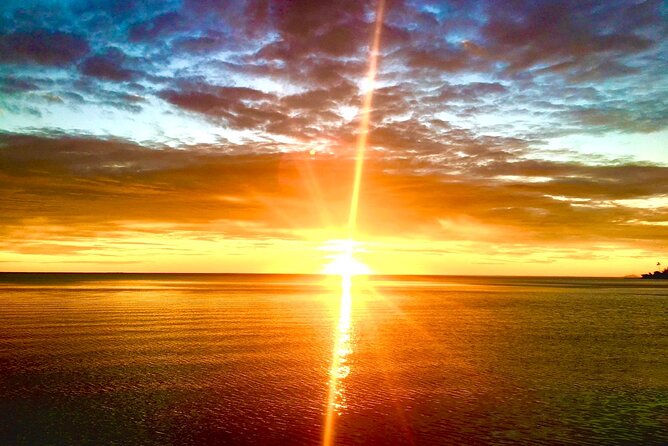
Staying onboard does not mean you have missed the whole point. A whale may remain near the boat for a long time, offering repeated surface views. You can also watch flying fish, tuna, waves, and the changing relationship between the lagoon side and the open-ocean side of the reef.
One particularly useful detail is that even rougher water can create a memorable show from the deck. A whale may accompany the boat while swimmers enter the sea, giving you a different angle on the encounter without the fatigue or anxiety of getting wet.
That said, boat viewing can be frustrating if you booked mainly to swim. You could spend the entire trip hoping for a launch and never get one. You should be comfortable with that possibility before paying.
A small group makes a real difference
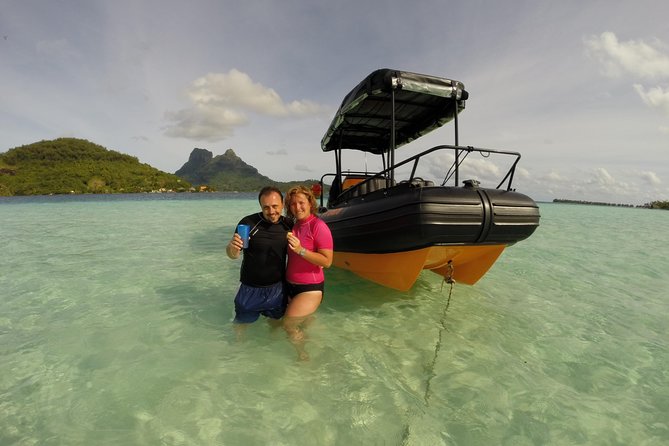
The maximum group size is six people. For an activity involving safety briefings, open water, and careful approaches, that is a meaningful advantage.
A small group gives the guide fewer people to watch during a water entry. It also limits crowding around the boat and reduces the chance that a large group will make the encounter feel noisy or rushed. If you remain onboard, you should have a better chance of seeing what is happening rather than peering around a packed deck.
The group size also explains some of the price. A specialist boat outing with a captain, guide, fuel, safety equipment, and a low passenger count costs more to operate than a large lagoon cruise.
Is $305.30 a fair price?
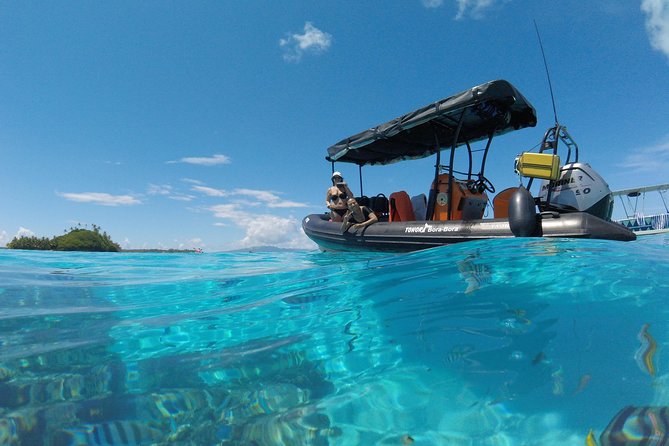
At $305.30 per person, this is an expensive half-day activity. The price is easier to justify if you value a small group, specialist guidance, the hydrophone, and the possibility of entering open water with humpback whales.
It is harder to justify if you need a guaranteed result. There is no promise that you will see whales, hear them clearly, or swim with them. A three-and-a-half-hour search can end with a disappointing wildlife day, even when the crew has worked hard.
The cost also reflects the operating demands of open-ocean work in French Polynesia. The boat, fuel, crew, safety equipment, and time spent searching all carry expenses. Booking through a third-party platform may also cost more than arranging the outing directly.
My value judgment is straightforward: this is fair for a serious, small-group wildlife expedition, but poor value for anyone treating it as a guaranteed whale swim. The distinction is important. You are paying for the attempt, expertise, equipment, and access to the environment, not a guaranteed animal encounter.
Timing, pickup, and booking details
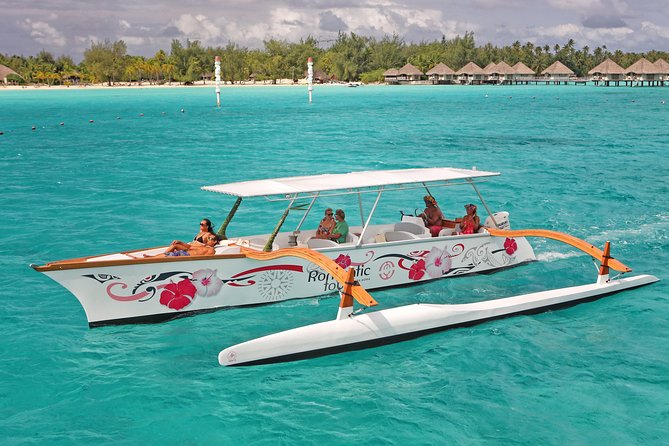
Pickup is offered, and the activity begins and ends back at the meeting point in Bora Bora. The exact meeting arrangements should be confirmed after booking, since confirmation is sent within 48 hours and remains subject to availability.
The trip is usually booked well in advance, around 39 days on average. That suggests you should not leave it until the last part of your stay if this is a priority.
Weather matters. Poor conditions can cause the outing to be canceled, in which case you are offered another date or a full refund. The experience also requires a minimum number of participants. If that minimum is not met, you are offered another date or experience, or a full refund.
The standard cancellation terms are strict: the booking is non-refundable and cannot be changed for personal reasons. Read those conditions carefully before committing, especially if your Bora Bora visit depends on a cruise schedule or uncertain island transfers.
The strongest parts of the experience
The most praised elements are consistent and practical. Simon is often described as punctual, persistent, humorous, and deeply focused on finding whales. The team, including guides such as Victor and Maui, has also been credited with looking after the group and explaining what is happening.
The actual whale encounters can be extraordinary. Some outings have included several swims and long periods with a whale near the boat. Those are rare wildlife moments, and the small boat can make them feel personal rather than crowded.
The crew’s effort also matters on days without a sighting. Searching hard, explaining whale behavior, and making use of the open-water setting can still produce a worthwhile trip. But effort is not the same as a result, and you should keep that distinction clear.
There is also a useful lesson in the mixed experiences. Some people have found the swimming demanding, the sea too rough, or the communication around timing frustrating. The operator’s replies can be blunt when defending safety rules or explaining schedule changes. If you prefer a gentle, highly polished tourism style, that direct approach may not suit you.
Who should book this whale tour?
I would recommend it to you if you:
- Are physically fit and comfortable swimming in open water
- Accept that wildlife sightings are never guaranteed
- Prefer a small group over a large sightseeing boat
- Care about respectful whale observation
- Like natural history, sound, and patient searching
- Would still value the boat ride if swimming is not possible
I would hesitate if you:
- Need calm, shallow water
- Are uncomfortable with waves or swell
- Expect a guaranteed close encounter
- Mainly want a short, relaxed lagoon cruise
- Would be upset by paying for a day with no whales
- Have a tight schedule that cannot absorb a weather change
Should you book Tohora Bora Bora?
Book this tour if you see it as a genuine wildlife expedition with a chance of an extraordinary encounter, not as an attraction that delivers whales on demand. The hydrophone, six-person limit, experienced crew, and careful rules give it substance beyond a standard boat ride.
Before booking, be honest about your swimming ability and your tolerance for uncertainty. If the idea of watching from the boat sounds perfectly good, you are well matched. If you would consider the trip a failure without swimming beside a whale, choose another activity or adjust your expectations first.
For the right person, this can be one of Bora Bora’s most powerful experiences. For the wrong person, the open water, strict instructions, high price, and lack of guarantee will feel like too much. Know which kind of person you are before you reserve it.
FAQ
How long does the whale-watching tour last?
The excursion lasts approximately 3 hours and 30 minutes.
How many people can join the tour?
The maximum group size is six people.
Is swimming with the whales guaranteed?
No. Entering the water depends on whale behavior, weather, sea conditions, maritime rules, safety, and the guide’s judgment.
Do I need strong swimming skills?
Yes. The activity requires a strong level of physical fitness, and a water entry may involve swimming more than 100 meters in the open sea.
Can I stay on the boat instead of swimming?
Yes. You can remain onboard and watch the whales from the boat.
What happens if bad weather cancels the tour?
You will be offered another date or a full refund if the experience is canceled because of poor weather.
Just added around French Polynesia
- Tahiti, land of whales: a unique experience!★ 5.0 · 11 reviews
- Observe and Swim with Whales in Tahiti★ 4.5 · 14 reviews
- Whale Watching Activity★ 5.0 · 8 reviews
- Whale watching DE Tahiti Peninsula★ 5.0 · 12 reviews
- Whale watching in the calm of the peninsula with Tātahi tours★ 5.0 · 6 reviews
- Whale watching DE Humpback West Coast of Tahiti★ 5.0 · 3 reviews
- 4 Hours of Humpback Whale Watching in Tahiti★ 5.0 · 36 reviews
- Half Day Whale Watching in a Small Shared Group★ 5.0 · 33 reviews
French Polynesia Whale Watching Tours, compared.
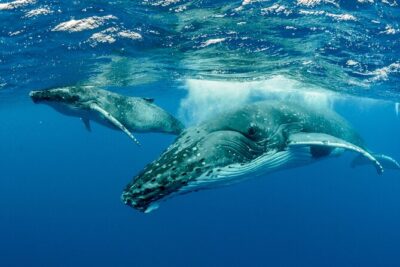
Swimming with Whales in Moorea (Half Day tour)
Read our review →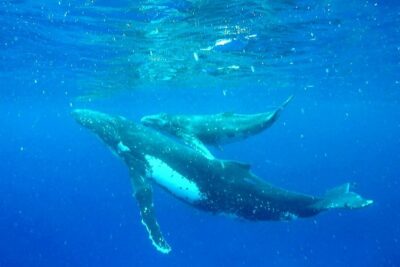
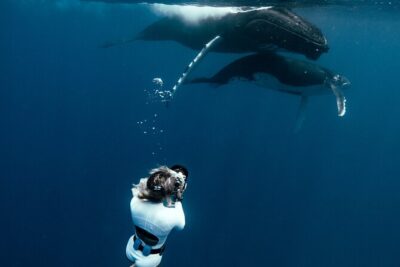
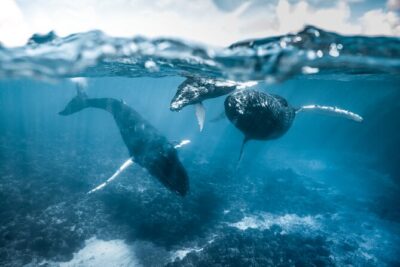
Humpback whale watching and marine life in Moorea
Read our review →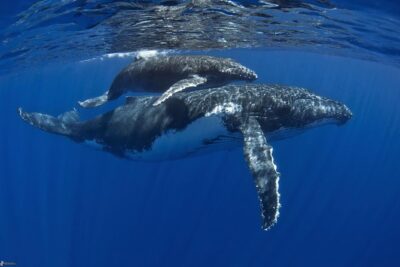
Private tour observing and swimming with humpback whales in Moorea
Read our review →
Browse the lists this tour appears in