
Review · NEW ZEALAND
Auckland Dolphin and Whale Watching Eco-Safari Cruise
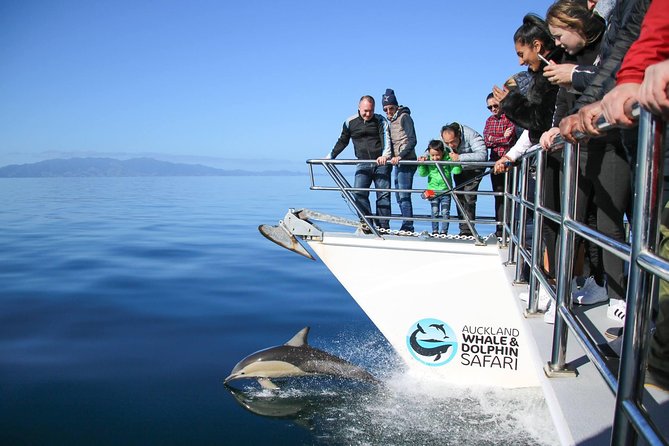
A pod of dolphins racing beside the bow is the star of this Auckland outing, but the real appeal is the mix of wildlife watching and marine research. The 4.5-hour cruise heads from Viaduct Harbour into the Hauraki Gulf, where you might see dolphins, Bryde’s whales, seals, blue penguins, sharks, and rare seabirds.
I like the research connection and the care taken around wild animals. I also like the broad views of Rangitoto, Motuihe, Motutapu, and the gulf islands. The catch is simple: whales are wild, and even dolphins are not guaranteed. A rough day or a full boat can also affect your comfort.
Key points to know before you book
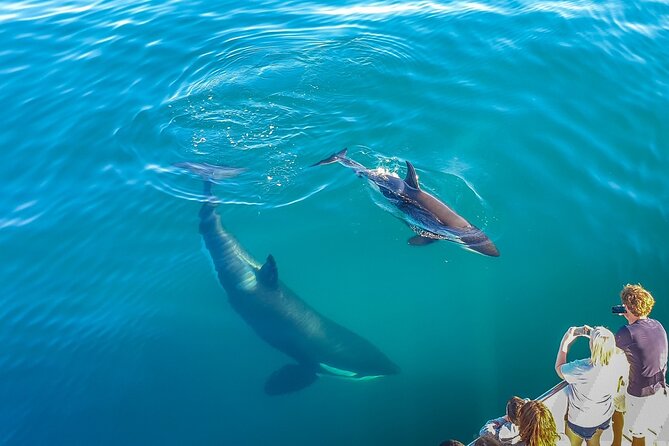
- Dolphins are often the best bet, with reports of large pods playing near the catamaran for as long as 30 minutes.
- Marine research scientists provide commentary, linking your outing to ongoing data collection and conservation work.
- The 65-foot catamaran has indoor and outdoor viewing areas, but space can feel tight when all 99 seats are filled.
- No-mammal sightings bring a free return trip, though that offer is most useful if you can remain in Auckland.
- Weather matters: wind, rain, and cold can change a comfortable cruise into a tiring one.
- The boat leaves from central Auckland, making this an easy half-day addition to a city stay.
Setting out from Viaduct Harbour
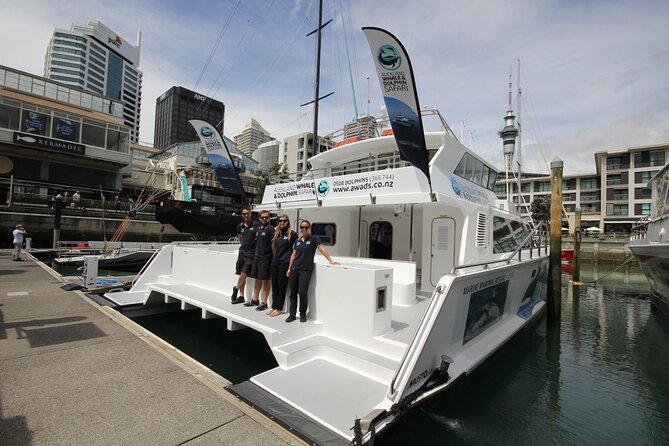
Your meeting point is at the New Zealand Maritime Museum on Auckland’s Eastern Viaduct. This is a handy departure spot if you are staying in central Auckland, and the tour returns to the same place after roughly four and a half hours.
Check-in closes 15 minutes before departure. Take that rule seriously. Late arrivals risk losing their allocated seats, which matters on a busy sailing when the boat may carry up to 99 people.
You board a custom-built 65-foot, or 20-meter, catamaran. A catamaran usually gives you a steadier ride than a narrow single-hull boat, but this is still an open-water trip. One outing had rough seas, while another benefited from calm morning water. You should expect conditions to vary.
The boat has indoor seating, outdoor viewing areas, toilets, and snacks available for purchase. You will want to move around as wildlife appears, so wear flat-soled shoes and bring only what you can manage easily.
More Whale and Dolphin Tours in New Zealand:
- Auckland: Whale and Dolphin Watching Half-Day Eco Cruise
★ 4.5 · 1,072 reviews - Auckland: Tikapa Moana Whales, Dolphins and Islands Cruise
★ 3.9 · 292 reviews - Auckland: Tikapa Moana Dolphin, Whale and Island Cruise
★ 4.0 · 17 reviews
Auckland Harbour Bridge and Waitemata Harbour
The first part of the journey gives you a useful view of Auckland from the water. The Auckland Harbour Bridge frames the city, while Waitemata Harbour provides a gentler start before the boat moves toward the more open waters of the Hauraki Gulf.
This section is not just filler. It helps you see how quickly Auckland’s urban waterfront gives way to islands, headlands, and protected marine areas. Keep your camera out, but do not spend the whole time looking through it. The gulf scenery is part of the experience, even on a day when the animals stay hidden.
The captain and crew explain the route, safety rules, and viewing etiquette. When an animal appears, people naturally gather at the rails. The crew may ask everyone to take turns so those at the back can see too. That is fair, though a full boat can mean three rows of people waiting for a glimpse.
Rangitoto and the first open-water views
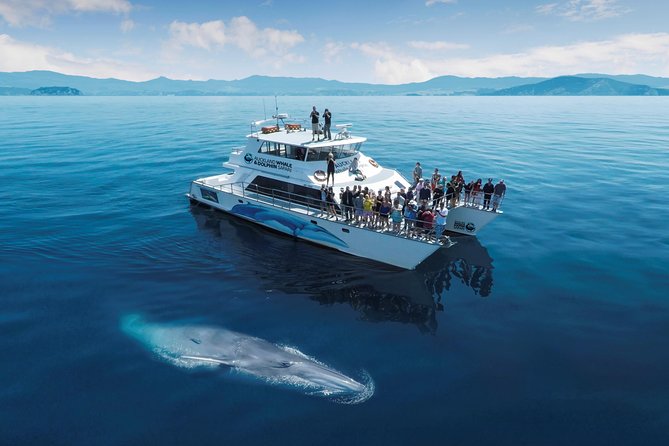
Rangitoto Island is one of the most recognizable sights in the Hauraki Gulf. Its volcanic form gives the cruise a strong sense of place, and seeing it from the water offers a different angle than a walk on the island itself.
You are not stopping to explore Rangitoto on foot. The point here is the wider view and the transition into the marine park. As the boat moves farther from Auckland, keep watch for seabirds. Australasian gannets, petrels, shearwaters, and white-fronted terns may appear above the water or plunge toward it.
The bird life can fill the gaps between mammal sightings. That matters because whale watching is never a stage show. The more you appreciate the whole marine setting, the less disappointing a quiet spell will feel.
Hauraki Gulf Marine Park and the search for whales
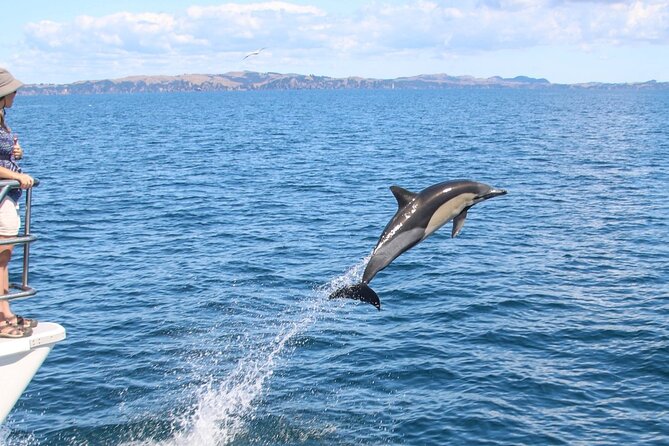
The Hauraki Gulf Marine Park includes five marine preserves and supports about 23 marine species. The crew explains how local scientists track whales and monitor marine life, giving the trip a purpose beyond simply finding something large to photograph.
Up to six types of whales may pass through these waters, including Bryde’s whales, which are native to New Zealand. Some outings produce several whale sightings. Others bring no whales at all, even after the crew spends extra time searching.
That uncertainty should shape your expectations. The advertised price is $135.91 per person, which is reasonable if you want a substantial half-day on the water with guided interpretation and a conservation contribution. It is less satisfying if you judge value only by the number of whales photographed.
The operator says dolphins and whales are often found in the area, but no viewing can be promised. If you see no marine mammals at all, you can take another trip at no extra charge. That is a thoughtful policy, but it has limited value if you are visiting from overseas and will not return to Auckland.
A few more whale trips around New Zealand worth a look
- Kaikoura Whale Watching – 45 Minute Ocean Safari
★ 5.0 · 39 reviews - Los Cristianos Respectful No-Chase Whale and Dolphin Safari
★ 4.6 · 12,782 reviews - Tromsø Whale Safari with MS Gabriele
★ 4.3 · 1,937 reviews - From Tromsø: All-Inclusive Whale & Orca Safari
★ 4.5 · 1,221 reviews
Dolphins, whales, seals, and penguins
Dolphins provide the most dependable excitement on this cruise, though they remain wild animals. Bottlenose dolphins may travel in large pods, with young animals among them. The best encounters can last many minutes, with dolphins appearing beside the bow and surfacing again and again.
The boat’s front deck is a popular viewing spot when it is underway. It can also be windy, wet, and cold, so bring a secure hat, sunglasses, sunscreen, and weatherproof layers. A chin strap is useful because an ordinary hat can quickly become a souvenir for the sea.
Whales may appear as a distant blow, a back, or a fuller sighting. You may also see seals, blue penguins, or even a shark. One particularly productive outing included hammerhead sharks, whales, dolphins, and seabirds. You should treat that kind of day as a bonus, not a standard itinerary.
Blue penguins are small and easy to miss. Binoculars help, though you should not assume the boat provides them. Bring your own if you have room.
Motuihe and Motutapu from the water
Motuihe and Motutapu islands add variety to the route. Their shores and bays give the crew more places to search, while the changing backdrop keeps the ride interesting during quieter periods.
You are not visiting these islands ashore, so think of them as scenic points along a wildlife route rather than separate stops. The views are valuable for families and anyone who wants a broad Auckland outing rather than a narrow whale-only trip.
The islands also show why the gulf works well as a marine setting. Wildlife is not being brought to you. You are moving through a large protected area and waiting for natural activity to reveal itself.
Tiritiri Matangi and North Head
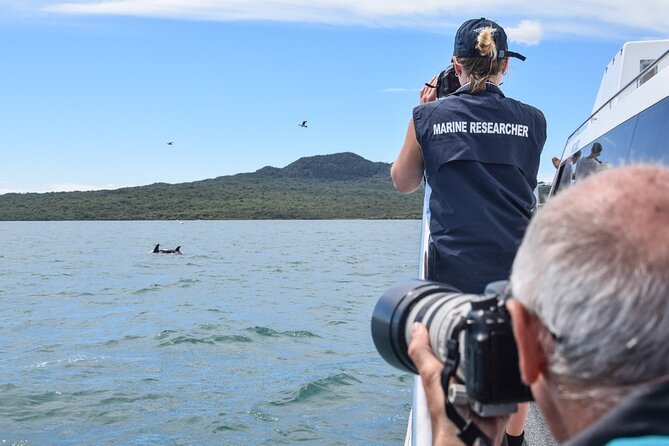
Tiritiri Matangi is another landmark on the route, viewed from the boat rather than explored on foot. It helps place the cruise within Auckland’s island network and provides another chance to scan the water and sky.
North Head Historic Reserve marks the return toward the city. The headland gives you a final land-based reference before the boat turns back toward Viaduct Harbour. If the return journey is calm, this is a good time to put the camera away and simply watch Auckland come back into view.
The itinerary is long enough to feel like a proper marine outing, but that length has a downside. Four and a half hours is a commitment, especially in rain or rough seas. If you get seasick, or if you dislike sitting outdoors in changing weather, you should think carefully before booking.
What the marine scientists add
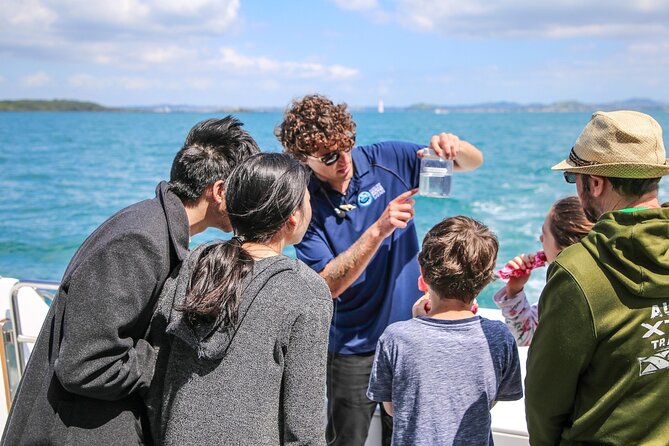
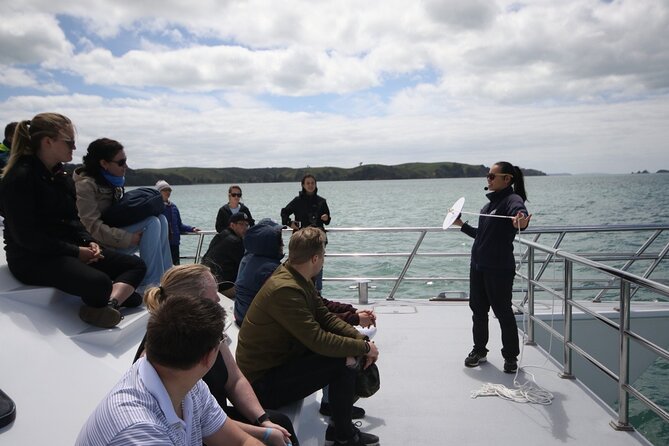
The strongest feature here is the educational side. Onboard marine research scientists explain the animals, the gulf, and the work carried out with local research partners. You learn which whales the crew tracks and why sightings matter.
The quality of the commentary can depend on where you sit and how clearly each announcement carries. On a crowded day, some people found the microphone volume too low from the rear or outside seating. If the science interests you, stay near the main commentary area when possible, and do not hesitate to ask a crew member to repeat something.
The conservation contribution is included in every ticket. You are not merely buying a boat ride. Part of the fare supports marine mammal conservation, and the crew’s approach is to give animals room and allow them to choose how close they come. That respectful policy is important. A good wildlife cruise should not pressure animals for a better photograph.
Comfort, crowding, and what to pack
The catamaran is described as stable and comfortable, with room to sit inside or outside. In practice, comfort depends heavily on passenger numbers and weather. With close to 100 people onboard, prime rail positions fill quickly. Rain can push everyone beneath cover, making the indoor areas feel crowded.
Pack for wind rather than for the temperature at the dock. I would bring:
- Warm layers and weatherproof outerwear
- A sun hat with a chin strap
- Sunscreen and sunglasses
- Flat-soled shoes
- A camera and binoculars
- Water or money for snacks onboard
Food and drinks are not included, though you can buy snacks on the boat. Hotel pickup and drop-off are also not included, so plan your own way to the Viaduct Harbour meeting point.
Most people can take part, and service animals are allowed. The cruise is not a private charter, so families and independent visitors share the boat. Children who can handle a long outing on open water should find plenty to watch, but very young children may tire before the boat returns.
How the $135.91 price measures up
At $135.91 per person, this is not a cheap harbor sightseeing ride. You are paying for roughly four and a half hours, a purpose-built vessel, crew commentary, marine research input, and the chance to see wildlife in its natural setting.
The value is strongest when you care about the whole experience: island views, seabirds, scientific interpretation, and the possibility of dolphins or whales. It is also better value for someone with enough time in Auckland to appreciate a half-day on the gulf.
The value is weaker if your schedule is tight or if a whale sighting is your only goal. You could spend the full four and a half hours seeing very little marine life. The free return offer helps, but only if you can use it.
The high rating of 4.6 from 1,792 ratings and a 91 percent recommendation rate suggest that the overall experience works well for most people. Still, the less enthusiastic accounts point to the two real risks: no whales and crowded viewing areas. You should book with those facts in mind, not with the expectation of a guaranteed wildlife performance.
Weather, cancellations, and timing
This activity requires suitable weather. If poor conditions force a cancellation, you can choose another date or receive a full refund. The same choice applies if the minimum number of participants is not reached.
For your own cancellation, free cancellation is available up to 24 hours before the start time. Changes or cancellations made within 24 hours are not accepted for a refund.
Weather also affects the quality of the outing even when the boat sails. Calm water makes it easier to watch, photograph, and listen. Wind and rain can make the front deck exciting but uncomfortable. A morning departure may have calmer water on some days, but conditions are not guaranteed.
Who should book this Auckland cruise?
I would choose this cruise if you like wildlife, boats, and practical conservation work. It suits visitors who want to see Auckland’s islands from the water and who can accept that nature controls the schedule.
It is especially good for:
- Families with older children
- Bird and marine-life fans
- Visitors with a half-day to spare
- People who value scientific interpretation
- Anyone who prefers a conservation-minded wildlife outing
I would hesitate if you need a guaranteed whale sighting, dislike open water, or have only one short window in Auckland. I would also avoid booking without warm layers. The city may feel mild when you leave the dock, while the gulf can feel much colder.
Should you book the Auckland Dolphin and Whale Watching Eco-Safari?
Yes, if you treat it as a marine safari rather than a whale guarantee. Dolphins are often the highlight, and the chance to see whales, seals, penguins, sharks, and seabirds adds real excitement. The island scenery and marine scientists give the cruise substance even during quiet stretches.
Book it for the full Hauraki Gulf experience, not just for a photograph of a whale. Arrive early, dress for wind and rain, bring binoculars if you have them, and try to stay flexible about where you stand. If you can accept the possibility of a long ride with few sightings, this is a worthwhile and responsible way to spend half a day in Auckland.
FAQ
Where does the cruise depart from?
The cruise departs from the Eastern Viaduct at the New Zealand Maritime Museum in Auckland Central. It returns to the same meeting point.
How long does the experience last?
The cruise lasts approximately 4 hours and 30 minutes.
Are whales and dolphins guaranteed?
No. Wildlife sightings cannot be guaranteed. Dolphins and whales are often found in the area, but conditions and animal behavior vary.
What happens if no marine mammals are seen?
If you do not see any marine mammals during the trip, you can take the cruise again on another day at no extra charge.
What should I bring?
Bring warm layers, weatherproof clothing, a sun hat with a chin strap, sunscreen, sunglasses, a camera, binoculars if available, and flat-soled shoes.
Can I cancel for a refund?
You can cancel up to 24 hours before the experience for a full refund. Cancellations or changes made less than 24 hours before departure are not accepted for a refund.
Just added around New Zealand
- Whakaari – White Island Cultural and Flight Experience★ 5.0 · 138 reviews
- Whale Watching in Kaikoura – Ultimate Experience★ 4.5 · 199 reviews
- Kaikōura Whale Watching and Scenic Landing – 1hr Premier Tour★ 5.0 · 24 reviews
- Kaikoura Whale Watching – 45 Minute Ocean Safari★ 5.0 · 39 reviews
- Kaikōura Whale Watching – 1hr 20min Ultimate Adventure★ 5.0 · 8 reviews
- Kaikoura Helicopters Extended Whale Watch★ 4.5 · 15 reviews
- Kaikoura Helicopters Top n Tail Whale Watch flight★ 5.0 · 7 reviews
- Kaikoura Whale Watch Day Tour from Christchurch★ 4.5 · 170 reviews
New Zealand Whale Watching Tours, compared.
Auckland: Whale and Dolphin Watching Half-Day Eco Cruise
Read our review →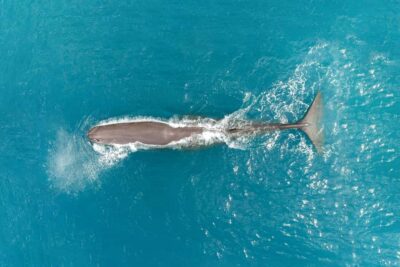
Kaikoura: Whale Watching Flight with Commentary
Read our review →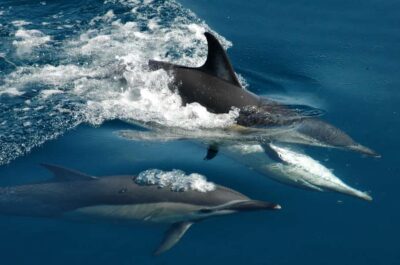
Auckland: Tikapa Moana Whales, Dolphins and Islands Cruise
Read our review →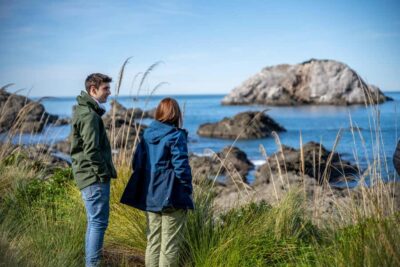
Christchurch: Kaikōura Day Tour with Whale Watching
Read our review →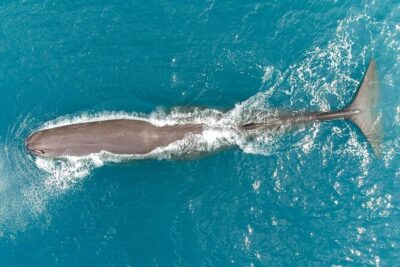
Kaikōura Whale Watching Scenic Flight (40 Minutes)
Read our review →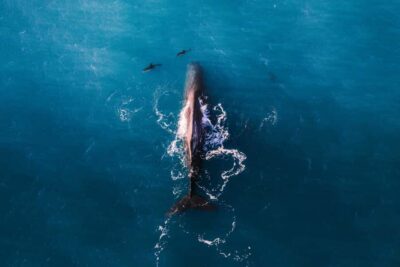
Kaikoura: Whale Watching Flight with Guided Commentary
Read our review →Browse the lists this tour appears in