
Review · NEW ZEALAND
Auckland: Whale and Dolphin Watching Half-Day Eco Cruise
A pod of dolphins can turn an ordinary Auckland afternoon into something you remember for years. This 4.5-hour eco-cruise leaves from the city center, passes North Head and Rangitoto Island, and reaches the Hauraki Gulf Marine Park, where the crew searches for whales, dolphins, penguins, gannets, and other sea life.
I like two things right away: the boat is a comfortable 65-foot catamaran with room to spread out, and the crew combines wildlife watching with real marine research. The conservation angle matters too, with a dollar from every ticket supporting the Hauraki Gulf Guardians fund.
The main drawback is simple: wild animals do not follow a timetable. Some trips see several whales and more than 100 dolphins, while others find only birds or no mammals at all. You receive a free second cruise if no marine mammals appear, but you still need flexible plans and warm clothing.
Key points to know before you book
- Auckland departure: Meet the crew at Berth 9, Eastern Viaduct Marina, opposite the Maritime Museum.
- A working research vessel: Marine scientists may collect samples and explain their work during the cruise.
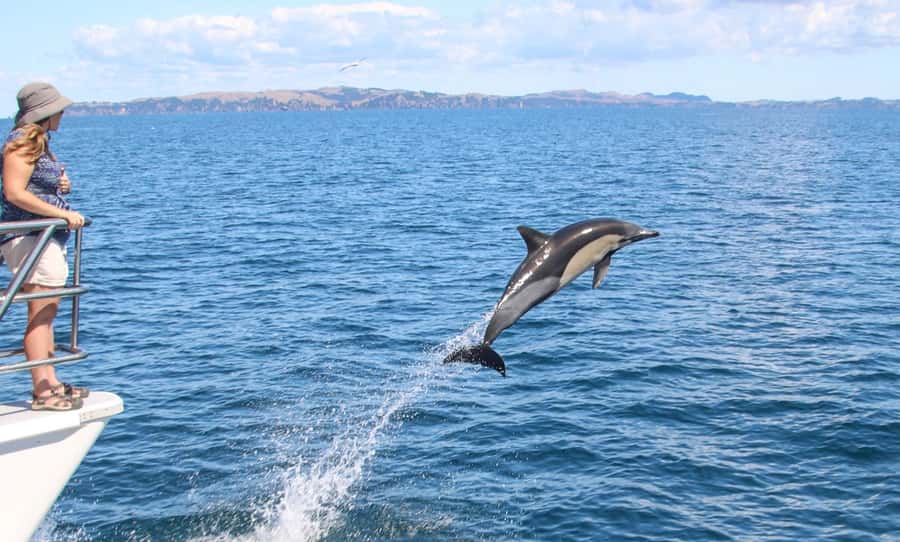
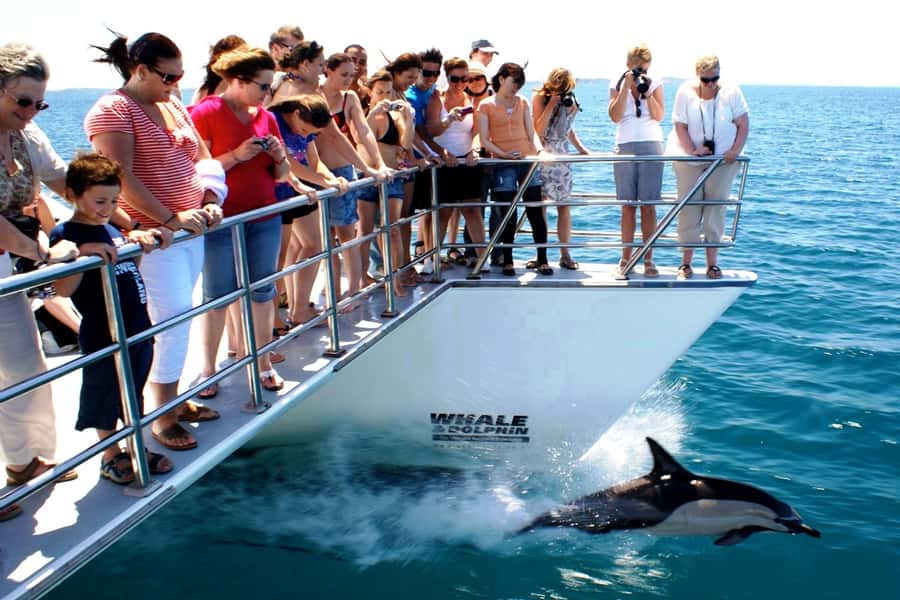
- Wildlife can be close: Dolphins may swim beside or beneath the catamaran, while whales are sometimes seen farther away.
- Strong birdwatching: Australasian gannets, blue penguins, shearwaters, and other seabirds add interest when mammals stay hidden.
- No-sighting protection: If you see no marine mammals, you can take the cruise again for free.
- Prepare for the sea: Bring warm layers, a showerproof jacket, sun protection, and seasickness medication taken before boarding.
Leaving Auckland from the Eastern Viaduct
The trip starts at Berth 9 in the Eastern Viaduct Marina, at the western end of Quay Street and opposite the Maritime Museum. You need to check in 30 minutes before departure, since check-in closes 15 minutes before the scheduled sailing.
That central location is one of the tour’s best practical features. You do not need a long transfer from an Auckland hotel or an outlying harbor. If you are building a day around the waterfront, you can pair the cruise with the Maritime Museum, Viaduct dining, or a walk through the central city.
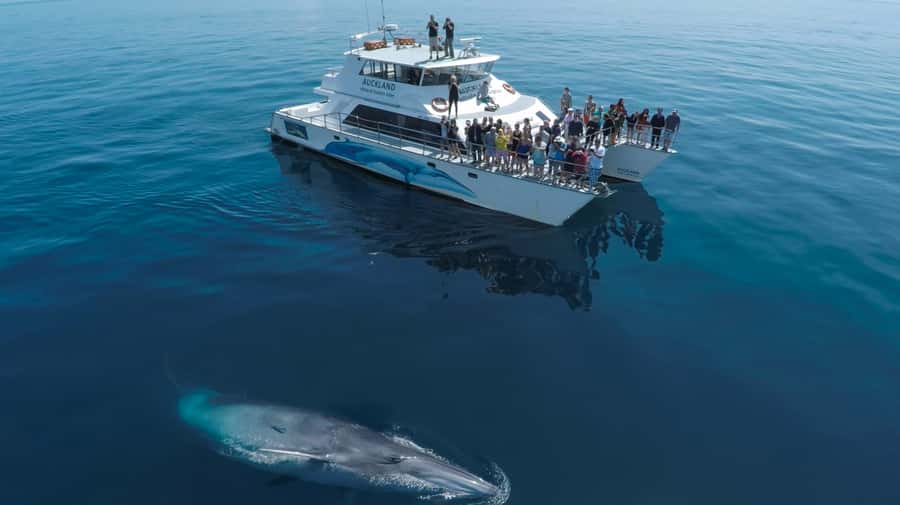
The vessel is called the Dolphin Explorer, a 65-foot catamaran designed for wildlife watching and marine research. A catamaran gives you several viewing areas, and the boat is described as a comfortable size rather than a giant sightseeing ship. That matters when an animal appears. You have a better chance of finding an open rail or clear view than you would on a packed, very large vessel.
The boat has seating, but you should still bring a jacket even on a sunny Auckland day. Wind on open water can feel much colder than it does beside the harbor. Sun protection matters too, since glare from the sea can catch you by surprise.
More Whale and Dolphin Tours in New Zealand:
- Auckland Dolphin and Whale Watching Eco-Safari Cruise
★ 4.5 · 1,790 reviews - Auckland: Tikapa Moana Whales, Dolphins and Islands Cruise
★ 3.9 · 292 reviews - Auckland: Tikapa Moana Dolphin, Whale and Island Cruise
★ 4.0 · 17 reviews
North Head, Devonport, and Rangitoto Island
The first part of the sailing gives you a quick water-level look at Auckland’s harbor surroundings. North Head and Devonport offer a change from the city streets, while Rangitoto Island provides the most memorable view as the boat heads toward the gulf.
This section is not just filler before the wildlife search. It helps you understand Auckland’s setting. The city is tied closely to the water, and the views from the catamaran show how the urban harbor opens into a much larger marine park.
Rangitoto is especially useful as a visual marker. Its broad volcanic form is easy to pick out from the water, and seeing it from a moving boat gives you a different sense of distance than a view from downtown. Keep your camera ready, but do not spend the whole crossing looking through a screen. The best moments may be a sudden bird on the water, a change in the sea, or the crew pointing toward something you would have missed.
The boat then heads into the Hauraki Gulf Marine Park. The gulf is not a wildlife theater with guaranteed appearances. Conditions, season, food sources, and animal movements all affect what you see. The crew searches actively, often watching for areas where seabirds gather and feed.
Searching for dolphins and whales in the gulf
The wildlife search is the heart of the trip. The stated targets include orcas and bottlenose dolphins, but sightings can also include common dolphins, Bryde’s whales, blue sharks, hammerhead sharks, blue penguins, gannets, shearwaters, and other birds.
Dolphins are often the most reliable reward. They may travel in pods, race beside the boat, or pass under the catamaran. Some sightings last only a few minutes. Others allow the crew to remain in the area for around half an hour, giving everyone time to watch rather than simply point at a distant fin.
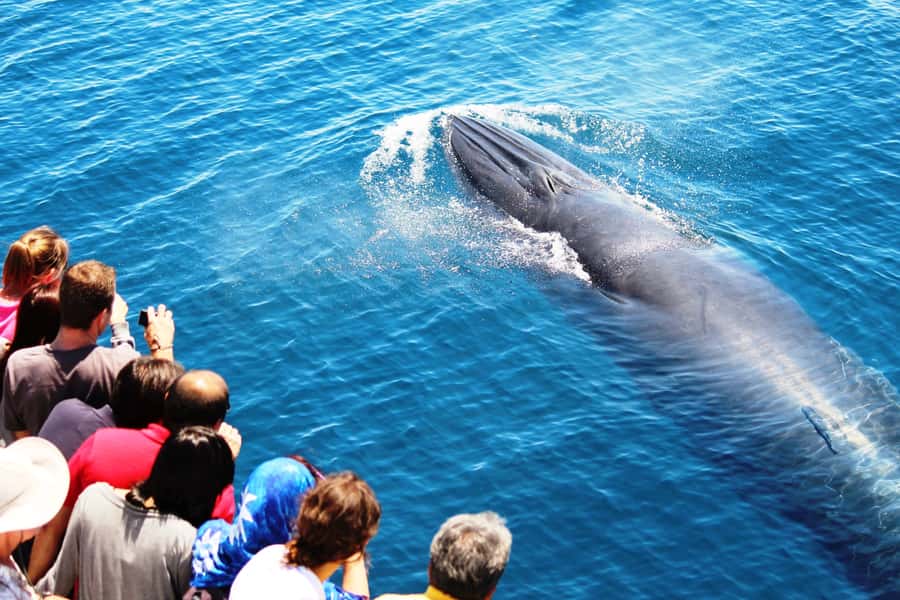
Whales are less predictable. On strong days, the boat has found multiple Bryde’s whales, including trips with three whales or six seen in the distance. On other outings, no whale appears, even when dolphins and birds are plentiful. That is not a weakness unique to this cruise. It is the basic tradeoff of looking for wild animals instead of visiting an aquarium.
The crew tries to keep its distance and avoid disturbing the animals. That is important for the quality of the experience. You want a close view, but you also want the animals to remain in control of the encounter. The guides explain behavior and sightings rather than treating the gulf like a performance stage.
If no marine mammals are seen, you can take the cruise again for free. The policy does not remove the disappointment of a quiet day, and you need enough time in Auckland to use it. Still, it is a meaningful safeguard, especially when your main reason for booking is whales and dolphins.
A research trip as well as a sightseeing cruise
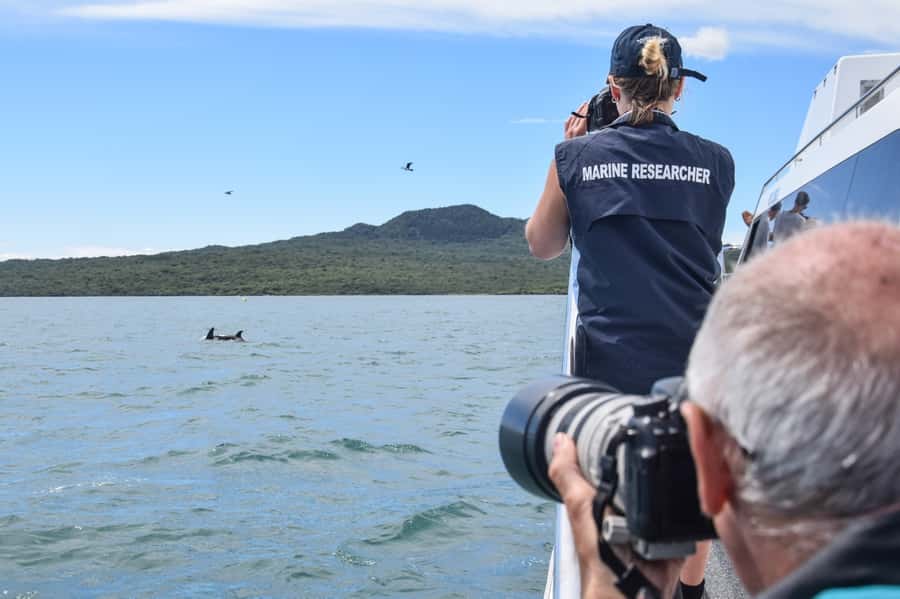
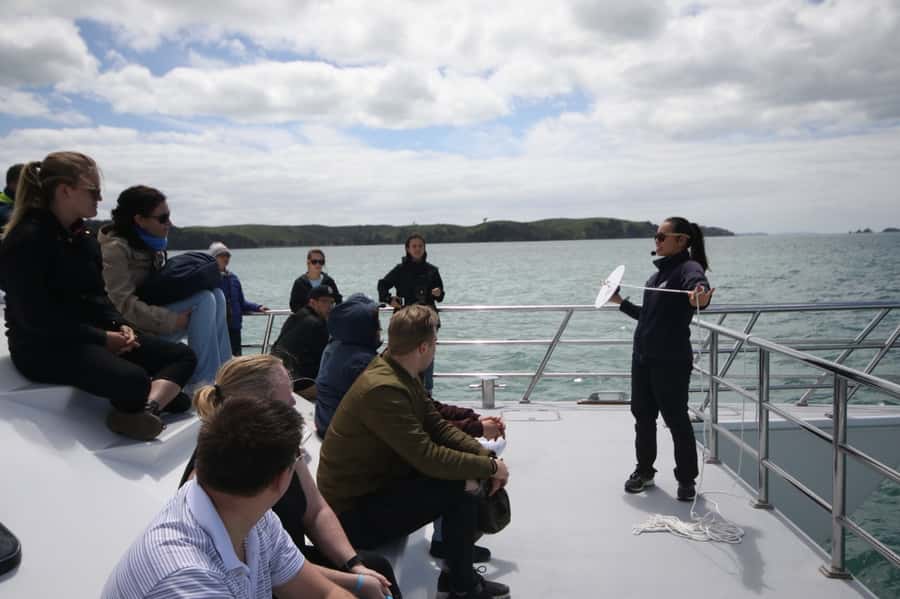
The science element gives this outing more substance than a simple harbor ride. Marine scientists and guides explain the animals, seabirds, plankton, geography, and the way the crew tracks marine mammals.
You might see the team stop to take a research sample. One particularly interesting part of the work involves plankton, the tiny organisms that help support the food chain. The crew also follows feeding activity, including workups, where seabirds gather around concentrated marine life. Swarms of gannets plunging into the water can help point the crew toward a productive area.
I like this approach because it helps you understand why the boat goes where it does. Instead of simply hearing that a whale is nearby, you learn how food, birds, and ocean conditions fit together. Even on a day without mammals, the explanations can give the trip a clear purpose.
The crew members named in feedback include Emily, Sanaa, John, Joseph, Toni, George, Jo, Brittany, and Jess. Staffing can change, but the repeated impression is of an enthusiastic team that enjoys explaining the work. John has been singled out for keeping the mood light while staying clear about sightings, and other crew members have been praised for making sure everyone gets a safe view.
You should ask questions. The guides are there to discuss animal behavior, local waters, seabirds, and the research being done on board. This is not a silent photo safari. The commentary is a major part of the value.
More Half-Day Whale Watching in New Zealand:
- Vancouver Half-Day Whale Watching Adventure with Free Photos
★ 5.0 · 5,000 reviews - Akureyri: 3-Hour Classic Whale Watching Tour by Ship
★ 4.6 · 3,000 reviews - Victoria Half-Day Whale Watching Adventure with Free Photos
★ 5.0 · 2,259 reviews - Tadoussac/Charlevoix: 3-Hour Whale Watching Boat Tour
★ 4.2 · 2,179 reviews
What you might see besides whales and dolphins
The birds deserve more attention than they often receive. Australasian gannets are especially dramatic, dropping from the air toward the water with remarkable speed. Shearwaters can skim the surface, and blue penguins have also been spotted during the cruise.
Birds can make a quiet mammal day worthwhile. They also help you read the water. A busy patch of gannets may signal feeding activity below, which gives the crew a clue about where to look next.
Sharks have appeared too, including a blue shark and a hammerhead shark. These sightings are not promised, but they show how varied the gulf can be. You might also see young dolphins within a pod, which can make the encounter feel more personal without the crew treating the animals as a show.
Bring binoculars if you have them. The boat may approach some wildlife closely, but whales can remain in the distance. Binoculars also improve birdwatching and help you follow a whale’s back or blow when the sea is choppy.
Comfort, weather, and seasickness
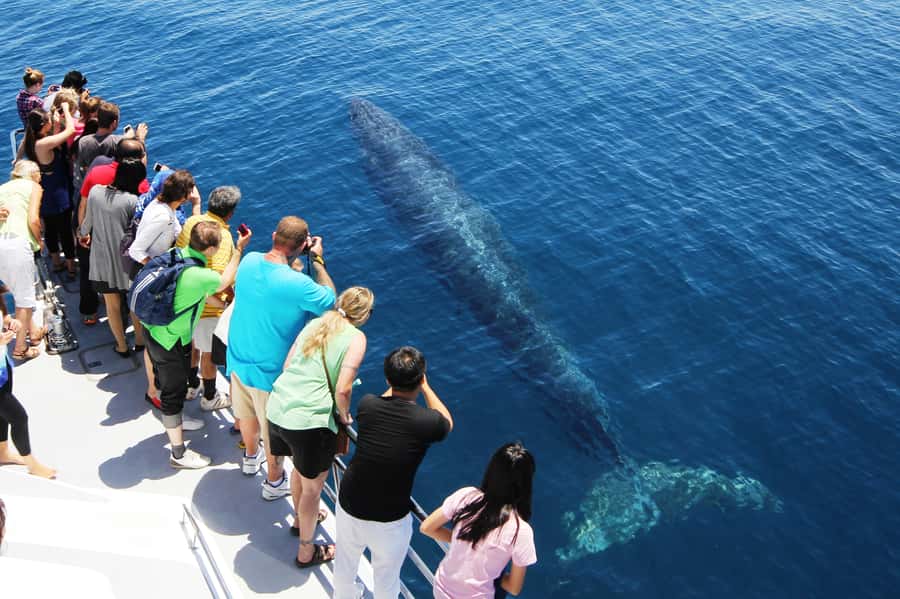
The catamaran has seating and enough viewing space for people to find a place along the edge. Still, conditions can change quickly. A calm sea can make animal spotting much easier, while wind and swell can make the ride tiring and reduce visibility.
Wear warm clothes and pack a showerproof jacket. Add a sun hat and sunscreen, since you can need both warmth and sun protection on the same trip. If you are prone to seasickness, take your medication before departure rather than waiting until you feel ill.
The crew may cancel a sailing because of wind, weather, or sea conditions. That is the right call for a wildlife boat operating outside the harbor. In at least one case, poor weather led to a choice between a refund and rebooking, with the change handled without difficulty.
This activity is not suitable for heavily pregnant women. Children under five may join only when closely supervised by a parent or guardian, and unaccompanied minors are not allowed. The vessel is not wheelchair accessible because of stairs and narrow doorways.
Food is not included. You can buy a small selection of snacks, hot food, and drinks on board, including beer and wine. I would not plan on a full meal at sea, so eat beforehand if you know you get hungry or unsettled on boats.
Is $130 per person good value?
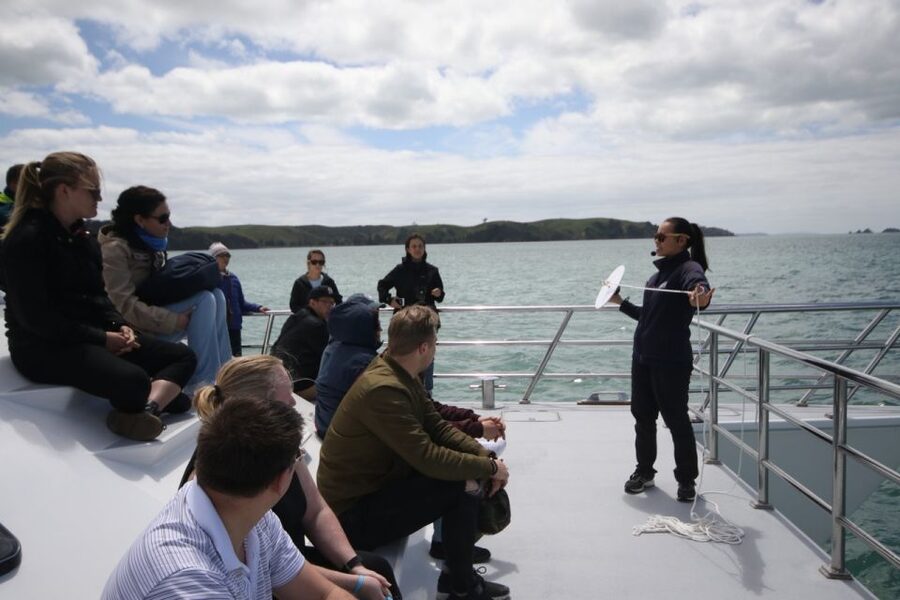
At $130 per person, this is not a cheap way to fill a few hours. The value depends on what you want from the outing.
If you only want a guaranteed whale photograph, the price may feel high, since nature can produce a bird-heavy or mammal-free trip. You are paying for time on the water, fuel, crew, research work, commentary, the catamaran, and access to a large marine park, not a guaranteed animal count.
The value improves if you care about the full experience. You receive a 4.5-hour cruise, city and island views, a comfortable vessel, live guidance in English, and a chance to see dolphins, whales, seabirds, penguins, or sharks. The free second cruise also gives the purchase more protection when luck runs out.
The conservation contribution adds another worthwhile detail. One dollar from each ticket goes to the Hauraki Gulf Guardians fund, which supports efforts to regenerate and protect the marine park. The boat also carries out research, so your outing supports more than sightseeing.
I would compare this with other Auckland activities by asking how much time you have. If you have only one free morning and cannot return for a second sailing, the no-sighting policy is less useful. If you can keep a spare half-day open, it becomes a stronger deal.
Who will enjoy this Auckland cruise?
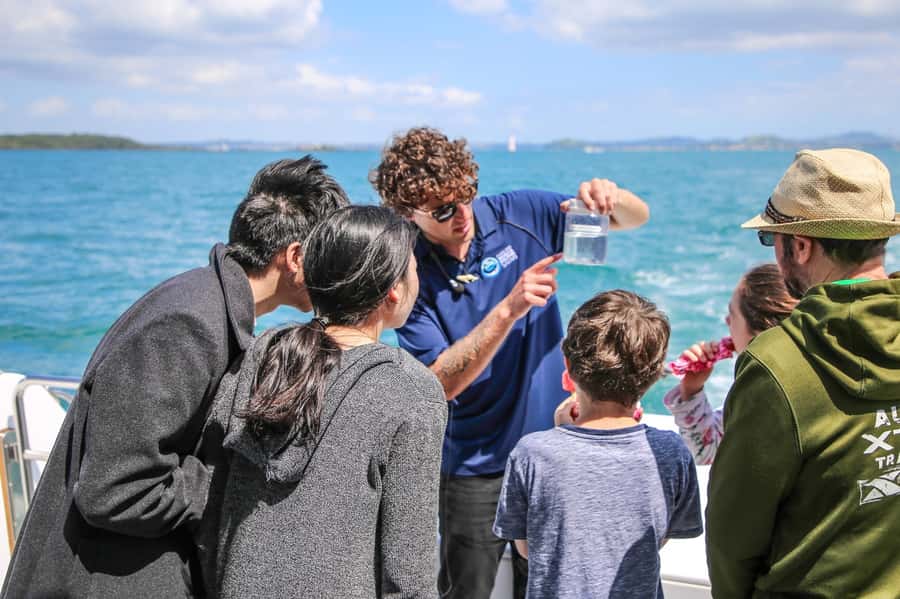
I would recommend it most to people who enjoy natural history, photography, seabirds, and open water. It suits couples, families with supervised young children, solo visitors, and anyone who wants a major Auckland activity without leaving from a distant town.
It is also a good fit if you care about responsible wildlife watching. The crew works to keep a respectful distance, explains its research, and supports conservation. You get more context than you would on a boat ride that simply circles until something appears.
You should think twice if you need guaranteed sightings, dislike wind and motion, or have a tightly packed schedule with no room for weather changes. The boat is not wheelchair accessible, and the sea can be uncomfortable even when the harbor looks calm.
For families, explain the rules before boarding. Children under five are permitted only with close supervision, and the boat’s narrow doorways and stairs may be difficult for some passengers.
Booking details that matter
You can cancel up to 24 hours before departure for a full refund, and you can reserve now and pay later. Check the available departure time when booking, since the trip lasts 270 minutes and the sailing schedule can vary.
Arrive at Berth 9 30 minutes before departure. Do not cut it close, since check-in closes 15 minutes before the trip begins. The crew waits at the top of the boarding ramp.
The cruise is conducted in English. Bring your camera, binoculars, personal medication, and seasickness medication if needed. Keep your jacket handy rather than buried in a bag, since the temperature can shift once the boat leaves the sheltered harbor.
Should you book the Dolphin Explorer?
Book this cruise if you want a serious wildlife search with a strong science and conservation element. The best days can bring close dolphin encounters, several Bryde’s whales, gannets, penguins, and sharks, while the crew keeps the mood friendly and the explanations useful.
Skip it if your schedule cannot handle weather changes or if a quiet wildlife day would ruin your Auckland plans. For everyone else, the combination of easy city access, a 4.5-hour journey, research work, and a free second cruise if no marine mammals appear makes the $130 fare reasonable.
Go with modest expectations and warm layers. If the gulf cooperates, you may spend the ride home watching dolphins under the hull or trying to count whales on the horizon. If it does not, you will still have seen Auckland from the water and learned what keeps this marine park alive.
FAQ
Where does the Auckland whale and dolphin cruise depart from?
The boat leaves from Berth 9 at Eastern Viaduct Marina, at the end of Quay Street heading west. The berth is opposite the Maritime Museum.
How early should I arrive?
You should check in 30 minutes before departure. Check-in closes 15 minutes before the scheduled trip time.
How long does the cruise last?
The eco-cruise lasts 270 minutes, or 4.5 hours.
What animals might I see?
Possible sightings include orcas, bottlenose dolphins, common dolphins, Bryde’s whales, blue sharks, hammerhead sharks, blue penguins, Australasian gannets, shearwaters, and other seabirds.
What happens if I see no marine mammals?
You can take the cruise again for free if no marine mammals are seen.
Is food available on board?
Food and drinks are not included, but a small range of snacks, hot food, and drinks can be purchased. Beer and wine are also available.
What should I bring?
Bring warm clothing, a showerproof jacket, a sun hat, sunscreen, a camera, binoculars, personal medication if needed, and seasickness medication taken before the trip.
Is the boat wheelchair accessible?
No. The vessel has stairs and narrow doorways, so it is not wheelchair accessible.
More Half-Day in New Zealand
- Seattle: Half-Day Wildlife and Whale Watching Cruise
★ 4.3 · 378 reviews - Small-Group Half-Day Whale-Watching Tour in Puerto Vallarta
★ 5.0 · 334 reviews - Vancouver Island Half-Day Whale Watching Tour – Telegraph Cove
★ 5.0 · 333 reviews - Hervey Bay: Half-Day Whale-Watching Cruise
★ 4.8 · 277 reviews
Just added around New Zealand
- Whakaari – White Island Cultural and Flight Experience★ 5.0 · 138 reviews
- Whale Watching in Kaikoura – Ultimate Experience★ 4.5 · 199 reviews
- Kaikoura Whale Watching – 45 Minute Ocean Safari★ 5.0 · 39 reviews
- Kaikōura Whale Watching – 1hr 20min Ultimate Adventure★ 5.0 · 8 reviews
- Kaikōura Whale Watching and Scenic Landing – 1hr Premier Tour★ 5.0 · 24 reviews
- Kaikoura Helicopters Extended Whale Watch★ 4.5 · 15 reviews
- Kaikoura Helicopters Top n Tail Whale Watch flight★ 5.0 · 7 reviews
- Kaikoura Whale Watch Day Tour from Christchurch★ 4.5 · 170 reviews
New Zealand Whale Watching Tours, compared.
Auckland Dolphin and Whale Watching Eco-Safari Cruise
Read our review →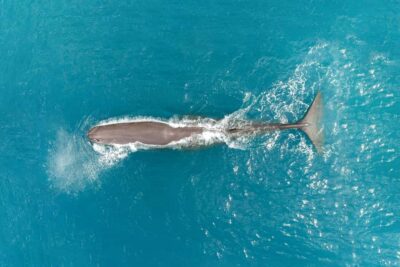
Kaikoura: Whale Watching Flight with Commentary
Read our review →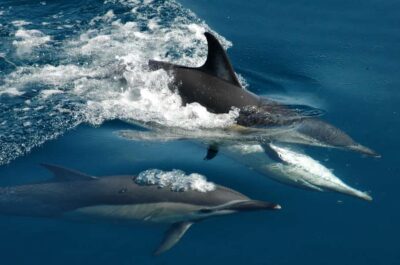
Auckland: Tikapa Moana Whales, Dolphins and Islands Cruise
Read our review →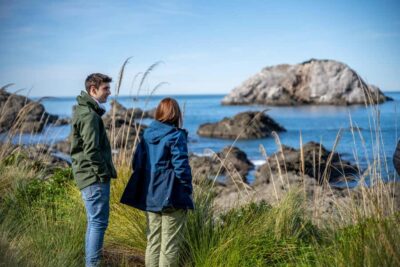
Christchurch: Kaikōura Day Tour with Whale Watching
Read our review →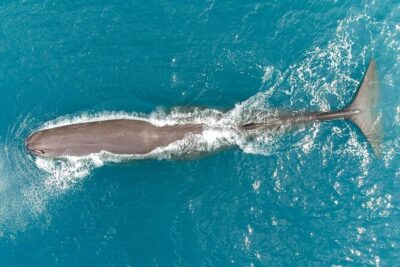
Kaikōura Whale Watching Scenic Flight (40 Minutes)
Read our review →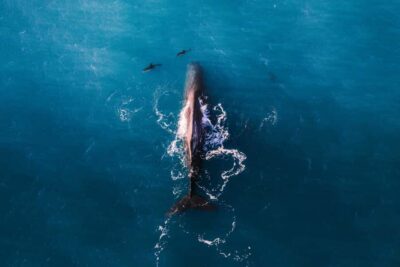
Kaikoura: Whale Watching Flight with Guided Commentary
Read our review →Browse the lists this tour appears in