
Review · KAIKOURA
Kaikoura: Whale Watching Cruise
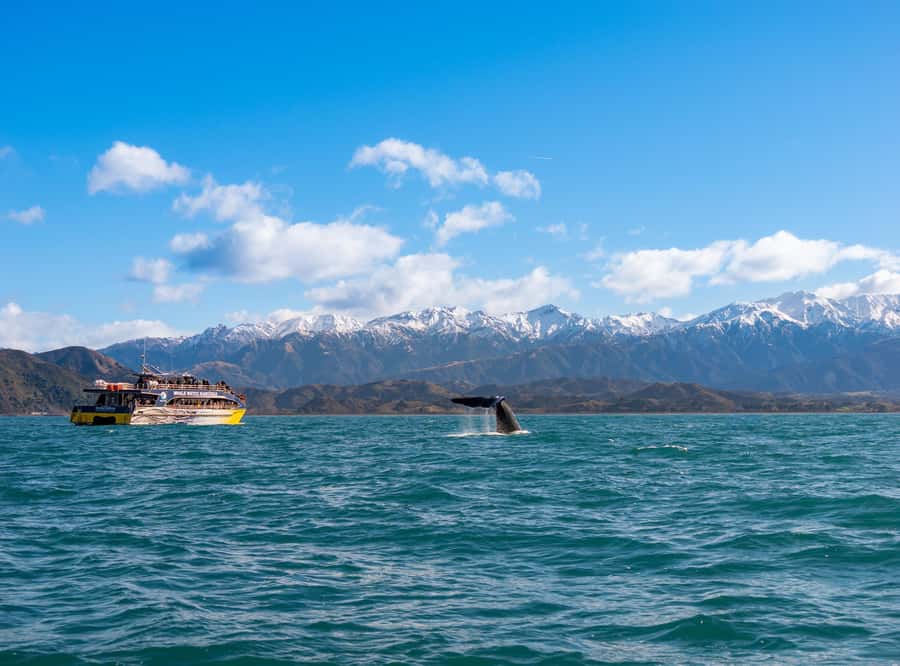
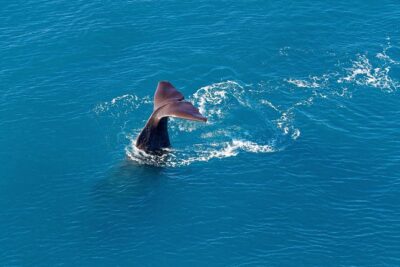
Kaikoura’s star attraction is not a museum or a scenic lookout. It is a giant sperm whale surfacing offshore, breathing for several minutes before showing its tail and heading down into the blue. This cruise gives you a strong chance to see that drama, along with dolphins, fur seals, albatross, and the steep mountains behind the coast.
I like two things in particular: the careful whale tracking and the way the crew explains both marine science and Māori connections to the sea. The spacious catamaran also helps, with outdoor decks for photos and an air-conditioned cabin when the wind picks up. The catch is the open ocean. Choppy conditions can make some passengers very seasick, so take that seriously.
I also like the thoughtful operation. Passenger numbers stay below the boat’s full capacity, the engines are designed to reduce underwater noise, and the vessel uses nonpolluting toilets. Sightings are never guaranteed, and some whales may remain farther away than you hope, but the crew works hard to find wildlife without treating the ocean like a stage show.
Key points to know before you book
- Sperm whales are the main event: Kaikoura’s offshore waters offer a good setting for seeing these huge toothed whales in the wild.
- Wildlife can change by the hour: You might also see dusky dolphins, pilot whales, orcas, fur seals, wandering albatross, blue penguins, sharks, and other seabirds.
- Allow 3 hours and 15 minutes: The cruise itself lasts just over two hours, with check-in, safety instructions, and a short bus transfer included in the total time.
- The ride can be rough: Motion sickness tablets are sold at the office, but it is wiser to prepare before you arrive.
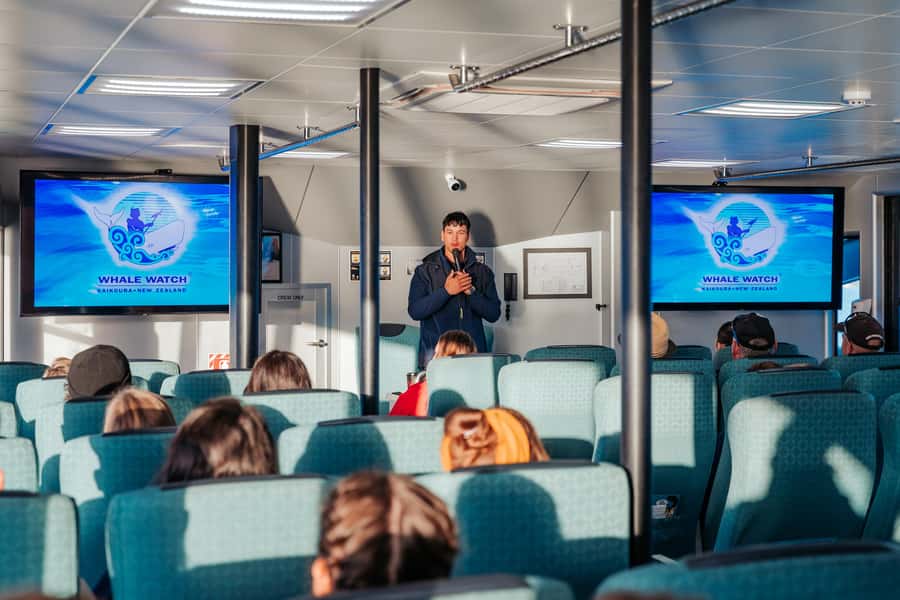
- The boat is built for viewing: You get outdoor decks, comfortable indoor seats, air conditioning, and screens with marine-life animation.
- The price is $104 per person: That is fair for a professionally run wildlife cruise of this length, especially if you value the interpretation and vessel quality.
Why Kaikoura is such a good place for whale watching
Kaikoura is one of those rare places where the wildlife is not merely passing through. The water close to shore drops into deep offshore channels, creating feeding grounds for sperm whales and a wide range of other sea life. That is why the cruise can focus on whales instead of spending the whole morning searching a huge area of empty ocean.
The setting adds plenty to the trip. As the boat leaves the harbour area, you get views back toward the rugged South Island coast, with mountains rising behind the town. On a clear day, the combination of dark water, pale mountains, and a whale’s back breaking the surface is the picture you came for.
Still, this is nature, not a scheduled performance. A sperm whale may surface near the boat, or it may be seen at a distance. You could get several sightings, as some departures have done, or spend more time searching before finding one. Keep that uncertainty in mind when deciding how much of your New Zealand itinerary should depend on this outing.
More Whale Watching Cruises in Kaikoura:
- Boston: City Cruises Whale Watching Cruise
★ 4.5 · 4,710 reviews - Los Gigantes: Dolphin & Whale Watching Cruise with Swim Stop
★ 4.7 · 4,539 reviews - Morro Jable: Dolphin & Whale Watching Cruise, Drinks & Swim
★ 4.1 · 4,158 reviews
From check-in to the short bus transfer
You begin at the Whale Watch Kaikōura office, the local partner’s meeting point. Allow enough time for check-in and the safety briefing rather than arriving at the last minute. The total experience lasts 210 minutes, but only a little over two hours is spent on the water.
A short bus transfer takes you from the office to the boat. This is a useful detail if you are planning around a meal, a train, or a longer drive through the South Island. The operation is designed to move a large group through check-in, transport, and boarding in an orderly way.
Your exact departure time may change. Weather and seat availability can affect the final schedule, and the operator confirms the time by email after booking. I would avoid putting a tight, nonrefundable plan immediately after the cruise, since wind can cause delays or a rescheduled departure.
The minimum age is three, though the final decision can depend on sea and weather conditions at check-in. Children under three cannot take part. The boat is wheelchair accessible, which makes this a practical choice for many people who need step-free access, though you should still confirm your personal requirements when booking.
A modern catamaran with room to spread out
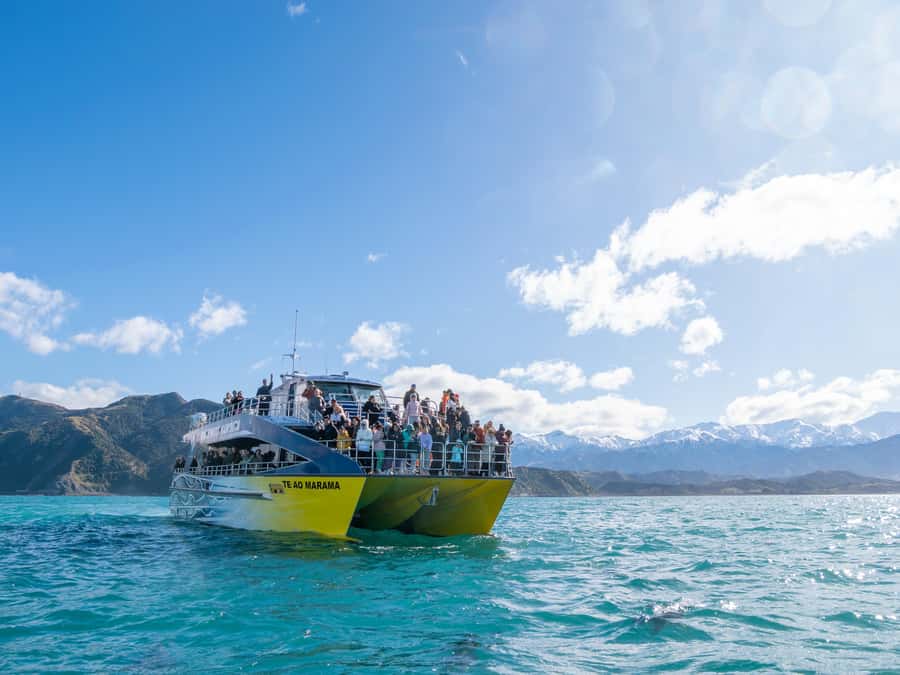
The boat is one of the strongest parts of the experience. It has large outdoor viewing areas, so you are not forced to watch through a small window. You can move around when a whale surfaces, find a less crowded angle, and try for a photo without blocking everyone behind you.
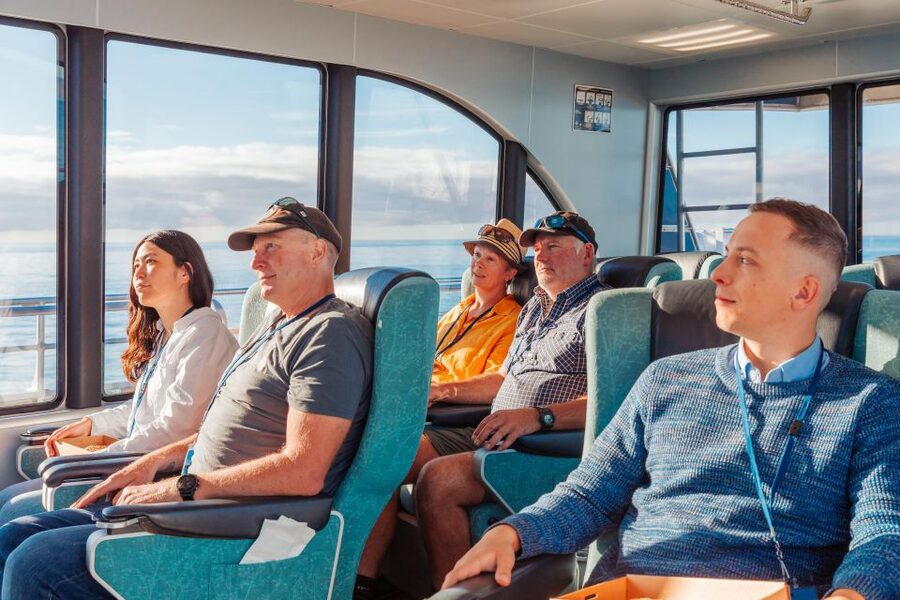
The indoor cabin gives you a useful retreat. It has comfortable seating, air conditioning, and plasma screens showing marine-life animation. That matters on a long ride, especially if the day is cold, windy, or wet. You can warm up, listen to the commentary, and watch the screens while the crew searches for the next sighting.
Passenger numbers are kept below the vessel’s full capacity. That does not mean you will have a private boat, and busy departures can still feel busy, but the arrangement gives you more breathing room than a tightly packed sightseeing vessel. Several recent departures have been praised for having enough space at the rail and in the cabin.
The boat is also fitted with engines intended to limit underwater noise. That is a meaningful detail on a wildlife trip. The point is not only your comfort. Quieter operation can help reduce disturbance to the animals you have come to see. Nonpolluting toilets are another small but welcome sign that the operator has considered its effect on the marine environment.
Finding the sperm whales offshore
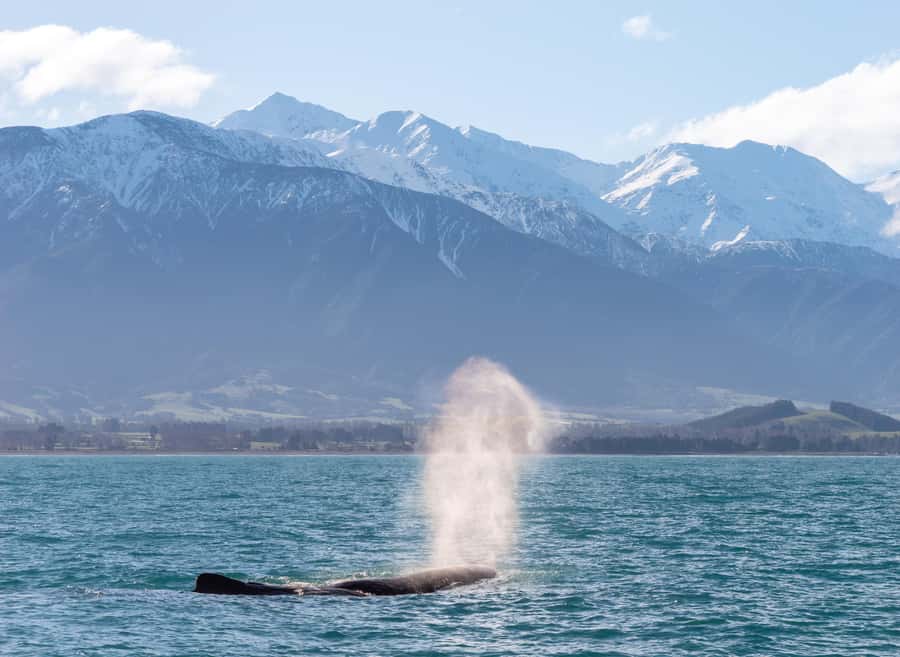
Once you reach the whale-watching area, the crew uses their experience, reports, and onboard equipment to locate the animals. The commentary helps you understand what is happening instead of leaving you to stare at a blank patch of sea.
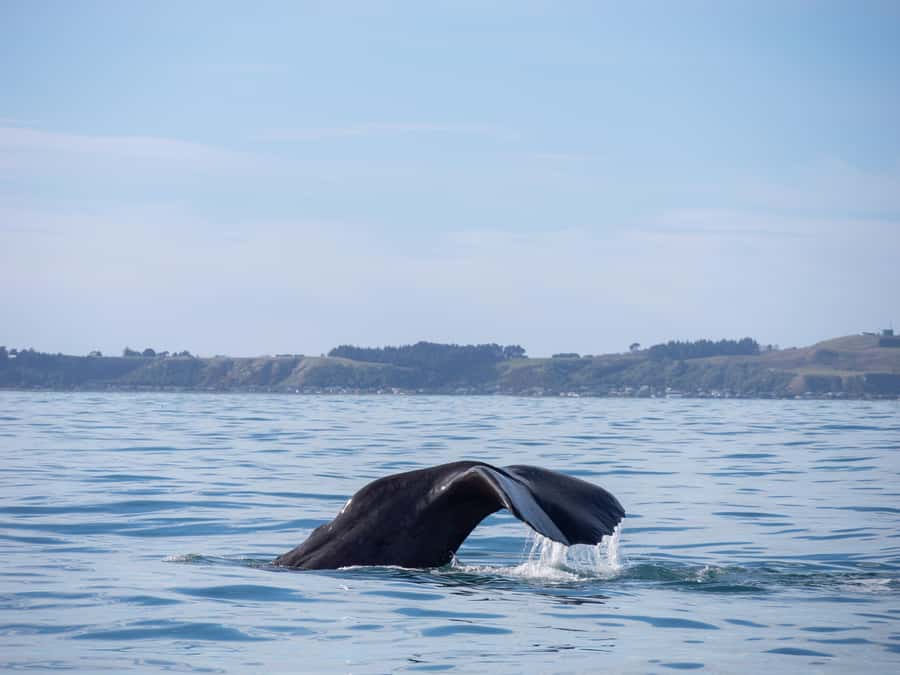
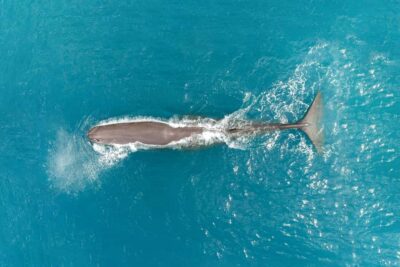
A sperm whale may remain at the surface for around ten minutes, breathing before it makes a long descent. The best moment often comes at the end, when the whale lifts its tail above the water. Crew members warn you when this is likely, giving you time to stop fiddling with your camera and look up.
That warning is useful because whale photography is harder than it appears. A large animal can still look small against a wide ocean, and the tail may appear for only a few seconds. I suggest taking a few pictures, then putting the phone away. The strongest memory may be the sound of the whale breathing and the sudden curve of its tail, not a distant, shaky image.
Some departures report two or three sperm whales, and one outing recorded five whale sightings. Other trips have found only distant whales, and an unlucky departure may not locate one at all. You should book this for the chance to see a wild whale, not for a guaranteed close-up encounter.
The crew’s tracking work is part of the value. This is not a boat that simply sails offshore and hopes for the best. Guides and the captain follow signs of animal activity and adjust the route as conditions change. The onboard commentary may include information from scientific research, as well as Māori knowledge and the connection between Ngāi Tahu and the sea.
A few more whale trips around Kaikoura worth a look
- Whale Watching in Kaikoura by Boat
★ 4.5 · 2,906 reviews - Kaikoura: Whale Watching Flight with Commentary
★ 4.6 · 823 reviews - Kaikōura Whale Watching Scenic Flight (40 Minutes)
★ 5.0 · 221 reviews - Kaikoura: Whale Watching Flight with Guided Commentary
★ 4.5 · 216 reviews
Dolphins, seals, birds, and occasional surprises
The sperm whale is the headline, but the extra wildlife can make the trip. Dusky dolphins are often a major highlight. Pods can number in the hundreds, with animals swimming beside the boat, leaping, and turning through the water.
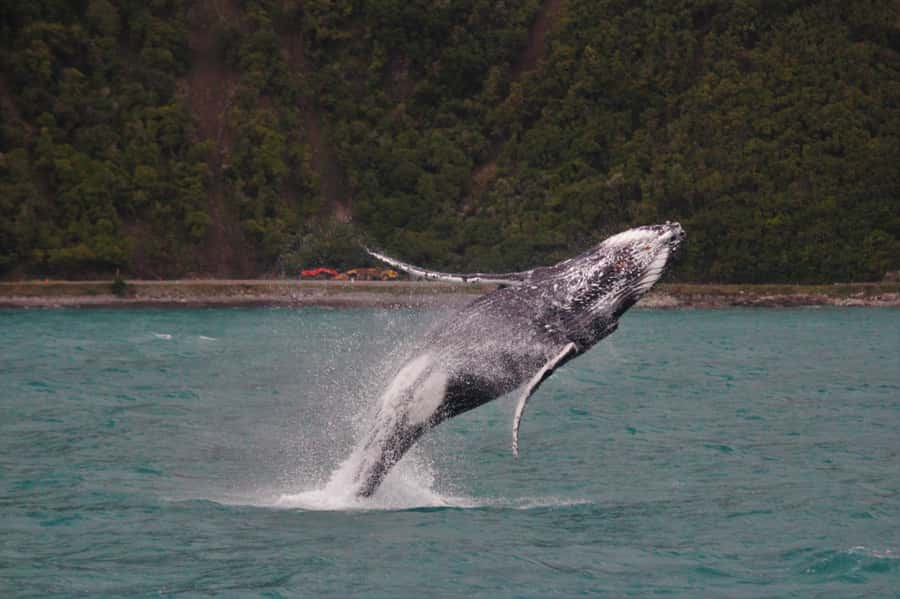
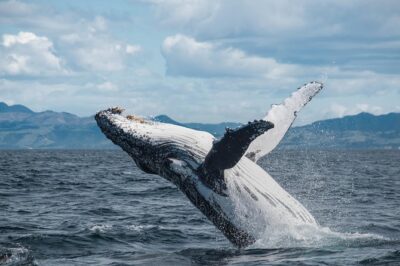
You might also see fur seals close to the surface. They are less dramatic than a whale, but their presence gives you a better sense of the busy food chain around Kaikoura. Some outings have included pilot whales, orcas, humpback whales, blue whales, and sharks. These sightings are bonuses, not part of a promise.
Birdwatching is another reason to keep your eyes moving. The wandering albatross is the prize, with its long wings and graceful flight over the water. You might also spot other albatross species, Cape petrels, and additional seabirds. Blue penguins have been seen on some trips as well.
The variety helps on a day when whales are shy. You may spend several minutes waiting for a whale to surface, then find a pod of dolphins suddenly racing across the bow. The trip becomes less about ticking off one species and more about reading the whole marine environment.
The commentary adds real value
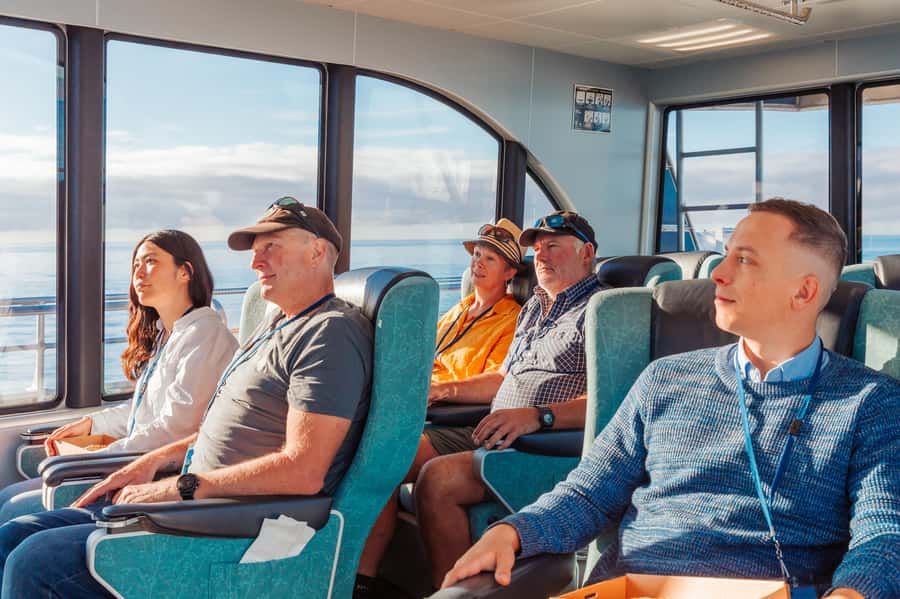
The guide is not just there to point and shout whale. The best part of the narration is the explanation of behavior: why the animal surfaces, what the tail movement means, how the crew tracks it, and which birds are flying nearby.
Guides such as Caolan and Mikayla have received particular praise for clear, friendly presentations, while Captain Jack has been noted for placing the boat well for sightings. Staff names can change by departure, but the pattern is consistent: the crew is expected to combine safety information, science, and a little humor.
You may also hear whale sounds through a hydrophone. That gives the experience another layer, since you are not relying only on sight. The sound of clicks beneath the boat makes the animal feel present even when it is below the surface.
One small criticism is that commentary can become repetitive on the return ride. That is understandable after a long morning at sea, but if you have already heard the main facts, you may prefer to sit outside and watch the coast. The screens and animation help fill quieter stretches, particularly for children.
Motion sickness is the main concern
I would not treat the sea conditions as a minor footnote. Several departures have been described as choppy, and some passengers spend much of the trip feeling ill. A modern catamaran handles wind and waves well, but no boat can make open-ocean movement disappear.
If you are prone to seasickness, take precautions before arriving at the office. Motion sickness tablets are available there, but it is better not to wait until you already feel unwell. Sit where you are most comfortable, use the outdoor horizon if that helps, and avoid assuming that a calm harbour means calm water offshore.
The crew is prepared to help passengers who become sick, and the boat has indoor seating and toilets. Even so, sickness can prevent you from enjoying the animals you came to see. If this is a serious concern, ask yourself if a three-hour ocean outing fits your comfort level.
Weather can also change the plan. The cruise operates only in suitable conditions, and the local partner may reschedule a departure. The cancellation policy allows a full refund when you cancel at least 24 hours ahead, and you can reserve now and pay later. That flexibility is useful when your South Island route is still changing.
Is $104 a fair price?
At $104 per person, this is not a cheap add-on, but it is a reasonable price for a 210-minute wildlife experience with more than two hours at sea. You are paying for the boat, crew, transport from the office, marine interpretation, safety systems, and the time spent locating animals in their natural setting.
The value is strongest if you see a sperm whale and have time with dolphins or seabirds as well. Multiple whale sightings can make the outing feel like one of the major events of a New Zealand visit. If the whale stays far away, the price may feel steep, although the boat, scenery, and other wildlife still give the trip substance.
I would compare this cost with the importance of the experience to you. If seeing a whale in the wild is high on your list, $104 is a sensible use of your budget. If you are mainly looking for a general boat ride, Kaikoura offers dramatic coastal views, but you may find the ocean conditions and uncertain sightings harder to justify.
Who will enjoy this cruise most?
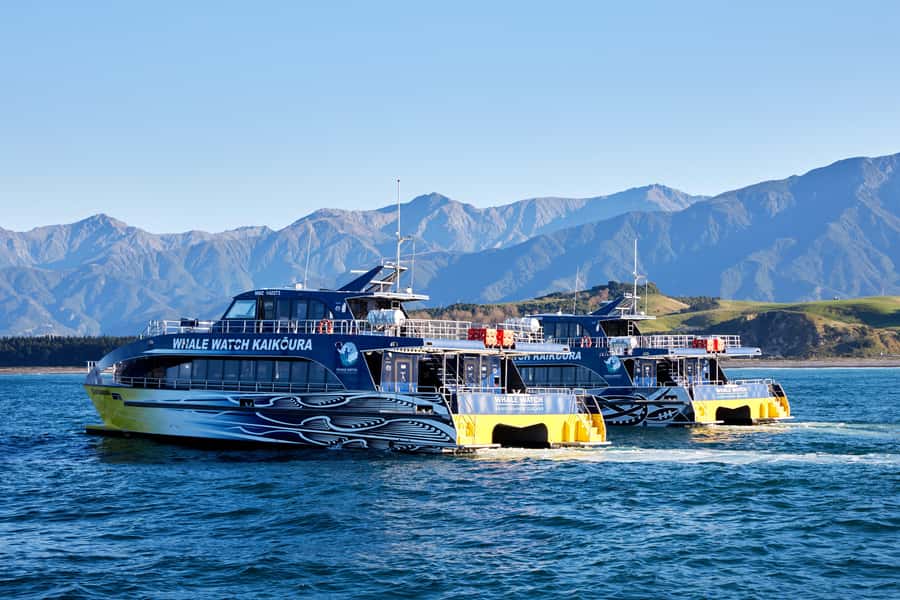
This trip suits adults, older children, wildlife fans, photographers, birdwatchers, and anyone who wants a closer look at New Zealand’s marine life. It also works well for people who value interpretation rather than simply taking a boat out for a view.
Families should consider the minimum age of three and the possibility of rough water. A child who enjoys animals may love the dolphins and screens, while a child who dislikes movement may have a difficult three hours.
I would also recommend it to visitors interested in responsible wildlife tourism. The reduced-noise engines, nonpolluting toilets, limited passenger numbers, and emphasis on Māori knowledge show an effort to treat the sea as more than a backdrop. You are still entering a wild animal’s habitat, so patience and realistic expectations matter.
Should you book Whale Watch Kaikoura?
Yes, if you can handle open water and want a well-organized chance to see sperm whales in a remarkable coastal setting. The boat is comfortable, the crew puts real effort into locating animals, and the commentary gives the outing more meaning than a simple sightseeing ride.
Book it with flexible plans, prepare for seasickness, and leave room in your schedule in case weather changes the departure. Do not promise yourself a perfect close-up photograph or a certain list of species. If you can accept the uncertainty, the combination of sperm whales, dolphins, seals, albatross, and mountain views makes this one of Kaikoura’s strongest experiences.
FAQ
How long does the Kaikoura whale-watching experience last?
The full experience takes 210 minutes, or about 3 hours and 15 minutes. This includes check-in, the safety briefing, bus transfers, and just over two hours on the water.
What animals might I see?
The main animal is the giant sperm whale. You might also see fur seals, dusky dolphins, pilot whales, orcas, humpback whales, blue whales, wandering albatross, other seabirds, blue penguins, and sharks.
Is the cruise suitable for young children?
The minimum age is three years old. The final age decision can depend on sea and weather conditions at check-in, and children under three are not suitable for the cruise.
What happens if the weather is poor?
The cruise depends on favorable weather conditions. The local partner may change your departure time or reschedule the outing, and the exact time is confirmed by email after booking.
What should I do if I get seasick?
Take precautions before arriving. Motion sickness tablets are available for purchase at the office, but the open water can be choppy, so prepare before boarding rather than waiting until symptoms begin.
Is the boat wheelchair accessible?
Yes, the experience is listed as wheelchair accessible. Smoking is not allowed onboard, and food and drinks are not included.
Just added around Kaikoura
- Whale Watching in Kaikoura – Ultimate Experience★ 4.5 · 199 reviews
- Kaikoura Whale Watching – 45 Minute Ocean Safari★ 5.0 · 39 reviews
- Kaikōura Whale Watching – 1hr 20min Ultimate Adventure★ 5.0 · 8 reviews
- Kaikōura Whale Watching and Scenic Landing – 1hr Premier Tour★ 5.0 · 24 reviews
- Kaikoura Whale Watch Day Tour from Christchurch★ 4.5 · 170 reviews
- Kaikoura Helicopters Extended Whale Watch★ 4.5 · 15 reviews
- Kaikoura Helicopters Top n Tail Whale Watch flight★ 5.0 · 7 reviews
- Kaikoura Helicopters Classic Whale Watch★ 5.0 · 40 reviews
Kaikoura Whale Watching Tours, compared.
Kaikoura: Whale Watching Flight with Commentary
Read our review →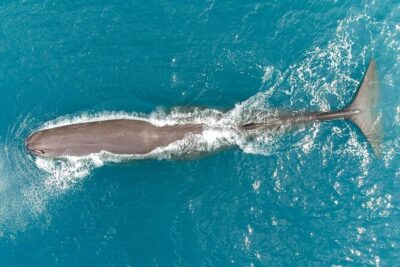
Kaikōura Whale Watching Scenic Flight (40 Minutes)
Read our review →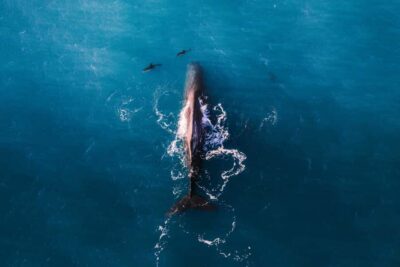
Kaikoura: Whale Watching Flight with Guided Commentary
Read our review →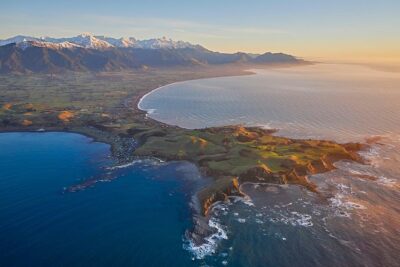
Whale Watching in Kaikoura – Ultimate Experience
Read our review →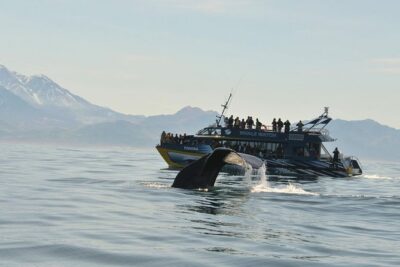
Kaikoura Whale Watch Day Tour from Christchurch
Read our review →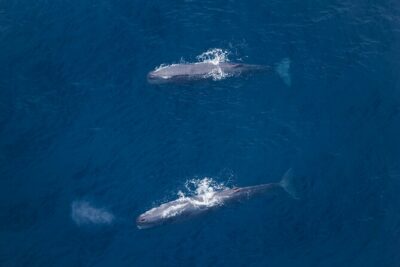
Browse the lists this tour appears in