
Review · KAIKOURA
Whale Watching in Kaikoura by Boat
Kaikoura’s sperm whales live close to a dramatic underwater canyon, where warm and cold currents bring food within reach. That gives you a strong chance of seeing a whale in the wild, not in a show pool. The boat heads offshore by speedy catamaran, and the crew tracks wildlife while explaining what you are seeing.
I like the 80% refund promise if no whale appears, which takes some of the gamble out of booking a wildlife trip. I also like the thoughtful running commentary, which adds meaning to a brief spout, a rolling back, or the slow lift of a whale’s tail.
The main caution is the sea. Even on a day described as moderate, the ride can be rough enough to make people ill. Take motion-sickness medicine before boarding, wear warm layers, and expect the boat to feel busy when everyone gathers on one side for a sighting.
Key points to know before you go
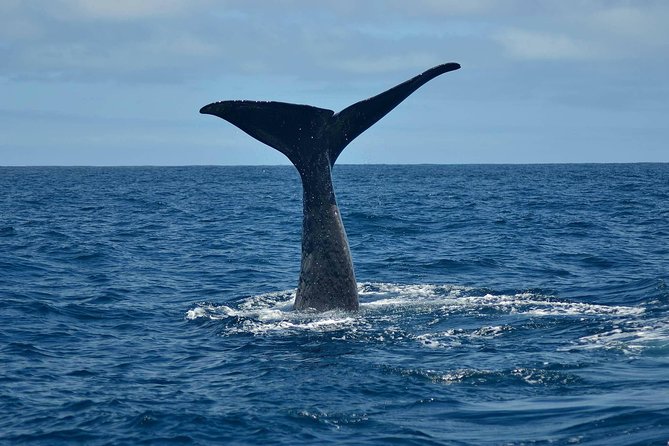
- Sperm whales are the main target: They live off Kaikoura year-round, and the crew has an advertised 95% overall whale-sighting success rate.
- The boat ride lasts up to 2.5 hours: Allow about 3.5 hours in all for check-in, safety instructions, transport, and time at sea.
- The wildlife list can grow quickly: Dolphins, fur seals, albatross, petrels, orcas, humpback whales, and pilot whales have all been seen on individual trips.
- Seasickness is the biggest practical issue: The catamarans are modern, but Kaikoura’s offshore water can still be choppy.
- The tour runs year-round: Check-in times include 7:15 a.m., 10 a.m., 12:45 p.m., and 3:30 p.m. from November through March.
- You return to the same place: The tour starts and ends at Whaleway Station Road, with a bus ride between the station and marina.
Why Kaikoura is such a good whale-watching base
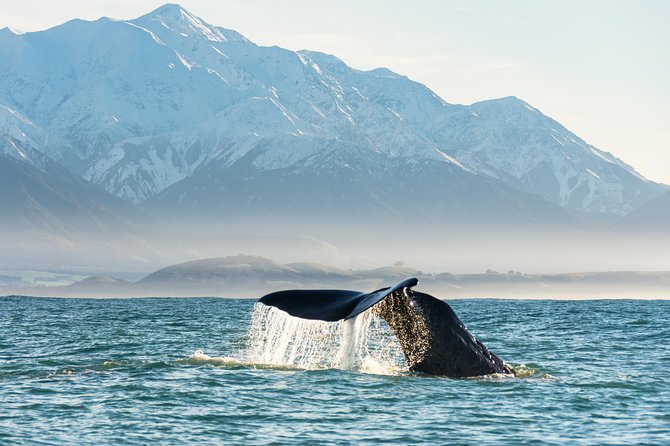
Kaikoura is not simply a seaside town with a whale trip attached. Its unusual setting makes the wildlife possible. The mountains come close to the coast, and the seabed drops sharply into offshore canyons. Currents carry food into these waters, drawing large marine animals near the shore.
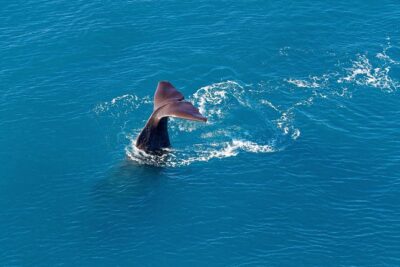
That is why sperm whales can be found here throughout the year. These are huge animals, but you should set your expectations properly. A typical sighting may give you a blow, part of the back, a head at the surface, or a tail lifted before the whale disappears below the water.
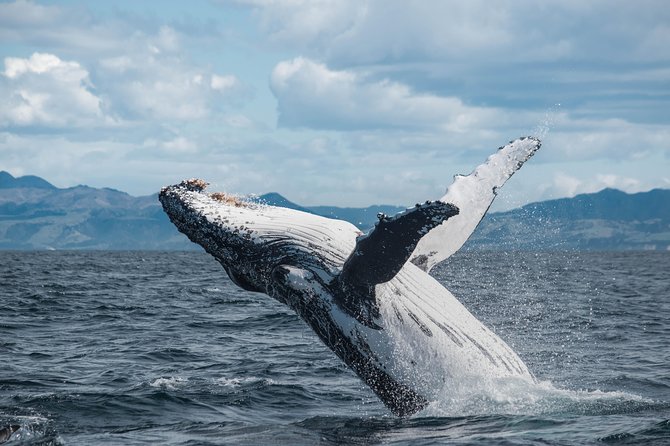
You may not get the television version of whale watching, with a whale leaping clear of the sea beside the boat. The reward is quieter and more natural: waiting as a whale rests at the surface, watching its breathing pattern, then seeing the tail rise as it heads down to feed.
The setting adds plenty even when whales are scarce. Kaikoura’s mountains frame the coast, while seabirds work the air above the water. Albatross, petrels, and fur seals may appear between whale sightings, and large groups of dusky dolphins can turn the trip into a lively wildlife show of their own.
A few more whale trips around Kaikoura worth a look
- Kaikoura: Whale Watching Cruise
★ 4.6 · 3,089 reviews - Kaikoura: Whale Watching Flight with Commentary
★ 4.6 · 823 reviews - Kaikōura Whale Watching Scenic Flight (40 Minutes)
★ 5.0 · 221 reviews
From Whaleway Station to the catamaran
You begin at Whaleway Station on Station Road in Kaikoura. The listed time is a check-in time, not a suggestion to arrive hours early, so plan around the stated departure. A bus carries you from the station to the marina, and the same arrangement brings you back at the end.
This short transfer is useful because it keeps the meeting point simple. You do not need to find the marina or arrange separate transport to the boat. The entire outing takes about three and a half hours, although only up to two and a half hours are spent on the water.
Once aboard, you receive a safety briefing before the catamaran heads out. The fleet consists of purpose-built modern catamarans, with an enclosed interior and outside viewing areas. That indoor space matters on a cold or wet day, but you will want to step outside when wildlife appears.
Wear flat shoes. Dress warmly, and bring a light waterproof layer if you hope to spend time on deck. Kaikoura can feel calm at the station and much cooler offshore, particularly when the boat is moving quickly.
The run offshore and the first wildlife
The outward trip can take roughly 20 to 40 minutes before the boat reaches the main whale area, depending on conditions and where the animals are located. This is when the commentary becomes useful. You hear about Kaikoura’s bays and underwater canyons, the local sea life, and the habits and life cycle of sperm whales.
The onboard animations also help. A whale at a distance can be hard to interpret, especially for children or anyone new to marine wildlife. Diagrams and explanations give you a better sense of what the animal is doing instead of leaving you to guess from a small puff of air.
The crew keeps watch while the catamaran moves through the area. Individual trips have included pilot whales, dusky dolphins, fur seals, albatross, petrels, orcas, humpback whales, and even rare sightings of blue whales. None of these animals is guaranteed, so treat them as possible bonuses rather than promised stops.
The wildlife is not presented as a performance. The company says it does not use methods that interfere with the animals, and the boat waits for natural behavior. That means a whale may remain at the surface for several minutes, or it may appear briefly and leave before everyone gets a perfect photograph.
Meeting a sperm whale in open water
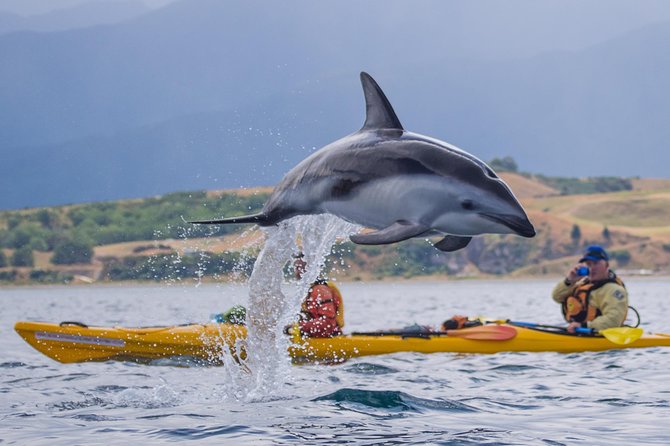
The central moment is usually the search for a sperm whale. The crew uses its experience and current sightings to position the boat near an animal, then waits rather than forcing the encounter.
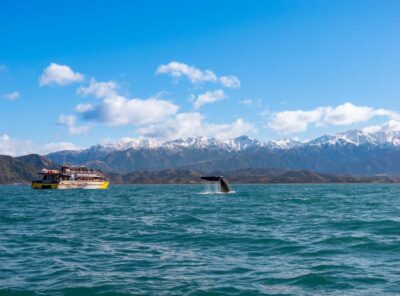
A sperm whale may rest at the surface for five or ten minutes. You may see the blow first, followed by a dark back and the large head. The best photographic moment often comes at the end, when the tail rises above the surface before the whale disappears to feed.
The boat can feel crowded at this point. A maximum of 116 people may be aboard, and when a whale appears, many will gather along the same side. If having lots of open viewing space is important to you, this is a genuine drawback. You can still see from the viewing areas, but the experience is not an intimate small-boat outing.
The crew’s handling makes a difference. Individual captains named in passenger comments include Malena and Fred, and the operation is supported by onboard staff who provide commentary and watch the sea conditions. The crew may stay with a whale long enough for everyone to understand its behavior, while still respecting the animal’s movements.
The advertised figure is a 95% success rate for whale sightings, backed by an 80% refund if your tour does not see a whale. Read that promise carefully: it applies to seeing a whale, not to seeing a particular species or getting a close tail shot. Wildlife remains unpredictable.
Same water, a different way to meet the whales:
- Kaikoura: Whale Watching Flight with Guided Commentary
★ 4.5 · 216 reviews - Whale Watching in Kaikoura – Ultimate Experience
★ 4.5 · 199 reviews - Kaikoura Whale Watch Day Tour from Christchurch
★ 4.5 · 170 reviews - Kaikoura: Whale Watching Flight
★ 5.0 · 100 reviews
Dolphins, seals, and seabirds on the way home
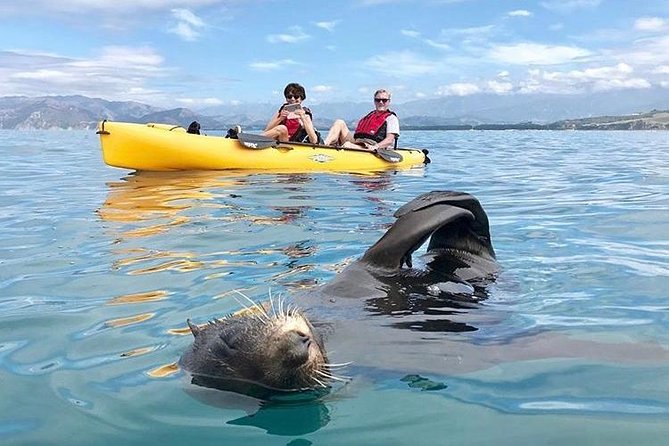
The return journey can be just as memorable as the whale search. Dusky dolphins are a regular possibility, and their behavior is very different from the slow, patient appearance of a sperm whale. They may race alongside the catamaran, leap, twist, and gather in large groups around the boat.
Some trips have encountered hundreds of dolphins. Others have seen a smaller pod, along with fur seals swimming near the boat. These encounters are often easier to watch than a whale because the animals move constantly and cover a wider area.
Keep looking upward, too. Albatross are especially rewarding, with long wings and graceful flight close to the water. Petrels and other seabirds add interest while the crew continues its explanation of the marine environment.
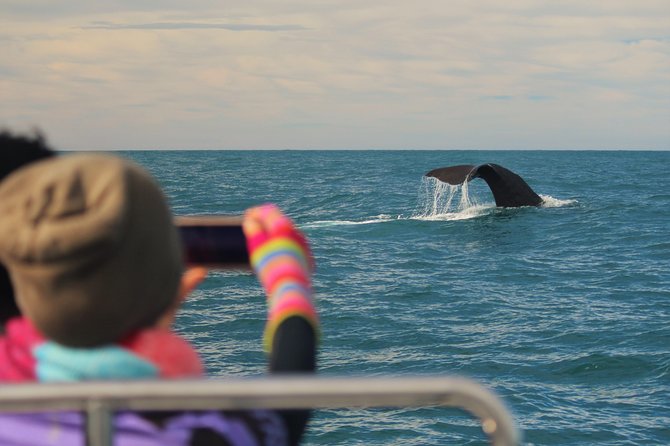
You should bring a camera, but do not let it run the trip. Wildlife sightings can last only seconds, and a phone held above your head can block someone else’s view. Watch first, take a few photographs, then return your attention to the water.
The commentary makes the waiting worthwhile
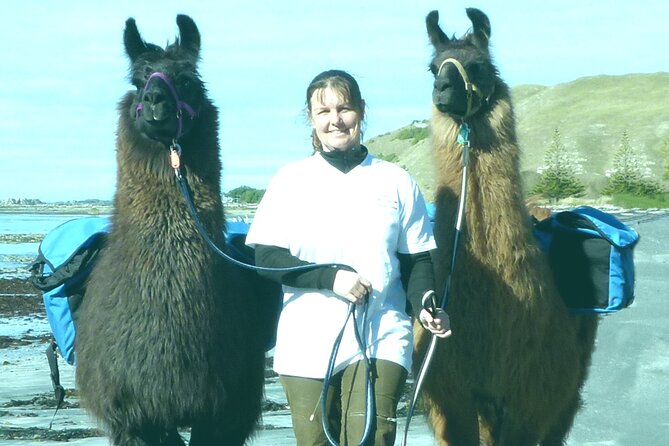
The tour’s commentary is more than filler during the search. A marine biologist may explain how the whales feed, why Kaikoura attracts them, and how the local canyons affect the sea. The crew also discusses the town’s Māori connection to whales, including the story of Paikea, whose descendants live in Kaikoura.
That context gives the outing a stronger sense of place. You are not just looking for a large animal. You are learning why this particular coast supports it and how the town’s identity is tied to the sea.
The tone varies by crew member, but the strongest accounts single out the clarity of the explanations, local knowledge, and good safety focus. Captain Fred, Captain Malena, and the marine biologist have all been praised by name for making the experience interesting as well as well-run.
The onboard videos and animations are especially helpful during quiet periods. Still, do not expect nonstop action. The boat may spend time moving between sightings, and an animal can remain underwater for a long interval. The payoff comes from patience.
Seasickness deserves serious attention
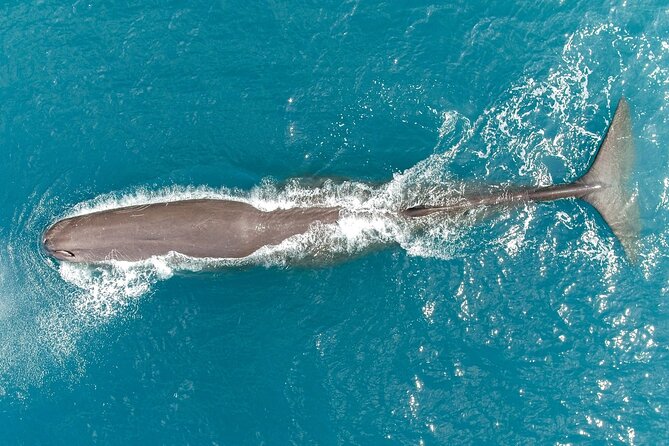
This is the most important practical warning. Kaikoura’s waters can be rough, and several passengers have become ill even when the sea was described as moderate. The ride out and back may be the hardest part, especially if you are prone to motion sickness.
Buy motion-sickness tablets from the retail store before departure, or bring suitable medicine with you. The advice is to take it before boarding, not after you already feel sick. Sit or stand where the motion feels manageable, follow crew instructions, and use the indoor area if the weather turns unpleasant.
The company monitors the weather and sea conditions closely. It may cancel a departure or place restrictions on children and passengers with medical problems. If conditions are poor, you can choose another date or receive a full refund.
Children must be at least three years old, although the operator can raise the minimum age on a particular day because of sea conditions. This matters for families: a child who is fine on a calm ferry may not cope well with a fast catamaran in rough water.
Is $111.39 a fair price?
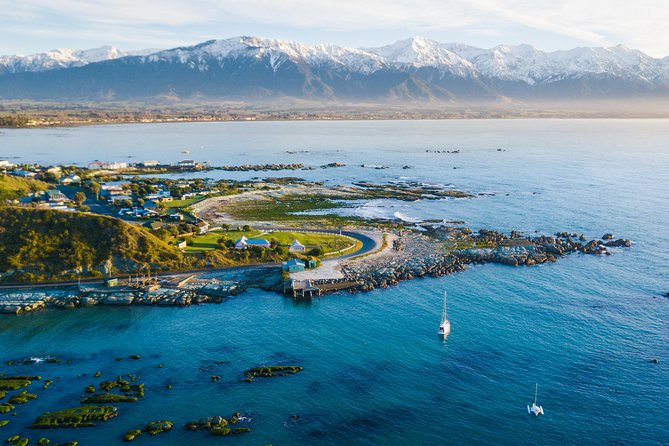
At $111.39 per person, this is not a cheap add-on, but it covers more than a simple boat ride. You receive the catamaran trip, the bus transfer to and from the marina, crew commentary, safety management, and a strong chance of seeing a whale.
The 80% no-whale refund also gives the price some protection. You are still paying for time, fuel, staff, and the chance to see wildlife in the wild, not for a guaranteed performance. If the trip includes a sperm whale, dolphins, seals, and seabirds, the value is strong.
The main question is how you handle uncertainty. If you need constant action or a guaranteed close-up photograph, the cost may feel high. If you value an informed trip into a remarkable marine setting and accept that nature sets the schedule, the price is easier to justify.
The maximum group size of 116 is worth considering. A large boat offers stability, indoor shelter, and a professional operation, but it cannot provide the quiet feel of a small private charter. You are paying for a reliable, organized outing rather than exclusivity.
Timing, cancellation, and who should book
The tour operates throughout the year. From November through March, check-in times are listed as 7:15 a.m., 10 a.m., 12:45 p.m., and 3:30 p.m. Early departures may give you a less crowded feel, although wildlife activity and sea conditions can change from day to day.
You can cancel for a full refund up to 24 hours before the start time. Cancellations or changes made inside that window are not refunded. If the operator cancels because of poor weather, you receive the choice of another date or a full refund.
I would recommend this experience to anyone who wants a serious wildlife outing, especially first-time whale watchers, families with older children, and people who enjoy learning while they look. It also suits photographers, though you should remember that the boat may be crowded around a sighting.
I would think twice if you are highly prone to seasickness, have medical concerns affected by rough conditions, or strongly dislike group tours. You can still consider it, but speak with the operator and prepare carefully before committing.
Should you book Whale Watching in Kaikoura by Boat?
Book it if seeing a sperm whale in its natural home is high on your New Zealand list and you can accept a bumpy ride. The strong sighting record, refund policy, modern catamarans, and clear commentary make this a sound choice for a first whale-watching trip.
Go prepared for patience. You may see only a blow and tail, or you may get sperm whales, dolphins, seals, albatross, and other birds in one outing. Take seasickness medicine before boarding, wear warm clothing, and choose the tour for the whole marine experience, not just the hope of one perfect photograph.
FAQ
How long does the whale-watching tour take?
Allow about 3.5 hours in total. This includes check-in, the safety briefing, bus transfers, and up to 2.5 hours on the water.
Where does the tour start and finish?
It starts at Whaleway Station Road in Kaikoura and ends back at the same meeting point. A bus carries you to and from the marina.
What animals might I see?
Sperm whales are the main focus. You might also see dolphins, fur seals, albatross, petrels, orcas, humpback whales, pilot whales, and other seabirds.
Is a whale sighting guaranteed?
No wildlife sighting can be guaranteed, but the operator states a 95% whale-sighting success rate. If you do not see a whale, you are eligible for an 80% refund.
What should I wear?
Wear warm clothing and flat shoes. Bring light waterproof clothing if you plan to use the outside decks.
Are children allowed on the tour?
Children must be at least three years old. The operator may raise the minimum age because of sea or weather conditions on the day.
What happens if bad weather cancels the tour?
You can choose an alternative date or receive a full refund if the operator cancels because of poor weather or sea conditions.
Just added around Kaikoura
- Whale Watching in Kaikoura – Ultimate Experience★ 4.5 · 199 reviews
- Kaikoura Whale Watching – 45 Minute Ocean Safari★ 5.0 · 39 reviews
- Kaikōura Whale Watching – 1hr 20min Ultimate Adventure★ 5.0 · 8 reviews
- Kaikōura Whale Watching and Scenic Landing – 1hr Premier Tour★ 5.0 · 24 reviews
- Kaikoura Helicopters Extended Whale Watch★ 4.5 · 15 reviews
- Kaikoura Helicopters Top n Tail Whale Watch flight★ 5.0 · 7 reviews
- Kaikoura Whale Watch Day Tour from Christchurch★ 4.5 · 170 reviews
- Kaikoura Helicopters Classic Whale Watch★ 5.0 · 40 reviews
Kaikoura Whale Watching Tours, compared.
Kaikoura: Whale Watching Flight with Commentary
Read our review →
Kaikōura Whale Watching Scenic Flight (40 Minutes)
Read our review →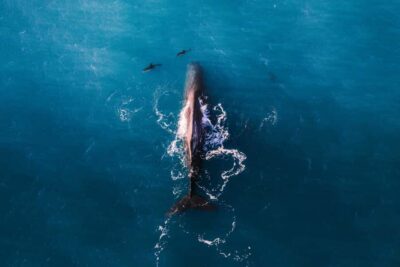
Kaikoura: Whale Watching Flight with Guided Commentary
Read our review →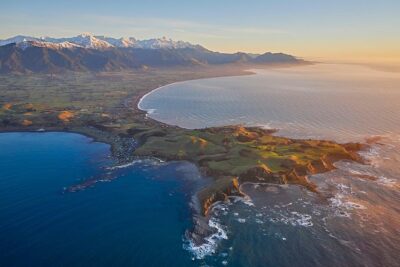
Whale Watching in Kaikoura – Ultimate Experience
Read our review →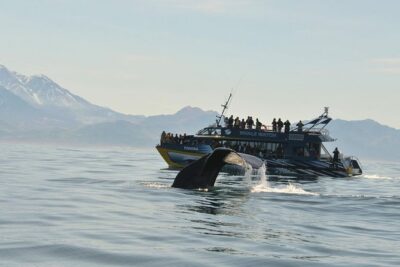
Kaikoura Whale Watch Day Tour from Christchurch
Read our review →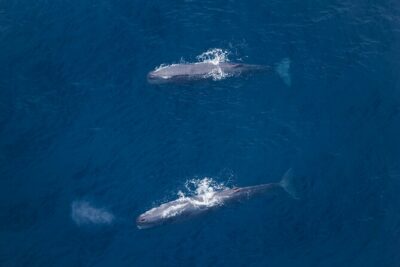
Browse the lists this tour appears in