
Review · USA
Boston: City Cruises Whale Watching Cruise
Boston’s best whale sightings happen far beyond the harbor, where humpback whales surface, fin whales cruise past, and dolphins sometimes gather beside the boat. The trip to Stellwagen Bank takes time, but that open-water setting is exactly what makes the experience feel real: these are wild animals, not a staged show.
I like the New England Aquarium Naturalists, who explain what you are seeing and help you spot animals that might otherwise slip past. I also like the boat’s mix of outdoor decks and warm indoor seating, since Boston’s wind can turn a sunny day chilly fast. The main drawback is the sea itself: rough water can make the ride uncomfortable, and whale sightings are never guaranteed.
Key points to know before you book
- Plan on 3.5 to 4 hours: The advertised duration is 210 minutes, but the boat may stay out longer if whales are farther offshore.
- Stellwagen Bank is the main event: You get about 1.5 hours in the whale-watching area, with the rest of the time spent crossing Boston Harbor and Massachusetts Bay.
- Expect humpbacks, fin whales, and minkes: White-sided dolphins and other marine life are also possible.
- The guide makes a real difference: Naturalists share facts, identify individual whales, explain behavior, and answer questions during the cruise.
- Bring more clothing than you think you need: Wind on the viewing decks can feel cold even in pleasant weather.
- Motion sickness is the big concern: The boat is stable for its size, but choppy conditions have caused problems for some passengers.
From Long Wharf to the open Atlantic
The cruise leaves from One Long Wharf, between the Long Wharf Marriott and the New England Aquarium. You present your voucher for scanning at the boarding point, then choose between the outdoor viewing areas and the climate-controlled cabin.
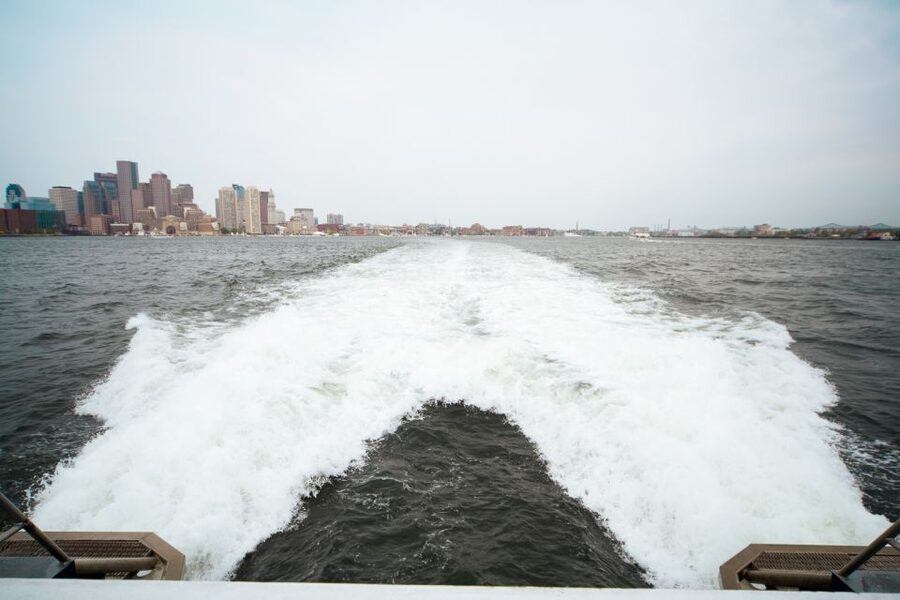
The opening part of the trip gives you a pleasant change of pace from downtown Boston. The boat passes Castle Island and the Boston Harbor Islands National and State Park. These are passing views rather than scheduled stops, so you will not get off the boat, but they give you a good sense of how quickly the city gives way to open water.
I like this gradual transition. You begin with harbor sights, working boats, islands, and city views, then spend more time watching the horizon. It helps you understand that this is not a short harbor cruise with a lucky whale thrown in. You are heading toward a large marine sanctuary where the animals come to feed.
The crossing can take roughly 1.5 hours, depending on sea conditions and where the whales are located. That is useful to know before you book. If you want a quick outing, this is not it. If you have half a day to spare and enjoy being on the water, the long ride becomes part of the experience.
More Whale Watching Cruises in the USA
- City Cruises Boston Whale Watching Cruise by High-Speed Boat
★ 4.5 · 3,115 reviews - San Diego Whale Watching Cruise
★ 5.0 · 2,317 reviews - Whale-Watching Cruise from Newport Beach
★ 4.5 · 927 reviews
Why Stellwagen Bank matters
The boat’s main destination is the Gerry E. Studds/Stellwagen Bank National Marine Sanctuary. The sanctuary lies offshore and provides feeding grounds for several whale species. The cruise spends about 1.5 hours in the whale-watching area, though the overall trip can run longer when the animals are farther away.
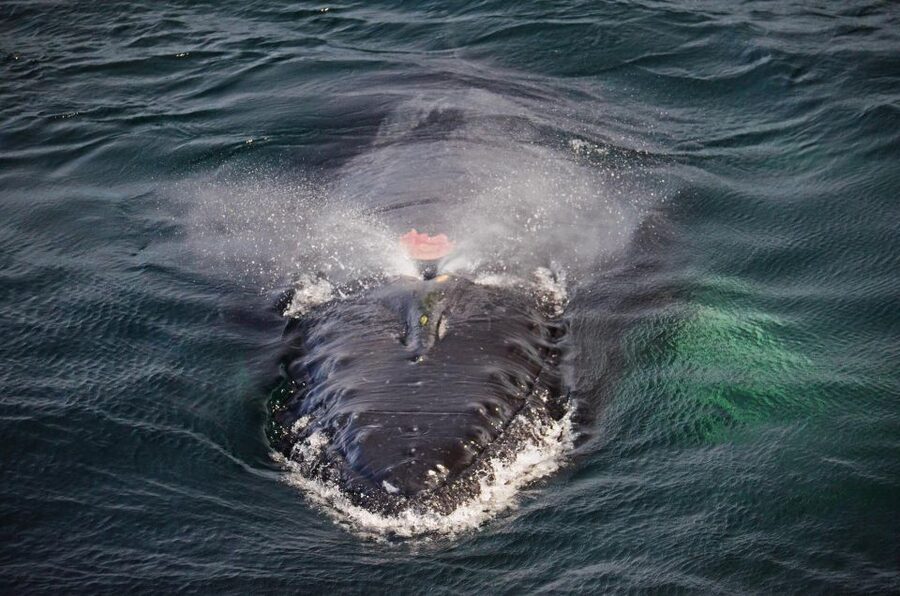
This is where patience matters. You may watch for a while before seeing a blow, a fin, or a dark back breaking the surface. The naturalists keep the search organized by pointing out where to look and explaining the animals’ movements. That guidance is valuable because a whale can surface for only a few seconds, often at a distance.
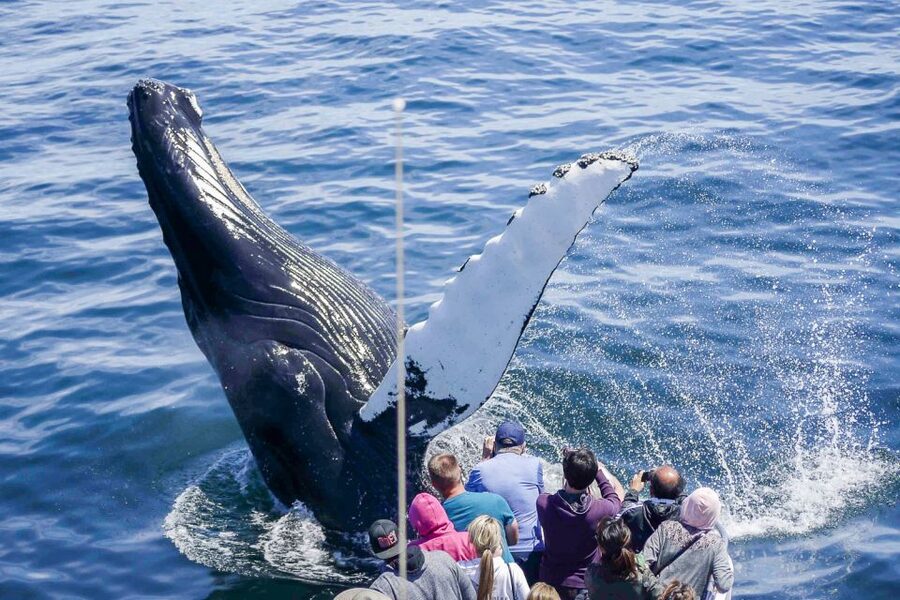
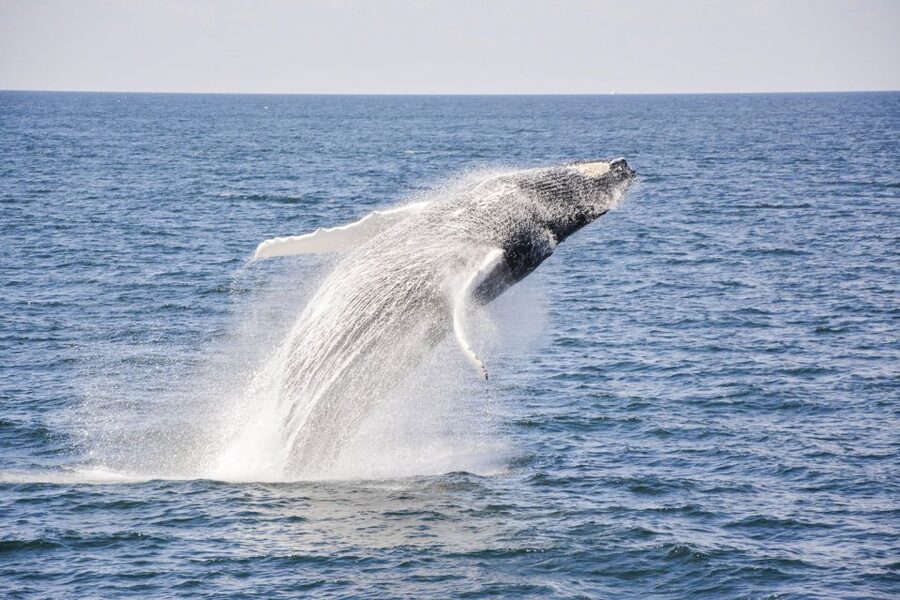
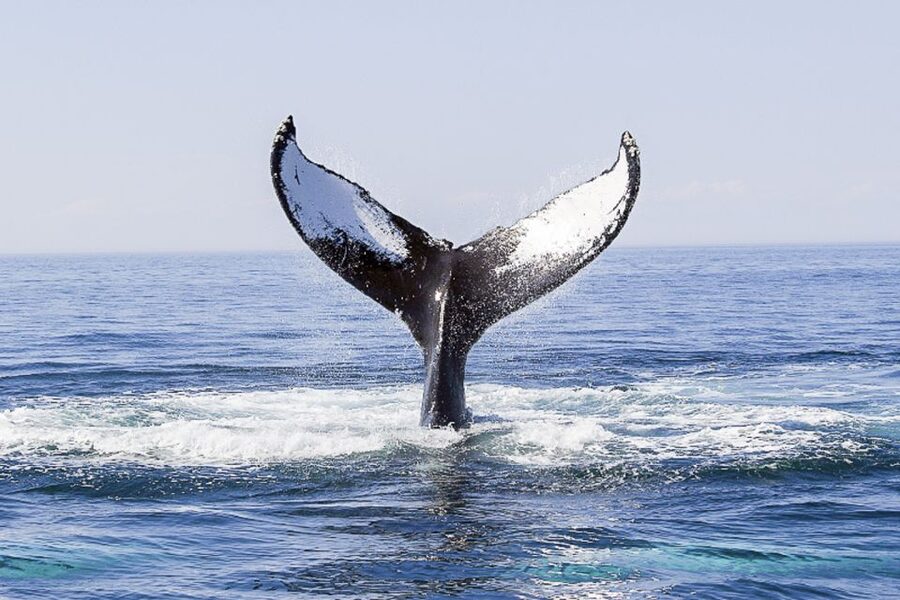
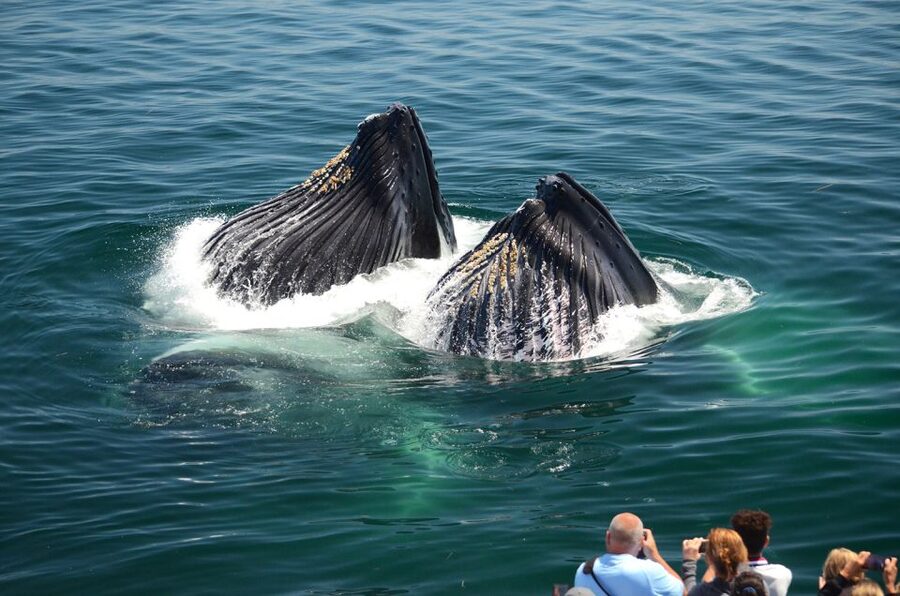
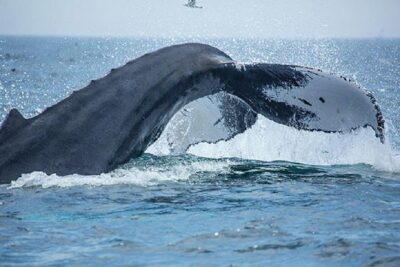
Humpback whales are the star for many people. Their arched backs and broad tails make them easier to recognize, and they sometimes offer the most dramatic displays. The name Megaptera novaeangliae means big-winged New Englander, a fitting reference to their long, powerful flippers.
Fin whales are even larger than most humpbacks. They can reach roughly 45 to 70 feet and weigh about 40 tons as adults. Their size does not make them easy to photograph, though. A fin whale may surface quickly and travel in a straight line, so listen closely when the naturalist directs your attention.
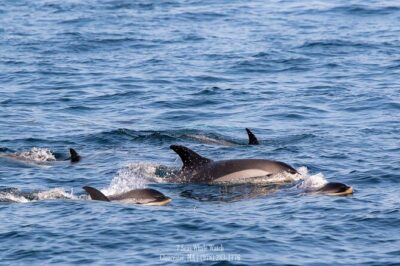
Minke whales are smaller and sleek, with a more dolphin-like shape. They are common worldwide, but spotting one is still a worthwhile part of the trip. White-sided dolphins may also appear, especially in groups. They are found in the North Atlantic and can be lively around the boat, though no wildlife sighting is promised.
The New England Aquarium Naturalists add context
A good whale watch is not just about locating animals. It is also about understanding what you are seeing. The Naturalists from the New England Aquarium provide commentary during the ride and help identify whales by name and markings when possible.
The commentary begins before you reach the sanctuary, so the crossing does not have to feel like dead time. Naturalists also move through the boat on the way out and back, giving you a chance to ask questions. That personal contact is one of the strongest reasons to choose this cruise over a simple sightseeing boat.
Amanda is one naturalist whose talks have made an impression, including a demonstration involving a piece of original humpback whale tooth. Andrew has also been praised for his energy and enthusiasm. The specific guide varies, but the main benefit remains the same: you have a trained voice explaining animal behavior rather than a generic recording.
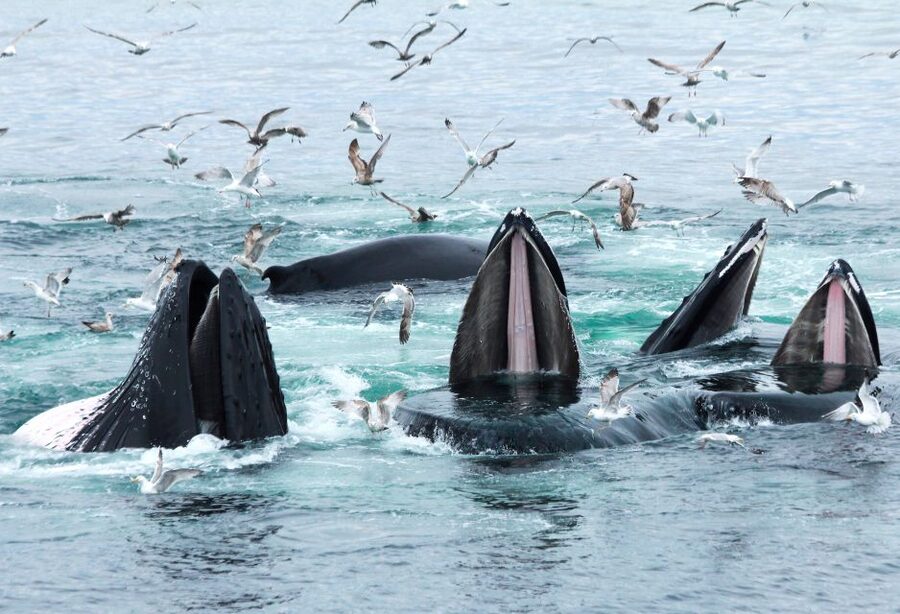
The commentary may cover feeding habits, species identification, conservation work, and individual whale behavior. You might hear about a humpback kick-feeding, tail-flipping, breaching, or slapping its flippers. Those terms become much more useful when you are watching the behavior happen in front of you.
The conservation message also matters. Participation supports research connected with these animals, and the guides make clear that the whale’s welfare comes first. The boat is there to observe, not to create a performance.
What the boat is like for a long day at sea
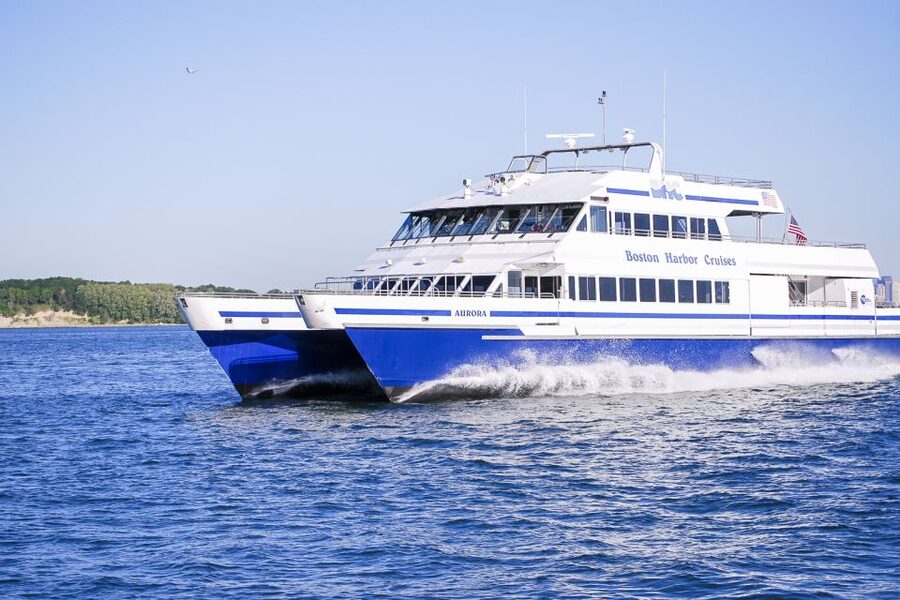
The vessel is designed to move quickly to the sanctuary while giving you several ways to watch. Outdoor viewing decks let you feel the wind and get an unobstructed view. Indoor areas have large windows, cushioned seating, tables, climate control, sound equipment, and video systems.
That arrangement works well for a four-hour outing. You can go outside when whales are active, then step indoors to warm up, sit down, or watch through the windows. The boat also has a galley selling snacks and drinks, so you do not have to pack a full meal for the trip.
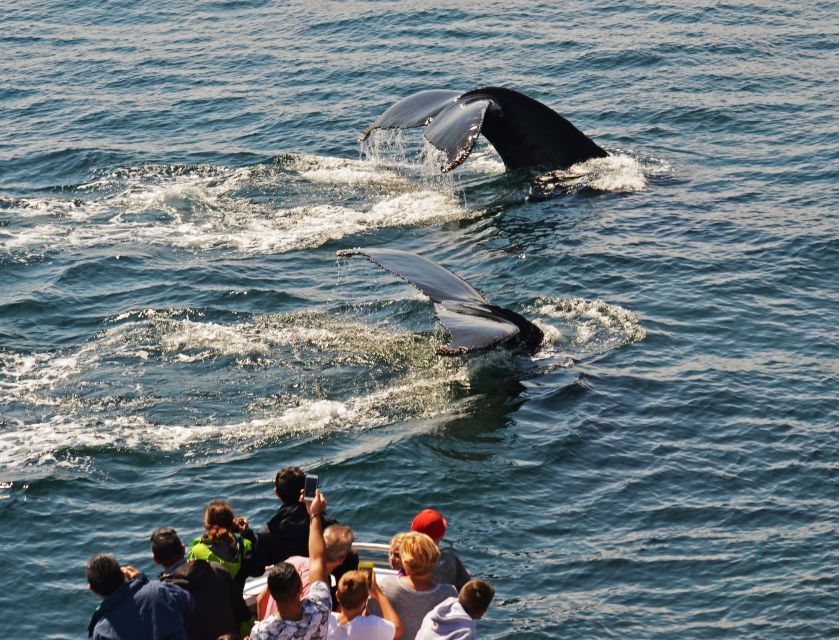
A few practical points matter here. The outdoor rail can become crowded when several whales surface at once. People naturally move toward the best viewing spots, and not everyone remembers to make room. If you are short, arriving early and choosing a useful viewing position can help. Still, you should expect to move around rather than hold one perfect spot for the whole cruise.
The front of the boat often attracts people who want the closest look at the water, but it can also feel windier and bumpier. A position closer to the middle may feel steadier if you are prone to motion sickness. If you need to sit down, the indoor cabin provides a welcome break.
Some passengers have found the seats worn or the public-address system hard to understand. Those are fair limitations to keep in mind. The boat is comfortable in broad terms, but this is working transportation for a marine excursion, not a luxury yacht.
Same water, a different way to meet the whales:
- Juneau Wildlife Whale Watching
★ 5.0 · 7,379 reviews - Juneau Wildlife Whale Watching & Mendenhall Glacier
★ 5.0 · 6,236 reviews - Whale Watching Tour in Gloucester
★ 5.0 · 4,460 reviews - Maui Eco-Raft Tour: Eye-Level Whale or Dolphin Watching – Lahaina
★ 5.0 · 2,482 reviews
Whale sightings are thrilling because they are unpredictable
The biggest strength of this trip is also the main uncertainty. You are visiting wild animals in their natural habitat. Some outings produce several humpbacks, fin whales, or dolphins. Others may offer fewer sightings, and the boat may need extra time to locate them.
When the conditions line up, the payoff can be remarkable. The cruise has produced sightings of groups of humpbacks, multiple fin whales, minke whales, and large pods of dolphins. Breaching, tail slapping, flipper clapping, and kick-feeding are possible, but you should treat these as lucky moments rather than promised parts of the itinerary.
A whale surfacing close to the boat can feel almost unreal, but do not spend the whole trip staring at your phone. Wildlife photography is difficult, especially when the animal appears for only a few seconds. I would keep your camera ready, but watch the water with your own eyes first.
The naturalists also help you accept the slower moments. They can point out a blow before the whale surfaces and explain why a whale may disappear for several minutes. That turns waiting into observation rather than frustration.
If the first trip does not produce sightings, ask the operator directly about current policies and available options. One passenger was offered a free return visit after an unsuccessful outing, but you should confirm what applies to your booking and date.
Weather, waves, and what to pack
Boston’s harbor may look calm when you board, but conditions offshore can be very different. Wind and swell can make the crossing bumpy, and the ride back may feel rougher than the trip out. Several passengers who usually manage boats well still found motion sickness a serious issue in choppy conditions.
If you are prone to seasickness, take your usual preventive measure before boarding and ask the crew where the boat moves least. Remaining in the center of the vessel can help, though no part of a moving boat is guaranteed to feel calm.
Wear layers. A warm afternoon in Boston can become cold on the upper deck, especially when the boat is moving. Comfortable shoes, sunglasses, a hat, sunscreen, a jacket, weather-appropriate clothing, and binoculars are all sensible. A camera is useful, but binoculars may help you see the first signs of a whale before it comes close.
Smoking is not allowed. Infants need their own tickets to board. The cruise is wheelchair accessible, but the practical ease of moving around outdoor decks and crowded viewing areas can depend on conditions and passenger numbers.
Is $85 a fair price?
At $85 per person, this is not a cheap add-on. You are paying for a 3 to 4 hour marine excursion, a high-speed boat, outdoor and indoor viewing areas, onboard commentary, and access to Naturalists connected with the New England Aquarium.
I think the price is fair if whale watching is a priority during your Boston visit. The boat spends substantial time traveling to the sanctuary, and the wildlife setting is much more meaningful than a short harbor ride. The guides also add value by helping you understand species, feeding behavior, and conservation work.
The price feels less attractive if you are uncertain about spending most of a day at sea or if you expect a guaranteed close-up encounter. Food and drinks cost extra, and there is no included snack allowance. You are also paying for the chance to see wildlife, not a fixed show.
For the best value, treat this as your main activity for the morning or afternoon. Do not schedule a tight museum booking, airport transfer, or dinner immediately afterward. The average trip lasts 3.5 to 4 hours, and the location of the whales can extend the outing beyond three hours.
Free cancellation is available up to 24 hours in advance, and a reserve-now, pay-later option can help if your Boston plans are still shifting. Check current weather and cancellation information with the local operator before you go.
Who should book this Boston whale watch?
I would recommend it to families with older children, couples, wildlife fans, photographers, and anyone who wants a break from city sightseeing. The indoor cabin makes it easier to manage changing weather, while the outside decks provide the best sense of the sea.
It is also a good choice if you want an educational outing rather than a simple boat ride. The guides do more than announce sightings. They explain what you are looking at and give the animals context.
I would think twice if you dislike long boat rides, have serious motion sickness, or need a tightly timed schedule. The crossing can be bumpy, crowded viewing areas can be frustrating, and no wild whale can be ordered to appear on schedule.
My practical verdict
Book this cruise if seeing whales is high on your Boston list and you can give the trip a flexible half-day. The strongest reasons are the access to Stellwagen Bank, the skilled New England Aquarium Naturalists, and the boat’s useful mix of outdoor and indoor spaces.
Go with realistic expectations. You may see several humpbacks, fin whales, minkes, dolphins, or dramatic behavior. You may also spend long stretches scanning the water in wind and sun. That uncertainty is part of the bargain, and when a whale finally surfaces beside the boat, the wait makes the moment feel earned.
FAQ
Where does the whale-watching cruise leave from?
It leaves from One Long Wharf in Boston, between the Long Wharf Marriott Hotel and the New England Aquarium. Present your voucher for scanning at the boarding location.
How long does the cruise last?
The listed duration is 210 minutes, but the average trip lasts about 3.5 to 4 hours. It can run longer if the whales are farther from shore.
Which whales might I see?
Possible sightings include humpback whales, fin whales, and minke whales. You may also see white-sided dolphins and other marine wildlife.
How much time is spent watching whales?
The itinerary allows about 1.5 hours in the Gerry E. Studds/Stellwagen Bank National Marine Sanctuary. Travel time to and from the sanctuary makes up much of the remaining cruise.
Is the boat suitable in cold or rainy weather?
The boat has outdoor viewing decks and a climate-controlled indoor cabin with large windows. You should still bring a jacket and weather-appropriate clothing because the outdoor decks can be windy and cold.
Is the cruise wheelchair accessible?
Yes, the activity is listed as wheelchair accessible.
What happens if I get seasick?
Motion sickness is a known concern, especially when the sea is choppy. Bring any preventive remedy you normally use, and ask the crew which part of the boat has the least movement.
Just added around the USA
- Newport Beach: Year-Round Whale Watching Cruise★ 4.2 · 151 reviews
- Juneau: Mendenhall Glacier and Whale Watching Tour★ 4.6 · 98 reviews
- West Oahu: Eco-Friendly Whale Watching Cruise★ 4.5 · 40 reviews
- Oahu: Waikiki Eco-Friendly Morning Whale Watching Cruise★ 4.4 · 119 reviews
- Whale Watch Sail Ma’alaea★ 4.9 · 27 reviews
- Whale and wildlife watching Private and Semi-Private tours★ 5.0 · 2 reviews
- Oahu: Waikiki Eco-Friendly Afternoon Whale Watching Trip★ 4.5 · 60 reviews
- Waikiki: Sunset Whale Watching with 2 Drinks (BYOB-Friendly)★ 4.3 · 34 reviews
USA Whale Watching Tours, compared.
Juneau Wildlife Whale Watching & Mendenhall Glacier
Read our review →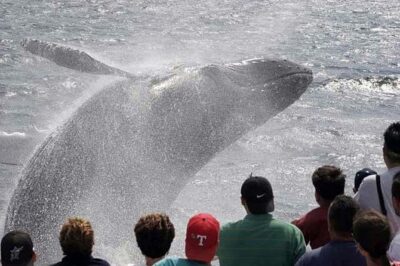
City Cruises Boston Whale Watching Cruise by High-Speed Boat
Read our review →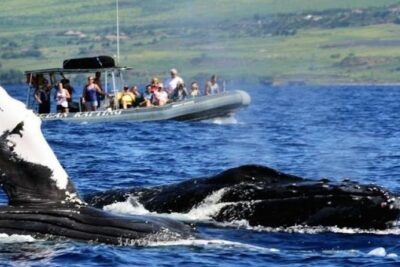
Maui Eco-Raft Tour: Eye-Level Whale or Dolphin Watching – Lahaina
Read our review →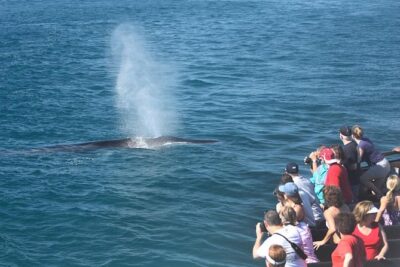
Whale Watching Trips to Stellwagen Bank Marine Sanctuary. Guaranteed sightings!
Read our review →Browse the lists this tour appears in