
Review · PORTUGAL
São Miguel: Whale-Watching Cruise with Marine Biologist
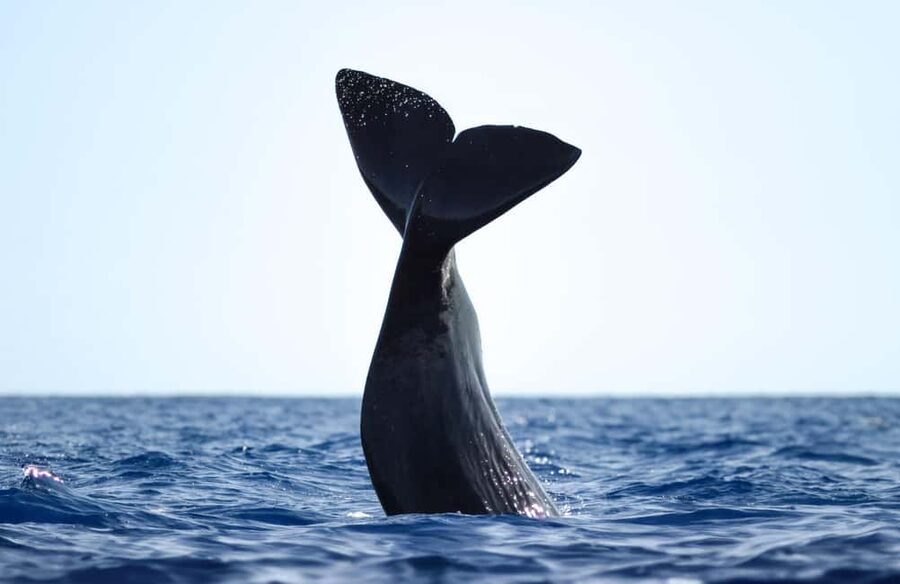
The best part of this São Miguel cruise is the chance to watch whales and dolphins where they belong, far out in the Atlantic, with marine biologists explaining what you are seeing. Shore lookouts scan the water with powerful binoculars and guide the boat by radio, which gives the trip a real purpose beyond simply racing around in search of fins.
I like the 98% reported sighting success rate, and I like the careful approach to wildlife. The crew slows down near dolphin pods and keeps a respectful distance from whales. The main drawback is the sea itself: a zodiac-style speedboat can be fast, wet, and bumpy, so this is not a good pick if you have back or heart problems or want a calm ride.
Key points at a glance
- Shore-based lookouts guide the boat: Spotters on São Miguel’s coast search with military-grade binoculars and radio the crew with animal locations.
- Marine biologists lead the trip: Guides such as Mark, Sarah, Raquel, Bia, and Mateo have explained species, behavior, and conservation during past departures.
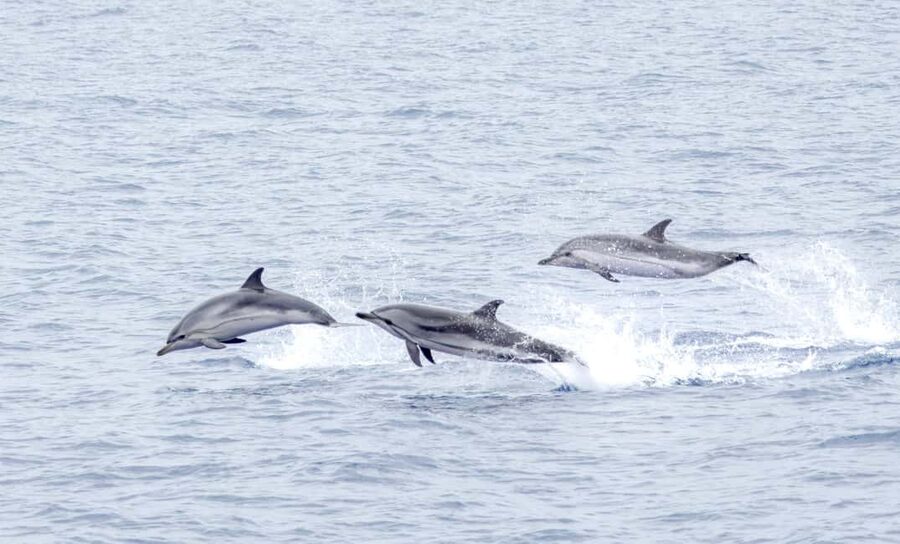
- Dolphins are a strong possibility: Sightings can include bottlenose, Atlantic spotted, and striped dolphins, sometimes in very large pods.
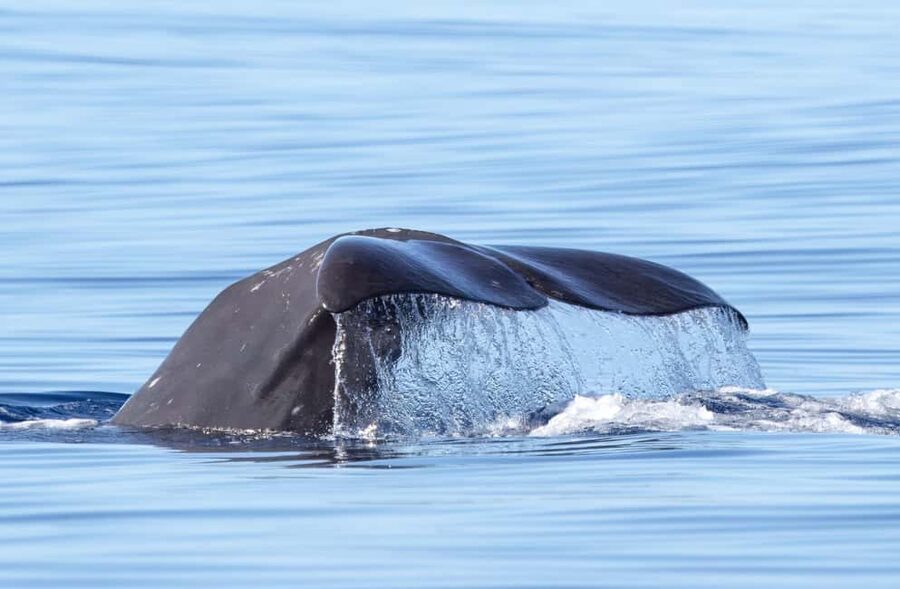
- Whale sightings vary by day: Sperm, sei, and other whale species have appeared, but no wild animal can be guaranteed.
- The ride can be lively: Catamarans offer more shelter and comfort, while zodiac-style boats feel faster and bumpier.
- No sighting means a remedy: On the regular Ponta Delgada trip, you can request a full refund or take another trip free of charge if no whale or dolphin is seen.
Why São Miguel is a fine place for whale watching
The Azores sit in the open Atlantic, and the waters around São Miguel are used by several whale and dolphin species. That setting matters. You are not visiting a marine park or watching trained animals perform. You are looking for wild creatures that may surface for only a few seconds, then vanish into a broad stretch of sea.
That uncertainty is part of the appeal, but it also sets fair expectations. A 98% sighting success rate is excellent, yet it does not mean you will see a whale on every departure. One recent trip produced dolphins but no whale. Another brought a mother and calf, several dolphin species, and a close look at the feeding activity below seabirds. The day’s conditions, season, animal behavior, and luck all matter.
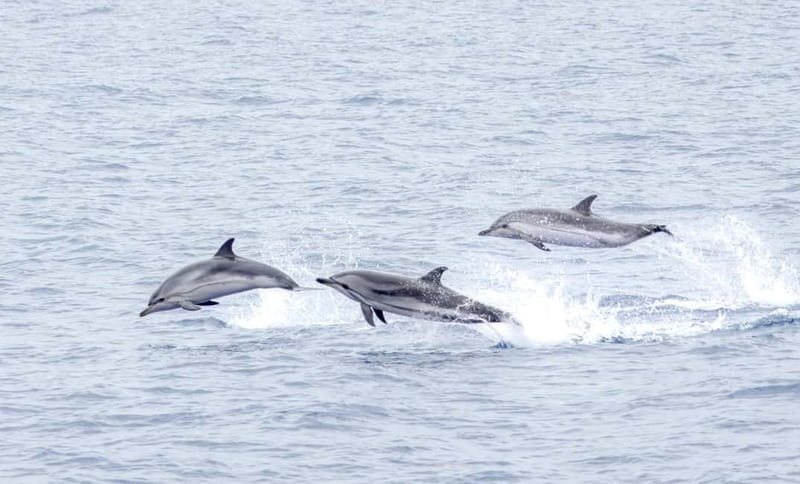
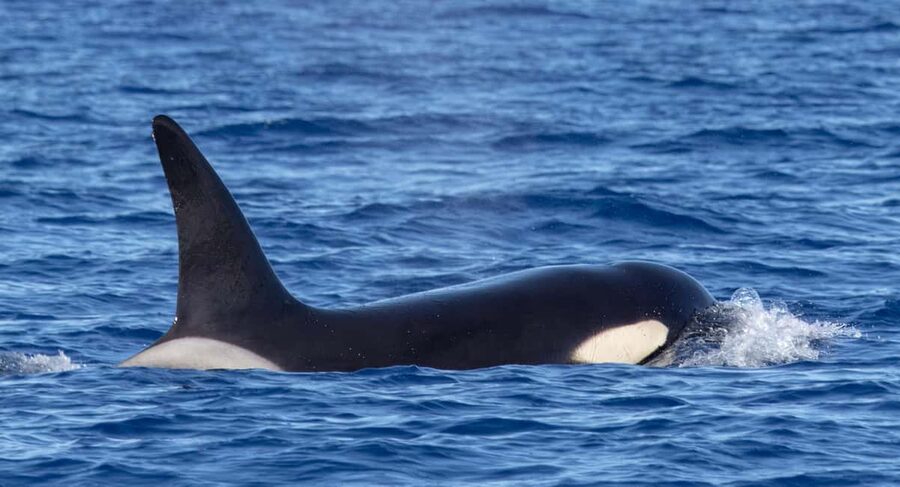
Dolphins are often the most reliable reward. Sightings have included bottlenose dolphins, Atlantic spotted dolphins, and striped dolphins. Large pods can number in the hundreds, with animals swimming beside the boat or crossing in front of it. Whales seen on different outings have included sperm whales and sei whales, with occasional reports of other species.
More Trips with a Marine Biologist in Portugal:
- Azores: Whale Watching & Islet Boat Tour w/ Marine Biologist
★ 4.7 · 2,945 reviews - Sesimbra: Arrábida Dolphin and Whale Watching with Biologist
★ 4.9 · 310 reviews - Sesimbra: Arrábida Dolphin and Whale Watching tour with biologist
★ 5.0 · 248 reviews
Meeting at Ponta Delgada Marina
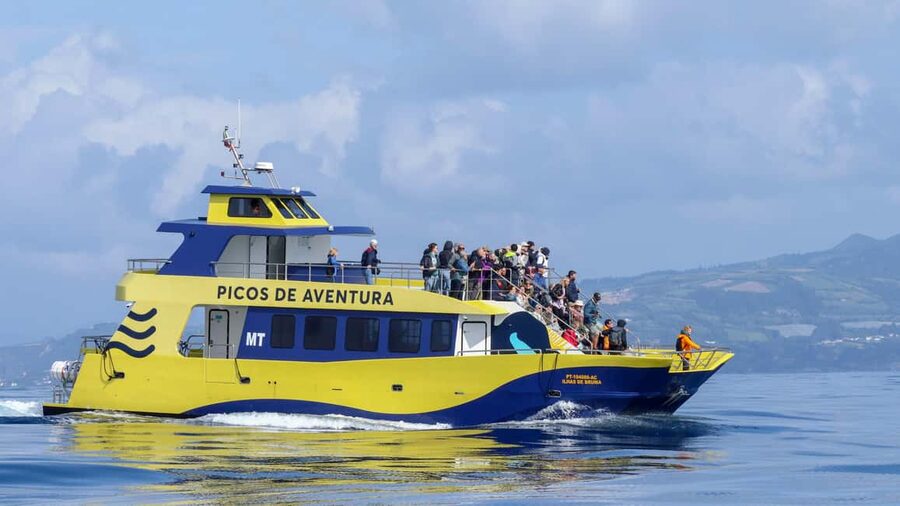
The regular tour begins at Picos de Aventura, at the marina across from Hotel Marina Atlântico. Look for the boat marked with the activity provider’s name. Hotel pickup is not included, so allow time to reach the marina on your own.
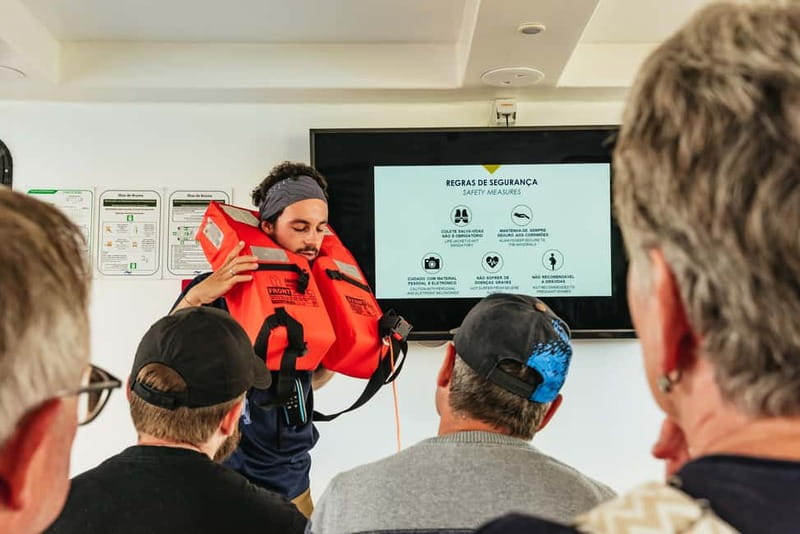
The experience starts with a safety briefing of about 20 minutes. This is not filler. You receive instructions for boarding, movement on the boat, and behavior around the animals. You also learn the basic wildlife code, including the need to keep a safe distance and avoid forcing an approach.
Life jackets and raincoats are provided. Wear warm clothing beneath the outer layer, closed-toe shoes, and sunglasses. Bring a reusable water bottle, but leave large bags and luggage behind. Flip-flops and sandals are not allowed, which makes sense on a moving boat with wet decks.
The tour lasts three hours in all. After the briefing, you spend about two and a half hours at sea, then return to the same marina. Food and drinks are not included, so eat and hydrate before you arrive, while avoiding a heavy meal if you are prone to seasickness.
How the lookout system improves the search
The boat does not simply head offshore and hope for the best. Lookouts are stationed at strategic points along the São Miguel coast. Using military-grade binoculars, they search the water for blows, dorsal fins, splashes, and feeding activity. When they locate animals, they radio the position to the skipper.
This system gives the crew a useful advantage. A whale can disappear before a boat reaches the area, and dolphins can cover a surprising amount of water. A trained person watching from land can often see the wider pattern better than people on a low boat surrounded by waves.
It also helps keep the trip focused on animal welfare. The crew does not need to search blindly around every possible sighting. Instead, it can approach a known location and then slow down. The guides explain what the animals are doing and allow the wildlife to control the encounter.
That approach has been praised by visitors who noticed the boat moving slowly toward dolphin pods, then waiting for the animals to come closer if they wished. The crew’s stated aim is a safe and respectful distance, not the closest possible photograph.
Two and a half hours among whales and dolphins
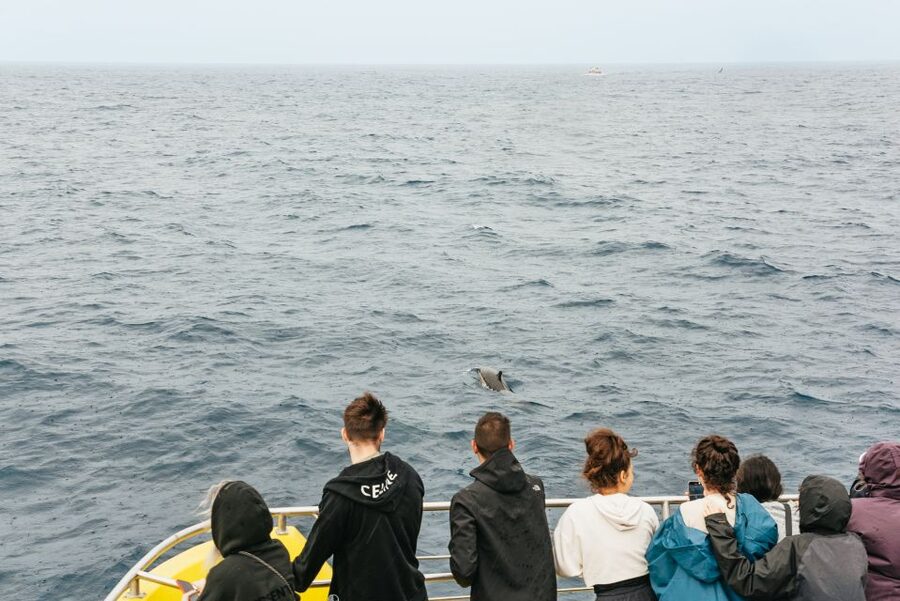
Once offshore, your attention shifts from the marina to the water. The guide points out where to look and explains the signs that may reveal an animal before it surfaces. A whale’s blow may be visible first. Dolphins can appear as a line of quick splashes or as dark shapes riding the bow wave.
The marine biologist adds value throughout the ride. Guides named in past departures include Mark, Sarah, Raquel, Bia, and Mateo. Their style may vary, but the role is the same: identify species, explain behavior, answer questions, and put each sighting in context.
On the return leg, the biologists may walk around the boat and speak with people individually. This is useful if you have a question that did not fit into the main commentary. You might ask how to tell a sperm whale from a sei whale, why dolphins travel in pods, or how the crew finds animals without using sonar.
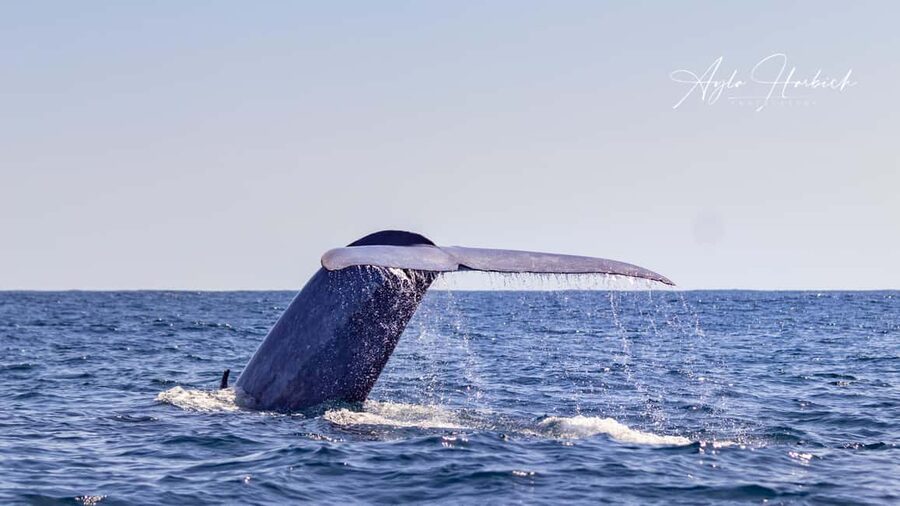
The trip can produce several different encounters in a single outing. Sightings have included four species of dolphins and whales on the same day, as well as turtles, tuna, seabirds, flying fish, and even a hammerhead shark. Those extra sightings are never promised, but they show how much life can be present beyond the main target.
One especially memorable type of encounter is a feeding scene. Dolphins, whales, birds, and tuna may gather where fish are concentrated. You might see birds working the surface while dolphins move through the water and whales rise nearby. It is a natural event, not a show arranged for the boat, so the timing and view will vary.
More Whale Watching Cruises in Portugal:
- Funchal: Dolphin and Whale Watching Cruise
★ 4.7 · 844 reviews - Funchal: RIB Whale Watching Cruise and Optional Dolphin Swim
★ 4.6 · 273 reviews - Boston: City Cruises Whale Watching Cruise
★ 4.5 · 4,710 reviews - Los Gigantes: Dolphin & Whale Watching Cruise with Swim Stop
★ 4.7 · 4,539 reviews
Choosing between a catamaran and a zodiac-style boat
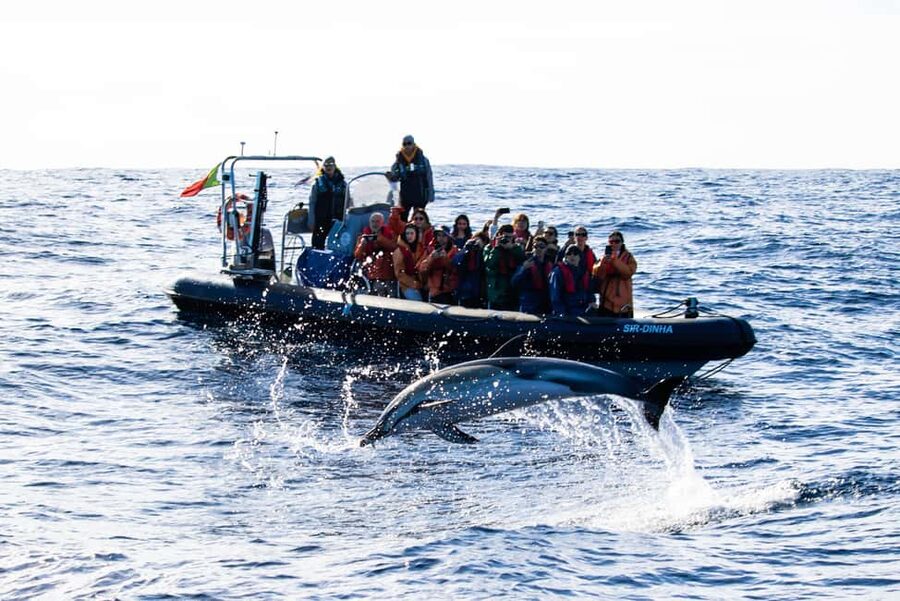
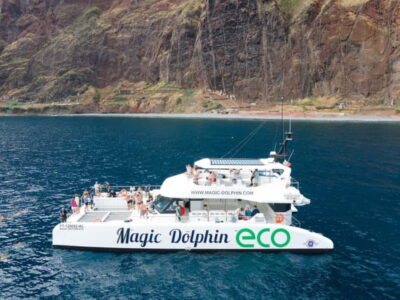
The boat affects the character of your day. A catamaran generally gives you more room, more shelter, and a steadier platform. One catamaran was noted for wide front steps where people could sit and watch the water, and another had a bathroom, a practical point for families.
A zodiac-style speedboat feels more adventurous. It moves quickly, which helps when the crew receives a report from the lookouts, but the ride can be rough in wind and waves. People seated at the front feel the motion most. The back is often more stable, according to practical advice from past passengers, though conditions change from day to day.
You may get wet even with a raincoat. Wind, spray, and sea conditions are part of the outing. Some departures have been smooth and sunny; others have involved rough waves while still producing excellent sightings. The crew can provide extra protection, but you should dress for the Atlantic, not for a warm walk around Ponta Delgada.
A zodiac is a poor match for anyone with back problems, heart problems, or limited physical strength. Pregnant women and children under six are not accepted. If you are older but in reasonably good health, the choice depends on your comfort with a bumpy ride. Ask the operator about the available boat and current sea conditions if this is a concern.
The coastline on the way back
The return to Ponta Delgada is not just dead time. The boat passes near São Miguel’s coast, giving you a different view of the island’s volcanic character. Expect rock formations, cliffs, and unusual shapes formed by the island’s geology.
After several hours looking toward open water, the coast gives your eyes a fixed point again. It is also a calmer way to finish the trip, especially if you have spent the afternoon standing, bracing, or scanning the horizon.
The regular departure leaves from Ponta Delgada. A North Coast option leaves from Rabo de Peixe on Thursday, Friday, and Saturday. If you choose that version, check the departure point carefully because it is not the same marina used by the regular tour.
Is $76 a fair price?
At $76 per person, this is not a cheap short boat ride, but the price covers more than transportation. You are paying for a three-hour operation with a skipper, boat crew, guide, life jacket, raincoat, shore-based lookout network, and marine biology commentary.
The sighting policy also improves the value. If the regular Ponta Delgada departure sees no whales or dolphins, you can receive a full refund or book another trip free of charge. The same offer applies to the North Coast tour if it produces no whale sightings. This does not remove the possibility of a disappointing day with dolphins but no whales, so understand the wording: the guarantee covers whales or dolphins together, not a particular species.
For a first visit to São Miguel, the price makes more sense if you value learning as well as seeing. A fast ride with a few distant fins is one thing. A guide who explains the animals, answers questions, and keeps the encounter respectful gives the outing more lasting value.
The experience has received a 4.6 rating from 1,311 reviews, with especially strong praise for the crew, wildlife ethics, and marine biologist guides. A few small limitations remain, including rough water, occasional unclear audio on the boat, and the simple fact that nature controls the schedule.
What to wear and how to prepare
Pack light. Large bags and luggage are not allowed, and you will have less to manage if you bring only the essentials.
Wear:
- Warm layers
- Closed-toe shoes
- Sunglasses
- A waterproof outer layer if you have one
- A reusable water bottle
The operator provides a life jacket and raincoat. A phone or camera can capture the moment, but wildlife photography from a moving boat is difficult. Stabilize your camera as much as you can, and do not spend the whole trip staring at a screen. Polarized sunglasses may help cut glare and make it easier to focus on distant animals.
Do not assume a later departure will be less productive. One late-afternoon trip produced two dolphin species and a mother whale with her calf, even after the guide had warned that earlier conditions had been quiet. Sightings depend on the animals, not just the clock.
The tour is highly weather dependent. Extreme weather can lead to cancellation or rescheduling. Free cancellation is available up to 24 hours before departure, and the reserve-now, pay-later option lets you hold a place without paying immediately.
Who will enjoy this cruise most?
You should book it if you want a wildlife outing led by people who can explain what you see, and if you are comfortable accepting some uncertainty. It suits couples, families with children aged six or older, photographers, and anyone who wants a natural encounter rather than a staged attraction.
It is especially good for people who care about the way wildlife is approached. The crew’s use of land lookouts, slow approach near dolphins, and emphasis on animal behavior all point toward a careful style of whale watching.
Think twice if you need a smooth boat, dislike wind and spray, or have back or heart problems. The catamaran may be the better fit when available, but you should still expect movement on the Atlantic. If seeing a whale is your only goal, build flexibility into your São Miguel schedule and use the free rebooking option when possible.
Should you book the São Miguel whale-watching cruise?
I would book this trip if you have three spare hours and can handle a boat ride that may be bumpy. The combination of land-based lookouts, marine biologists, a clear wildlife code, and a whale-or-dolphin refund policy makes it a sensible choice at $76.
Book with realistic hopes. You may see sperm whales, sei whales, several dolphin species, turtles, or a rare feeding scene. You may also see dolphins without whales, or spend much of the trip searching. That is the honest bargain of watching wild animals in the Atlantic, and the respectful approach is a good reason to go.
FAQ
Where does the whale-watching cruise depart from?
The regular tour departs from Picos de Aventura at the marina across from Hotel Marina Atlântico in Ponta Delgada. The boat carries the activity provider’s name.
How long does the experience last?
The full activity lasts three hours. This includes a 20-minute safety briefing and about two and a half hours of whale watching around São Miguel.
What happens during the safety briefing?
The crew explains safety procedures and the wildlife code of ethics. You then put on a life jacket before boarding the boat.
Which languages are available?
The live guide service is available in English, Portuguese, and Spanish.
Are whales guaranteed?
No particular whale species is guaranteed. If the regular Ponta Delgada tour sees no whales or dolphins, you can request a full refund or book another trip free of charge.
What if I choose the North Coast tour?
The North Coast tour leaves from Rabo de Peixe and is available Thursday, Friday, and Saturday. If no whales are spotted, you can receive a full refund or book another trip free of charge.
Is the boat ride smooth?
Conditions vary. A catamaran usually offers more shelter and comfort, while a zodiac-style speedboat can be fast and bumpy. The tour is very dependent on weather and sea conditions.
What should I bring?
Bring warm clothing, sunglasses, closed-toe shoes, and a reusable water bottle. A life jacket and raincoat are provided.
Who should not take this tour?
The experience is not suitable for children under six, pregnant women, or people with back or heart problems. Sandals, flip-flops, luggage, and large bags are not allowed.
Just added around Portugal
- Madeira : Whales and Dolphins wooden boat excursion★ 4.1 · 247 reviews
- Madeira: Whale and Dolphin Watching Tour★ 4.6 · 174 reviews
- From Machico: Madeira Whale and Dolphin Watching Boat Tour★ 4.8 · 225 reviews
- Terceira Island: Whale & Dolphin Watching | Best Wildlife Tour★ 4.0 · 24 reviews
- Sesimbra: Arrábida Dolphin and Whale Watching tour with biologist★ 5.0 · 248 reviews
- Observation of Dolphins and Whales with Marine Biologist in Arrábida★ 5.0 · 224 reviews
- Whale Watching Activity in North Coast★ 4.5 · 49 reviews
- Among Whales Dolphins and Volcanoes Full Day Tour With Lunch★ 4.5 · 28 reviews
Portugal Whale Watching Tours, compared.
Funchal: Ecological Catamaran Dolphin Whale Watching
Read our review →
Funchal: Dolphin and Whale Watching Catamaran Cruise
Read our review →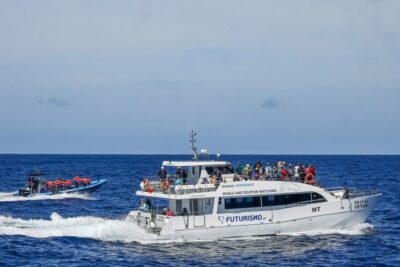
Ponta Delgada: Whale and Dolphin Watching Trip
Read our review →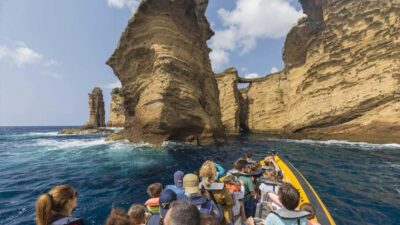
Azores: Whale Watching & Islet Boat Tour w/ Marine Biologist
Read our review →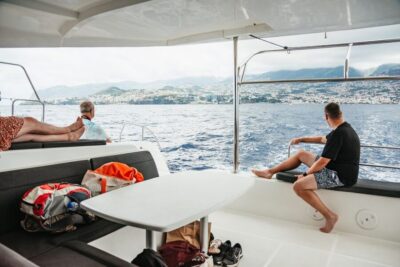
Funchal Bay: Dolphin & Whale Watch Luxury Catamaran Cruise
Read our review →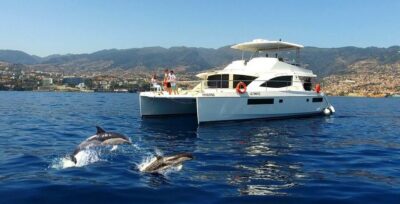
All Inclusive Whale and Dolphin Watching Luxury Tour
Read our review →
Madeira Dolphin and Whale Watching on a Ecological Catamaran
Read our review →
Funchal: Dolphin and Whale Watching by Luxury Catamaran
Read our review →Browse the lists this tour appears in