Review · MOOREA
Whale Tour – Observe and swim with whales
Moorea’s whale season offers something few tours can promise: the chance to enter the open Pacific near humpback whales in their own world. The crew searches by boat, watches the animals closely, and only allows swimmers into the water when conditions and whale behavior look right.
I like the small-group approach, with no more than seven people in the water, including the guide, and two groups organized for the swim. I also like that you can stay aboard and watch if you are not comfortable entering the sea. The tradeoff is clear: this is physically demanding, weather-sensitive, and not a gentle lagoon cruise.
Key things to know before booking
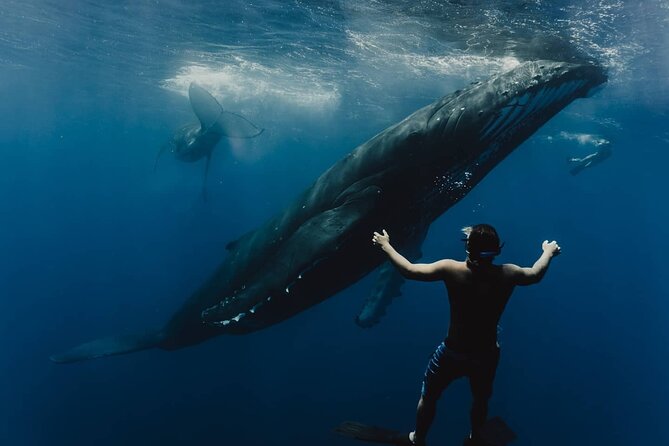
- Whale swims are never guaranteed: You may see humpbacks from the boat without entering the water.
- Only seven people enter the water at once: The guide is included in that number, which helps limit crowding.
- Open-ocean swimming is required: You need to be comfortable with fins, a mask, a snorkel, and changing sea conditions.
- The crew may include experienced spotters and guides: Joaquin, Carlos, Tamuti, Ike, Alfred, Amo, and Mankato are among the names associated with particularly well-regarded trips.
- A short lagoon stop adds variety: You may snorkel with stingrays and reef sharks after the whale search.
- Moorea is the start and finish point: If you are staying on Tahiti, check ferry times carefully before booking.
The real prize is the open-ocean whale encounter
The main purpose of this four-hour trip is simple: find humpback whales around Moorea and, if the animals and sea conditions allow, swim near them. That sounds straightforward, but whales move on their own schedule. The crew cannot summon them, and responsible operators should not force an encounter.
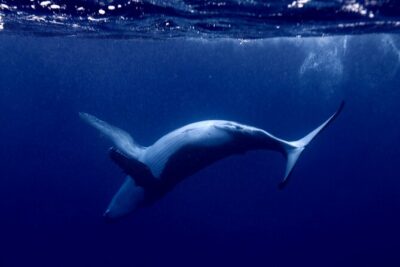
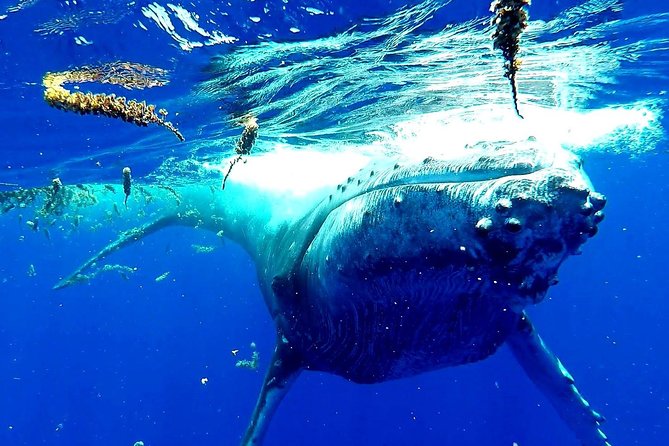
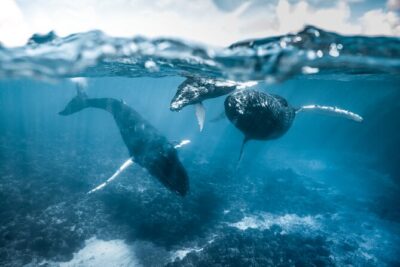
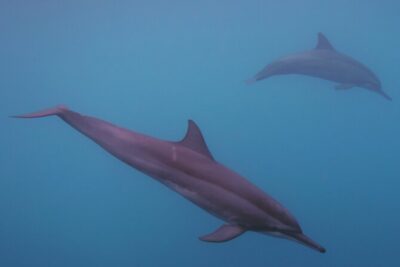
Humpbacks migrate through the Pacific and spend part of the year around French Polynesia. During the search, you might also see narrow-beaked dolphins, reef sharks, or deep-sea sharks. The exact sighting depends on the day, but the trip is not limited to one species.
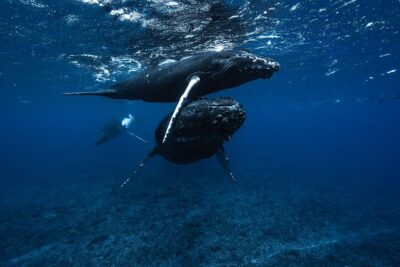
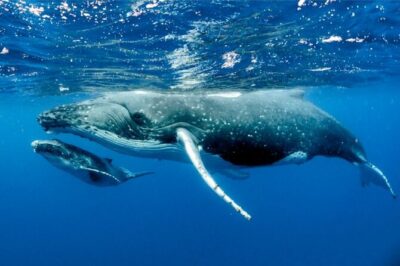
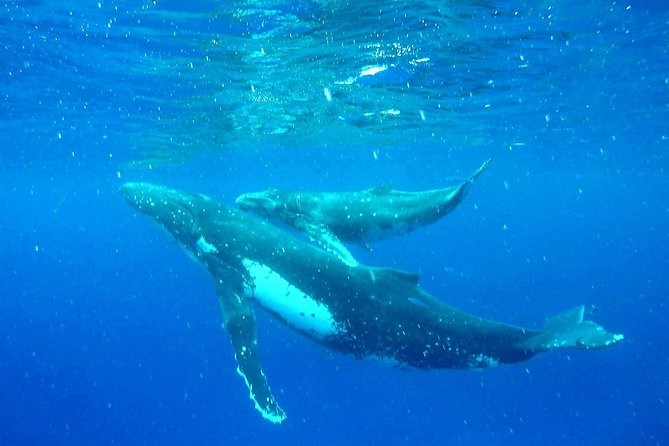
The best moments can be surprisingly quiet. You may see a whale surface, disappear, and surface again somewhere else. A mother and young calf have been seen together, including a calf only about a month old. That sort of sighting can feel far more special than a quick pass by a single adult, but it also demands patience and careful conduct.
The crew uses the whale’s behavior, the weather, and the condition of the water to decide if anyone enters. That rule matters. A close encounter is valuable only if the animals are not being chased, crowded, or disturbed.
More Swim with Whales Experiences in French Polynesia
- Swimming with Whales in Moorea (Half Day tour)
★ 4.5 · 264 reviews - Swim with humpback whales
★ 5.0 · 224 reviews - Private tour observing and swimming with humpback whales in Moorea
★ 5.0 · 126 reviews
How the four-hour trip unfolds
The tour starts and ends at Enjoy Boat Tours Moorea in Moorea-Maiao, French Polynesia. Pickup is offered, and some departures include a shuttle from a hotel before you board the boat. Confirm the exact pickup details when you book, especially if your accommodation is not on Moorea.
Once aboard, the trip is mainly spent searching the sea. The listed whale portion lasts about three hours and 35 minutes, though the actual pace depends on sightings and weather. The crew may spend time locating whales, positioning the boat, explaining behavior, and waiting for the right moment.
This is not a fixed parade route. You may find whales quickly, or you may spend longer scanning the water. That uncertainty is part of the experience, so I would not book it if you need every minute to follow a rigid schedule.
The crew has been praised for spotting whales quickly on some outings, with Carlos and the captain singled out for finding a mother and calf. Joaquin has also been praised for answering questions and helping explain what you are seeing. The names of your exact crew may differ, but the useful thing to look for is a guide who gives clear instructions and keeps the boat organized.
If whales are nearby and conditions are suitable, the group is split into two teams. No more than seven people, including the guide, should be in the water at one time. The overall boat capacity is listed as eight travelers, so this is a notably small outing rather than a large excursion with dozens of swimmers.
What swimming with whales actually demands
You need more than basic comfort in a swimming pool. This is open-ocean swimming, with waves, current, boat movement, and the possibility of feeling disoriented once you leave the vessel. The tour specifically asks for strong physical fitness and effective use of a mask, snorkel, and fins.
The flotation device is included, and the crew assists with snorkeling equipment when people enter and return to the boat. Still, flotation gear does not replace swimming ability. If you are tired, cold, seasick, or uneasy in open water, you should stay on the boat.
Launching into the sea is optional. That is one of the most useful details here. You can watch the whales from the boat and still take part in the search. Nobody should feel pressured to enter just because another person does.
The crew is expected to keep a safe distance and consider the whales’ rest and behavior. You may get close enough to watch a whale underwater, but the animal controls the encounter. Do not expect to swim alongside it for a long stretch or touch it.
Conditions make a major difference. One calm day can produce a smooth, clear encounter, while another can bring rough water and a difficult re-entry into the boat. If the waves are active, even a capable swimmer may find the experience tiring.
The lagoon stop with stingrays and reef sharks
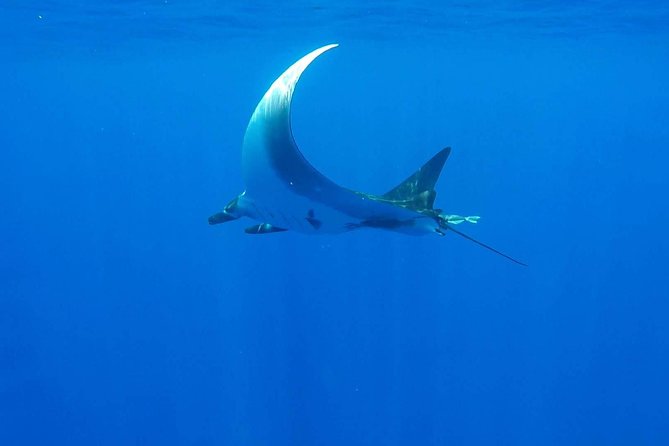
After the whale search, the itinerary includes about 10 minutes of snorkeling in the lagoon with stingrays and reef sharks. This is a short stop, not a second full excursion, but it gives you a calmer change of pace after the open ocean.
The lagoon setting can make the wildlife easier to observe. Stingrays and reef sharks are very different from humpbacks, and the stop adds another side of Moorea’s marine life. You should think of it as a brief bonus rather than the main reason to book.
The short timing also means you should not expect a long, leisurely snorkel session here. If the whale search takes longer or sea conditions change, the overall rhythm may feel different from the advertised outline. The whale portion remains the central event.
More Swim with Whales Experiences in Moorea
- WHALE TOUR – Watching and Swimming with Whales
★ 5.0 · 52 reviews - Sacred Experience Swimming with a Whale in Moorea
★ 5.0 · 46 reviews - Private boat tour to swim with whales and sharks
★ 5.0 · 4 reviews - Watch and Swim with Humpback Whales in Moorea
★ 5.0 · 3 reviews
Guides, safety, and the quality of the outing
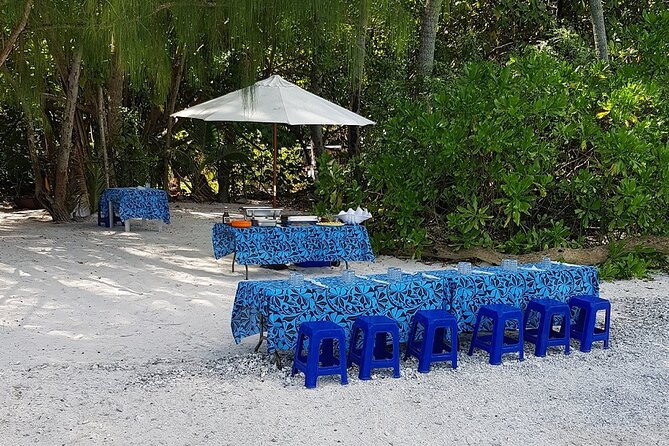
The strongest accounts of this experience focus on the crew. Guides have been praised for staying attentive, helping with masks and fins, translating instructions into English and French, and keeping people together in the water. Joaquin has been noted as a photographer and guide who answered questions, while Carlos was praised for finding a good position near a mother and calf.
Other crew names connected with positive outings include Tamuti, Ike, Alfred, Amo, and Mankato. You may not meet all of them, and the exact team can vary. What matters is the practical service: clear directions, patient help, and a guide who knows when not to put people in the sea.
There is also a useful caution. One account described a weak safety briefing, poor snorkeling equipment, and unclear information about life jackets and drinking-water cups. That does not match the many positive descriptions of attentive crews, but it is worth taking seriously. Before leaving the dock, ask where the flotation equipment is, how the group will be divided, and what the signal is for returning to the boat.
A responsible guide should explain how to behave around whales and what to do if you become tired. If those points are not covered clearly, ask. You are not being difficult. You are preparing for an open-ocean activity.
The maximum group size helps. With up to eight travelers overall and only seven people in the water at once, the guide can keep better track of swimmers than on a crowded boat. It also reduces the chance of a noisy cluster surrounding the animals.
Equipment, comfort, and what to bring
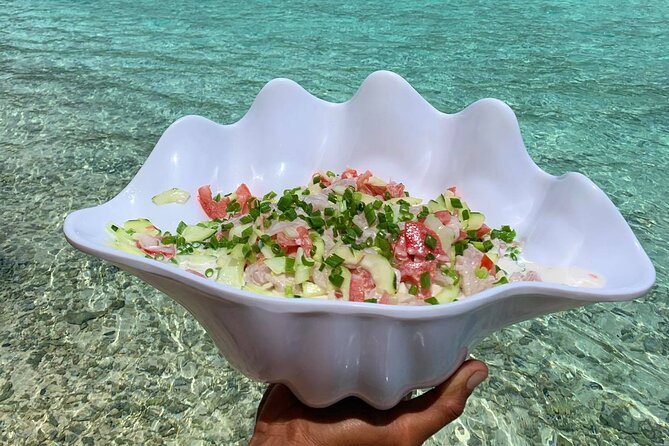
Snorkeling equipment, bottled water, a flotation device, private transportation, and a dry compartment are included. Towels and sunscreen are not included, so bring both.
A dry compartment is useful for phones, wallets, and other items you do not want sitting loose on a wet boat. You still need to pack carefully and avoid bringing valuables you do not need.
Some people get cold in the water even in French Polynesia. One outing specifically suggested bringing or asking about a wetsuit if you tend to feel cold. A wetsuit is not listed as an included item, so check before you count on one.
Use reef-conscious sunscreen if you bring it, and apply it before boarding if possible. You will also want a swimsuit, a towel, and clothing that can handle spray. These are practical additions, not extras that the operator supplies.
Motion sickness deserves attention. The boat spends much of the outing on open water, and people prone to seasickness can become ill. Take your usual precautions before departure and eat in a way that works for you. If you know that boat motion affects you, sit where movement is least bothersome and tell the crew early.
Is $270.63 a fair price?
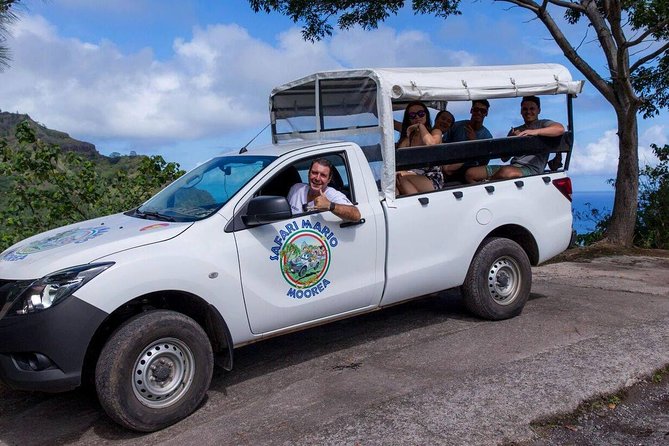
At $270.63 per person, this is an expensive half-day activity. You are paying for a small boat outing, crew time, transportation, snorkeling equipment, water, wildlife spotting, and the possibility of entering the ocean near humpbacks. You are not paying for a guaranteed whale swim.
That distinction is central to the value. If you see whales but weather or behavior prevents a swim, the trip may feel costly. If you get a calm-water encounter with a mother and calf, the price can feel easier to justify because the experience is unusual and difficult to arrange independently.
The small group helps support the price. A crowded boat might offer a lower rate, but it can make it harder to hear instructions, enter the water calmly, and observe animals without a mass of swimmers around you.
Professional photographs and videos may be available to buy afterward. This can be useful if you want to keep your hands free and simply watch, though expectations should be measured. One account found the image and video quality disappointing for the price. I would treat any media package as optional, not part of the value calculation.
The best reason to book is the chance to have a carefully managed whale encounter with a limited number of people. The weakest reason is simply wanting a guaranteed photograph of yourself beside a whale. Nature does not work that way.
Moorea or Tahiti: plan the transport carefully
This activity begins and ends in Moorea. Pickup may be offered on Moorea, but the tour does not solve the transport problem between Tahiti and Moorea.
If you are staying at the Hilton Tahiti or elsewhere on Tahiti, you must check ferry schedules and allow enough time for delays. A missed ferry can mean missing the tour, and late changes may not qualify for a refund. Do not assume the operator will arrange a same-day connection that fits your departure.
The practical choice is to stay on Moorea the night before the tour. That removes a layer of risk and lets you reach the meeting point without racing the clock. If you plan to make the crossing from Tahiti, confirm the timing yourself before the cancellation deadline.
The tour offers free cancellation up to 24 hours before the start time. Changes or cancellations inside that window are not refunded. If poor weather cancels the trip, you can be offered another date or a full refund. The same applies if the minimum number of participants is not reached.
Who should book this experience?
I would recommend it to a confident swimmer who wants a serious wildlife encounter rather than a relaxed sightseeing cruise. You should be comfortable in open water, able to use snorkeling gear, and willing to accept that the whales set the schedule.
It also suits you if you care about animal welfare and prefer a guide who may choose not to release swimmers when conditions are poor. The ability to remain on the boat makes it more flexible for a mixed group, although anyone who is not a strong swimmer should not feel obliged to enter.
This is less suitable for children under 12, people with limited physical fitness, or anyone who becomes badly seasick. The minimum age is 12, and the physical demands are real.
Families with older children may find it memorable, especially if everyone understands that watching from the boat is a valid outcome. Couples and small groups who value a rare natural encounter may also find the cost worthwhile.
Should you book the Moorea whale tour?
Book it if you can accept uncertainty, swim well, and want a chance to see humpbacks with a small group and careful limits on the number of people in the water. The strongest parts are the wildlife focus, the crew’s effort to locate whales, the optional swim, and the chance to see a mother and calf.
Think twice if you need calm water, a guaranteed swim, polished equipment, or a fixed timetable. Ask about the day’s safety briefing, the available flotation equipment, and any wetsuit options before entering the water. If you are staying on Tahiti, solve the ferry plan first.
For the right person, this can be a powerful Moorea memory. Just book it as a chance to meet wild whales responsibly, not as an amusement-park encounter with a guaranteed script.
FAQ
How long does the whale tour last?
The experience lasts about four hours. The whale-search portion is listed at approximately three hours and 35 minutes, followed by a short lagoon snorkeling stop.
Can I see the whales without swimming?
Yes. Entering the water is not obligatory, so you can watch the whales from the boat if you prefer.
How many people can enter the water?
A maximum of seven people, including the guide, are allowed in the water at one time. The group is organized into two smaller groups.
What equipment is included?
Snorkeling equipment, bottled water, a flotation device, private transportation, and a dry compartment are included. Towels and sunscreen are not included.
Do I need to be a strong swimmer?
Yes. The activity requires good physical fitness and comfort swimming in the open ocean while using a mask, snorkel, and fins.
What happens if the weather is poor?
The trip requires suitable weather. If it is canceled because of poor conditions, you can be offered another date or a full refund.
More Swim-with-Whales Trips in Moorea
- Swim with Whale Sharks in the Ningaloo Reef: 3 Island Shark Dive
★ 5.0 · 919 reviews - Cancún: Swim with Whale Sharks
★ 4.5 · 380 reviews - Whale Dream ltd – Whales watching and swim with dolphins
★ 5.0 · 308 reviews - Swimming with the Whale Sharks – Ningaloo Reef (Exmouth)
★ 5.0 · 172 reviews
Just added around Moorea
- Whale watching and snorkelling in Moorea★ 5.0 · 64 reviews
- Whale watching 6 people half day★ 5.0 · 38 reviews
- WHALE TOUR – Watching and Swimming with Whales★ 5.0 · 52 reviews
- Whale Watching Moorea (non-swimming)★ 4.0 · 12 reviews
- Snorkeling Lagoon Cruise and Whale Watching in Moorea★ 5.0 · 2 reviews
- Watch and Swim with Humpback Whales in Moorea★ 5.0 · 3 reviews
- Sacred Experience Swimming with a Whale in Moorea★ 5.0 · 46 reviews
- Shared Whale Expedition★ 5.0 · 34 reviews
Moorea Whale Watching Tours, compared.
Swimming with Whales in Moorea (Half Day tour)
Read our review →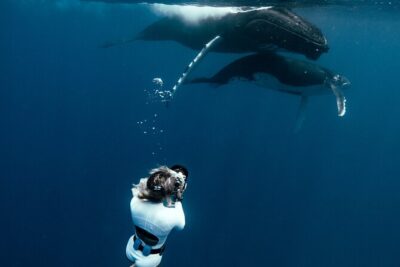
Humpback whale watching and marine life in Moorea
Read our review →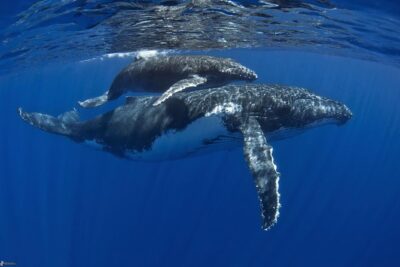
Private tour observing and swimming with humpback whales in Moorea
Read our review →