
Review · SAO MIGUEL ISLAND
Rabo de Peixe: Sperm Whale Sanctuary Expedition
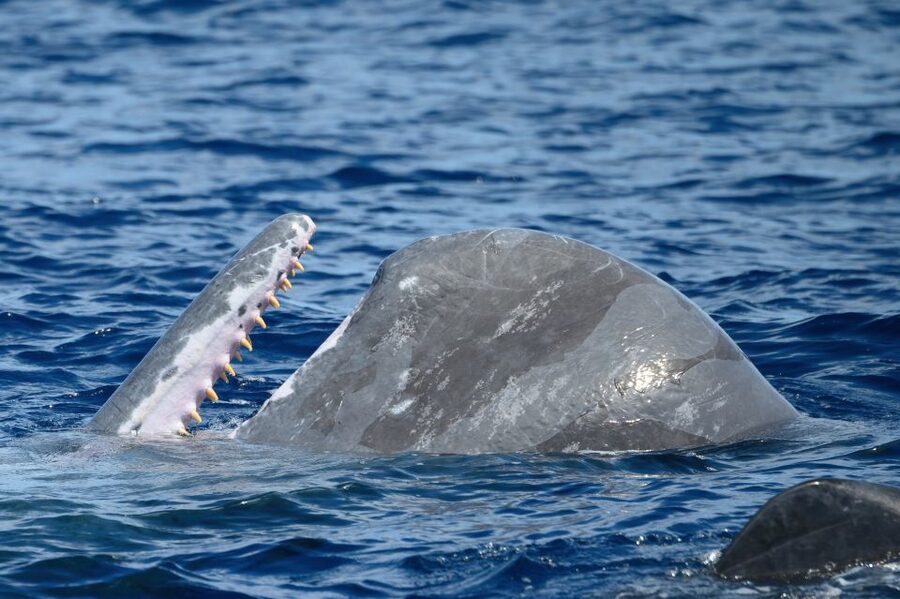
Sperm whales are the stars here, and this outing takes you from Rabo de Peixe into the deep Atlantic waters where these enormous cetaceans feed and travel. You begin with a short briefing, then spend most of the time scanning the sea with marine biologists who explain what you are seeing and how the animals are treated.
I like the serious respect for marine life and the chance to learn from a biologist rather than simply chase a whale fin. I also like the variety: dolphins, turtles, Portuguese man-o-war, and other whale species may appear before you reach the sperm whale area. The main consideration is that sightings are never guaranteed, and rough weather can cancel or delay the trip.
Key points to know before booking
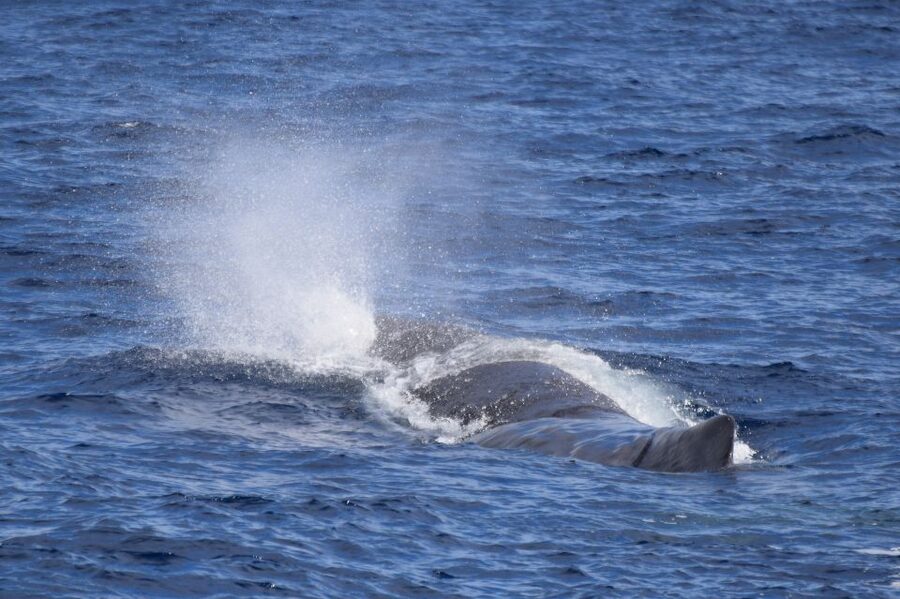
- Sperm whales in their protected habitat: The boat heads into deeper Atlantic waters where these large cetaceans are commonly sought.
- A 10-minute marine biology briefing: You learn about local species, whale-watching rules, and the Azores tradition of observing animals with care.
- A small Zodiac may be used: One recent outing used a 16-place boat, which gives you a close-to-the-water view but can mean a bumpier ride.
- More than a whale trip: Dolphins, turtles, Portuguese man-o-war, and other whales may add to the day.
- Marine biologist Emma has guided outings: Her enthusiasm and clear explanations have made a strong impression on people who joined her boat.
- Allow extra time: Marina logistics can add 30 to 45 minutes to the stated duration.
Why sperm whales make this São Miguel outing special
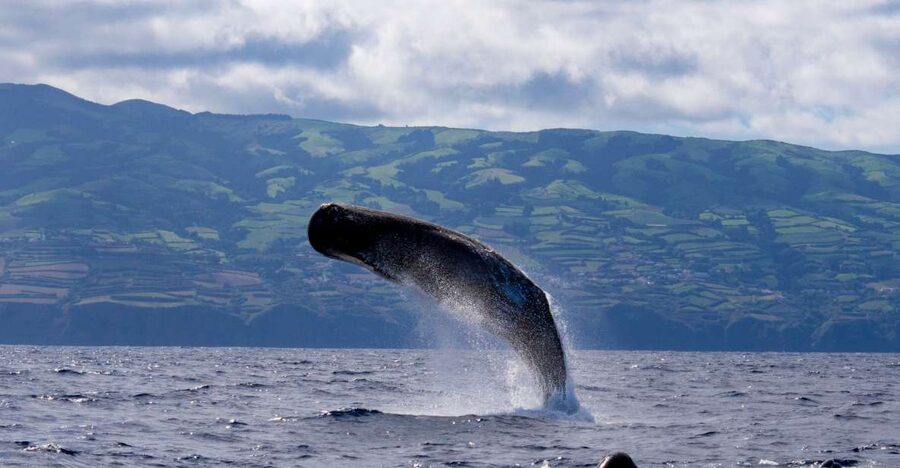
Sperm whales are not just another possible sighting. They are the largest cetacean species, and the waters around the Azores are an important place to look for them. The tour takes you away from the northern coast of São Miguel and toward a protected marine area, where the open sea becomes the main setting.
I like that the focus is not only on getting a photograph. The marine biologists explain sperm whale habits, routes, and the way responsible whale watching works. That context changes how you read the water. A distant blow, a dark back, or a tail disappearing below the surface becomes part of a larger story.
The Azores are volcanic islands, but much of their drama lies offshore. From the boat, you get broad views of the coast before the ocean takes over. Keep your eyes moving. A trip aimed at sperm whales can also produce dolphins, turtles, Portuguese man-o-war, or another whale species.
Recent outings have included impressive variety. One group saw minke whales, Bryde’s whales, several kinds of dolphins, and a hammerhead shark. Another recorded 10 sperm whales and three dolphin species, including bottlenose, common, and Atlantic spotted dolphins. Those sightings show the possible range, but they should not be treated as a promise for your particular departure.
A few more whale trips around Portugal worth a look
- From Funchal: Ecological Catamaran Dolphin Whale Watching
★ 4.5 · 8,204 reviews - Funchal: Dolphin and Whale Watching Catamaran Cruise
★ 4.5 · 5,697 reviews - From Ponta Delgada: Whale and Dolphin Watching Trip
★ 4.7 · 4,109 reviews
Starting at Clube Naval Rabo de Peixe
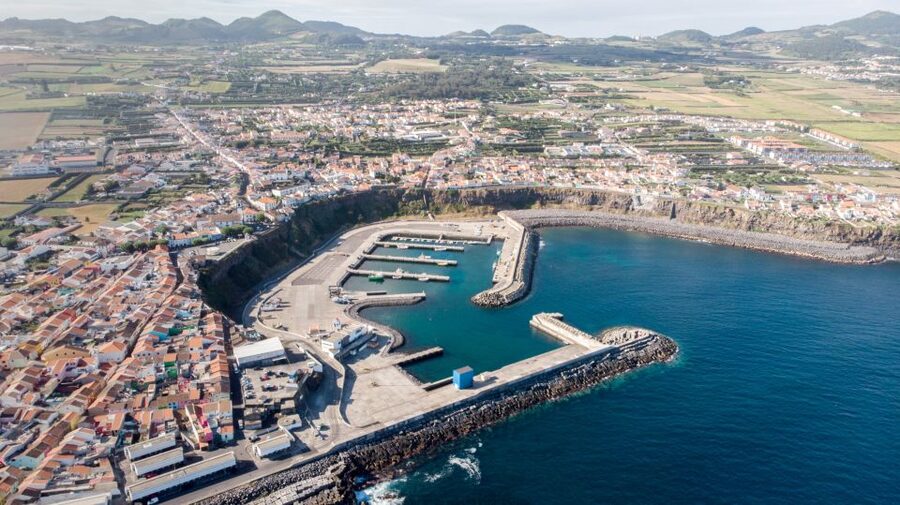
Your meeting point is Clube Naval Rabo de Peixe, on the northern side of São Miguel. There is no hotel pickup or drop-off, so you need to arrange your own way to the harbor and arrive ready for a boat trip.
The first formal part is a safety briefing of about 10 minutes. This is more useful than a quick list of rules. You learn which species you might see, how whale watching developed in the Azores, and why boats keep appropriate behavior around marine animals.
Pay attention here. The briefing helps you understand what the crew is doing once you are offshore. If the boat slows, changes direction, or keeps its distance from an animal, you will know that the pause is part of responsible observation, not poor organization.
Wear comfortable clothes and shoes with a secure grip. High heels are not allowed, and they would be a poor match for a small boat anyway. Bring sunglasses, a sun hat, sunscreen, and snacks. Food and drinks are not included, and a raincoat is also your responsibility.
Three hours on the Atlantic
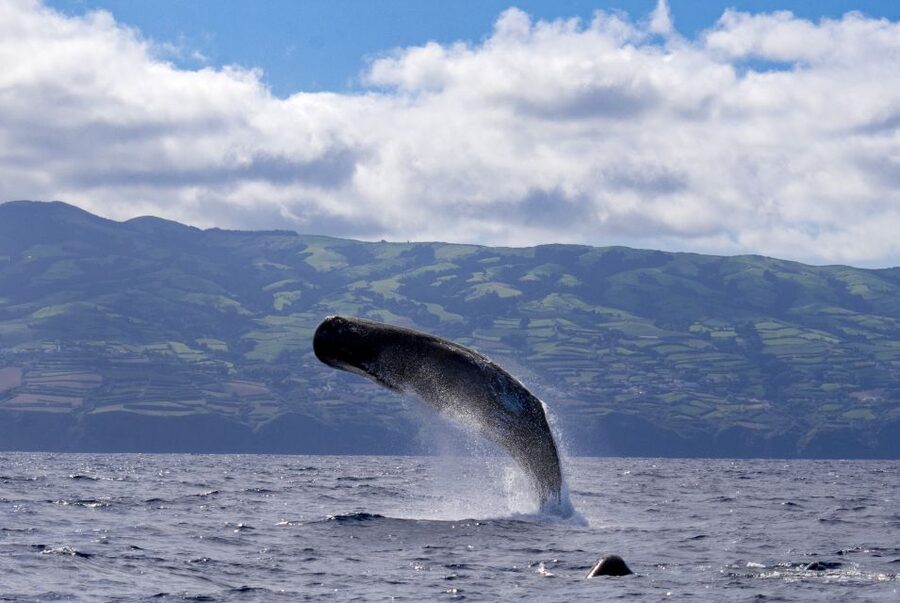
After the briefing, you board the boat and leave Rabo de Peixe Harbor. The total activity is listed as three hours, with the safety talk included in the schedule. In practice, the operator warns that marina logistics can add 30 to 45 minutes, so do not plan a tight connection immediately afterward.
The first part gives you views of northern São Miguel and the coast. Then the boat moves into more open water. The change matters: near the shore, you may spot dolphins, turtles, or Portuguese man-o-war, while the deeper sanctuary is where the search for sperm whales becomes the main purpose.
This is an active lookout rather than a scripted show. You may spend stretches of time watching an apparently empty sea. That is normal for wildlife work. The payoff comes when the crew spots a blow or a moving animal and helps you find it.
A small Zodiac-style boat can make the outing feel direct and intimate. A 16-place boat has fewer people competing for a view than a large vessel, and you sit close to the water. The tradeoff is comfort. Small boats can move sharply with the sea, and this trip is not suitable for pregnant women, people with back problems, people with mobility impairments, or anyone recovering from recent surgery.
The crew may adjust the route and the timing to suit conditions. That flexibility is useful for wildlife, but it also means the trip will not feel like a fixed sightseeing circuit. Bring patience, keep your camera ready, and do not judge the trip by the first quiet stretch.
Meeting the dolphins, turtles, and other sea life
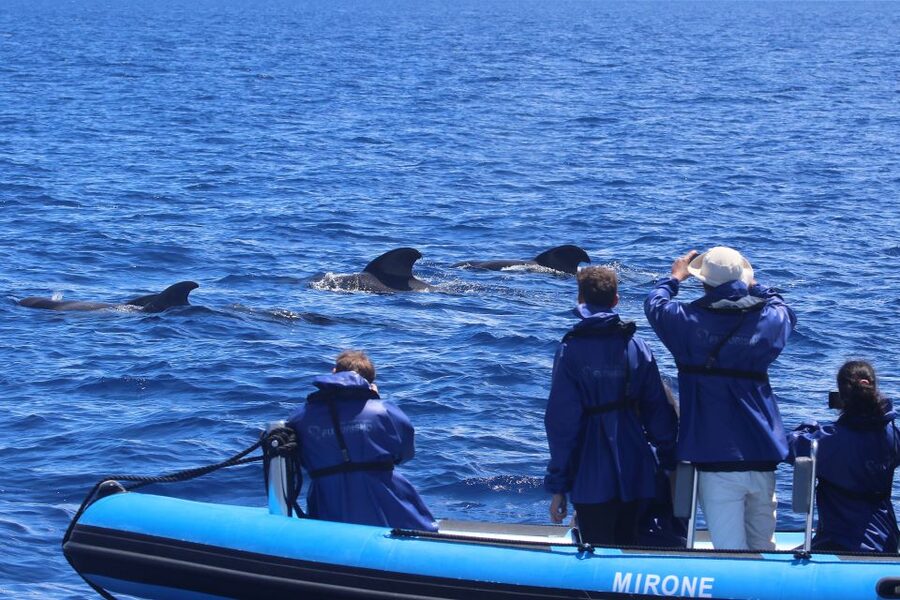
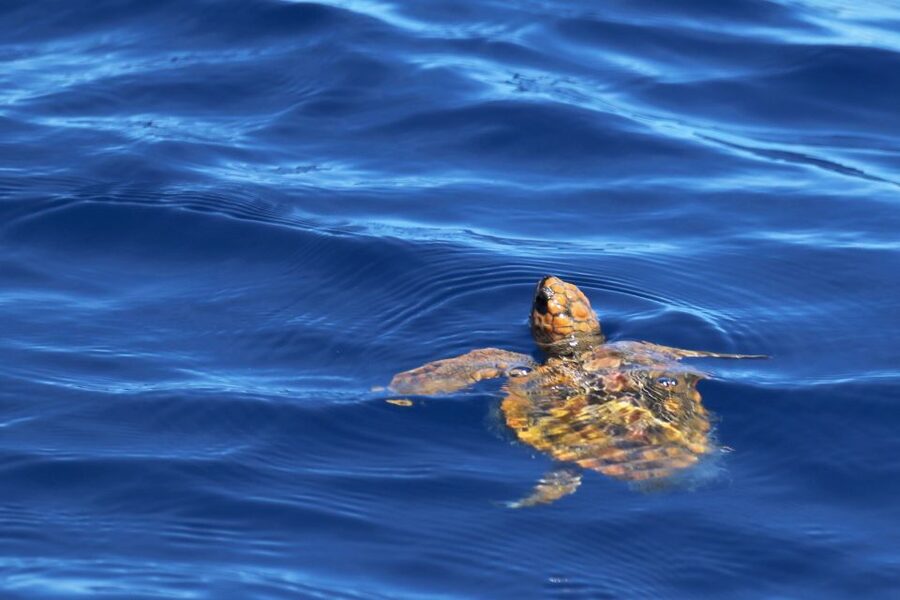
The sperm whale search gives the excursion its name, but the supporting cast can be excellent. Dolphins may travel in groups, and different species can appear on the same outing. Recent sightings have included bottlenose, common, and Atlantic spotted dolphins, sometimes with young animals among them.
You might also see a minke whale or Bryde’s whale. These are very different encounters from sperm whales, and a good guide will help you tell them apart. A hammerhead shark has also appeared on the return route during one successful afternoon, though unusual sightings should be considered a bonus rather than part of the standard plan.
Portuguese man-o-war can be seen along the coast. It is easy to mistake this striking animal for a jellyfish, so listen closely when the guide identifies what is in the water. Turtles are another possibility.
The appeal of this variety is that you are not waiting for one single result. If sperm whales stay out of sight, the crew still has a wider marine world to interpret. That does not remove the disappointment of a whale-free trip, but it gives the three hours more substance.
Same water, a different way to meet the whales:
- Azores: Whale Watching & Islet Boat Tour w/ Marine Biologist
★ 4.7 · 2,945 reviews - Funchal Bay: Dolphin & Whale Watch Luxury Catamaran Cruise
★ 4.2 · 2,684 reviews - All Inclusive Whale and Dolphin Watching Luxury Tour
★ 4.9 · 2,573 reviews - Madeira Dolphin and Whale Watching on a Ecological Catamaran
★ 4.5 · 1,957 reviews
Watching sperm whales without chasing them
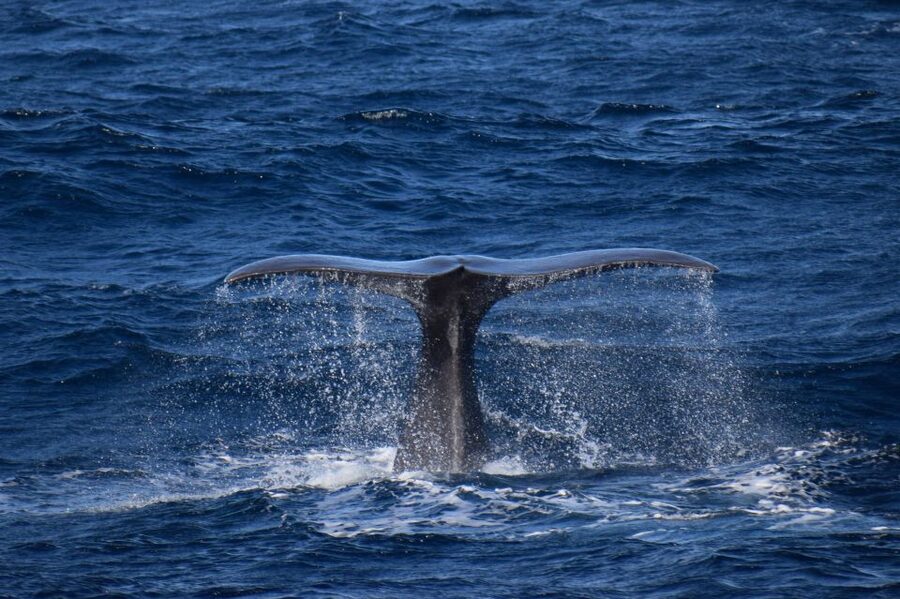
The strongest part of the operation is its approach to the animals. The crew explains how whale watchers and biologists respect the whales, and the most memorable encounters happen when an animal chooses the distance, not when a boat forces it.
One recent sighting included a sperm whale coming close to the boat while the boat did not move toward it. That distinction matters. Responsible wildlife watching can feel less dramatic at first because the boat may wait, hold back, or leave an animal alone. In the long run, that restraint is exactly what you want from a marine operator.
You will need to accept that the sea decides the schedule. A whale may surface far away, appear for a moment, or vanish before everyone has a clear view. The crew’s skill lies partly in finding animals and partly in helping you understand what you have seen without disturbing them.
The best clothing choice is practical rather than stylish. Sun, spray, and wind can all be part of the same trip. The operator does not provide raincoats, so pack your own outer layer. Snacks are worth bringing, especially if you are sensitive to the motion of a small boat and prefer to have something light at hand.
Learning from a marine biologist
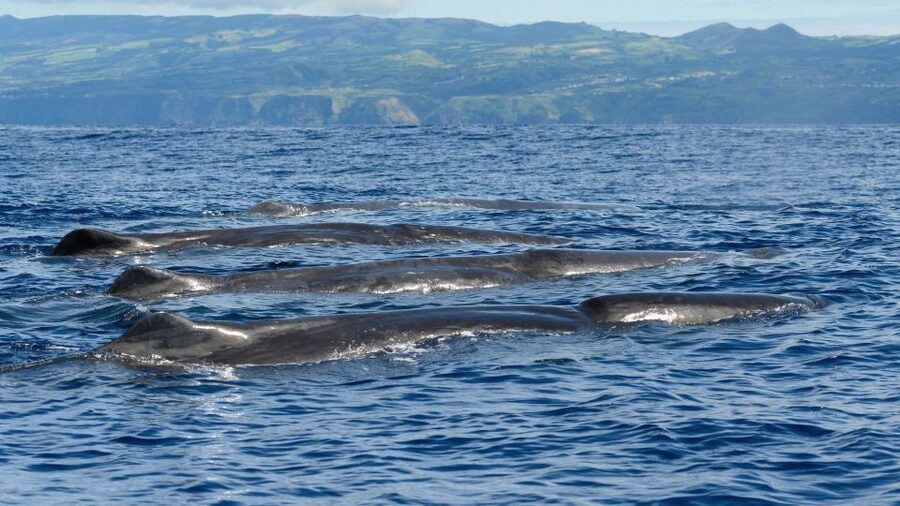
A marine biologist rides with you, and that makes this more than a ride to a viewing point. The guide discusses the animals’ habits, routes, and place in Azorean waters during the outing and again after you return.
Biologist Emma has led departures with a clear sense of excitement about sperm whales. That matters because the open ocean can look empty to an untrained eye. A guide who can explain where to look and what behavior means helps you stay engaged during the quiet moments.
The post-trip talk at the harbor is a useful final piece. You can review the species you saw, ask about their habits, and connect the outing to wider conservation work in the Azores. If your group sees several kinds of dolphins or more than one whale species, this is when the sightings become easier to sort out.
English and Portuguese are offered. If you want the scientific side of whale watching, listen during both the opening briefing and the closing discussion. The short briefing tells you how to observe; the return conversation helps you make sense of the animals.
Is $82 a fair price?
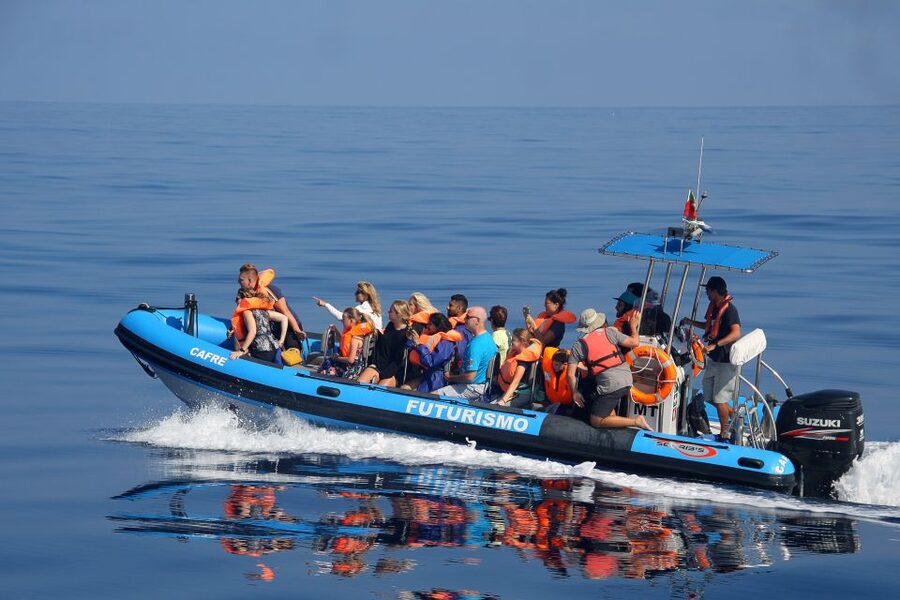
At $82 per person, I consider this a reasonable price for a three-hour marine biology-led expedition, especially if you value the educational side and the chance to use a smaller boat. You are paying for the boat, crew, briefing, marine biologist, and access to a protected offshore setting rather than for a guaranteed whale sighting.
The value depends on your expectations. If you want a quick coastal cruise with a certain photograph, this may feel expensive when the sea is quiet. If you want a respectful wildlife outing with professional interpretation, the price is easier to justify.
The strongest value comes when the trip combines sperm whales with dolphins or other cetaceans. Some departures have produced 10 sperm whales, several dolphin species, and close encounters that felt entirely controlled by the animals. Other outings may be less generous, so book this for the quality of the search, not a promised checklist.
The free cancellation policy gives you useful flexibility. You can cancel up to 24 hours in advance for a full refund, and you can reserve now and pay later. Since good weather is required, those terms are practical rather than decorative.
Weather, comfort, and who should go
This activity requires good weather. The operator may delay or cancel a departure when conditions are unsuitable, and the marina process can add 30 to 45 minutes even when the boat runs. Keep your schedule loose.
I would choose this outing if you are comfortable with open water, changing conditions, and periods of patient searching. It suits adults and older children who can follow safety instructions and stay alert on a moving boat, although the supplied information does not set a minimum age.
I would skip it if you have back trouble, reduced mobility, a recent surgery, or are pregnant. A small boat can be physically demanding, and the ocean is not a smooth platform. Alcohol and drugs are not allowed, and drones are prohibited.
Bring:
- Comfortable shoes and clothes
- Sunglasses and a sun hat
- Sunscreen
- Snacks
- A raincoat or other weather layer
Leave high heels, drones, alcohol, and drugs behind. You do not need special equipment listed in the tour details, but a camera with a strap may be useful if you plan to photograph from the boat.
Should you book the Rabo de Peixe expedition?
Book it if you want a wildlife-focused Atlantic outing led by marine biologists, and if you can accept that nature controls the result. The combination of a sperm whale search, possible dolphin sightings, a small boat, and conservation guidance gives the trip real character.
I would be especially keen to book on a flexible day when I could tolerate a weather delay and would not mind returning without a perfect photograph. The best reason to go is not certainty. It is the chance to watch large marine animals on their terms and understand more about the waters around São Miguel.
Skip it if you need guaranteed sightings, hotel transportation, a calm ride, or a fixed end time. For everyone else, $82 is a fair price for three hours of attentive searching, with the possibility of one of the Azores’ most memorable natural encounters.
FAQ
Where does the tour start?
It starts at Clube Naval Rabo de Peixe in Rabo de Peixe, on São Miguel Island.
How long does the experience last?
The activity is scheduled for three hours, including a 10-minute safety briefing. Marina logistics may add 30 to 45 minutes to the total time.
What animal is the main focus?
The main focus is the sperm whale, described as the largest cetacean species. The boat searches for them in deeper Atlantic waters within a protected marine habitat.
Could I see dolphins?
Yes. Dolphins may appear during the trip, and possible species include bottlenose, common, and Atlantic spotted dolphins.
Could I see other marine life?
You might see turtles, Portuguese man-o-war, minke whales, Bryde’s whales, or other marine species. Sightings depend on conditions and animal behavior.
Is a marine biologist included?
Yes. A marine biologist joins the boat, and the tour includes a briefing before departure and more information about the animals after returning.
What languages are available?
The live guide service is available in English and Portuguese.
Is hotel pickup included?
No. Hotel pickup and drop-off are not included, so you need to reach Clube Naval Rabo Peixe yourself.
What should I bring?
Bring comfortable shoes, sunglasses, a sun hat, comfortable clothes, sunscreen, and snacks. A raincoat is not included, so bring one if you want rain protection.
Can I cancel the booking?
You can cancel up to 24 hours in advance for a full refund. You can also reserve now and pay later.
Just added around Portugal
- Madeira : Whales and Dolphins wooden boat excursion★ 4.1 · 247 reviews
- Madeira: Whale and Dolphin Watching Tour★ 4.6 · 174 reviews
- From Machico: Madeira Whale and Dolphin Watching Boat Tour★ 4.8 · 225 reviews
- Terceira Island: Whale & Dolphin Watching | Best Wildlife Tour★ 4.0 · 24 reviews
- Sesimbra: Arrábida Dolphin and Whale Watching tour with biologist★ 5.0 · 248 reviews
- Observation of Dolphins and Whales with Marine Biologist in Arrábida★ 5.0 · 224 reviews
- Whale Watching Activity in North Coast★ 4.5 · 49 reviews
- Among Whales Dolphins and Volcanoes Full Day Tour With Lunch★ 4.5 · 28 reviews
Sao Miguel Island Whale Watching Tours, compared.
Ponta Delgada: Whale and Dolphin Watching Trip
Read our review →
Azores: Whale Watching & Islet Boat Tour w/ Marine Biologist
Read our review →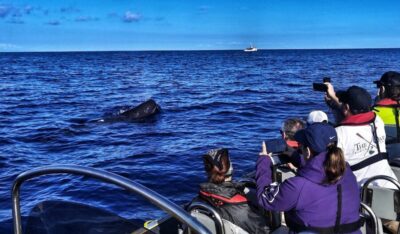
Terceira: Whale and Dolphin Watching in a Zodiac Boat
Read our review →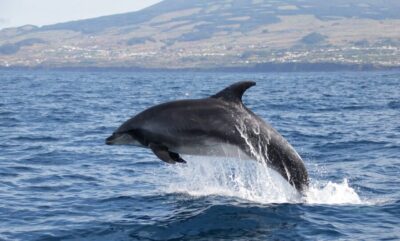
Terceira: Half-Day Dolphin and Whale Watching Tour
Read our review →
São Miguel: Whales & Volcano Full-Day Tour with Lunch
Read our review →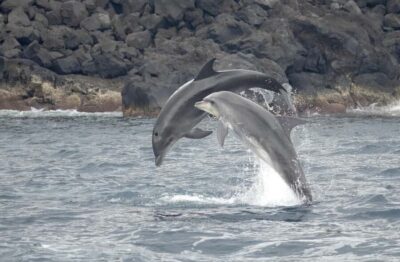
São Miguel: Whale Watching & Wild Dolphins Swimming Full-day
Read our review →Browse the lists this tour appears in