
Review · USA
Plymouth: Whale Watching Cruise
The best part of this four-hour cruise is the setting: Cape Cod Bay opens into Stellwagen Bank, a protected feeding area where humpback whales, finback whales, minke whales, pilot whales, and endangered right whales may appear. Some trips produce a single sighting. Others bring repeated tail waves, fin slaps, feeding whales, and dolphins near the harbor.
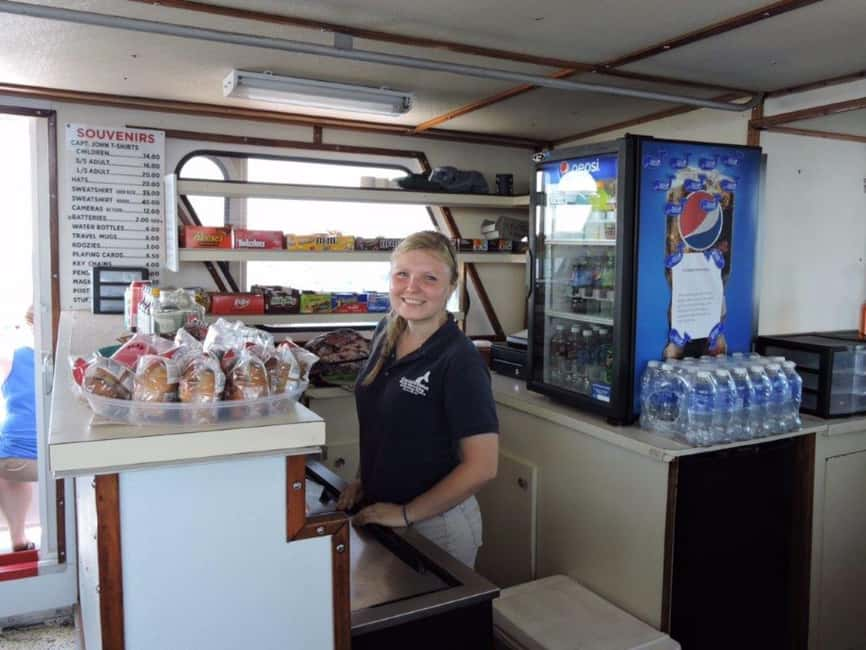
I like the strong naturalist commentary, which turns a boat ride into a lesson in whale behavior and identification. I also like the comfortable catamaran, indoor and outdoor seating, and full galley service. The main drawback is simple: whale watching is governed by weather and wildlife, not a timetable. Fog can limit views, and the boat may feel crowded when fully booked.
Key points to know
- Stellwagen Bank is the main viewing area: Expect a long run out from Plymouth before the whale action begins.
- Guides add real value: Naturalists such as Lindsay, Skylar, and Kelly have been praised for clear explanations and lively commentary.
- Sightings can be excellent: Recent trips have included humpbacks, fin whales, seals, dolphins, and the famous humpback Salt.
- The ride takes about four hours: Plan for roughly 60 minutes of ticketing and boarding before departure.
- Bring serious weather protection: The water can feel much colder than Plymouth, even on a sunny day.
- The boat has useful comforts: Indoor seating, outdoor viewing areas, a full galley, and alcoholic drinks for purchase make the trip easier on long runs.
From Town Wharf to Stellwagen Bank
You leave from Town Wharf in Plymouth, a fitting starting point for a day on the water. The cruise first carries you away from the harbor and toward Cape Cod Bay, with the main whale watching area farther out at Stellwagen Bank.
That travel time matters. One recent account described about an hour and a half getting out to the feeding grounds. The full excursion lasts four hours, so you should not think of this as a quick harbor outing. It is a substantial ocean trip, with a fair portion of the time spent reaching the area where whales gather.
Arrive early. You are told to allow about 60 minutes for ticketing and boarding, which is far more comfortable than arriving at the last moment. You can board, find a useful viewing position, and settle in before the boat leaves. Parking is not included, and the detailed parking and boarding directions arrive with your confirmation.
Stellwagen Bank is important because it is a marine sanctuary and a major feeding area. That gives the naturalist a useful setting for explaining why whales gather here, how they feed, and how different species can be identified. It also means the captain may need to move around the area rather than head to one fixed spot.
More Whale Watching Cruises in the USA
- Boston: City Cruises Whale Watching Cruise
★ 4.5 · 4,710 reviews - City Cruises Boston Whale Watching Cruise by High-Speed Boat
★ 4.5 · 3,115 reviews - San Diego Whale Watching Cruise
★ 5.0 · 2,317 reviews
What the Four-Hour Schedule Feels Like
The first part of the cruise is the outward run. Use it to get comfortable, ask questions, and decide how much time you want to spend outside. The boat has indoor and outdoor seating, so you can move inside if the wind becomes too sharp or return outside when a whale is reported.
Once the boat reaches the feeding grounds, the pace changes. You may spend time watching a whale surface repeatedly, wait for a tail to appear, or shift position as the captain looks for better viewing. One whale held attention for about an hour on a recent trip, while other outings included two active humpbacks swimming on their backs and waving their fins.
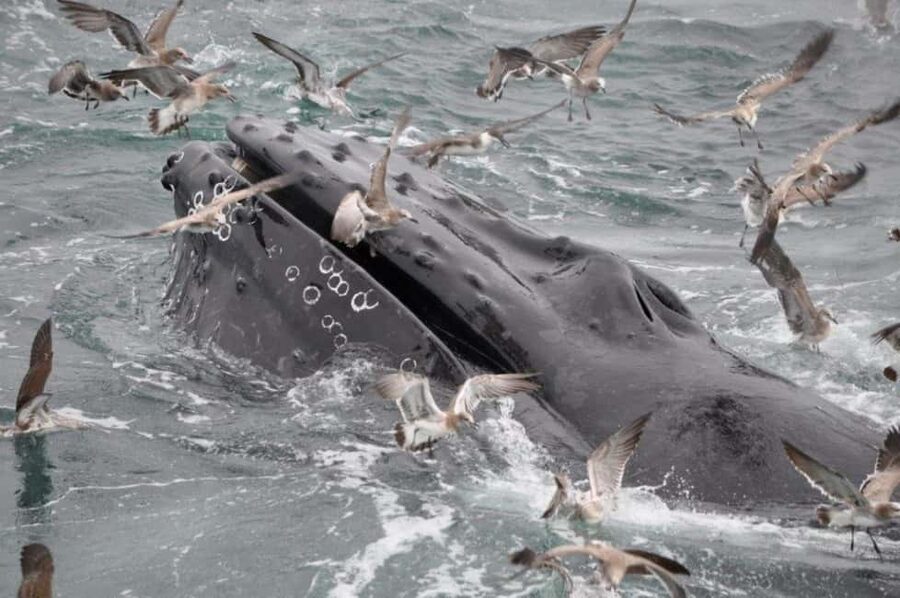
This is not a staged show. Whales do not surface on command, and the best moments may last only a few seconds. A tail rising cleanly from the water, a fin slap, or a whale surfacing with its mouth open can reward a lot of patient watching. Keep your camera ready, but do not spend the whole trip looking through a screen.
The return trip gives you time to warm up, eat, and compare notes with the naturalist. One outing ended with dolphins following the boat back toward port. That kind of encounter is possible, but it should be treated as a bonus rather than part of the promised schedule.
The Whales You May See
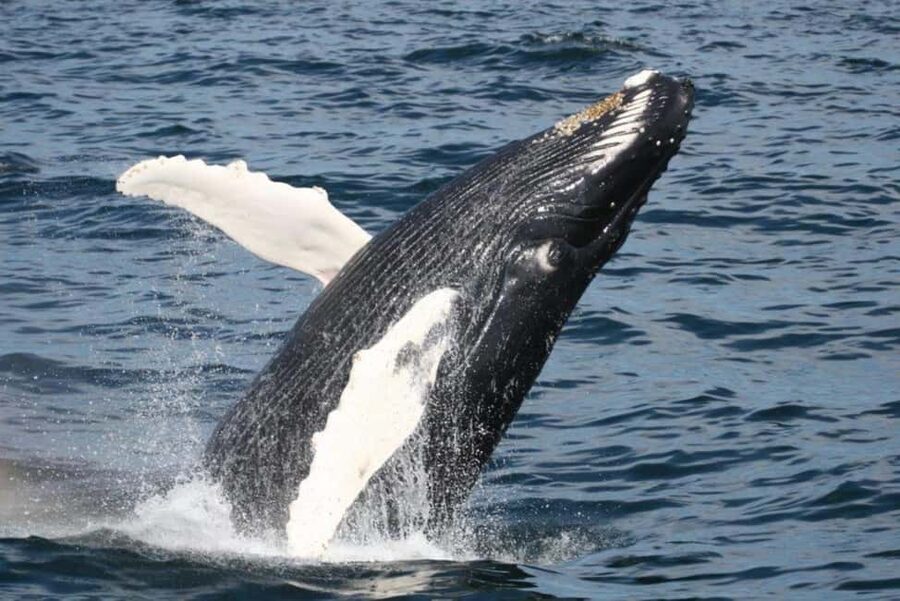
Humpback whales are the stars of many trips. They are large, active, and easier to recognize than some other species because of their long pectoral fins and distinctive tail patterns. The naturalist may identify individual whales by their markings and explain their histories.
Salt, a famous humpback observed and tracked for almost 50 years, has appeared on recent outings. Another whale called Music was seen slapping, clapping, and waving her fins, while Tripod gave repeated tail waves. These names turn a distant animal into a recognizable individual and give the naturalist something meaningful to explain.
Fin whales can be harder to appreciate at first because their bodies are long and streamlined. They are also endangered, which makes a sighting particularly special. One trip briefly saw two fin whales along with Salt.
The list also includes minke whales, pilot whales, and endangered North Atlantic right whales. Seals can appear too. Seeing several species on one outing is possible, but no specific species is promised. The honest way to book this cruise is to expect time on the ocean with a chance of whales, not a guaranteed performance.
Naturalists Who Make the Waiting Worthwhile
A good naturalist changes the experience. Without one, you may see a dark shape on the water and wonder what you are looking at. With one, you can learn the difference between a humpback and a fin whale, understand feeding behavior, and hear the stories behind known animals.
Recent trips have included naturalists named Lindsay, Skylar, and Kelly. Lindsay was praised for being clear, informed, and entertaining. Skylar was described as engaging, while Kelly received particular credit for explaining what was happening during the sightings.
The guides also add geographic context. One recent account noted that the naturalist explained both the whales and the surrounding geography. That is useful during the outward run, when you are still waiting for wildlife activity.
The guide is also your second set of eyes. Naturalists know where to look and can point out a blow, back, fin, or tail before it disappears. Listen carefully, then watch the water rather than only following the crowd. A calm, patient guide is especially valuable on a foggy day or during a quiet stretch.
Same water, a different way to meet the whales:
- Juneau Wildlife Whale Watching
★ 5.0 · 7,379 reviews - Juneau Wildlife Whale Watching & Mendenhall Glacier
★ 5.0 · 6,236 reviews - Whale Watching Tour in Gloucester
★ 5.0 · 4,460 reviews - Maui Eco-Raft Tour: Eye-Level Whale or Dolphin Watching – Lahaina
★ 5.0 · 2,482 reviews
Boat Comfort, Crowding, and Viewing Positions
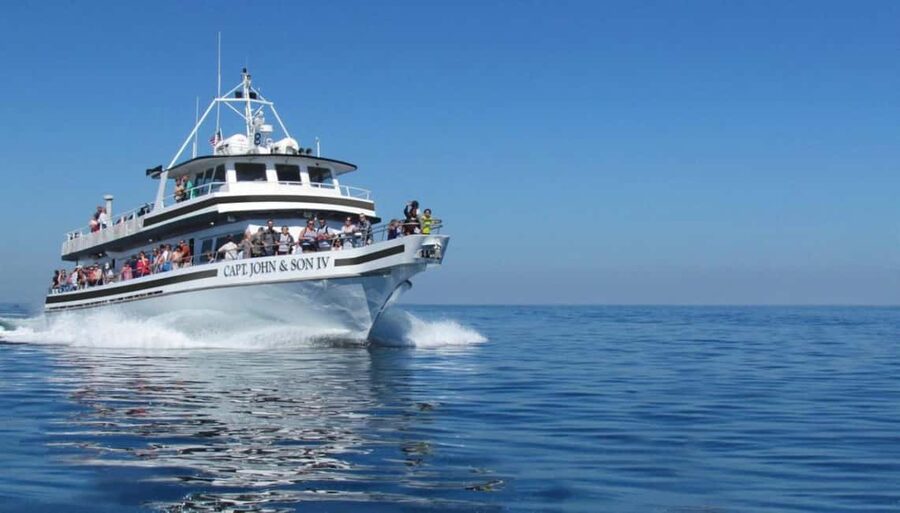
The catamaran has indoor and outdoor seating, which is important on a four-hour trip. You can get out of the wind, take a break from the sun, or warm up with food and a drink from the galley. Alcoholic beverages are available for purchase, though they are not included in the $74 ticket.
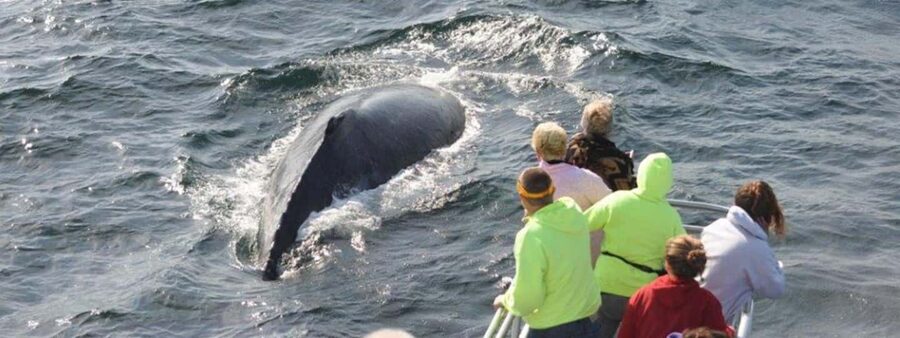
Outdoor viewing is where you will want to be when whales are near. That can create a bit of movement as people shift from one side of the boat to the other. One recent outing had plenty of room, while another felt overcrowded. A sold-out trip was still described as manageable, but finding a clear sightline may require patience.
I would not choose a viewing place and refuse to move. Whales may surface on either side, and the captain may reposition the boat. Wear shoes and clothing that make it easy to move safely, and keep your camera ready without blocking someone else’s view.
The boat and crew have received especially strong praise. Captains named in recent outings include Kenny, John, and Tyler. Tyler was credited with moving around to find whales during both a foggy trip and a clearer second attempt. That kind of flexibility matters because conditions can change quickly on the bay.
Weather, Motion, and the Reality of Wildlife
Cold is the most predictable challenge. Even if Plymouth feels warm, wind and open water can make the deck chilly. Bring warm clothing, a jacket, sunscreen, and more layers than you think you need. You can remove a layer, but you cannot borrow a warmer one from the sea.
Motion sickness is the less predictable challenge. The experience is specifically not suitable for people prone to seasickness. If you know you have trouble on boats, plan carefully and consider motion sickness prevention before departure. Stay aware of how you feel early in the trip, since the ride out can take a substantial part of the schedule.
Fog can change the day completely. One outing spent almost the entire trip in fog and produced one whale. The same party returned the next day in clear weather and saw four whales of two types, along with seals. That story captures both the risk and the value of whale watching: conditions matter, and a second attempt may produce a very different day.
The cruise cannot guarantee a certain number of whales or a particular species. Some trips have included 10 to 15 humpbacks, a breaching whale, and repeated feeding activity. Another trip saw only one whale through heavy fog. You should be comfortable with that uncertainty before paying for any whale watching cruise.
Is $74 a Fair Price?
At $74 per person, this is not a budget harbor ride. You are paying for four hours on the water, the vessel, the captain and crew, a naturalist, and access to a major whale feeding area. The full galley service is included, but food, drinks, and alcoholic beverages are not clearly listed as part of the ticket, and alcohol costs extra.
I think the price makes sense if whale watching is one of your main reasons for visiting Plymouth or Cape Cod. The cruise gives you enough time to reach Stellwagen Bank and wait for meaningful activity. A shorter trip might cost less, but it could also leave less time in the feeding grounds.
The value is less certain if you only want a guaranteed photo opportunity. Wildlife does not cooperate, fog can erase the view, and a crowded boat can make sightlines harder. If the chance of seeing whales matters more to you than certainty, the cost is easier to justify.
The rating of 4.7 from 171 bookings points to a very strong overall experience, but the details matter more than the number. The most repeated strengths are the crew, the naturalists, the captain’s handling of the boat, and the quality of the whale sightings. The recurring cautions are crowding, cold, and the possibility of limited sightings in poor weather.
Who Will Enjoy This Cruise Most
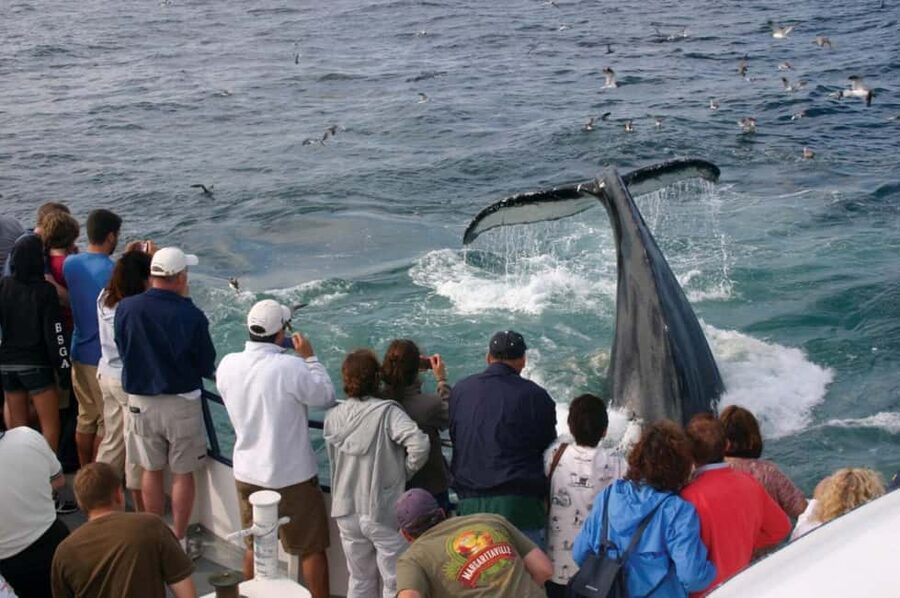
Families can do well here because the trip combines wildlife, open water, and clear explanations. Children may need help staying patient during the outward run, but the payoff can be memorable when a whale surfaces nearby.
Photographers will appreciate the possibility of active humpbacks, tail waves, fin slaps, and feeding behavior. Bring a camera, binoculars, and spare patience. The best shot may come between announcements, so watch the water continuously.
It also suits adults who want more than a quick look at a whale. The naturalist can explain individual animals, species, feeding grounds, and local geography. The galley and indoor seating make the long outing easier than a bare-bones boat ride.
I would hesitate to recommend it to anyone who becomes badly seasick or who needs a fixed, predictable schedule. I would also avoid booking it as the only important event of a very short visit unless you can accept the possibility of fog and limited wildlife.
What to Bring and How to Prepare
Pack warm layers, a jacket, sunscreen, a camera, and binoculars. You may need all of them on the same trip because the sun can be bright while the wind remains cold.
Arrive with time to spare. The recommended allowance of about 60 minutes covers ticketing and boarding, and it prevents a rushed start. Check your confirmation for parking and boarding instructions, since parking fees are not included.
If you are sensitive to motion, bring your preferred motion sickness prevention. The activity is not a good fit for people prone to seasickness, and four hours is a long time to spend uncomfortable on open water.
The tour is conducted in English. Cancellation is flexible up to 24 hours before departure for a full refund, and you can reserve now and pay later. Those policies help if the weather forecast looks uncertain, although they do not change the fact that wildlife sightings are never guaranteed.
Should You Book the Plymouth Whale Watching Cruise?
Book it if you want a serious whale watching outing from Plymouth, not a short sightseeing loop. The four-hour length gives you time to reach Stellwagen Bank, listen to a naturalist, and wait for animals to surface. The strongest reasons to choose it are the experienced crew, the useful wildlife commentary, and the chance of seeing named humpbacks such as Salt, Music, or Tripod.
Go in prepared for cold, motion, crowding, and an occasional foggy day. If you can accept those conditions, $74 is a reasonable price for access to one of the region’s major whale feeding areas. If you need guaranteed sightings or dislike long boat rides, spend your money elsewhere.
FAQ
How long is the Plymouth whale watching cruise?
The cruise lasts four hours. Allow about 60 minutes before departure for ticketing and boarding.
Where does the cruise depart?
The boat departs from Town Wharf in Plymouth, Massachusetts. Parking and boarding instructions are provided in your confirmation email.
What whale species might I see?
Possible sightings include humpback, finback, pilot, minke, and endangered right whales. Seals and dolphins have also been seen during some trips.
Is whale watching guaranteed?
No. Sightings depend on weather, visibility, and wildlife activity. Trips have ranged from one whale in heavy fog to many humpbacks, fin whales, seals, and dolphins in clearer conditions.
Is food available on the boat?
Yes. Full galley service is available onboard. Alcoholic beverages can be purchased separately.
What should I wear and bring?
Bring warm clothing, a jacket, sunscreen, a camera, binoculars, and motion sickness prevention if needed. Temperatures can be cooler on the water than on land.
Is the tour conducted in English?
Yes. The tour has a live guide and is conducted in English.
Can I cancel or pay later?
You can cancel up to 24 hours in advance for a full refund. You can also reserve your place and pay later.
Just added around the USA
- Newport Beach: Year-Round Whale Watching Cruise★ 4.2 · 151 reviews
- Juneau: Mendenhall Glacier and Whale Watching Tour★ 4.6 · 98 reviews
- West Oahu: Eco-Friendly Whale Watching Cruise★ 4.5 · 40 reviews
- Oahu: Waikiki Eco-Friendly Morning Whale Watching Cruise★ 4.4 · 119 reviews
- Whale Watch Sail Ma’alaea★ 4.9 · 27 reviews
- Whale and wildlife watching Private and Semi-Private tours★ 5.0 · 2 reviews
- Oahu: Waikiki Eco-Friendly Afternoon Whale Watching Trip★ 4.5 · 60 reviews
- Waikiki: Sunset Whale Watching with 2 Drinks (BYOB-Friendly)★ 4.3 · 34 reviews
USA Whale Watching Tours, compared.
Juneau Wildlife Whale Watching & Mendenhall Glacier
Read our review →
City Cruises Boston Whale Watching Cruise by High-Speed Boat
Read our review →
Maui Eco-Raft Tour: Eye-Level Whale or Dolphin Watching – Lahaina
Read our review →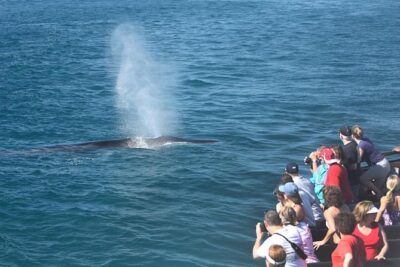
Browse the lists this tour appears in