
Review · AUSTRALIA
Mooloolaba: Whale Watching Cruise
A humpback whale can turn a routine boat trip into something you remember for years. From Mooloolaba, you cruise out past the river mouth and search the open water for breaching whales, tail slaps, spy-hops, dolphins, turtles, and sea birds. The animals set the schedule, so this is real wildlife watching, not a staged show.
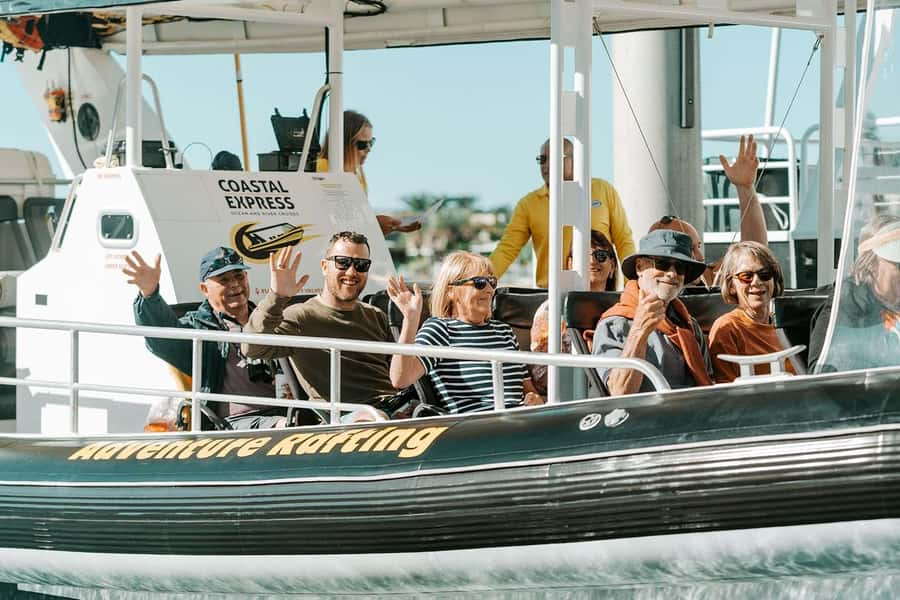
I like the comfortable Whale One vessel, with indoor, outdoor, upstairs, and downstairs viewing areas. I also like the crew’s practical approach: they explain what to look for, share facts about the migration, and keep a respectful distance from the whales. The main drawback is the sea. Once you leave the shelter of the coast, the swell can be strong, and several passengers have become seasick.
Key points
- Three hours on the water: The cruise leaves Mooloolaba River, reaches the river mouth in about 15 minutes, then spends most of its time searching offshore.
- Several viewing levels: You can move between indoor and outdoor areas, upstairs and downstairs, though crossing from one side to another may be awkward when the boat is busy.
- Strong whale activity in season: Sightings have included mothers with calves, juvenile males, breaching whales, fluke slaps, and spy-hops.
- Good crew commentary: The team helps you spot small surface movements and explains whale behavior and migration.
- Free return trip if no whales appear: This is not a refund, but it gives you another chance to see them.
- Prepare for motion: Warm clothes, sunscreen, a hat, and seasickness medication are sensible additions to your day bag.
Leaving Mooloolaba River for the open sea
Your day begins at Sunreef Mooloolaba, Shop 11 to 12 at The Wharf Mooloolaba. Arrive at least 15 minutes before departure, check in at the desk, collect your boarding pass, and wait in the designated area before boarding.
That early arrival matters. The crew uses the waiting period to organize boarding, and getting on promptly gives you more choice of viewing positions. You do not need to race for a particular seat, though. Whale watching is a moving activity, and you will likely shift around the boat as sightings develop.
After boarding, you receive a safety briefing as the vessel leaves the Mooloolaba River. The first part of the cruise is gentle and scenic, with the boat passing through the river mouth and out toward the coast. After roughly 15 minutes, the proper search begins.
The Mooloolaba coastline gives you something to watch while the crew scans the horizon. This is not simply a straight ride to a fixed viewing point. The staff are looking for signs of whale activity and adjusting the route as needed, so the pace can feel active even during quiet spells.
More Whale Watching Cruises in Australia
- Brisbane Whale Watching Cruise from Redcliffe or Sunshine Coast
★ 5.0 · 997 reviews - Freedom 3/4 Day Hervey Bay Premium Whale Watching Cruise
★ 5.0 · 919 reviews - Sydney Whale-Watching Cruise Including Lunch or Breakfast
★ 4.5 · 878 reviews
What the three-hour search really involves
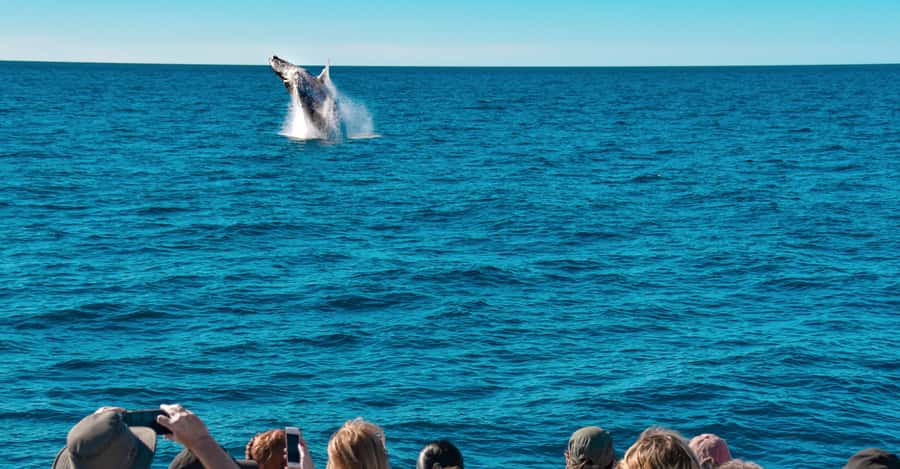
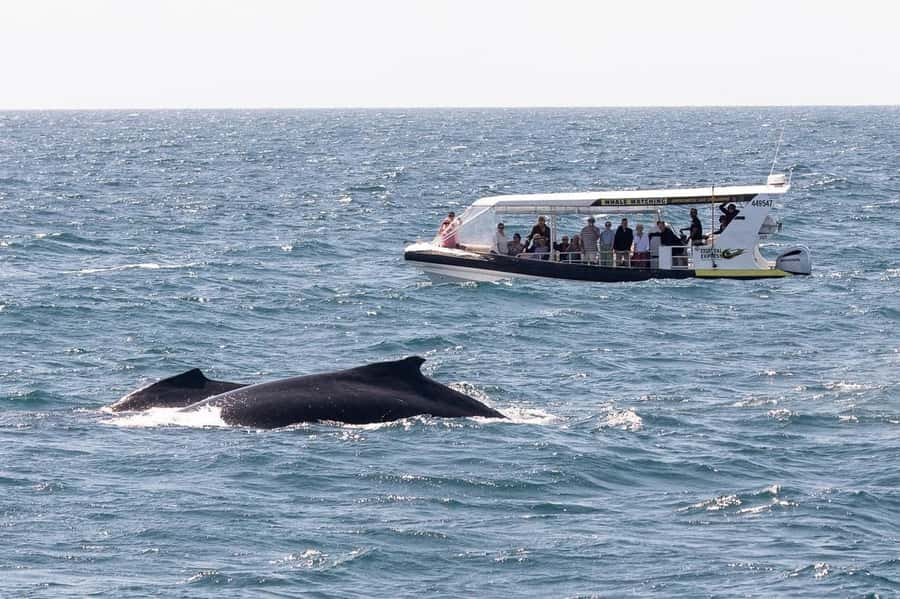
Whale watching requires patience. A humpback might appear as a small puff of spray, a dark back, or a brief movement of the tail. The crew helps you read these signs, pointing out the difference between minor surface activity and the larger displays that everyone hopes to see.
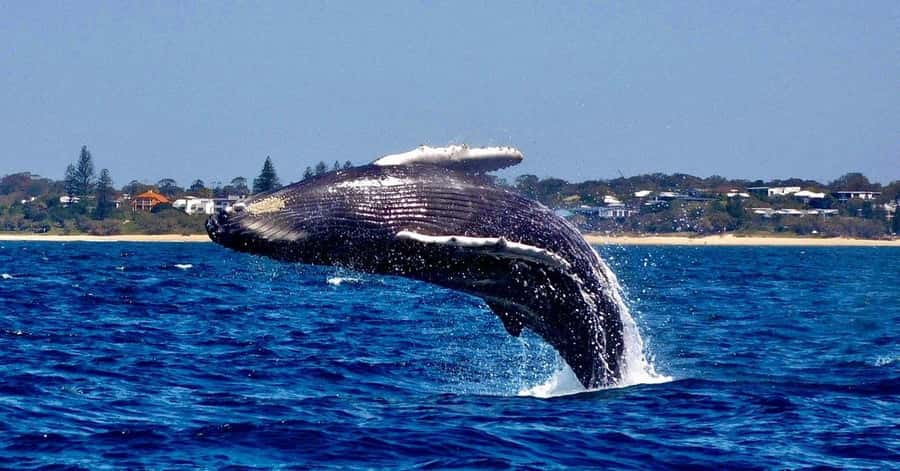
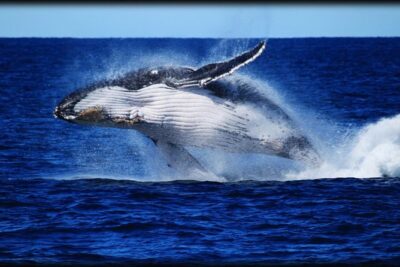
You might see a whale breach cleanly from the water, slap its tail, or raise its head in a spy-hop. You might also see a back surface once and then vanish. The operator cannot control the whales, their direction, or their mood. A whale can approach the vessel, circle nearby, and then continue north without giving you another look.
That uncertainty is part of the value, but it also sets a fair expectation. You are paying for a serious search in a natural setting, not a guaranteed performance. Some trips produce several groups, calves, dolphins, and repeated activity. On another outing, you may spend more time scanning the water than watching spectacular behavior.
The strongest sightings described on this cruise include a mother and calf with a male escort staying near the boat for more than an hour, several whales circling and spy-hopping, and groups of juvenile males remaining close for a long time. Other trips have produced around seven or eight whales, dolphins, sea turtles, and multiple displays in one outing.
Whale One gives you room to find a good angle
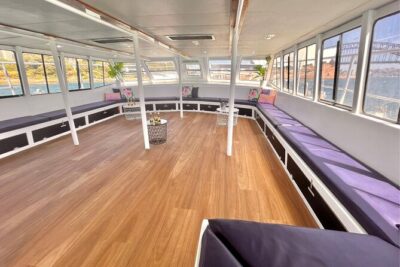
The vessel, Whale One, has been praised for being large, comfortable, and steady for this type of excursion. You get indoor and outdoor seating, plus upper and lower viewing areas. That arrangement is useful because whale activity can happen on either side of the boat.
You may need to move quickly when the crew calls a sighting. One passenger found herself repeatedly on the wrong side and needed help crossing over. That is a minor nuisance, but it points to a practical truth: there is no single perfect seat for the whole cruise.
Outside is usually the better choice if you are worried about seasickness. Fresh air can help, and an open position gives you a wider view of the horizon. The tradeoff is exposure to wind and spray, so bring warm clothing even on a sunny Queensland day.
The indoor areas offer shelter and a place to sit when conditions turn rough. They can also be handy for families, older passengers, or anyone who needs a break from the wind. Still, enclosed seating may make motion feel worse for some people.
Bathrooms are available onboard. An onboard bar sells snacks, soft drinks, and alcohol after 10:00 AM. Outside food and drinks are not allowed because of food licensing rules, so plan to buy refreshments onboard or eat before you depart.
The crew makes the difference between spotting and missing
The crew’s main job is not only to find whales but to teach you how to find them. They point out small movements, suggest where to look, and explain why whales may surface in a particular way.
The commentary covers the migration, breeding behavior, and the reasons humpbacks travel along this part of the Queensland coast. The best accounts describe the staff as friendly, enthusiastic, and respectful of the animals. That combination matters. You get useful information without turning the trip into a nonstop lecture.
The crew also keeps a safe distance from the whales. Close encounters can feel thrilling, especially when an animal spy-hops beside the boat, but responsible viewing means allowing the animals space. The operator does not chase a whale simply to create a better photograph.
There is a small tension in the way the search works. Passengers are encouraged to report sightings, but one person felt that a clear sighting was overlooked while the crew followed another possible report. I would give the crew the benefit of its experience, since the staff are watching movement, wind, and whale behavior from a better position than most people on deck. Still, if you see something, point it out clearly and be ready to explain exactly where it appeared.
Same water, a different way to meet the whales:
- Sydney: Whale Watching Adventure Cruise
★ 4.2 · 1,790 reviews - Swim with Whale Sharks in the Ningaloo Reef: 3 Island Shark Dive
★ 5.0 · 919 reviews - Whale Watching Tour with Spirit of Gold Coast
★ 4.5 · 884 reviews - Sydney: 2-hour Express Whale Watching Cruise
★ 4.2 · 756 reviews
The best months bring mothers, calves, and active young whales
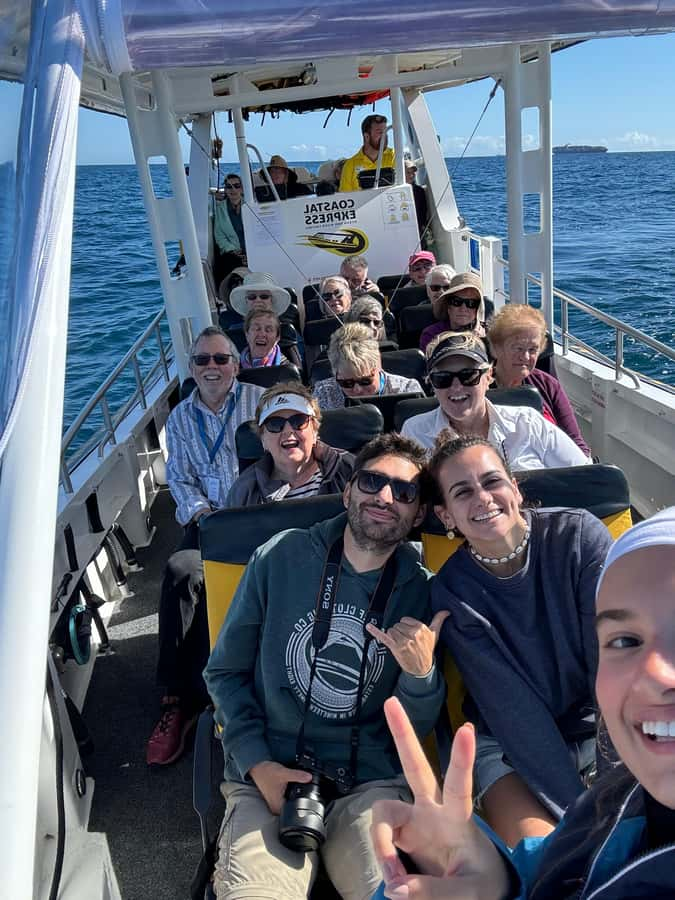
The supplied trip reports show strong sightings from June through October, including late September and early October. This is the period when humpbacks are making their seasonal journey to breed and mate, so timing your visit during the migration gives you the best chance of activity.
The behavior can vary by day. You might see a mother and calf traveling together, young males hanging around the boat, or a whale breaching several times. Calves are especially memorable because they may practice surfacing, tail movement, or breaching while the adults remain nearby.
One outing near the end of the migration still produced multiple mother and calf pairs. Another produced about 20 whales, with some jumping clear of the water. These examples show the possible range, but they are not a promise for every departure.
The trip also offers a chance to see animals besides whales. Dolphins, turtles, eagle rays, and sea birds may appear. A turtle and a small pod of golden-nosed dolphins have been seen on the same cruise, adding interest when whales are underwater or out of sight.
Seasickness is the practical issue you should take seriously
Several passengers have described noticeable swell after the boat leaves the shelter of the land. Others had a smooth ride, and Whale One is considered about as steady as a vessel of this type can be, but no boat can remove ocean movement entirely.
If you are prone to seasickness, take appropriate medication before departure rather than waiting until you feel ill. Seasickness tablets are available onboard, but it is better to plan ahead. Stay outside in fresh air, look toward the horizon, and avoid spending the whole cruise below deck if motion bothers you.
The trip is not suitable for pregnant women or wheelchair users. Children under 14 must be accompanied by an adult at all times. A stroller may be accepted only if its wheels lock and there is enough room onboard, with the final decision made at check-in.
The operator does not allow unaccompanied minors or drones. Comfortable clothes, sunglasses, a hat, sunscreen, a camera, and warm layers belong on your packing list. The boat can be bright and windy even when Mooloolaba feels mild from shore.
Is $60 good value for three hours?
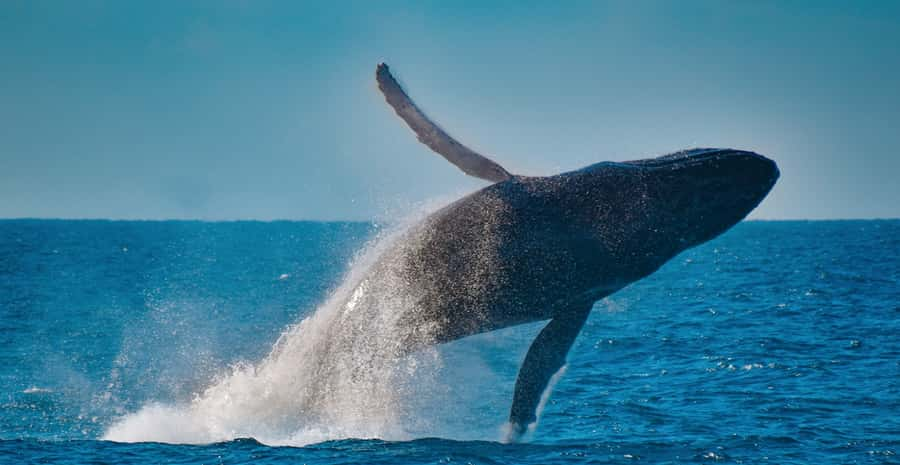
At $60 per person, this is reasonably priced for a three-hour marine wildlife trip, especially when the cruise includes a guide, safety briefing, toilets, several viewing areas, and a whale guarantee in the form of a free return trip.
That guarantee needs careful reading. If you see no whales, you do not receive a refund. Instead, you receive a free return trip. This is useful if you have several days in Mooloolaba, but less helpful if you are leaving Queensland soon after the cruise.
One important price detail came up at check-in for one booking: booking directly with Sunreef Mooloolaba was said to have saved $40, and the passenger wished a similar family pass had been available through the booking channel used. Prices can change, so compare the direct operator rate and any family options before paying.
The value also depends on what you want from the outing. If you need a guaranteed breach for a perfect photograph, no whale cruise can honestly offer that. If you want three hours of wildlife searching, useful commentary, a chance to see other marine life, and a second chance when no whales appear, the price makes sense.
Who will enjoy this cruise most?
I would choose this trip for families with older children, couples who want a major Queensland wildlife experience, and anyone interested in learning how whale watching works. Children can take part in the lookout game, and the crew’s explanations give the outing more shape than simply sitting on a boat.
It is also a good fit if you enjoy photography but understand that wildlife does not pose on command. Bring a camera, but keep watching with your eyes. A whale may surface on the opposite side before you have time to adjust your settings.
You should think twice if you are pregnant, use a wheelchair, have severe motion sickness, or have only a few hours left before a flight or long drive. The trip takes three hours, and rough water can leave you tired afterward.
Booking details and useful timing
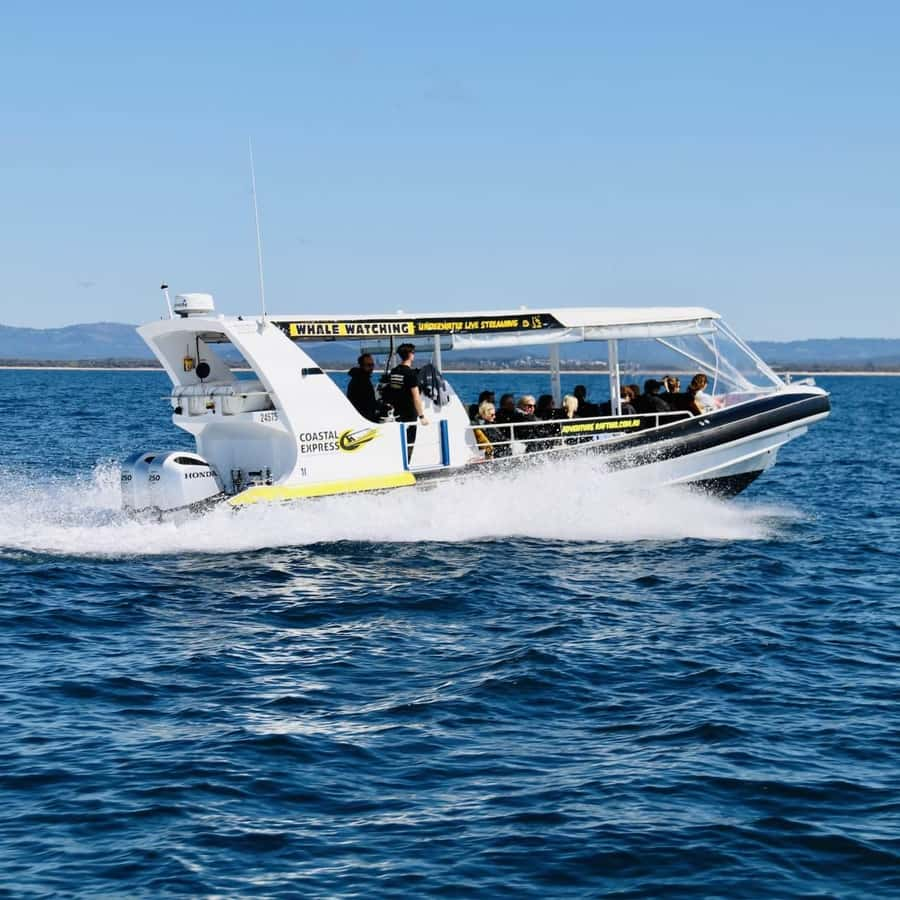
The activity lasts three hours, with departure times varying by date. The local operator sends an email and text message around 3:30 PM the day before with the trip status and departure time. Confirmation depends on sea and weather conditions, so check your messages before heading to the wharf.
Free cancellation is available up to three days before departure. Hotel pickup and drop-off are not included, so arrange your own way to The Wharf Mooloolaba.
The tour is conducted in English with a live guide. You should arrive 15 minutes early, but I would allow extra time if you need parking, refreshments, or help arranging medication before boarding.
Should you book the Mooloolaba whale cruise?
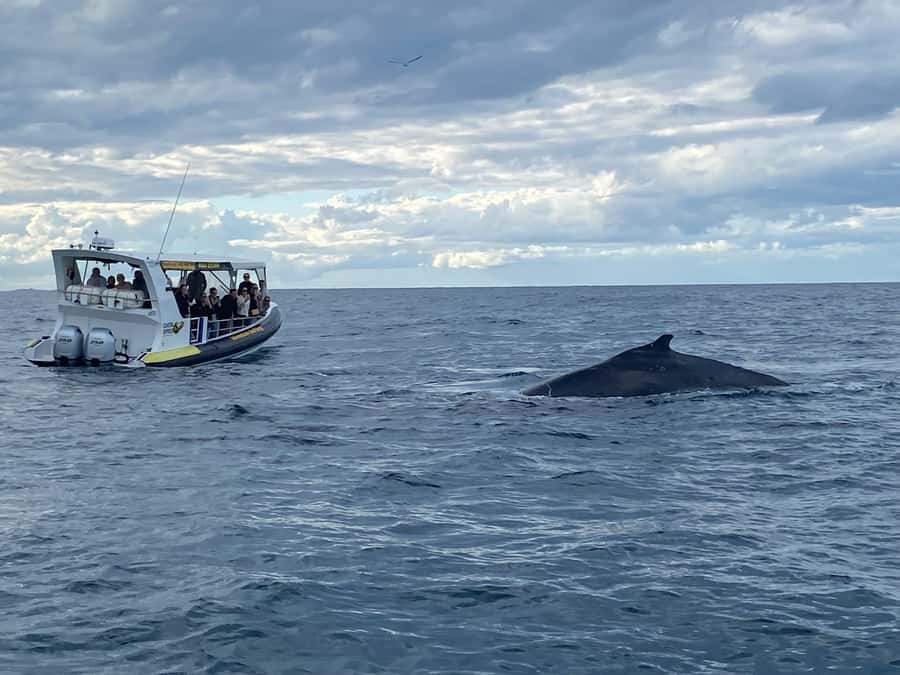
Book it if you want a well-run, three-hour search for humpbacks with a friendly crew, plenty of viewing positions, and a free return trip if the ocean stays quiet. The strongest part of the experience is the combination of close wildlife encounters and clear, enthusiastic commentary.
Go in with realistic expectations. You may see a mother and calf for an hour, or you may get only brief sightings. The boat can move sharply in open water, and seasickness is a genuine concern.
For the best chance of enjoying it, visit during the June to October migration period, take motion precautions, arrive early, and stay flexible about where you stand. If those conditions suit you, this is a memorable and fairly priced way to experience Mooloolaba from the water.
FAQ
Where does the Mooloolaba whale watching cruise depart from?
Check in at the Sunreef Mooloolaba desk, Shop 11 to 12 at The Wharf Mooloolaba. You receive your boarding pass there and are shown where to wait before boarding.
How long does the cruise last?
The cruise lasts three hours. After leaving the Mooloolaba River, the vessel reaches the river mouth in about 15 minutes and begins searching for whales.
Are whales guaranteed?
No. Whale sightings depend on the animals, weather, and sea conditions. If no whales are seen, you receive a free return trip rather than a refund.
What happens if the weather or sea is unsuitable?
Your trip confirmation depends on weather and sea conditions. The local operator sends an email and text message around 3:30 PM the day before with an update on the trip and departure time.
What should I bring?
Bring warm clothing, sunglasses, a hat, sunscreen, comfortable clothes, and a camera. Seasickness medication is also worth considering if you are sensitive to motion.
Can I bring my own food and drinks?
No. Outside food and drinks are not permitted because of food licensing restrictions. Snacks, soft drinks, and alcohol after 10:00 AM are available from the onboard bar.
Are children allowed on the cruise?
Children are allowed, but anyone under 14 must be accompanied by an adult at all times. Unaccompanied minors are not permitted.
Is the cruise suitable for wheelchair users or pregnant women?
No. The activity is not suitable for wheelchair users or pregnant women. A stroller may be accepted only if its wheels lock and space is available, with the decision made at check-in.
Just added around Australia
- Wilsons Promontory: Whale Spotting Cruise with Lunch★ 4.9 · 20 reviews
- Whale Watching Safari Byron Bay★ 4.9 · 39 reviews
- Noosa: Epic Whale Watching Ocean Kayak Tour & Beach 4X4★ 4.8 · 7 reviews
- Western Australia: Swim with Humpback Whales★ 5.0 · 20 reviews
- Tweed Heads: Whale Watching Boat Tour★ 4.7 · 30 reviews
- Bremer Bay Orca Experience★ 5.0 · 79 reviews
- Wilsons Prom Whale Cruise★ 5.0 · 104 reviews
- Whale Watching and Wildlife Cruise Townsville and Magnetic Island★ 5.0 · 11 reviews
Australia Whale Watching Tours, compared.
Brisbane Whale Watching Cruise from Redcliffe or Sunshine Coast
Read our review →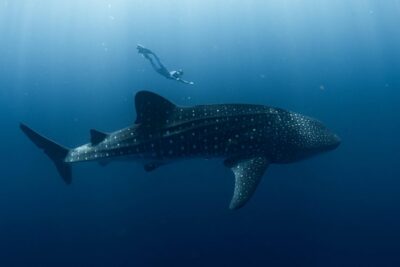
Swim with Whale Sharks in the Ningaloo Reef: 3 Island Shark Dive
Read our review →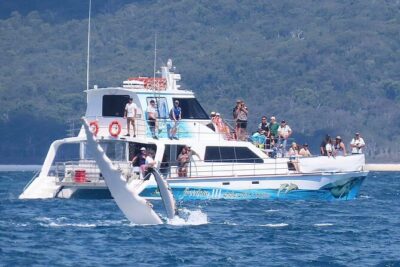
Freedom 3/4 Day Hervey Bay Premium Whale Watching Cruise
Read our review →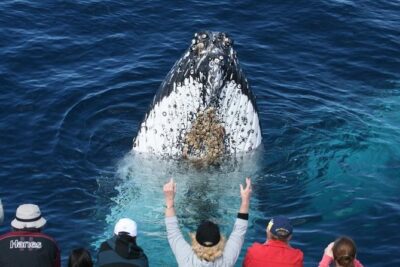
Sydney Whale-Watching Cruise Including Lunch or Breakfast
Read our review →
Spirit of Gold Coast 2.5-Hour Whale Watching Tour
Read our review →Browse the lists this tour appears in