
Review · BUSSELTON
Augusta Whale Watching Eco Tour
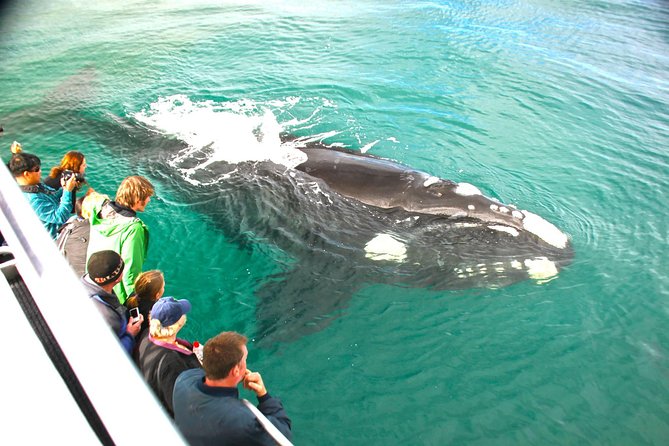
A whale can appear anywhere along the horizon, then suddenly breach beside the boat. That mix of patience and surprise is the heart of the Augusta Whale Watching Eco Tour, which follows humpback and southern right whales during their migrations. A blue whale may also pass by, though that sighting is less certain.
I like the six-month Cape to Cape season, which follows the northern and southern migrations from Augusta between May and August, then from Dunsborough between August and November. I also like the no-whale return policy. If the ocean stays quiet, you receive another tour at no extra cost within one year, subject to availability.
The main caution is the sea itself. The boat can move enough to unsettle children and adults, and sightings can never be promised on a given morning or afternoon. Poor weather can also cancel the trip, though you receive another date or a full refund.
Key points to know before you book
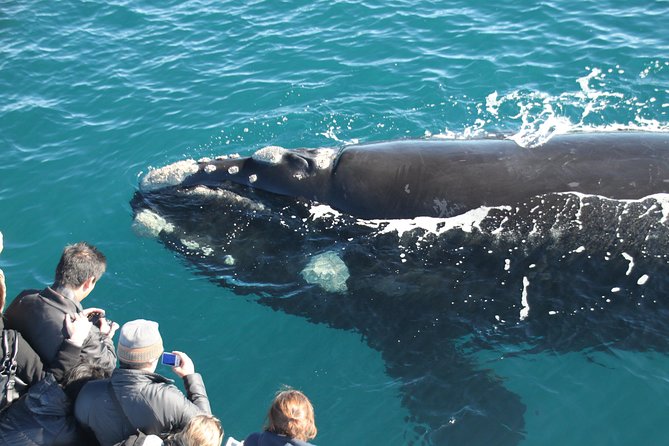
- Whales in open water: Look for humpback and southern right whales, with a chance of blue whales, dolphins, seals, and seabirds.
- Augusta season: Tours operate from May through August, part of Naturaliste Charters’ wider Cape to Cape whale season.
- Marine science commentary: The crew are trained in marine science and explain whale movements, including the long journey between Antarctica and Australia.
- Whale sighting promise: If no whales appear, you can return once within a year at no additional cost, subject to availability.
- Two-and-a-half-hour outing: The tour leaves Augusta Boat Harbour and returns there, with morning or afternoon tea served onboard.
- Small enough to feel organized: The boat carries a maximum of 90 people, so this is not an intimate private cruise, but the crew can still attend to individual needs.
Why Augusta is a strong place for whale watching
Augusta sits at the meeting point of the Southern and Indian Ocean waters, giving you a useful setting for watching migrating whales. The local season runs from May through August, when whales move along the coast during their northern and southern migrations.
That timing matters. You are not visiting an aquarium or a marine park where animals appear on cue. You are watching wild creatures travel, rest, breach, and socialize in their own environment. Some outings may bring several sightings, while others require more patience.
The experience is run by Naturaliste Charters, which has operated whale watching tours in the Southwest for more than 30 years. That long operating history matters most in the crew’s ability to read the conditions and explain what you are seeing without turning the trip into a simple search for a photograph.
A few more whale trips around Australia worth a look
- Sydney: Whale Watching Adventure Cruise
★ 4.2 · 1,790 reviews - Brisbane Whale Watching Cruise from Redcliffe or Sunshine Coast
★ 5.0 · 997 reviews - Freedom 3/4 Day Hervey Bay Premium Whale Watching Cruise
★ 5.0 · 919 reviews
Leaving Augusta Boat Harbour for the open water
You meet at Augusta Boat Harbour on Leeuwin Road in Leeuwin, Western Australia. The tour lasts about two hours and 30 minutes, and it ends back at the same harbour, so you do not need to arrange a separate return transfer.
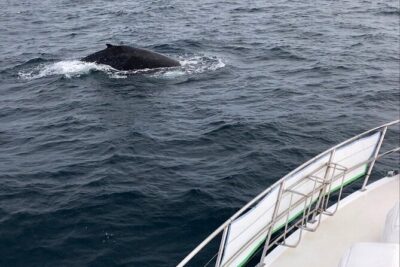
Once the boat leaves the harbour, the outing becomes a moving search. There is no fixed sequence of named stops. Instead, the skipper and crew look across the water for blows, backs, tail flukes, splashes, and groups of birds that may indicate activity below the surface.
That open-water format is worth understanding before you book. You will not spend the entire trip looking at whales from a fixed viewing platform. You may spend stretches scanning the horizon, then find the mood change quickly when a whale surfaces nearby.
The maximum group size is 90 people. That is large enough for a proper charter boat, but not so large that the experience becomes a crowd spilling across a huge ferry. The crew’s work is important here, since people on different sides of the boat may have different views at different moments.
Humpbacks, southern right whales, and the chance of a blue whale
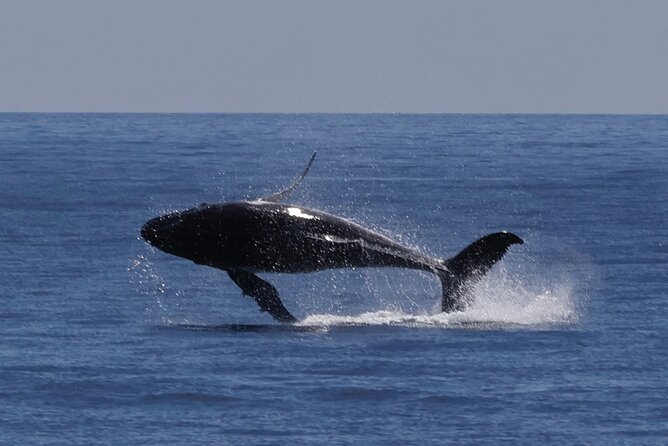
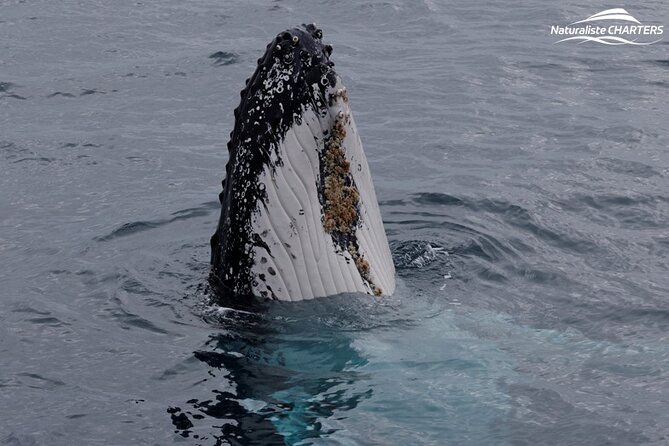
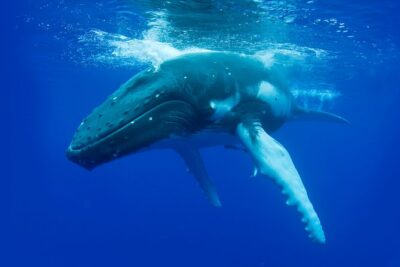
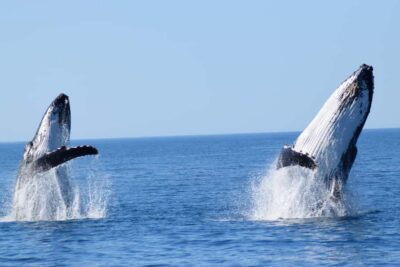
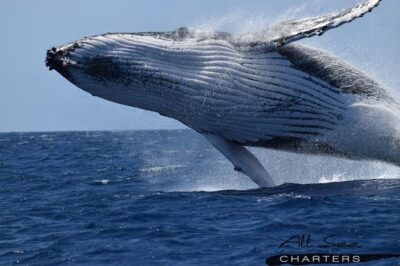
Humpback whales are among the main animals you may see. Their size and surface behavior make them the species most likely to deliver the classic moments: a back rolling through the water, a tail lifting, or a breach that sends spray into the air.
Southern right whales are also part of the seasonal picture. They can be less predictable in their surface behavior, so a sighting may be a quiet sequence of blows and slow movement rather than constant acrobatics.
Blue whales are listed as a possible sighting, but you should treat that as a fortunate extra rather than a booking promise. The same applies to dramatic breaches. The crew can help you look in the right places, but no responsible whale tour can control what wild animals do.
You may also encounter New Zealand fur seals, bottlenose dolphins, common dolphins, and seabirds. These animals add variety when whales are between sightings. They also remind you that the tour is about the wider marine environment, not just collecting one perfect photograph.
How the marine science commentary adds value

The crew are trained in marine science, and the commentary helps turn a distant animal into part of a larger story. You can learn about the whales’ movement between Antarctica and Australia, their migration routes, and the behavior that helps identify different species.
Pia, a marine biologist who has worked onboard, is specifically praised for her role in making the trip both informative and personal. The crew also receive strong marks for explaining whale travel in clear terms and for helping people understand what they are watching.
That matters if this is your first whale tour. A whale surfacing for two seconds can be easy to miss when you do not know where to look. A guide who points out the signs, explains the likely direction of travel, and keeps the mood calm gives you a better chance of following the action.
The commentary also keeps the quieter stretches useful. You are not simply waiting for a splash. You are learning why the whales are in the area, what species may appear, and how the animals fit into the local sea life.
Same water, a different way to meet the whales:
- Swim with Whale Sharks in the Ningaloo Reef: 3 Island Shark Dive
★ 5.0 · 919 reviews - Whale Watching Tour with Spirit of Gold Coast
★ 4.5 · 884 reviews - Sydney Whale-Watching Cruise Including Lunch or Breakfast
★ 4.5 · 878 reviews - Sydney: 2-hour Express Whale Watching Cruise
★ 4.2 · 756 reviews
What the two-and-a-half-hour outing feels like
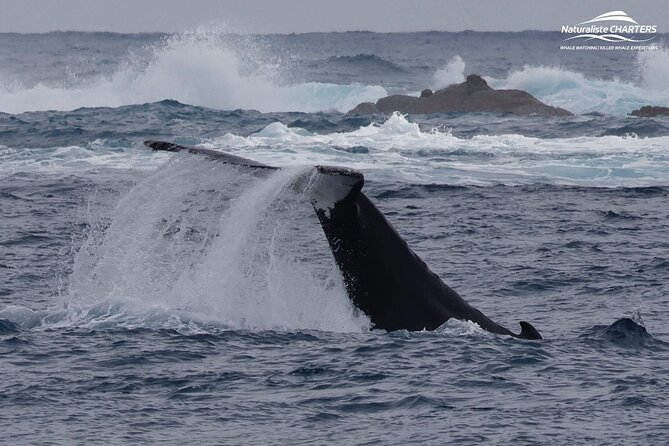
The pace is set by the animals, not by a checklist. You leave Augusta, watch the water, and move through the whale habitat while the crew searches for signs of activity. When whales are found, the boat positions you for views while keeping the focus on observing animals in their natural surroundings.
A successful trip can produce several sightings. One outing included five or six whales and calves, while another gave passengers a long look at a juvenile whale tail-slapping for nearly 10 minutes. Those moments are special because they are not staged. You may see a calf near an adult, a whale surface repeatedly, or a single animal playfully slap its tail.
You should also allow for less dramatic stretches. Even in a strong season, whales do not perform on demand. The trip’s value comes from the full period on the water, the possibility of a close sighting, and the chance to see marine life that appears between whale encounters.
Morning and afternoon departures include complimentary tea, coffee, Milo, green tea, and biscuits. It is a modest touch, but useful on a cool day or during a quiet wait. It also gives you something warm to hold while you scan the water.
Photo chances and the reality of whale watching
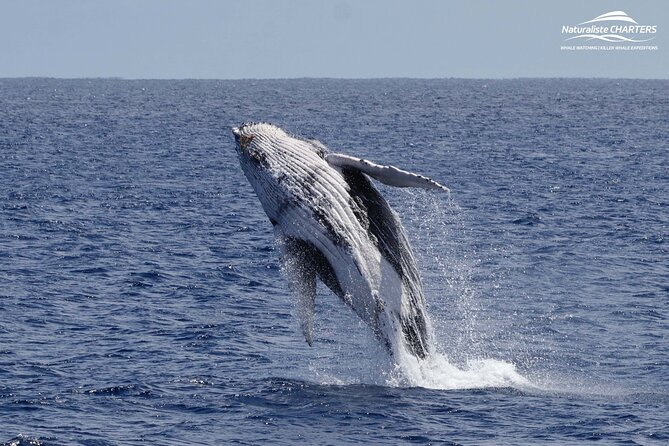
Bring your camera, but keep it ready rather than fixed on one point. A whale can surface in a different place from the last sighting, and you may have only a few seconds to react. The open water also means light, spray, and distance can change quickly.
The best photograph may not be a breach. A tail rising from the sea, a calf surfacing beside an adult, or a line of dolphins moving across the water can tell the story more honestly. I would also spend time watching with your eyes. It is easy to miss a second whale while checking the first photograph.
The crew can help you identify movement and direct attention, but the boat cannot guarantee a particular viewing angle for every person on board. Standing or moving around may improve your view, but you should follow crew instructions and allow room for others.
If you have children with you, explain this beforehand. The trip may bring a thrilling breach, but it may also involve long periods of looking and waiting. Setting that expectation can make the outing easier for the whole family.
Seasickness, weather, and comfort
Sea conditions are the biggest practical concern. One family had children who felt seasick, while another passenger became unwell and was well looked after by the crew. That tells you two useful things: motion can be a real issue, and the crew pay attention when someone needs help.
If you are prone to seasickness, plan ahead with advice from your doctor or pharmacist, eat lightly, and keep your focus on the horizon. Choose a place where you feel comfortable, and tell the crew early if you begin to feel unwell. The tour is not the right choice for anyone who knows that open-water motion will make the entire outing miserable.
The tour requires favorable weather. If poor conditions force a cancellation, you can choose another date or receive a full refund. That policy protects you from being pushed onto the water when conditions are not suitable, but it also means you should avoid scheduling this as the only fixed activity on your final day in the region.
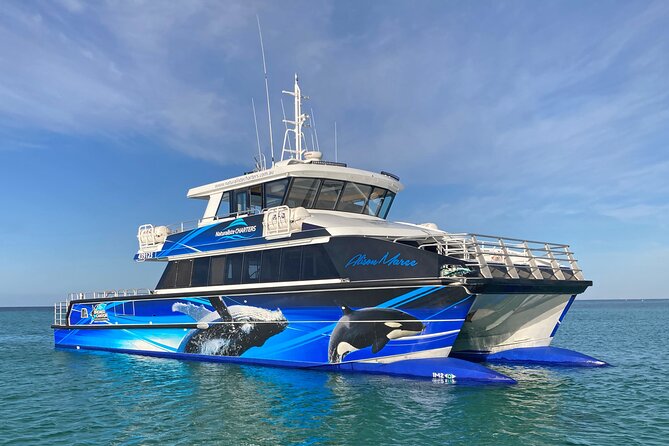
The boat is described in one strong account as a well-maintained catamaran. The crew’s attention to passenger needs is another plus, especially on a moving boat with families and older passengers onboard.
Is $75.31 a fair price?
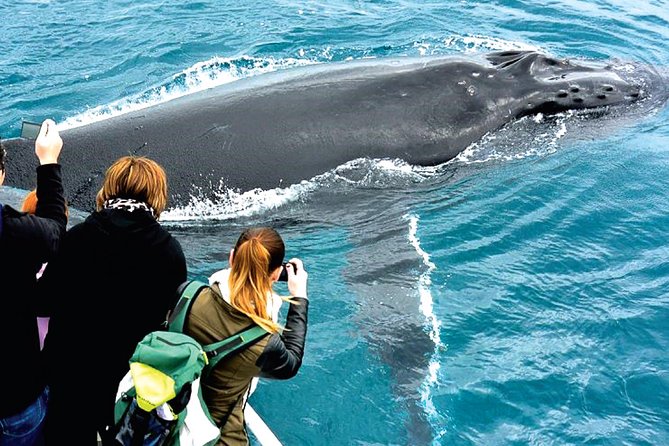
At $75.31 per person, the price is reasonable for a two-and-a-half-hour wildlife cruise with marine science commentary, refreshments, and a whale return policy. You are paying for the boat, crew, local experience, and the chance to observe wild animals without entering a captive setting.
The return policy adds real value. If you see no whales, you can book one free return tour within one year, subject to availability and non-transferable conditions. It does not guarantee a whale on the second attempt, but it reduces the risk of paying once for a completely quiet outing.
You should still compare the price with your schedule. If you are in Augusta for only one day, a cancelled trip or a calm sea with few sightings may be frustrating. If you can keep a spare day available, the policy becomes much more useful.
The tour is recommended by 99 percent of its published customers and holds a 4.9 rating from 137 reviews. The most praised features are consistent: friendly crew, clear information, many whale sightings on good days, and attentive care when someone feels unwell.
Who will enjoy this tour most
I would choose this outing if you want to see whales in the wild and value explanation as much as the sighting itself. Families can enjoy it, provided children are prepared for boat motion and periods of waiting. The crew’s help with seasickness is reassuring, but it does not remove the physical reality of the sea.
It also suits photographers, birdwatchers, and anyone interested in marine life beyond whales. Dolphins, fur seals, and seabirds may appear, giving you more to watch when the whales remain below the surface.
This is less suitable if you need a guaranteed close encounter, a short ride, or a fully predictable schedule. Wildlife tours always involve uncertainty, and this one is honest about that. The free return option helps, but it cannot turn nature into a performance.
Service animals are allowed, and most people can participate. Children must be accompanied by an adult. Confirmation is provided when you book, and the ticket is mobile, which keeps the start simple.
Booking timing and cancellation advice
The tour is booked an average of 19 days in advance, so I would not leave it until the last minute if whale watching is important to your South West trip. Augusta departures operate from May through August, while the wider Naturaliste Charters season continues from Dunsborough from August through November.
You can cancel up to 24 hours before the local start time for a full refund. Changes or cancellations inside that 24-hour window are not accepted for a refund. The operator may also cancel if too few people book, in which case you receive another date or experience, or a full refund.
The practical move is to schedule this early enough in your stay to leave room for poor weather or a second attempt. That gives the whale policy and weather policy genuine value instead of leaving you with no spare time.
Should you book the Augusta Whale Watching Eco Tour?
Book it if you want a well-run chance to see migrating whales from a working charter boat, with strong marine science commentary and a sensible backup if no whale appears. The season, location, and experienced crew give you a good foundation for a memorable outing.
I would be especially comfortable recommending it to visitors with a flexible South West itinerary. Keep your expectations grounded: the animals are wild, the sea can be rough, and a breach is never guaranteed. But with a fair price, complimentary drinks and biscuits, attentive staff, and a free return trip after a whale-free outing, this is a sound choice for a day on the Augusta coast.
FAQ
Where does the Augusta whale watching tour begin and end?
The tour begins at Augusta Boat Harbour on Leeuwin Road in Leeuwin, Western Australia. It ends back at the same meeting point.
How long does the whale watching tour last?
The outing lasts approximately two hours and 30 minutes.
Which whales might I see?
You may see humpback whales and southern right whales. Blue whales are also possible, though sightings cannot be guaranteed.
When does the Augusta whale watching season operate?
Augusta tours operate from May through August. Naturaliste Charters also operates from Dunsborough from August through November as part of the wider six-month Cape to Cape season.
What happens if no whales are sighted?
You receive a free return tour that can be booked on another day within one year, subject to availability. The return is non-transferable and costs nothing extra.
Can I cancel for a refund?
Yes. You can cancel at least 24 hours before the experience start time for a full refund. If poor weather cancels the tour, you receive the option of another date or a full refund.
Just added around Australia
- Wilsons Promontory: Whale Spotting Cruise with Lunch★ 4.9 · 20 reviews
- Whale Watching Safari Byron Bay★ 4.9 · 39 reviews
- Noosa: Epic Whale Watching Ocean Kayak Tour & Beach 4X4★ 4.8 · 7 reviews
- Western Australia: Swim with Humpback Whales★ 5.0 · 20 reviews
- Tweed Heads: Whale Watching Boat Tour★ 4.7 · 30 reviews
- Bremer Bay Orca Experience★ 5.0 · 79 reviews
- Wilsons Prom Whale Cruise★ 5.0 · 104 reviews
- Whale Watching and Wildlife Cruise Townsville and Magnetic Island★ 5.0 · 11 reviews
Busselton Whale Watching Tours, compared.
Whale Watching Cruise from Busselton, Augusta or Dunsborough
Read our review →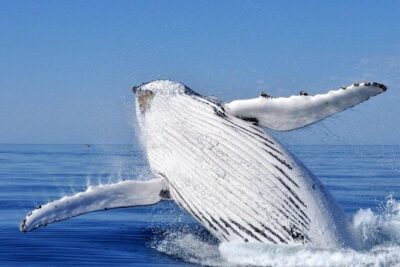
Whale Watching from Augusta in Western Australia
Read our review →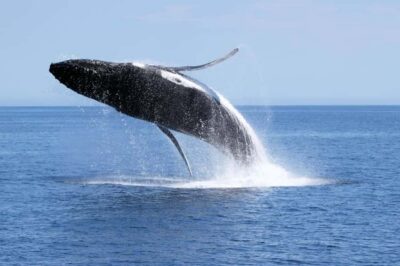
Browse the lists this tour appears in