
Review · ALTA
Alta: 3.5 Hour Fjord & Whale Watching Cruise
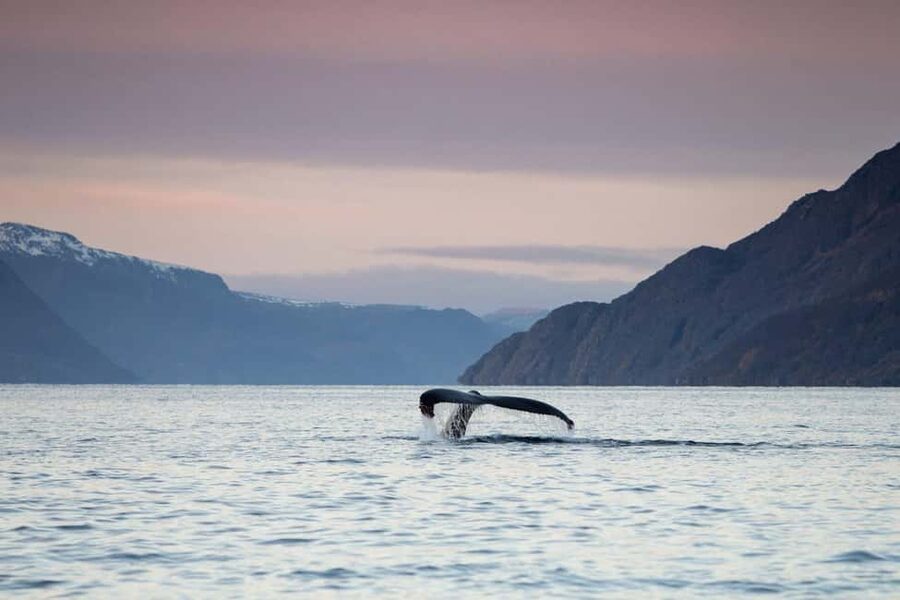
Humpback whales and orcas are the main event here, but the setting makes the outing special: snow-capped Arctic peaks, clear fjords, and winter light frame every sighting. You cruise aboard MS Åhav, with large windows, spacious decks, warm drinks, and a guide who helps you spot whales before they surface.
I especially like the chance to see both humpbacks and orcas in one outing, and the crew’s careful approach keeps the focus on wildlife rather than a close, intrusive encounter. The main concern is winter weather. Icy decks, wind, and snow can make the open areas tricky, so bring proper clothing and take care on board.
Key points to know before you book
- A 210-minute wildlife cruise: The long sailing time gives the crew a useful window to search the fjords and follow whale activity.
- Both humpbacks and orcas are possible: The whales gather near herring feeding grounds, though no sighting is guaranteed.
- MS Åhav has indoor and outdoor viewing: Large windows and spacious decks let you choose comfort or a clearer camera angle.
- Manon has guided recent trips: Her enthusiasm and clear help with spotting whales have been singled out as part of the experience.
- Winter conditions matter: Wind, snow, and ice can affect comfort and footing on the smaller open deck areas.
- The price includes useful basics: At $231 per person, you get city-center transport, the cruise, a certified guide and boat driver, coffee, tea, and snacks.
Why this cruise is more than a quick whale hunt
Whale watching is never a guaranteed show. You are looking for wild animals that move through a large, cold body of water on their own schedule. That uncertainty is part of the deal, and it is worth understanding before you pay $231.
The appeal here is the combination of time, setting, and crew experience. You have three and a half hours on the water, not a short ride out and back. The route passes through Arctic fjords toward areas where herring attract feeding whales. That gives the crew a sensible reason to be searching in those waters, rather than simply taking you on a scenic boat trip and hoping for luck.
The cruise also gives you more than one way to watch. You can stay inside by the large viewing windows, where you are protected from the worst of the weather. When the sea is calm and the light is good, you can move out to the spacious decks for a wider view and better photographs.
I like that balance. You do not have to choose between seeing the scenery and staying warm. A winter whale trip can be tiring if you spend the whole time exposed to wind. Here, you can warm up with coffee or tea, have a snack, and return outside when the guide spots activity.
More Whale Watching Cruises in Norway:
- 24hr Northern Lights & Whale Watching Cruise
★ 5.0 · 114 reviews - Tromsø: Responsible Whale Watching Cruise Aboard MS Alba
★ 4.7 · 53 reviews - Tromsø: 24hr Northern Lights & Whale Watching Cruise
★ 4.9 · 46 reviews
From Canyon Hotell to MS Åhav
You meet 10 minutes before departure at the Æventyr Booking Point inside Canyon Hotell in the city center. Transport to the harbor is included, which removes one small but useful piece of planning. You do not need to arrange your own ride to the boat.
Once at the harbor, you board MS Åhav for the 210-minute cruise. The vessel is described as a traditional boat with indoor seating, large windows, and open viewing areas. The information does not give a fixed stop-by-stop route, and that is normal for whale watching. The captain needs to adjust the course according to animal activity, weather, and the whales’ movement.
That flexible route is important. A scenic cruise can follow a set path, but a wildlife cruise needs room to change direction. You may spend part of the trip moving between fjords, then slow down or alter course when the crew sees a spout or receives useful information about whale activity.
The ride is led by a certified guide and boat driver. Guide and captain work together: one helps explain what you are seeing and where to look, while the other handles the vessel and searches for suitable waters. On recent trips, Manon has been praised for her enthusiasm and for helping people keep track of distant whales.
Searching the fjords for the first spout
The first part of the cruise is likely to feel like a moving lookout. The guide may ask you to scan the water for a vertical spout, a dark back, a dorsal fin, or a sudden change in the surface. In Arctic winter conditions, the background is dramatic enough to hold your attention even during a quiet spell.
Do not expect whales to appear on demand. The operator specifically warns that sightings are not guaranteed, and the season dates may shift as migration patterns change. That is not a flaw in the boat trip. It is simply the reality of watching wild marine life.
When the crew finds activity, several viewing areas matter. A whale can surface on one side of the vessel and then appear somewhere else a few moments later. Large windows help you keep watching if you are inside, while the deck gives you a wider sweep of the water.
You will get more from the experience if you follow the guide’s instructions instead of staring at one fixed point. A well-spotted whale may first be visible far away. The crew can direct your attention toward the next likely surfacing area, which is especially helpful when mountains, reflections, and winter glare make the water hard to read.
Humpbacks, orcas, and the herring grounds
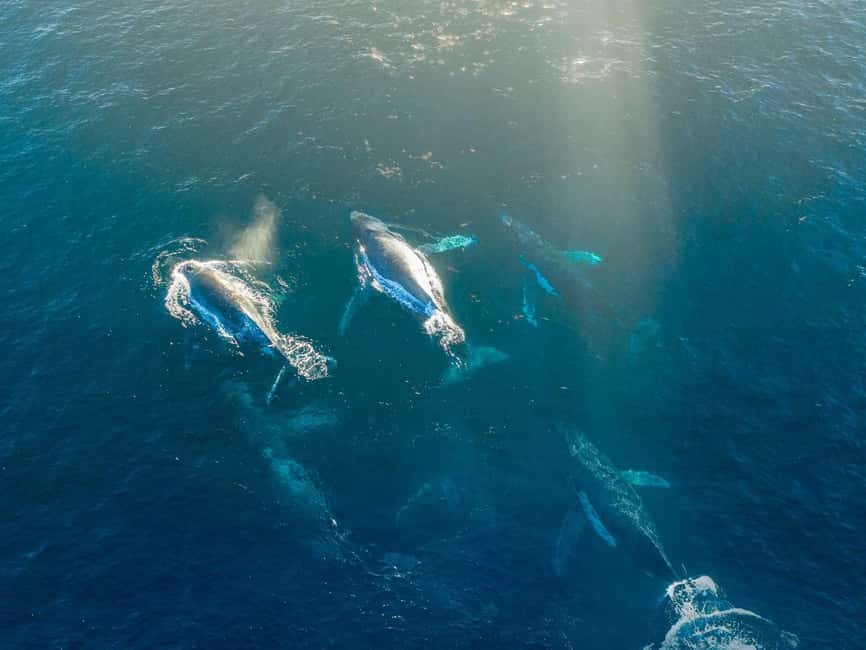
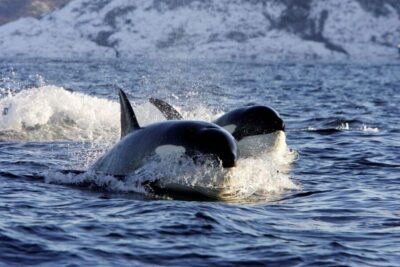
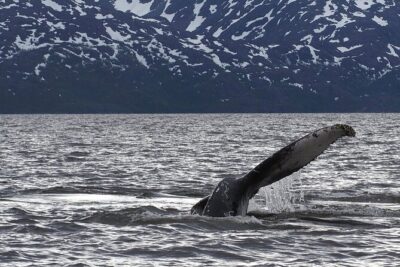
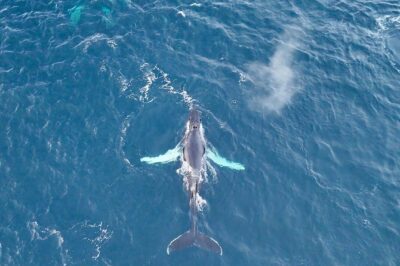
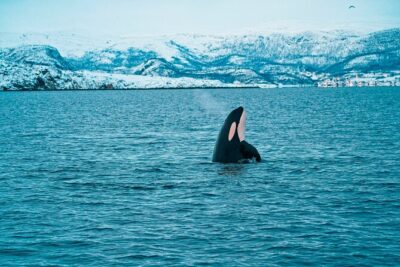
The most exciting possibility is seeing humpback whales and orcas in the same general feeding area. Humpbacks may surface with a broad back, a visible blow, or a powerful movement through the water. Orcas are smaller and more streamlined, so a pod can appear as several quick fins moving across the surface.
Recent trips have included humpbacks, a pod of orcas, eagles, and other birds. That mix gives you a better reason to keep watching even when the largest animals are not directly beside the boat. The fjords are not only a whale stage. They are a working feeding area for several kinds of wildlife.
The strongest sightings can include whales feeding, moving around the boat, breaching, or spy-hopping. None of those moments can be promised, and you should treat them as lucky additions rather than part of the basic contract. The guaranteed part is the cruise, the guide, the boat, and the chance to search these waters.
The crew keeps a safe distance from the whales to reduce disturbance. That may mean the animals are not always close enough for a perfect phone photograph. It also means you are watching a natural encounter with a responsible amount of space between boat and wildlife.
That distance is one of the things I value most. A whale coming near the boat can feel thrilling, but the goal is not to chase it or crowd it. The crew’s calm approach has allowed some sightings where whales chose to swim around the vessel on their own.
A few more whale trips around Norway worth a look
- Tromsø: Whale Watching Tour by Hybrid-Electric Boat
★ 4.5 · 4,217 reviews - Tromsø Whale Safari with MS Gabriele
★ 4.3 · 1,937 reviews - From Tromsø: All-Inclusive Whale & Orca Safari
★ 4.5 · 1,221 reviews - From Tromso: Whale Watching in Magic Skjervoy
★ 4.7 · 1,207 reviews
What the three and a half hours feel like
Three and a half hours is a good length for this kind of outing. You have enough time to search several areas and wait through quiet periods, but it is not an all-day commitment. The pace is relaxed rather than rushed.
That relaxed rhythm can be a strength. You have time to watch the fjords, look for seabirds, listen to explanations about whale behavior, and take photographs without being pushed from one short stop to another. It also gives the crew time to respond to changing conditions.
The drawback is that quiet periods can feel long if you are expecting constant action. You may spend part of the cruise staring across apparently empty water. Bring patience, and remember that the guide may be tracking signs that are not obvious to you.
Warm coffee and tea help. Snacks are included too, which is useful on a winter boat ride. These are simple provisions, not a full meal, so eat beforehand if you need something substantial.
The indoor areas give the trip a more comfortable feel than a small open boat. You can watch through the windows, warm your hands, and step outside when something appears. At the same time, do not assume every part of the boat will feel equally sheltered. One recent account described icy conditions, wind, snow, and low side barriers on the open deck. Those conditions caused some understandable nerves.
Winter weather, clothing, and safety
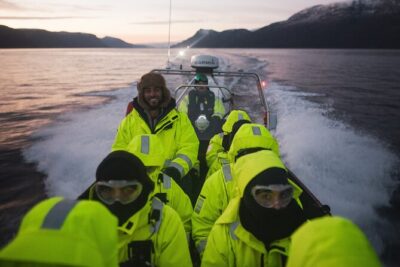
Your clothing will shape the day. Bring warm layers, a windproof outer layer, a hat, gloves, and footwear with good grip. The supplied information does not list a specific clothing package, so you should plan as if you need to dress for a cold, exposed boat ride.
The open deck can be the best place for a clear view, but it can also become slippery in freezing weather. Move carefully, hold on when needed, and do not rush from one side of the boat to the other when a whale is spotted.
If the weather turns rough, use the indoor viewing areas. The large windows are not a poor substitute for the deck. They allow you to keep scanning the fjord while reducing exposure to wind and snow.
This is described as suitable for all ages and mobility levels, but winter footing still deserves attention. That means you should consider your own comfort with icy surfaces and moving around a boat. The experience provides indoor seating, yet the outdoor areas may be less easy to manage in bad weather.
The crew’s decision to maintain distance from whales is another safety and conservation point. You are not being taken on a high-speed chase. The captain works toward viewing areas where the animals can be watched without close pursuit.
Photography from windows and decks
You can get striking photographs here, especially when a dark whale breaks the surface below snow-covered peaks. The mountain backdrop gives even distant animals a strong sense of place.
Wildlife photography from a moving boat is difficult, so keep your camera ready and use a fast shutter speed if your equipment allows it. The supplied details do not promise specialist photography support, so you should handle your own camera or phone settings.
The large windows are useful when the air is cold, but reflections can interfere with pictures. If you shoot through glass, keep the lens close to the window without pressing hard against it. On the deck, you may get cleaner images, but you also face more wind, spray, and slippery footing.
Do not spend the whole cruise looking at a screen. The best moments may last only seconds, and a phone can distract you from the next surfacing. I would take a few photographs, then lower the camera and watch the animal move.
The guide’s help matters here. A distant whale may be hard to find without a clear direction. Manon has been noted for telling people where to look, which can save you from missing a brief appearance.
Is $231 a fair price?
At $231 per person, this is not a cheap sightseeing cruise. The value depends mainly on how much you want a serious chance to look for whales in winter conditions.
The price includes transport from the city center to the harbor, a 210-minute cruise, a certified guide and boat driver, coffee, tea, and snacks. You are also paying for a vessel with indoor viewing and outdoor decks, plus a crew that searches according to whale movement rather than following only a scenic route.
The strongest value comes if you see both humpbacks and orcas and have time to watch them feeding or moving near the boat. That kind of encounter can make the cost feel justified. If no whales appear, the experience becomes a scenic fjord cruise with wildlife searching, and the value will feel more personal and harder to measure.
The price also reflects the uncertainty of the activity. No operator can control wild animals, and the season may change according to migration patterns. If a guaranteed attraction is important to you, this is the wrong type of outing. If you accept the risk for the chance of a rare Arctic sighting, the longer cruise and onboard comfort improve the odds of a worthwhile day.
Free cancellation up to 24 hours before the start and the option to reserve now and pay later make it easier to fit into a changing schedule. Check the available start times when booking, since the duration is fixed but departure times can vary.
Who should book this experience?
I would point this cruise toward anyone who wants wildlife watching without spending the whole day in a small exposed boat. Families may appreciate the indoor seating and warm drinks, while photographers will value the mix of windows, decks, and mountain scenery.
It also suits you if you care about responsible viewing. The crew keeps its distance, and the trip places more weight on patient observation than on getting as close as possible.
You should think twice if you dislike cold, uncertain activities or need constant action. Whale sightings are not guaranteed, and the winter deck can become icy. The indoor areas help, but this remains an Arctic boat trip, not a warm indoor attraction.
The experience is also a good fit if you want guidance in English or Norwegian. The guide explains whale behavior and migration patterns, points out where to look, and helps turn a distant spout into a sighting you can understand.
Should you book the Alta whale cruise?
Book it if seeing wild whales is high on your list and you are comfortable with uncertainty, cold weather, and a three and a half hour search. The strongest reasons are the chance to see both humpbacks and orcas, the spacious viewing setup, and the crew’s careful approach.
I would be more cautious if you are uncomfortable on icy decks or expect guaranteed close encounters. In that case, stay inside when needed and make the scenery, birdlife, and explanations part of the experience rather than judging the trip only by the number of whales seen.
For the best chance of enjoying it, arrive early, dress warmly, keep your camera ready, and listen closely when the guide directs your attention. If a whale surfaces against the snowy peaks, you will be glad you did.
FAQ
Where does the tour meet?
Meet 10 minutes before departure at the Æventyr Booking Point inside Canyon Hotell in the city center.
Is transport to the harbor included?
Yes. Transport from the city center to the harbor is included.
How long does the cruise last?
The activity lasts 210 minutes, or three and a half hours.
What boat is used?
The cruise takes place aboard MS Åhav.
What animals might I see?
The main wildlife possibilities are humpback whales and orcas. You might also see eagles and other birds.
Are whale sightings guaranteed?
No. The operator states that whale sightings cannot be guaranteed.
What languages does the guide speak?
The live tour guide speaks English and Norwegian.
Are drinks and food included?
Coffee, tea, and snacks are included.
Can I cancel for a full refund?
Yes. You can cancel up to 24 hours in advance for a full refund.
Can I reserve now and pay later?
Yes. The activity offers a reserve-now, pay-later option.
Just added around Norway
- From Svolvær: Whale Watching Day Trip to Andenes★ 3.8 · 27 reviews
- Tromsø Whale Safari with MS Keiser Wilhelm★ 4.3 · 161 reviews
- Tromsø: Whale Watching on hybrid boat with scenic bustrip★ 4.1 · 30 reviews
- Tromsø: Orca and Whale Watching comfort heated boat Trip★ 4.8 · 107 reviews
- Tromsø: Responsible Whale Watching Cruise Aboard MS Alba★ 4.7 · 53 reviews
- Tromsø: 24hr Northern Lights & Whale Watching Cruise★ 4.9 · 46 reviews
- Silent Whale Watching on Hybrid-Electric Boat with Scenic Bustrip★ 4.0 · 48 reviews
- Whale Watching RIB Boat Tour in Skjervoy from Tromso★ 4.5 · 102 reviews
Alta Whale Watching Tours, compared.
Alta: Altafjord Whale Watching in a Heated Boat
Read our review →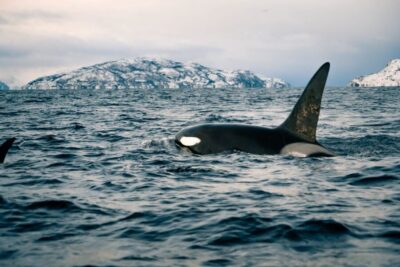
3.5-Hour Arctic Magic with Fjord and Whale Watching Adventure
Read our review →Browse the lists this tour appears in