
Review · SYDNEY
Sydney: Discovery Whale Watching Tour by Catamaran
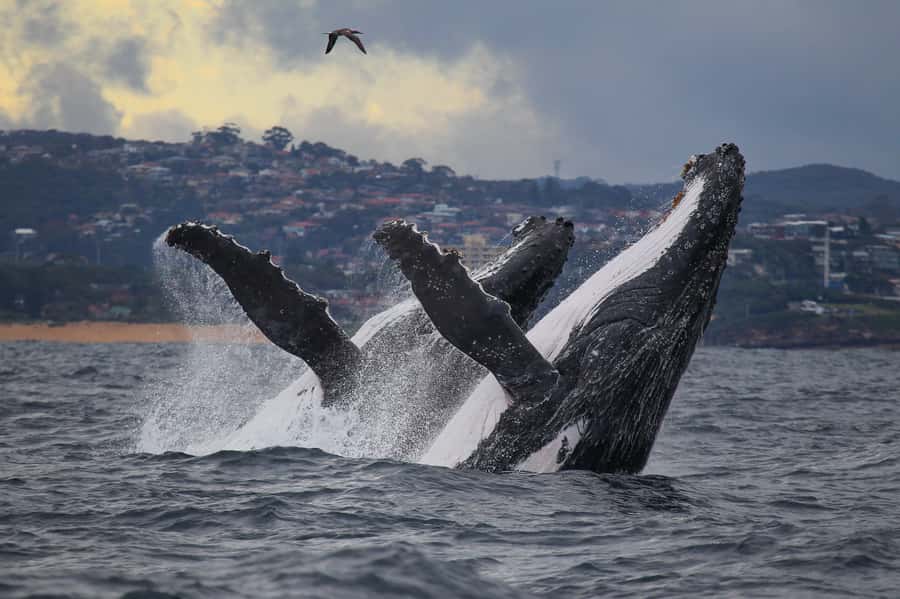
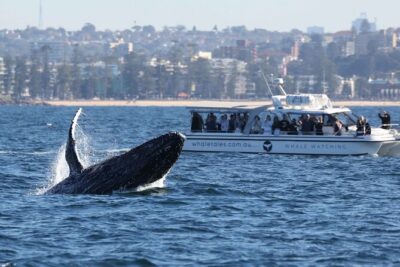
The best part of this Sydney whale-watching trip is the fast run from Darling Harbour to open water. The purpose-built Fantasea Avalon can cruise at up to 30 knots, so you spend less of the 150-minute outing threading through the harbor and more time searching for whales. Humpback sightings can include breaches, tail slaps, and mothers with calves.
I like the two-level viewing setup, which gives you a choice between indoor comfort and open-air sea views. I also like the practical extras: complimentary tea, coffee, and bottled water, plus a photographer who tries to capture the moments that are hard to catch on a phone. The main drawback is the sea. On rough afternoons, the ride can be choppy, commentary may be difficult to hear outside, and sea-sickness can spoil an otherwise good outing.
Key points to know before you sail
- Fast access to open water: The catamaran reaches the open ocean in about 30 minutes, leaving more of the trip for whale spotting.
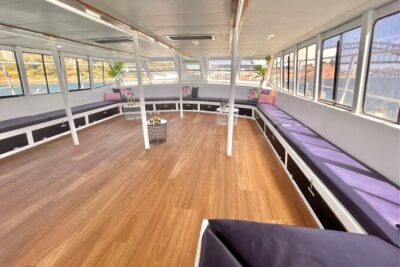
- Purpose-built whale-watching boat: Fantasea Avalon has air-conditioned cabins, panoramic windows, spacious seating, and indoor and outdoor viewing areas.
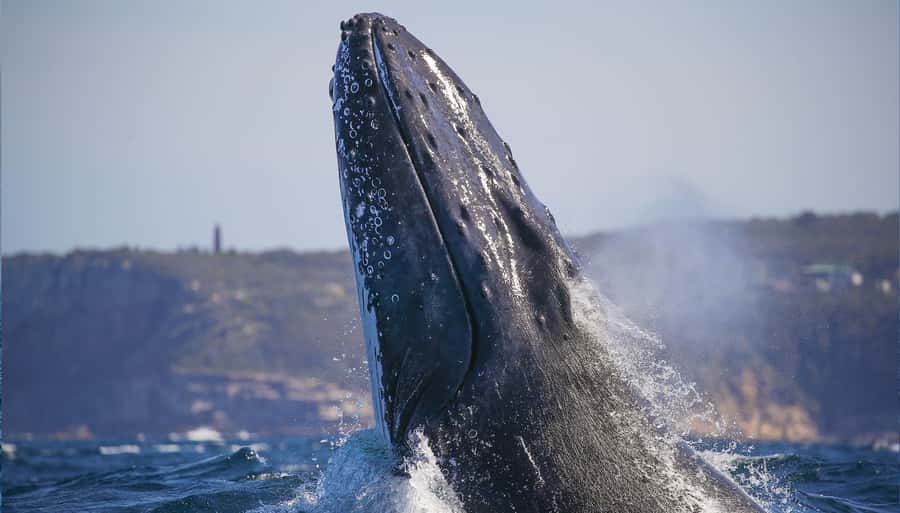
- Real wildlife, not a fixed show: You may see humpbacks, calves, dolphins, breaches, tail slaps, or only brief splashes.
- Photography is covered: An onboard professional photographer captures key moments, with images available to buy.
- Rough seas are possible: The large vessel can continue searching in choppy conditions, but sensitive stomachs should take care.
- Good booking flexibility: You can cancel up to 24 hours before departure for a full refund, and a free return voucher is offered if no whales are found.
Setting off from Aquarium Wharf in Darling Harbour
Your trip begins at Aquarium Wharf in Darling Harbour. That puts the departure point in one of Sydney’s easiest central areas to reach, but you still need to arrive with your printed voucher and enough time to check in before sailing.
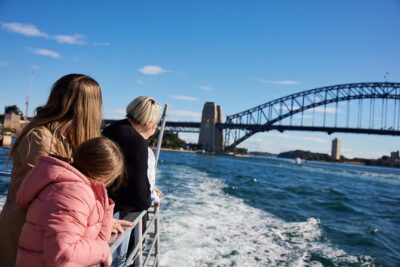
The boat leaves the harbor on a fast cruise toward the open ocean. This first 30-minute stretch matters more than it sounds. Whale tours that spend a long time moving through sheltered water can leave you with a short search window offshore. Here, the high-speed catamaran is designed to get you out of the harbor quickly.
You can use this time to settle into an indoor seat, watch the harbor through the panoramic windows, or head outside if you want fresh air and a better sense of the speed. The boat has air-conditioned cabins and spacious indoor and outdoor seating, so you are not forced to remain on deck for the whole trip.
That choice is useful in Sydney’s changeable conditions. You may start in comfortable sunshine and later want shelter from wind or spray. The indoor cabins also give you a place to rest if the motion becomes tiring.
More Catamaran Whale Watching in Sydney:
- From Funchal: Ecological Catamaran Dolphin Whale Watching
★ 4.5 · 8,204 reviews - Funchal: Dolphin and Whale Watching Catamaran Cruise
★ 4.5 · 5,697 reviews - Costa Adeje: Whale Watching Catamaran Tour with Drinks
★ 4.7 · 3,653 reviews
The Fantasea Avalon and its two viewing levels
Fantasea Avalon is a large catamaran built for this kind of work rather than a small sightseeing boat adapted for whale watching. Its size gives you room to move around, and its two levels create several ways to watch the water.
The outdoor areas are the obvious choice when the weather is calm. You get open views and a better chance of spotting a blow or splash before it disappears. The trade-off is that outdoor areas can feel crowded when everyone moves toward the same side of the boat, and commentary is harder to hear there.
The indoor cabins are more comfortable for a long ride. Panoramic windows let you keep watching without standing in wind or spray. You may not get the same unobstructed view as someone at the rail, but the windows are a sensible option for anyone who wants air conditioning, a seat, and a break from the weather.
One practical point comes from the boat’s layout: a big vessel does not mean every spot has a wide-open view. The outdoor areas can be limited when many people gather outside. I would move between the viewing areas rather than claim one place for the whole trip.
The whale search in open water
Once the catamaran reaches open ocean, the trip becomes less predictable. There is no fixed performance and no guarantee that a whale will surface beside your seat. The crew searches for signs of activity and adjusts the boat’s position as sightings develop.
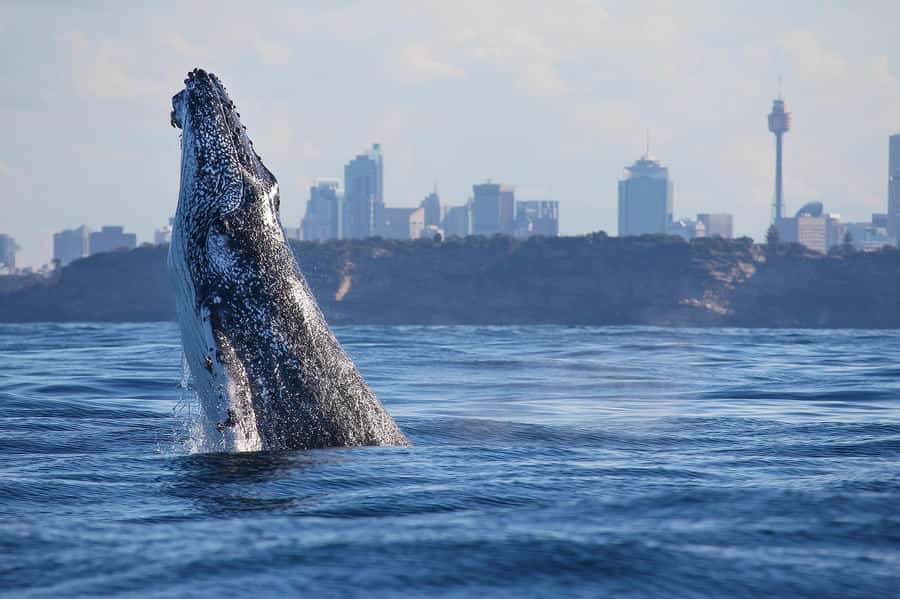
That uncertainty is part of the experience, but it also explains why some outings feel much more dramatic than others. On strong days, the action can come quickly. Sightings have included groups of humpbacks, dolphins, breaches, tail slaps, and fin slaps. One particularly memorable pattern is a mother and calf traveling with an escort whale.
At other times, a whale may surface only briefly. A splash can be visible for a second, then the animal is gone. You may see several blows but miss the photograph. Keep your camera ready, but do not spend the entire trip staring at a screen. The best moments often happen between phone movements.
The crew’s work matters here. They need to balance the wish for close views with safe and respectful distances from the whales. One reported sighting involved a mother striking the water with her tail, a clear warning near her calf. That is a useful reminder that these are wild animals, not performers following a route.
The boat may follow whales for a time as they move through the water. You could see a small group heading back toward the direction the boat came from, or watch a single animal surface several times. The crew may also keep searching if the first sighting is distant or brief.
What the 150-minute schedule feels like
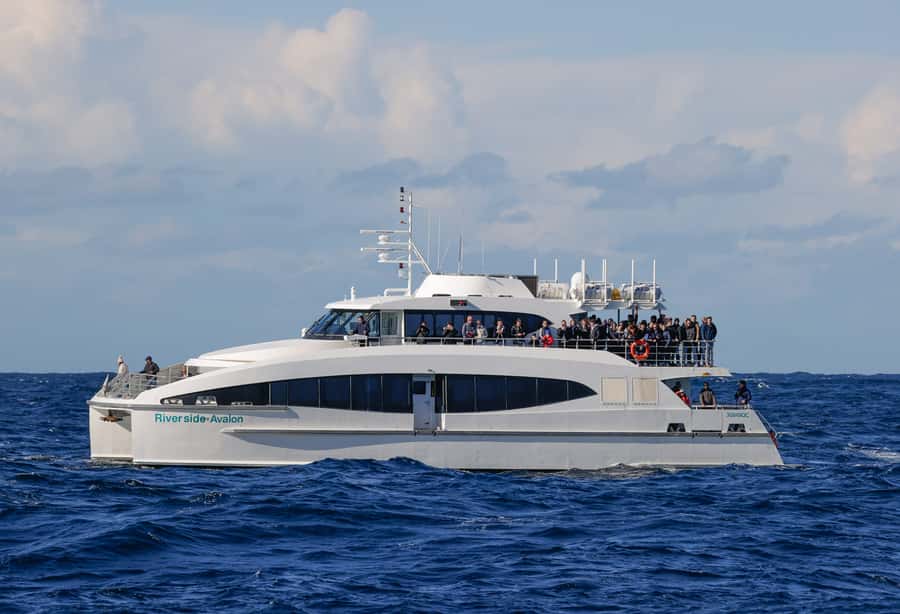
The total tour lasts 150 minutes. About 30 minutes is used for the fast cruise to open water, leaving roughly two hours for the whale-watching portion and the return trip, although the exact balance depends on conditions and sightings.
The first part feels energetic because of the catamaran’s speed. Once the boat reaches the search area, the pace changes. You may spend time scanning the water, waiting for a blow, then moving quickly when the crew spots activity.
That rhythm suits people who enjoy wildlife watching. It is less ideal if you want a nonstop sequence of close encounters. The tour can produce a spectacular breach, but it can also involve long quiet stretches and quick, difficult-to-photograph appearances.
The duration is long enough to give the crew a fair chance to locate whales. It also means you should plan for the possibility of motion for most of the outing. If you are prone to sea-sickness, the open-water portion is the part to take seriously.
More Sailing Days in Sydney:
- Whale Watching Sailing Experience in Sydney
★ 5.0 · 28 reviews - Tenerife: Eco-Yacht Whale and Dolphin Watching and Swimming
★ 4.7 · 15,619 reviews - Reykjavík: Whale Watching Cruise on the Amelia Rose Yacht
★ 4.5 · 2,911 reviews - Whale and Dolphin Watching Catamaran with Transfer and Buffet
★ 5.0 · 2,712 reviews
Rough water and sea-sickness
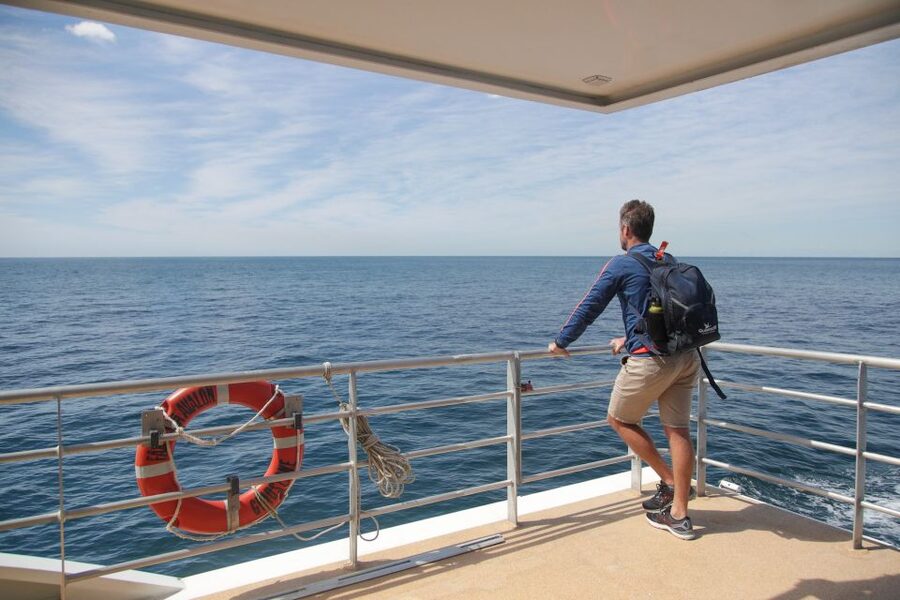
Several experiences have been described as exhilarating because of the ride into open sea. That same speed and exposure can make the trip uncomfortable when conditions turn rough.
The large catamaran has been able to continue searching in larger waves, and the crew takes safety seriously. On one rough outing, the captain warned everyone before departure and handed out sea-sickness bags. The crew even began heading back when the water became too rough, then changed course after whales were spotted.
Still, a stable boat does not remove the motion. One outing was difficult enough that two people in a group of four chose not to continue. Another passenger said the booming sea made the commentary hard to hear and made whale photography especially tough.
I would take the warnings seriously. If you are sensitive to motion, bring whatever sea-sickness remedy you normally use and choose a position that feels comfortable. The supplied information confirms that sea-sickness is a real consideration, but it does not specify which areas of the boat are best for reducing motion, so ask the crew on arrival.
Sunglasses and a camera are listed as useful things to bring. Sunglasses help with glare, while a camera can capture the wider scene even if you miss the perfect whale splash.
The onboard guide and commentary
An English-speaking live guide and expert crew accompany the cruise. The commentary adds value because a whale sighting means more when you understand what you are seeing, especially if the crew explains the difference between a blow, a breach, a tail slap, and normal travel behavior.
The crew has been praised for being friendly, informative, patient, and focused on safety. That combination matters on a wildlife trip, where good communication helps everyone respond quickly when an animal appears.
The sound system is the weak point. Commentary can be hard to hear on the outdoor decks, particularly when the sea is loud. If learning about whales is a major reason for booking, try to listen from inside or near a speaker rather than staying at the far edge of the deck.
This is a practical compromise. The best open-air view may not be the best place for commentary. Move around during the trip so you get both the information and the wide sea views.
Complimentary drinks and the photographer
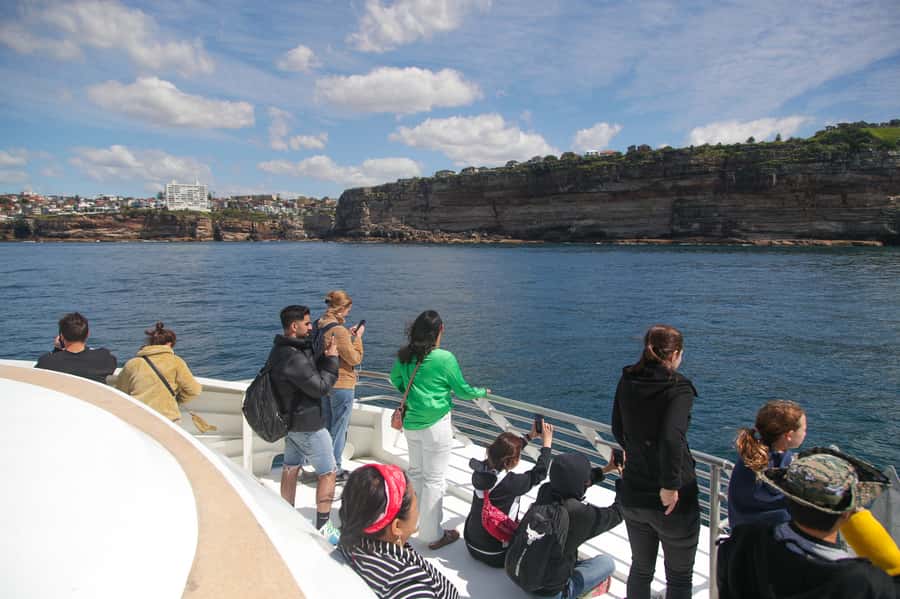
Tea, coffee, and bottled water are included. Food is not, and the trip does not include hotel pickup or drop-off. The boat has a licensed bar where additional drinks are available, but you should not expect a meal service to carry you through the cruise.
The included drinks are a small but useful comfort during a 150-minute outing. A hot drink can be welcome after time on deck, while water is sensible in the sun and wind.
An onboard professional photographer also works during the cruise. Photos are available for purchase, giving you a chance to buy a clear image if your phone records only a few blurry splashes. This is especially helpful because whales do not wait for you to frame the shot.
I would treat the photography service as an optional extra rather than part of the $63 price. The tour includes the photographer’s presence, but the images themselves are not included.
Is $63 good value?
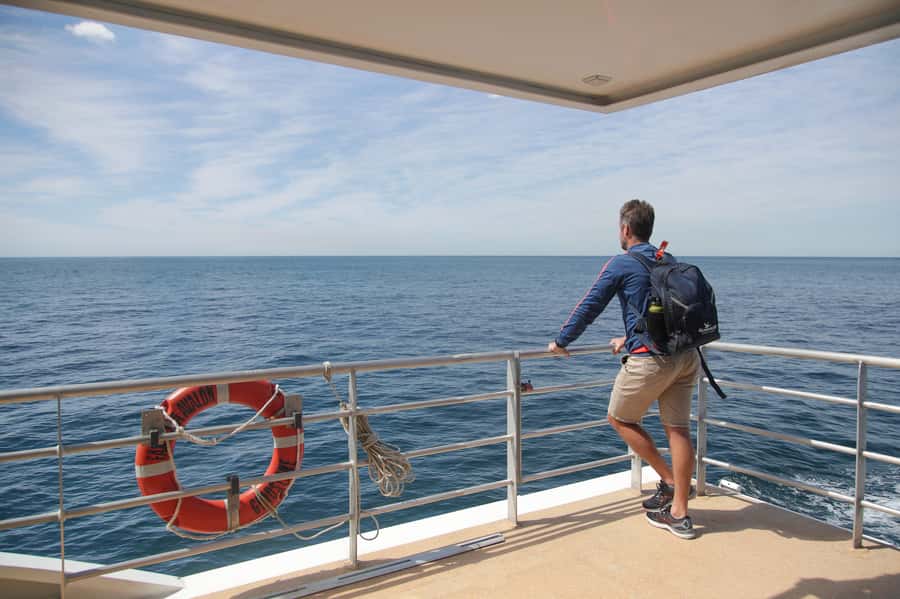
At $63 per person, this tour offers solid value if you want a dedicated whale-watching outing from central Sydney. The price includes the 150-minute cruise, the fast run to open water, the purpose-built vessel, an English-speaking crew, and tea, coffee, and bottled water.
The main value is time. Reaching the open ocean in 30 minutes gives the crew a useful search period instead of spending most of the trip in the harbor. The air-conditioned cabins and two viewing levels also make the price easier to justify than a basic boat ride with limited seating.
You should keep one thing in mind: you are paying for the chance to see wild whales, not a guaranteed show. A successful trip might bring breaches and calves. Another might bring one distant whale and a few splashes. The free return voucher if no whales are found reduces the risk, although it does not help much if you have only one day in Sydney.
The value is strongest for visitors who want a proper wildlife outing without paying for a private charter. It is less certain for anyone who dislikes open water or needs a guaranteed set of close-up views.
Who should book this catamaran tour?
I would recommend it to you if you want a straightforward Sydney whale-watching trip with a fast boat, indoor shelter, open-air viewing, and a reasonable price. Families and mixed groups may find the seating options useful because not everyone has to stand outside in the same conditions.
It also suits photographers who want a chance at action shots, though you should know that timing is difficult and the professional photographer may get the better image. Wildlife fans will appreciate the chance to see natural behavior such as mothers traveling with calves or whales signaling with their tails.
You may want to think twice if you are highly prone to sea-sickness, need quiet and easy-to-hear commentary at all times, or expect every trip to produce repeated close sightings. Rough conditions can make the ride tiring, and the commentary is not always clear on the outdoor decks.
The wheelchair accessibility is a useful feature, but the supplied information does not describe every boarding or deck arrangement. If you need specific access details, confirm them before booking.
Booking, cancellation, and the no-whale policy
You can cancel up to 24 hours before departure for a full refund. The reserve-now, pay-later option lets you hold a place without paying immediately, which is useful when your Sydney schedule is still changing.
A printed voucher is required. The tour departs from Aquarium Wharf in Darling Harbour, and starting times vary, so check availability before planning other activities around it.
The no-whale policy is one of the better safeguards. If no whales are found, you receive a free return voucher to cruise again. That does not remove the uncertainty of wildlife watching, but it gives you another chance instead of ending the experience with nothing to show for it.
Should you book the Fantasea Avalon?
Book this tour if you want a good-value, purpose-built whale cruise and can accept that wild animals set the schedule. The fast trip to open water, multiple viewing areas, included drinks, and strong record of whale and dolphin sightings make it a sensible choice from Darling Harbour.
Before booking, be honest about sea-sickness. Rough water can affect your comfort, your ability to hear the guide, and your chance of getting photographs. If you are prepared for that, the possibility of seeing humpbacks breach, slap their tails, or travel with calves makes the $63 fare worthwhile.
FAQ
Where does the Sydney whale-watching tour depart from?
The tour departs from Aquarium Wharf in Darling Harbour, Sydney.
How long does the whale-watching tour last?
The total duration is 150 minutes, or two and a half hours.
How quickly does the boat reach the open ocean?
The fast cruise reaches the open ocean in about 30 minutes.
What type of boat is used?
You sail aboard Fantasea Avalon, a purpose-built catamaran with two viewing levels, air-conditioned cabins, panoramic windows, and indoor and outdoor seating.
What is included in the ticket?
The ticket includes the cruise, whale watching aboard the catamaran, an English-speaking live guide, expert crew, complimentary tea, coffee, bottled water, and an onboard photographer. Hotel transfers and food are not included.
Are whale sightings guaranteed?
No. Whales are wild animals, so sightings cannot be guaranteed. If no whales are found, you receive a free return voucher to cruise again.
Is the tour suitable for people prone to sea-sickness?
The boat is large and designed for whale watching, but open-water conditions can be rough. Sea-sickness has affected some passengers, so sensitive passengers should take suitable precautions.
Can I cancel the booking?
Yes. You can cancel up to 24 hours before departure for a full refund.
Is the tour wheelchair accessible?
Yes, the activity is listed as wheelchair accessible. For specific boarding or seating requirements, confirm the details before departure.
Just added around Sydney
- Whales of Sydney Sea Safari★ 5.0 · 2 reviews
- Sydney Harbour Tall Ship Whale & Sail – Whale Watching Cruise★ 5.0 · 5 reviews
- Whale Watching on Speed Boat with canopy from Sydney Harbour★ 5.0 · 14 reviews
- Whale Watching Sailing Experience in Sydney★ 5.0 · 28 reviews
- Whale Watching Sydney★ 3.5 · 17 reviews
- Sydney Whale Watching on Small RIB★ 5.0 · 14 reviews
- Sydney Whale Watching – 2.5hr Discovery Cruise★ 4.0 · 120 reviews
- Sydney Whale Watching Cruise from Circular Quay★ 4.5 · 207 reviews
Sydney Whale Watching Tours, compared.
Sydney Whale-Watching Cruise Including Lunch or Breakfast
Read our review →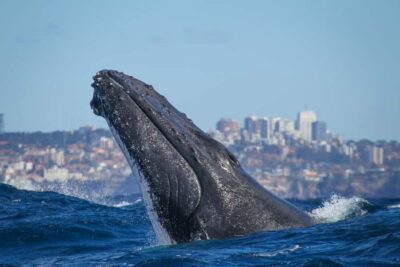
Sydney Whale Watching Cruise with Breakfast or Lunch
Read our review →
Sydney: Scenic Whale Watching Cruise – Whales Guaranteed
Read our review →
Browse the lists this tour appears in