
Review · SYDNEY
Whale Watching Boat Trip in Sydney
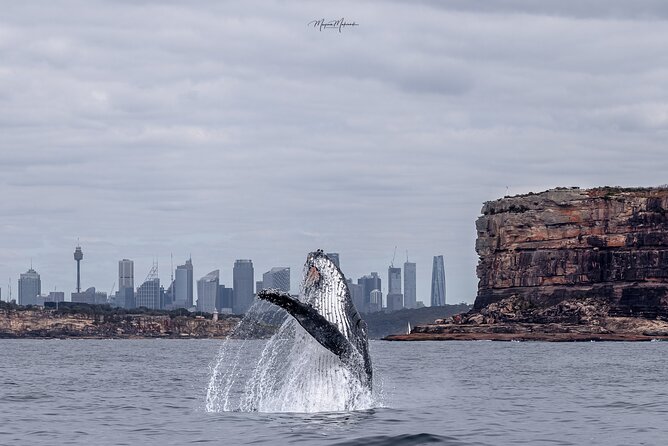
Sydney’s whale-watching season turns a harbour sightseeing cruise into a trip out on the open sea. You’ll glide under the Harbour Bridge, pass the Opera House, then head beyond the Heads in search of migrating humpback whales, dolphins, and other marine life.
I like the small-boat feel, which can make the outing more personal than a large sightseeing vessel. I also like the whale sighting guarantee: if no whales appear, you can return for another cruise at no charge. The main caution is the sea. Wind, waves, spray, and motion sickness are part of the deal, and one outing produced only a few distant surfaces.
Key points to know before booking
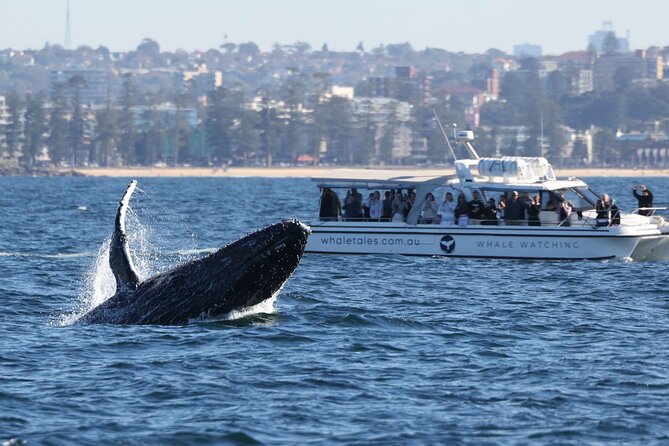
- Whale sightings are covered by a return guarantee: If you do not see whales, you can cruise again free of charge.
- The route starts with Sydney’s best harbour views: You pass beneath the Harbour Bridge and by the Opera House before reaching the open ocean.
- The boat carries no more than 30 people: Some departures have been much smaller, with around 14 passengers and three crew members.
- Crew commentary adds real value: Rex, Mette, Alex, Isaac, and Mawi have been praised for explaining whale behavior, migration, and marine life.
- You may get wet: Bring a rain jacket, hat, waterproof shoes, and spare clothes if the forecast looks windy or rough.
- You can choose a morning or afternoon departure: The total outing lasts about 2 hours and 30 minutes and returns to King Street Wharf.
From Darling Harbour to the open ocean
Your trip begins at King Street Wharf in Darling Harbour, at The Promenade on Lime Street. This is a useful starting point if you are already spending time around Darling Harbour, though you should allow enough time to locate the correct wharf before departure.
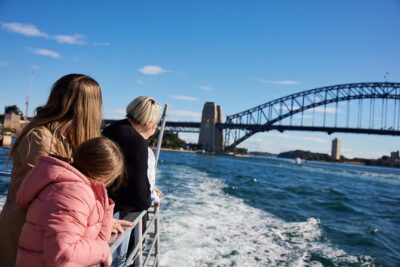
The first part is a gentle introduction to Sydney from the water. The boat travels through the harbour, giving you changing views of the city rather than one fixed postcard scene. You pass beneath the Harbour Bridge, then continue toward the Opera House. These stops are not shore visits. They are moving viewpoints, so keep your camera ready as the angle changes.
I like this opening because it gives you two experiences in one. You get a short harbour cruise and a wildlife trip without needing a separate sightseeing boat. If this is your first day in Sydney, the route also helps you understand how the central harbour connects to the coast.
The city views are not the main purpose of the outing, though. Once the boat passes through the harbour entrance and heads toward the ocean, the character of the trip changes. The water can become rougher, the city falls behind, and your attention turns to the horizon.
A few more whale trips around Sydney worth a look
- Sydney: Whale Watching Adventure Cruise
★ 4.2 · 1,790 reviews - Sydney Whale-Watching Cruise Including Lunch or Breakfast
★ 4.5 · 878 reviews - Sydney: 2-hour Express Whale Watching Cruise
★ 4.2 · 756 reviews
Searching beyond Sydney Heads
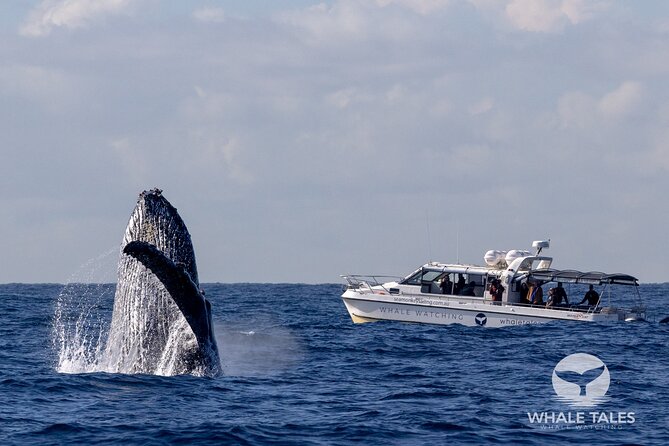
The crew takes you beyond Sydney Heads to look for migrating humpback whales. Humpbacks pass along the Australian coast during their annual migration, and the timing of a sighting can never be controlled. The crew uses its experience and communicates with other skippers to help locate whales in the area.
This is an important point: whale watching is a search, not a staged show. You may see a mother and calf close to the boat, several whales surfacing together, or a breach that lasts only a moment. You may also spend a long stretch scanning the water before a whale surfaces.
The boat’s smaller size helps here. You are not looking from far back on a huge passenger deck, and the crew can point out surfaces, blows, tails, and movement as they happen. On some trips, groups have seen two adults with a calf, several whales together, dolphins swimming beside the boat, and even what was described as false killer whales.
The best sightings can be brief. A whale might surface several times, disappear, then reappear farther away. A calf may come close to the boat, while an adult remains just beyond the best camera range. This is part of the appeal, but it also means you need to watch rather than wait for the crew to do all the work.
What the crew adds to the trip
The crew is one of the strongest parts of this experience. Mette has provided commentary on humpback behavior, migration, and other marine species. Rex has served as skipper, while Alex has helped with photography and wildlife spotting. Isaac and Mawi have also been praised for their work on different departures.
Names and roles can change by sailing, but the pattern is clear: you get both a person handling the boat and crew focused on finding and explaining the animals. The commentary covers more than simple identification. You learn how to look for whales, what different movements may mean, and why a sighting can be hard to predict.
I especially like the practical teaching element. Instead of only shouting that a whale is somewhere on the left, the crew helps you understand where to look and what to expect next. That matters when the ocean is wide and the animal may surface for only a few seconds.
The crew also takes the welfare of the whales seriously. The aim is to watch respectfully rather than chase animals for a dramatic photograph. That approach is worth keeping in mind if you want a wildlife outing that treats the animals as wild creatures, not performers.
Some trips have included a photographer who takes pictures during the cruise and sends them to passengers afterward at no added cost. This can be useful because getting a sharp whale photograph while standing on a moving boat is not easy. Do not count on every sailing having the same crew arrangement, but photo sharing has been part of the experience on several outings.
Small group, small boat, and personal space
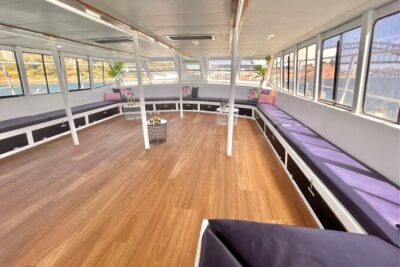
The stated maximum is 30 passengers. That is still a proper group outing, but it is smaller than many large whale-watching operations. Some departures have had only 14 passengers and three crew members, which gives the trip a more personal feel.
A small boat brings clear advantages. You can move around to improve your view, hear the commentary without relying only on a loudspeaker, and ask questions more easily. The crew can also keep an eye on people who are struggling with the motion.
The tradeoff is that a smaller boat may move more with the sea. The same design that brings you closer to the water can make the ride feel lively when the wind picks up. You might enjoy the spray and movement, or you might spend much of the trip wishing for a steadier deck.
The crew has warned passengers when conditions were windy or choppy and, in at least one case, offered a refund or a change of date before departure. That is a sensible approach, but you should still take responsibility for your own comfort. If you are prone to motion sickness, the practical advice is to take suitable medication about an hour before the trip, as directed for that medicine.
Do not treat the sea-sickness warning as a minor footnote. One person described seeing only a small whale surface a few times after a long search, while still praising the crew and harbour views. A different trip left passengers soaked but delighted. Both outcomes are possible because conditions vary.
Same water, a different way to meet the whales:
- Sydney: Discovery Whale Watching Tour by Catamaran
★ 4.2 · 402 reviews - Sydney Whale Watching Cruise with Breakfast or Lunch
★ 4.4 · 340 reviews - Sydney: Scenic Whale Watching Cruise – Whales Guaranteed
★ 4.6 · 318 reviews - Sydney Whale-Watching by Speed Boat
★ 5.0 · 314 reviews
The best and hardest moments on the water
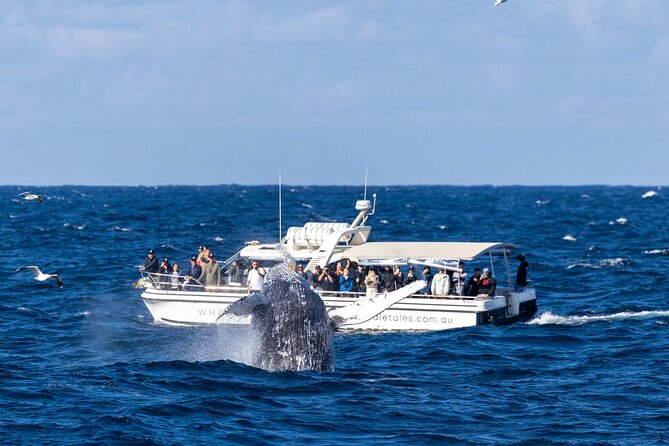
A successful trip can include several kinds of wildlife. Humpback whales are the main goal, but dolphins have been seen playing beside and in front of the boat. Mothers and calves are especially memorable because the calf may surface close to the adult or make repeated appearances.
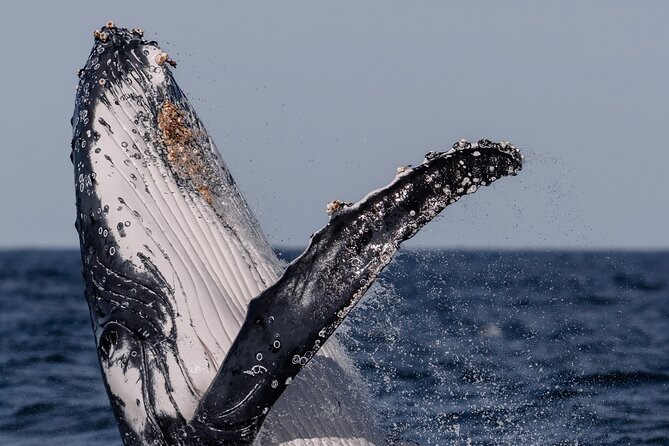
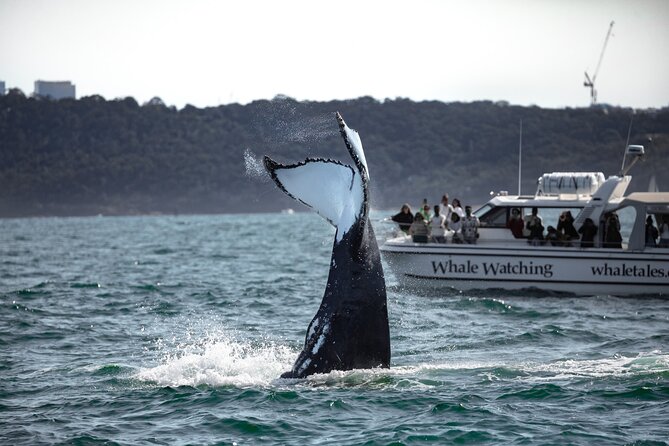
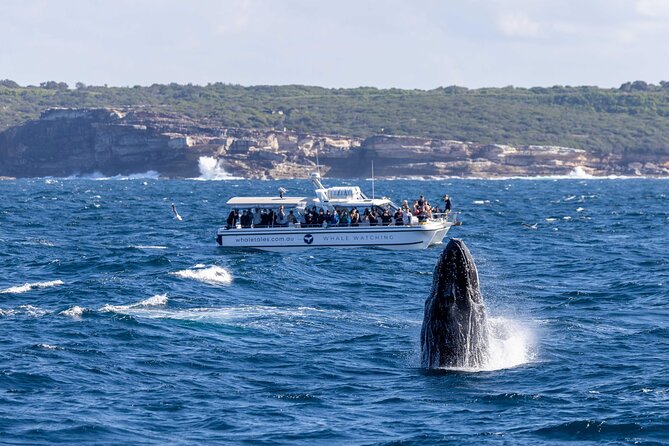
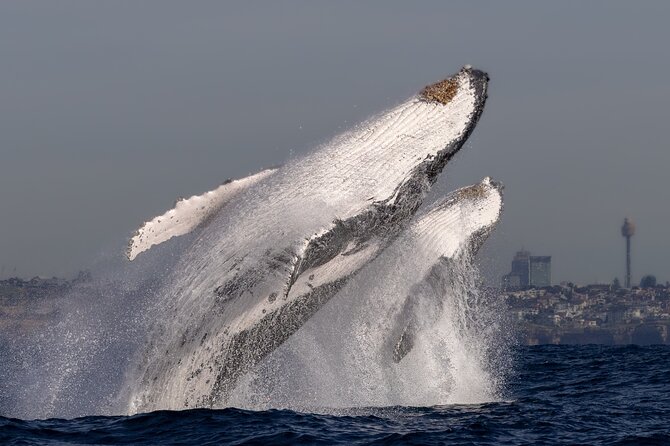
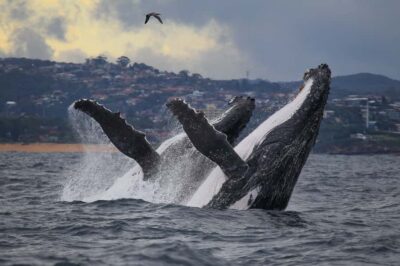
Breaching is the moment everyone hopes for. Several outings have included whales breaching multiple times, but you should not expect this on every cruise. A tail, a blow, or a rolling back can be just as likely, and sometimes the whale appears only briefly.
The crew’s work is often most valuable when the action is subtle. A trained eye may notice a distant blow before you do, then guide your attention to the right patch of water. That can turn a quiet stretch into a rewarding sighting.
Still, the trip is not a guaranteed parade of whales. The guarantee covers a return cruise if no whales are seen, but it does not promise close approaches, breaches, dolphins, or perfect weather. If you have only one free afternoon in Sydney and need a certain result, this may feel like a gamble.
If you have room in your schedule, the guarantee makes the choice easier. You can return if the first outing produces no whale sighting, subject to available arrangements. It is less useful if you leave Sydney immediately afterward.
How the $99.70 price holds up
At $99.70 per person, this is not the cheapest way to spend a morning or afternoon in Sydney. The value depends on what you want from the outing.
You are paying for about 2 hours and 30 minutes on the water, a route through Sydney Harbour and beyond the Heads, an experienced crew, marine commentary, and a small-boat setting. In good conditions, you also get the chance to see humpbacks, dolphins, and other wildlife. The free return cruise if no whales are seen adds protection that many wildlife outings do not offer.
I think the price makes sense for animal lovers and for people who value a smaller group. It is also reasonable if you want to combine famous harbour views with a genuine wildlife search. The price is harder to justify if you are mainly seeking a guaranteed photograph or a calm sightseeing cruise.
The rating is listed at 4.9 from 571 ratings, with 97 percent recommending the experience. That points to strong satisfaction, especially with the crew and the sightings, but it should not hide the basic truth of wildlife tours: nature controls the schedule.
Morning or afternoon cruise?
You can choose a morning or afternoon departure. Both options follow the same basic pattern: meet at King Street Wharf, cruise through the harbour, head into the ocean, search for whales, and return to the wharf.
A morning sailing can fit neatly into a day of sightseeing, while an afternoon trip may work better if you want a slower start. The best choice is the one that leaves you enough flexibility to handle weather changes or a return trip if the guarantee becomes relevant.
I would avoid booking this as the final activity before a tight airport transfer or another fixed appointment. The advertised duration is approximately 2 hours and 30 minutes, and the open-water section depends on wildlife and sea conditions. Give yourself breathing room after the cruise.
What to wear and bring
Dress for spray, wind, and changing conditions rather than for the weather at Darling Harbour. The harbour may feel pleasant while the open ocean feels cooler and rougher.
Bring:
- A rain jacket or waterproof outer layer
- A hat that fits securely
- Waterproof shoes
- Spare clothes if the forecast is windy
- Motion-sickness medication if you need it
- A phone or camera with enough battery for the full outing
Some passengers have been drenched and loved it. Others have been comfortable in dry, breezy conditions. Waterproof footwear matters because a wet deck and sea spray can make ordinary shoes unpleasant.
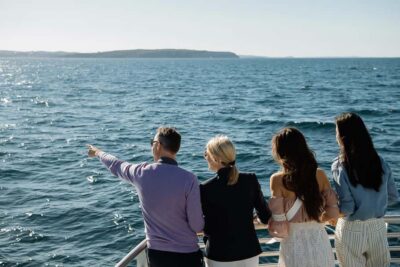
The crew may encourage you to stand and move around to help spot whales. That can improve your chances of seeing something and may help some people feel less sick, but only move when it is safe and follow the crew’s instructions.
Who will enjoy this most?
I would recommend this cruise to anyone who gets excited by the possibility of seeing wild animals without needing a luxury vessel or a large tour group. Families can find plenty to interest children, especially when dolphins or calves appear, and the crew has handled detailed questions from young passengers.
It also suits solo visitors. The small group and active search give you something to focus on, and the crew creates an easy setting for asking questions. Photographers will appreciate the chance to see whales from close range, but should remember that wildlife does not pose on command.
This is less suitable for someone who dislikes rough water, cannot spare extra time, or needs a certain number of whale sightings. It is also not the right pick if you want to remain inside a calm harbour. The most exciting section takes place outside the Heads, where conditions can change.
Booking, cancellation, and practical details
Your mobile ticket is confirmed at booking, and the activity begins and ends at King Street Wharf Darling Harbour. Service animals are allowed, public transport is nearby, and most people can take part. The maximum group size is 30.
You can cancel up to 24 hours before the start time for a full refund. Changes or cancellations inside 24 hours are not accepted for a refund. The trip needs suitable weather and a minimum number of participants. If the operator cancels for either reason, you are offered another date or a full refund.
Should you book the Whale Tales cruise?
Book it if you want a real ocean wildlife search, not a guaranteed performance. The strongest reasons are the small group, the passionate crew, the Sydney Harbour route, and the free return cruise if no whales appear.
I would book this for a morning or afternoon when I could handle an uncertain finish and possible rough water. I would take motion-sickness precautions, wear waterproof clothing, and keep the rest of the day flexible.
Skip it if a calm harbour ride is your priority or if you have only a few hours in Sydney and cannot accept the chance of a weak sighting. For everyone else, the combination of famous city views, humpbacks, dolphins, and thoughtful marine commentary makes this a worthwhile choice, provided you respect the conditions and let the ocean set the pace.
FAQ
Where does the whale-watching cruise start?
The cruise starts at King Street Wharf in Darling Harbour, at The Promenade, Lime Street, Sydney NSW 2000.
Where does the activity finish?
The cruise ends back at the meeting point at King Street Wharf.
How long does the cruise last?
The experience lasts approximately 2 hours and 30 minutes.
What animals might I see?
The main target is migrating humpback whales. Dolphins, bottlenose dolphins, and other marine species have also been seen during the cruise.
Is there a whale sighting guarantee?
Yes. If you do not see whales, you can take another cruise free of charge.
What Sydney sights are included?
The boat cruises under the Sydney Harbour Bridge and past the Sydney Opera House before heading beyond Sydney Heads.
How many people can join the boat?
The maximum group size is 30 travelers. Some departures have had smaller groups, including around 14 passengers.
What happens if bad weather cancels the trip?
If poor weather causes a cancellation, you are offered a different date or a full refund.
Just added around Sydney
- Whales of Sydney Sea Safari★ 5.0 · 2 reviews
- Sydney Harbour Tall Ship Whale & Sail – Whale Watching Cruise★ 5.0 · 5 reviews
- Whale Watching on Speed Boat with canopy from Sydney Harbour★ 5.0 · 14 reviews
- Whale Watching Sailing Experience in Sydney★ 5.0 · 28 reviews
- Whale Watching Sydney★ 3.5 · 17 reviews
- Sydney Whale Watching on Small RIB★ 5.0 · 14 reviews
- Sydney Whale Watching – 2.5hr Discovery Cruise★ 4.0 · 120 reviews
- Sydney Whale Watching Cruise from Circular Quay★ 4.5 · 207 reviews
Sydney Whale Watching Tours, compared.
Sydney Whale-Watching Cruise Including Lunch or Breakfast
Read our review →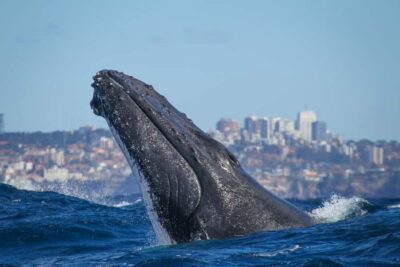
Sydney: Discovery Whale Watching Tour by Catamaran
Read our review →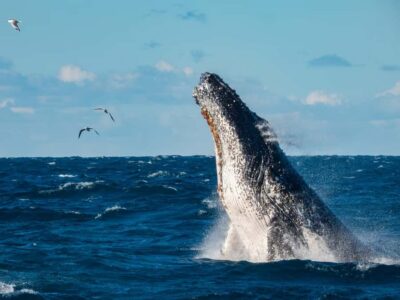
Sydney Whale Watching Cruise with Breakfast or Lunch
Read our review →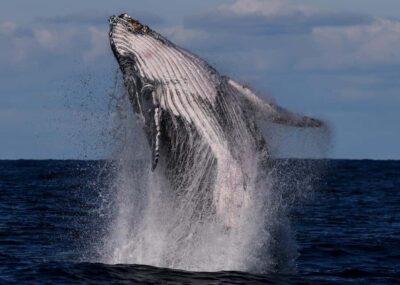
Sydney: Scenic Whale Watching Cruise – Whales Guaranteed
Read our review →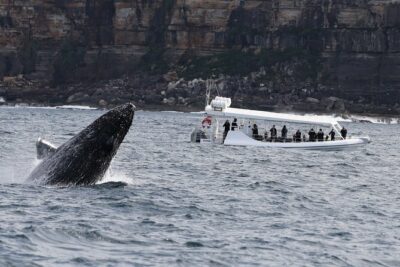
Browse the lists this tour appears in