
Review · AUSTRALIA
Bremer Bay: Bremer Canyon Killer Whale Expedition
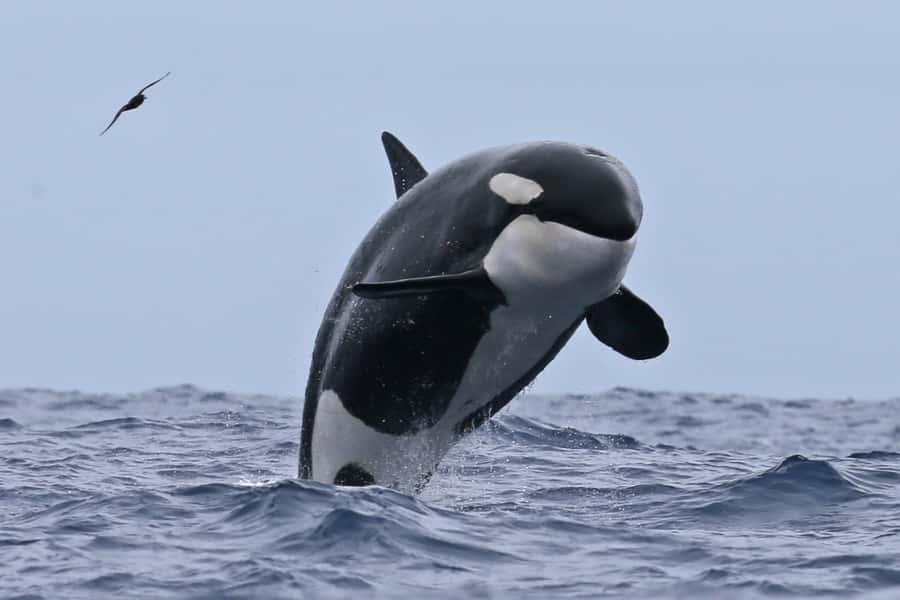
The main event is clear: you head far into the Southern Ocean to watch killer whales in the wild, often for hours at a time. Bremer Bay is the only place in Australia where orca encounters can be found with this level of reliability, though wild animals never come with a guarantee.
I like the marine biologist’s commentary, which turns each sighting into a lesson about hunting, family groups, and ocean ecology. I also like the care built into the day: the Alison Maree was made for Southern Ocean conditions, and morning tea, lunch, afternoon tea, and hot and cold drinks are included.
The catch is the sea itself. You spend about eight hours offshore, with up to 1.5 hours each way just reaching the canyon. Seasickness tablets are strongly recommended, even if you have never felt sick on a boat.
Key points to know before you book
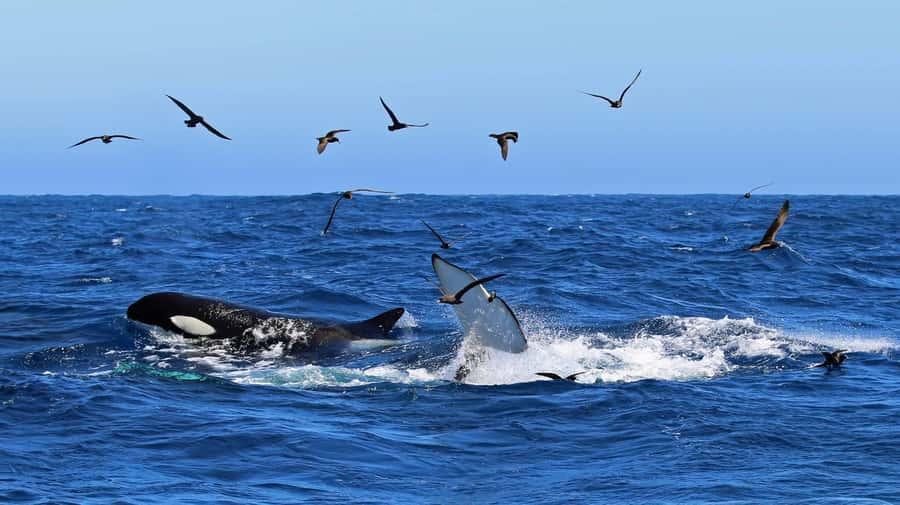
- Wild orca encounters: Search for killer whales in the Bremer Canyon, with possible sightings of pilot whales, sperm whales, dolphins, seals, sharks, and pelagic birds.
- A full Southern Ocean day: Allow eight hours from Bremer Bay boat harbour, including the long run to and from the canyon.
- Marine biology on board: An onboard marine biologist provides interpretation, beginning with a multimedia presentation before departure.
- Food is included: Morning tea, lunch, afternoon tea, and unlimited hot and cold beverages are provided.
- The Alison Maree is purpose-built: The vessel was designed for the conditions you can encounter offshore in the Southern Ocean.
- Prepare for motion: Warm clothing, comfortable shoes, and seasickness prevention are not optional extras for many people.
Why Bremer Bay is the place for wild orcas
This is not a coastal sightseeing cruise where you wait near shore for a lucky fin. The Bremer Canyon lies well offshore, so the expedition spends roughly 1 to 1.5 hours reaching the area where killer whales are reliably encountered.
That travel time is important when you decide if this trip suits you. You are committing to a serious day on open water, not a short wildlife ride. The reward is the chance to see orcas behaving naturally, without tanks, shows, or trained routines.
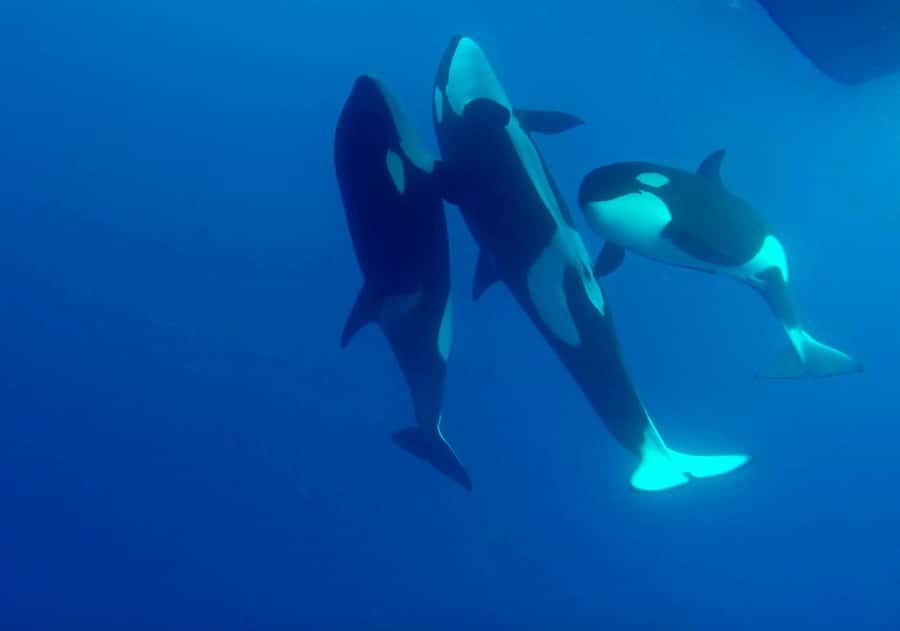
The whales may travel in pods, hunt, pass beneath the vessel, or move alongside it. On some days, you might watch feeding behavior or even a predation event. Those moments are never promised, but they explain why this experience feels different from a simple whale-watching outing.
You may also see a wide range of other marine life. Sightings have included pilot whales, sperm whales, common and bottlenose dolphins, seals, sea lions, sharks, albatross, other pelagic birds, and even a blue whale. The orcas are the reason to book, but the wider cast can make the long day feel full from start to finish.
More Orca Watching Tours in Australia:
- Bremer Canyon Killer Whale (Orca) Expedition
★ 5.0 · 215 reviews - Bremer Bay Orca Experience
★ 5.0 · 79 reviews - Bremer Canyon Orca Experience from Bremer Bay
★ 4.6 · 35 reviews
Starting at Bremer Bay boat harbour
Your day begins at Bremer Bay boat harbour. There is no hotel pickup or drop-off, so you need to arrange your own way to the departure point and allow enough time to arrive ready for an eight-hour outing.
Once aboard, the crew gives a safety briefing. This is more than a quick formality because the vessel heads into open Southern Ocean waters and conditions can change. Listen carefully to instructions about moving around the boat, finding viewing areas, and staying safe while the vessel is underway.
The Alison Maree was built specifically for these conditions. That does not mean the ride will be smooth. The boat may pitch and roll in rough water, and several people can feel unwell even when the weather seems mild from shore. Still, a purpose-built vessel and an attentive crew make a meaningful difference on such a long offshore run.
Wear warm layers and comfortable shoes. Waterproof outer clothing is sensible, as is clothing you can adjust during the day. You cannot swim or snorkel on this expedition, so pack for sitting, standing, watching, and staying warm rather than getting in the water.
The first presentation sets up the wildlife
Before the boat reaches the canyon, you receive a multimedia presentation covering killer whale biology and ecology. You also learn about the other animals you might encounter.
I value this part because it gives you something useful to watch for. Once you understand how orcas move, hunt, and interact, a distant dorsal fin becomes more than a quick photo. The marine biologist’s explanation can also help you understand why the vessel changes course, slows down, or waits.
The crew continues interpreting the wildlife throughout the day. They explain what you are seeing and answer questions, with particular attention to the whales and how they hunt. Several members of the crew help with spotting and keep an eye on passenger comfort, which matters when everyone is trying to follow fast-moving animals.
One practical point: the boat’s outdoor areas can be noisy and exposed, especially with wind and engine sounds. A past passenger wished for a microphone so announcements could be heard more clearly. Stay near the crew when information is being shared, and do not hesitate to ask for an explanation if you miss something.
The long run to the Bremer Canyon
The trip to the wildlife area usually takes about 1 to 1.5 hours, depending on sea state and weather. This is the least glamorous part of the expedition, but it is also when seasickness can begin.
Take motion sickness medication before boarding, following the product instructions. Several passengers who had never suffered from seasickness took precautions and felt fine, while others who skipped medication struggled. A light, plain breakfast can also be a sensible choice if you are prone to nausea.
You are not simply killing time during the run. The crew may keep watch for dolphins, seabirds, or other signs of marine life, and the sea itself becomes part of the experience. But keep your expectations realistic. If you want a short, calm boat ride, this is the wrong excursion.
The crew provides hot and cold drinks, morning tea, lunch, and afternoon tea. That is a real benefit. You do not need to carry a full day of food, and regular snacks can help when the day stretches on. Soft drinks are served, along with other hot and cold beverages.
A few more whale trips around Australia worth a look
- Sydney: Whale Watching Adventure Cruise
★ 4.2 · 1,790 reviews - Brisbane Whale Watching Cruise from Redcliffe or Sunshine Coast
★ 5.0 · 997 reviews - Freedom 3/4 Day Hervey Bay Premium Whale Watching Cruise
★ 5.0 · 919 reviews - Swim with Whale Sharks in the Ningaloo Reef: 3 Island Shark Dive
★ 5.0 · 919 reviews
Watching killer whales in their own world
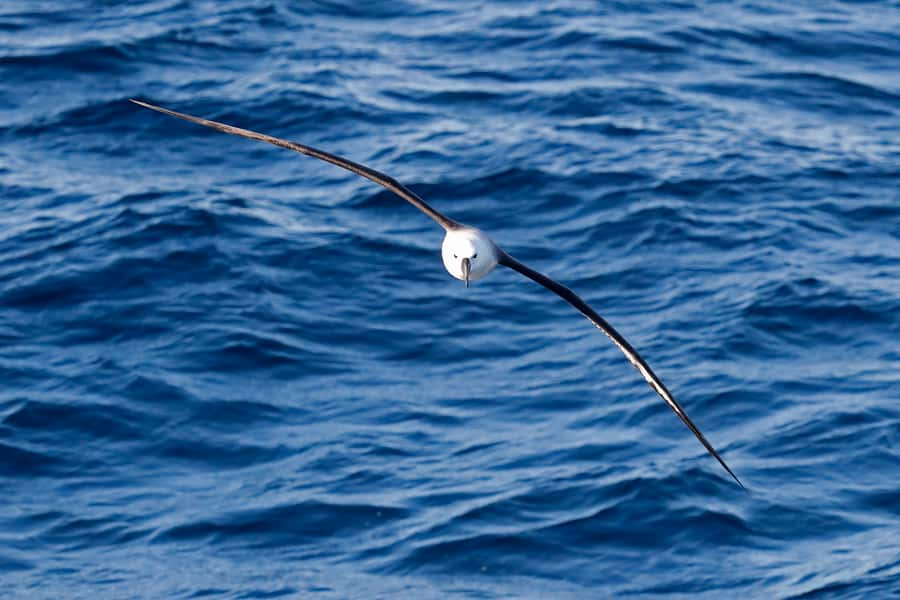
At the canyon, the focus shifts to the search for orcas. The crew works with spotters to locate pods and follows the animals without turning the encounter into a chase.
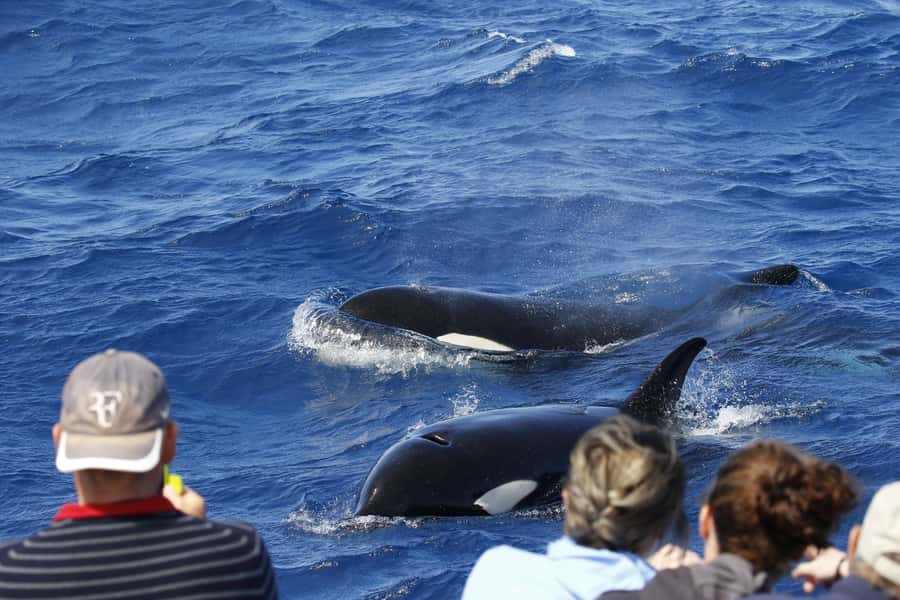
Sightings can vary from a few brief appearances to hours of repeated activity. On particularly strong days, pods have remained visible for much of the time spent at the canyon. Orcas have swum close to the boat, passed underneath it, traveled beside it, and played in the wake as the vessel headed away.
That unpredictability is part of the value. You are watching wild animals choose where to go and what to do. The crew can improve your chances by reading the conditions and moving to new areas, but nobody can control the whales.
You may watch a pod resting, traveling, socializing, or hunting. Predation scenes are rare and can be intense, so be prepared for nature in its raw form. A sighting is not staged for a perfect photograph, and the best moments may last only seconds.
Bring patience. You may spend time scanning the water between sightings, especially if the animals move away. The crew’s interpretation helps fill those gaps, but you should not expect constant action every minute of the eight-hour day.
More than orcas: whales, dolphins, seals, and birds
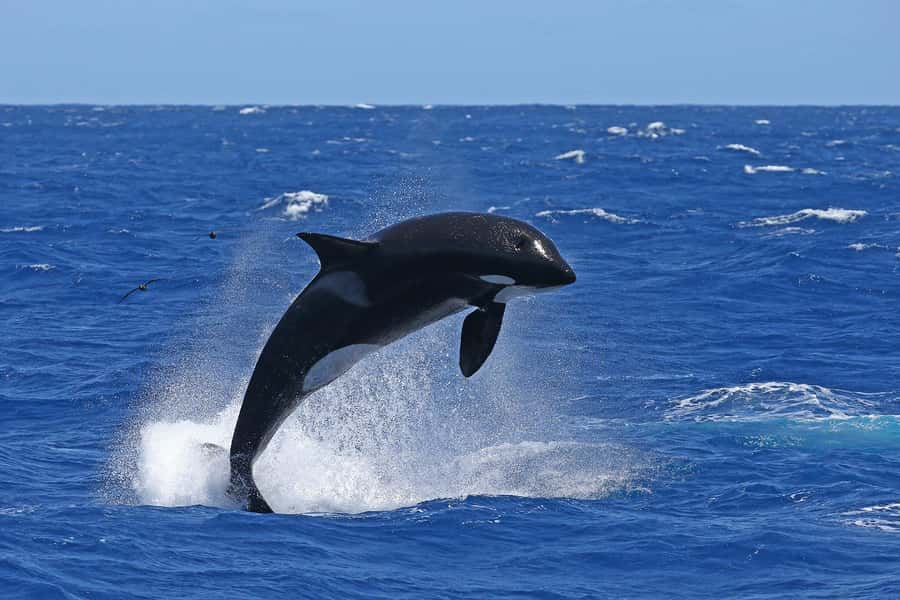
The supporting wildlife can be excellent. Pilot whales and sperm whales have been seen during these expeditions, including sperm whales on the return journey. Dolphins may appear during the outward run or near the canyon.
Seals and sea lions may surface near the boat, while sharks and pelagic birds add variety to the open-ocean setting. Sightings have included albatross, a bronze whaler shark, and a blue whale. None of these animals is guaranteed, but the possibility makes it worth keeping your eyes moving even when the orcas are not nearby.
If you book mainly for variety, keep your expectations measured. Orcas are the principal target, and some days may offer more killer whales than other large marine species. If you book because you want a broad list of animals, you may be pleased, but you should see the extra wildlife as a bonus rather than a promise.
What the boat and crew add to the day
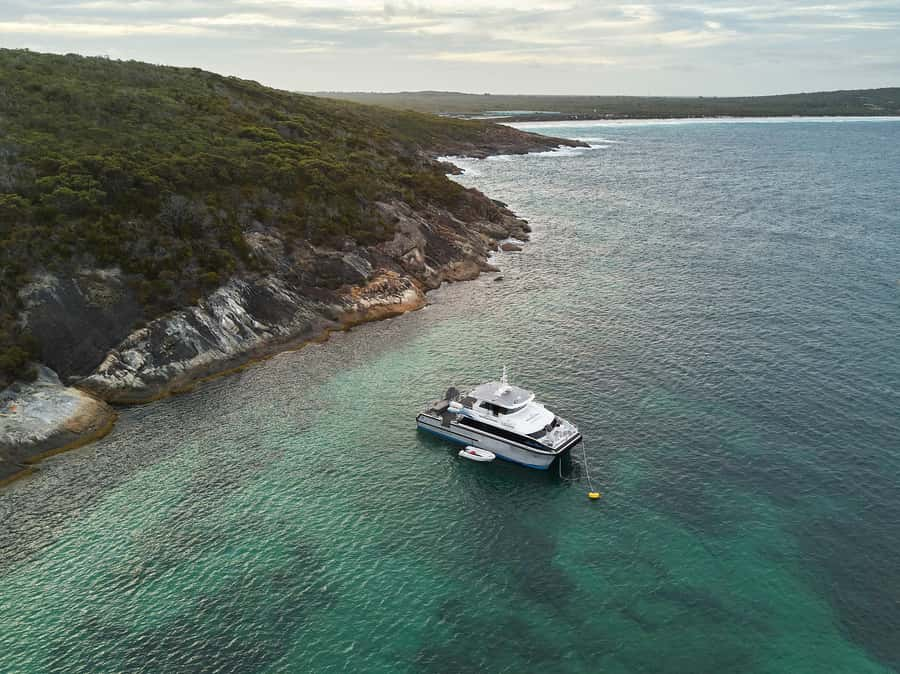
The Alison Maree is purpose-built for the Southern Ocean, a useful advantage on a trip that spends most of the day offshore. The boat offers a more suitable platform for this kind of expedition than a casual harbor cruise, though no vessel can remove the motion of open water.
The crew receives repeated praise for being friendly, attentive, and enthusiastic. They help passengers who feel unwell, provide food and drinks, answer questions, and keep the search moving. Their willingness to adjust the route and timing can matter when whales appear late in the day or when sperm whales are found on the return journey.
The human side of the experience is especially important here. You are together for a long time, often in changing weather, and the crew’s attitude affects the entire day. Patient explanations and regular care make a rough stretch easier to manage.
You should still follow safety instructions. The boat can become crowded around a good sighting, and moving from one side to the other needs care while at sea. The crew is there to help, but you remain responsible for holding on, watching your footing, and moving only when it is safe.
Food, photos, and the daily blog
Meals and drinks are included in the $282 price. You receive morning tea, lunch, afternoon tea, and unlimited hot and cold beverages. For an eight-hour expedition, that is more useful than a small snack included with a cheaper half-day cruise.
The food also means you can keep watching instead of worrying about finding lunch in the middle of the ocean. If you have dietary needs, the supplied information does not specify what alternatives are available, so ask the operator before booking.
After the expedition, photos and a daily blog are emailed to you. This is helpful because wildlife photography from a moving boat can be hit or miss. You can enjoy the sighting in the moment and have a chance to receive a visual record afterward.
Do not treat the photos as a replacement for your own camera. Conditions, distance, light, and the whales’ movements all affect what you capture. The best memory may be watching an orca surface beside the boat rather than getting a sharp image.
Is $282 a fair price?
At $282 per person, this is a major excursion expense, especially if you are already paying for flights, accommodation, and a long drive to Bremer Bay. The value depends on how strongly you want to see wild orcas and how comfortable you are spending a full day at sea.
I think the price is easier to justify because it includes eight hours aboard the vessel, marine biologist interpretation, all food and drinks, and emailed photos and a daily blog. You are also paying for a purpose-built boat, experienced spotting, and access to a remote offshore wildlife area.
The price is not good value if you dislike boats, want a short outing, or would be unhappy with a day that produces fewer sightings. Wild animals remain unpredictable. Even in Australia’s most reliable orca location, a booking is an opportunity, not a guarantee.
For an orca-focused trip, though, the experience offers something difficult to find elsewhere in Australia. If seeing killer whales in the wild is high on your list, the cost is easier to accept than it would be for a general sightseeing cruise.
Who should book this expedition
This trip suits adults and older children who can manage a long day offshore. Children under 10 are not accepted, and the experience is not suitable for pregnant women or wheelchair users.
You should book if you:
- Want to see killer whales behaving naturally
- Can handle an eight-hour expedition on the Southern Ocean
- Enjoy learning about animal behavior and ecology
- Are happy to watch patiently between sightings
- Appreciate food, drinks, interpretation, and photos included in one price
- Can prepare properly for possible seasickness
You should think twice if you are highly prone to motion sickness, cannot tolerate rough water, or need step-free wheelchair access. The crew can help with comfort, but they cannot make the ocean flat.
The best preparation is simple: take seasickness medication as recommended, eat lightly, wear warm layers, choose comfortable shoes, and keep your expectations focused on the wild experience rather than a guaranteed photograph.
Cancellation and practical details
You can cancel up to 24 hours before departure for a full refund. You can also reserve now and pay later, which helps if your Western Australia plans are still taking shape.
The tour is conducted in English, with a live guide and marine biologist interpretation. The departure and return point is Bremer Bay boat harbour, and hotel transportation is not included.
The full expedition takes approximately eight hours. Check the available start time when booking, then protect the entire day rather than planning another major activity afterward.
Should you book the Bremer Bay orca expedition?
Book it if a wild killer whale encounter is one of your main reasons for visiting Western Australia. The combination of a purpose-built vessel, marine biology interpretation, careful spotting, included meals, and the chance to watch pods for hours can make this a once-in-a-lifetime day.
Do not book it casually. The boat travels far offshore, the water can be rough, and seasickness is the one consistent practical warning. If you prepare properly and accept that nature sets the schedule, the $282 price can be good value for a rare Australian wildlife experience.
FAQ
Where does the Bremer Bay killer whale expedition depart from?
The expedition departs from Bremer Bay boat harbour and returns there after the day on the water.
How long does the expedition last?
The full expedition takes approximately eight hours.
How long does it take to reach the whale-watching area?
The journey to the Bremer Canyon takes about 1 to 1.5 hours, depending on sea conditions and weather.
What animals might I see?
You may see killer whales, sperm whales, pilot whales, dolphins, sharks, seals, sea lions, and pelagic birds. Sightings of a blue whale and albatross have also been recorded.
Are meals and drinks included?
Yes. Morning tea, lunch, afternoon tea, and unlimited hot and cold beverages are included.
Is the tour suitable for people who get seasick?
The expedition takes place in the Southern Ocean, so seasickness is possible. Seasickness tablets are strongly recommended, even if you have not been seasick before.
Can I swim or snorkel during the expedition?
No. Swimming and snorkeling are not allowed.
Is the tour suitable for children and wheelchair users?
Children under 10 are not permitted. The experience is also not suitable for wheelchair users or pregnant women.
What happens if I need to cancel?
You can cancel up to 24 hours in advance for a full refund. The reserve-now-and-pay-later option is also available.
Just added around Australia
- Wilsons Promontory: Whale Spotting Cruise with Lunch★ 4.9 · 20 reviews
- Whale Watching Safari Byron Bay★ 4.9 · 39 reviews
- Noosa: Epic Whale Watching Ocean Kayak Tour & Beach 4X4★ 4.8 · 7 reviews
- Western Australia: Swim with Humpback Whales★ 5.0 · 20 reviews
- Tweed Heads: Whale Watching Boat Tour★ 4.7 · 30 reviews
- Bremer Bay Orca Experience★ 5.0 · 79 reviews
- Wilsons Prom Whale Cruise★ 5.0 · 104 reviews
- Whale Watching and Wildlife Cruise Townsville and Magnetic Island★ 5.0 · 11 reviews
Australia Whale Watching Tours, compared.
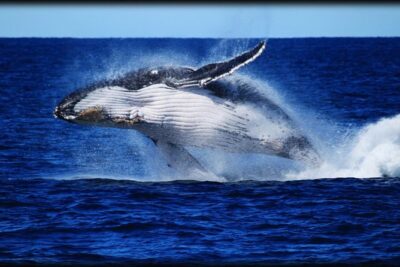
Brisbane Whale Watching Cruise from Redcliffe or Sunshine Coast
Read our review →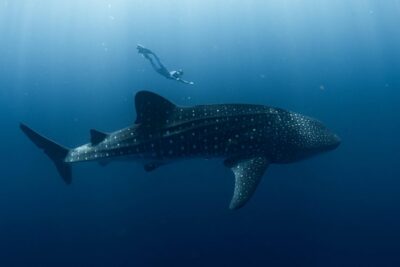
Swim with Whale Sharks in the Ningaloo Reef: 3 Island Shark Dive
Read our review →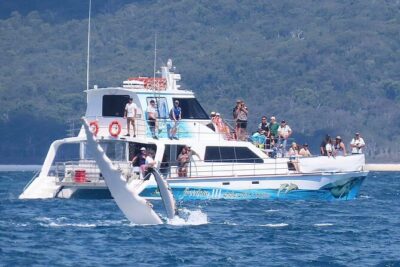
Freedom 3/4 Day Hervey Bay Premium Whale Watching Cruise
Read our review →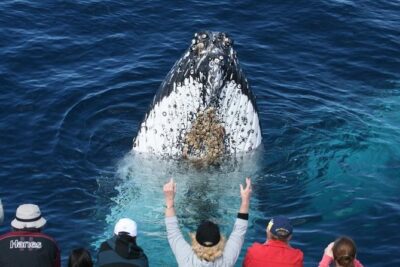
Sydney Whale-Watching Cruise Including Lunch or Breakfast
Read our review →
Spirit of Gold Coast 2.5-Hour Whale Watching Tour
Read our review →Browse the lists this tour appears in