
Review · MAUI
Whale Watching Experience
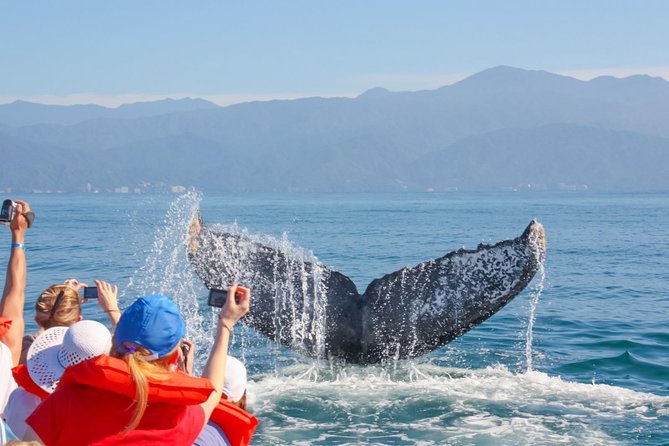
Seeing a humpback whale surface just a few yards from a low raft is the big draw here. This two-hour Ka’anapali whale watch keeps you close to the water, with a maximum of 20 people, so you have a better chance of seeing the action than from a packed sightseeing boat.
I like the small-group setting and the crew’s strong focus on whale behavior and safe viewing. I also like the covered seating, drinks, onboard toilet, and direct departure from Ka’anapali Beach. The catch is the beach transfer: you ride a small dinghy from shore to the raft, and getting in or out can be awkward for anyone with limited mobility. You should also expect some spray.
Key points to know before booking
- Low raft-style boat: You sit close to the water, which makes whale sightings feel immediate and gives everyone a clear view.
- Small group limit: The boat carries no more than 20 people, a useful advantage for photos and for following the crew’s instructions.
- Marine interpretation: Guides explain humpback behavior, and some trips include a speaker for listening to whale sounds.
- Beach boarding: You leave from Ka’anapali Beach and transfer by dinghy, not from a conventional dock.
- Weather matters: Wind, rain, and choppy water can affect comfort, visibility, and the route.
- Simple refreshments included: Soda and bottled water are provided, with a canopy for shade and an onboard toilet.
Why this small Ka’anapali raft works so well
Maui’s whale watching is about presence, not a guaranteed performance. The whales choose the show. Your boat crew can read the water, search for blows, and move to active groups, but no captain can promise a breach or a close pass.
This boat gives the experience a useful advantage. A raft-style vessel rides low, so a whale at the surface feels much closer than it might from the upper deck of a large catamaran. You are not looking over several rows of heads. Everyone has a seat, and the group is small enough for the captain to point out behavior as it happens.
That low position also means more exposure to the sea. Spray can reach you, and wind may be noticeable even on a bright day. A canopy helps with the sun, but it does not turn the boat into a dry cabin. Wear clothes that can handle getting wet and secure anything you do not want blown away.
The crew’s role adds real value. Bradley has served as captain, while Bethany has worked as a marine biologist on the boat. The guiding is not limited to naming the animal. You may learn how mothers, calves, and escorts interact, why males compete around a female, or what a whale is doing when it slaps a fin or remains at the surface.
Some trips include a hydrophone or speaker that lets you listen to whale sounds. That changes the outing from a simple search for fins into a lesson in animal behavior. It is especially useful during quiet stretches, when the boat is waiting for a whale to surface again.
A few more whale trips around Maui worth a look
- Maui Eco-Raft Tour: Eye-Level Whale or Dolphin Watching – Lahaina
★ 5.0 · 2,482 reviews - From Maalaea: Whale Watching Tour Aboard the Quicksilver
★ 4.5 · 1,461 reviews - Maui: Ultimate Whale Watch from Lahaina
★ 5.0 · 1,162 reviews
Leaving Ka’anapali Beach by dinghy
The meeting point is at 2435 Kaanapali Parkway, near Whalers Village and the resort area. That makes this a handy choice if you are staying along Ka’anapali Beach or already planning time at the shopping center. You do not need to arrange a separate ride to a distant harbor.
The boat does not leave from a standard pier. After meeting the crew on the beach, you place your shoes in a tub and board a small dinghy. The dinghy carries you through the shallow water to the larger raft-style boat, where you transfer again.
This is part of the character of the trip, but it is also the main practical warning. Waves can make the transfer unsteady. Children may need help, and anyone with limited mobility should think carefully before booking. One poor step can mean a fall into the sand or water. The process is manageable for people with moderate physical fitness, but it is not a step-free boarding arrangement.
The return works the same way in reverse. Plan to get wet during both beach transfers, even if the whale watch itself is calm. The crew helps organize the process, but you should wear footwear and clothing that tolerate sand and water.
The first minutes on the raft
Once everyone is aboard, the raft heads away from Ka’anapali Beach and the crew begins scanning for blows. The ride itself is part of the fun. You are on a compact vessel close to the sea, rather than in a large enclosed cabin.
Seating is one of the better features for a small boat. The raft has room for everyone to sit, and a canopy offers shade. You also have soda and bottled water available during the outing. An onboard toilet is another useful detail, especially for families and anyone who would rather not wait two hours.
Do not confuse the canopy with full weather protection. Rain can still reach you, and the boat may feel wet in wind or rough water. Conditions have ranged from comfortable and sunny to rainy and choppy. On a rough day, the crew may need to work harder to keep the ride safe and pleasant, and some people will find the motion uncomfortable.
If you tend to get seasick, prepare before boarding and speak up early if you need help. The crew has offered suggestions for managing motion sickness, but the best approach is to bring your own proven strategy. The raft’s low position is excellent for whale viewing, yet it also puts you closer to the movement of the ocean.
Searching for Northern Pacific humpbacks
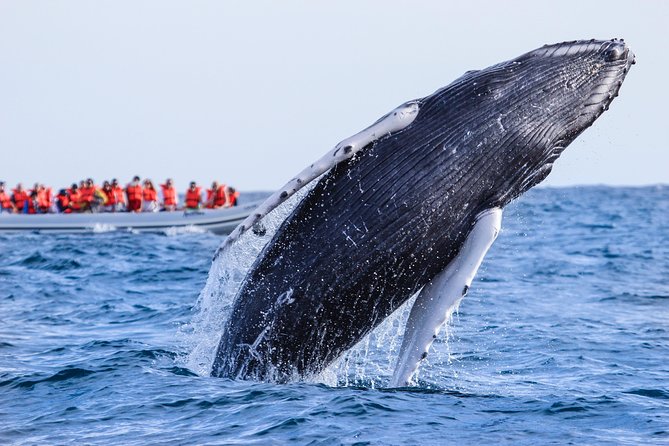
The main target is the Northern Pacific humpback whale. You might first see a distant blow, a dark back, or a tail disappearing beneath the surface. The captain then judges where to position the boat and how long to wait.
That waiting is important. Whales surface on their own schedule. A quiet minute does not mean the trip has failed. It may be followed by a close pass, a calf surfacing beside its mother, or a sudden breach. The strongest outings have included several groups, including mothers with calves and escorts.
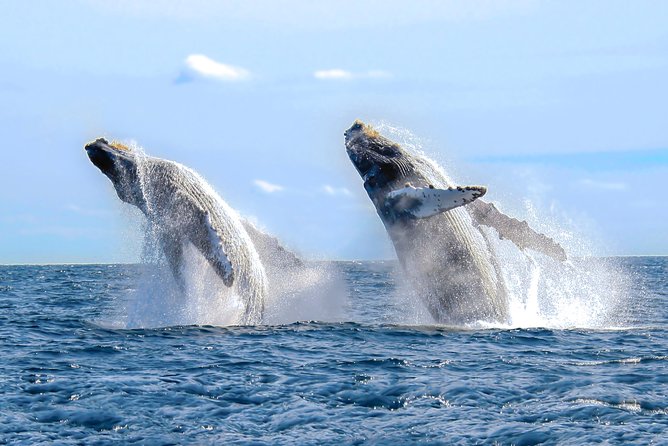
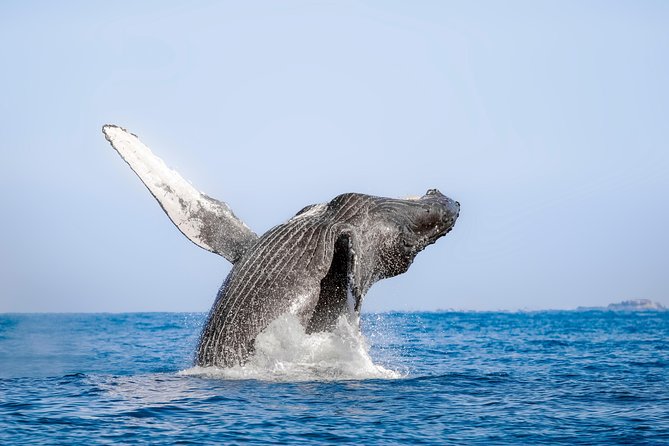
Active behavior can be spectacular. Past trips have included fin slaps, breaches, whales swimming under the raft, and several males competing around a female. One especially active encounter involved a group of males pursuing a female with a very young calf. You may also see a whale remain at the surface long enough for several people to photograph it.
The boat aims to get as close as safely permitted while respecting the animals. That balance matters. The best encounter is not simply the closest possible approach. It is the moment when a whale chooses to pass near the boat, and the crew gives it room to continue.
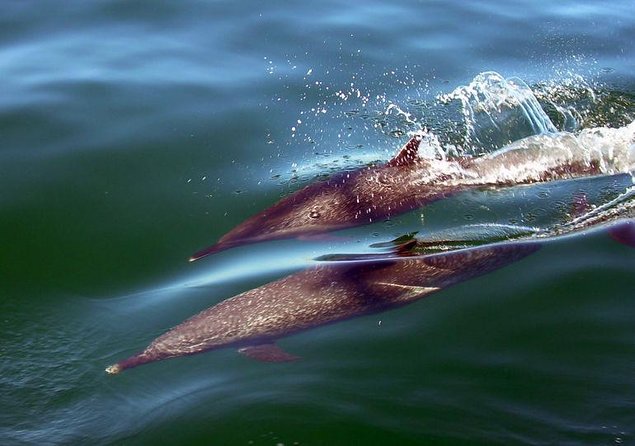
You might also encounter dolphins. They have been seen approaching and circling the raft, adding an unexpected bonus to the whale search. Still, you should book this for the chance to observe humpbacks, not for a promise of dolphins or any specific behavior.
Same water, a different way to meet the whales:
- WHALES GUARANTEED Maui Whale Watching Makai Adventures
★ 5.0 · 1,081 reviews - Ma’alaea Harbor: Whale Watching Tour Aboard Power Catamaran
★ 4.6 · 979 reviews - Maui: Whale Watching Cruise with Open Bar from Ka’anapali Beach
★ 5.0 · 802 reviews - Whale Watching Maui: 2-Hour Small Group Raft Tour from Lahaina
★ 5.0 · 661 reviews
What the small group changes
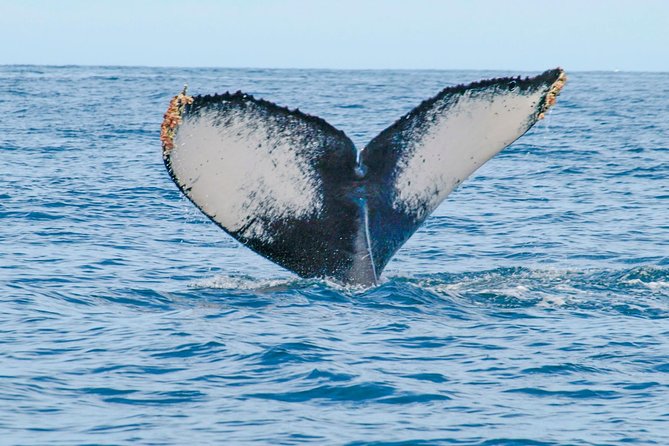
A maximum of 20 people makes a real difference. On a large boat, a whale surfacing on one side can leave you trying to see around railings and other bodies. Here, the low seating and compact group make it easier to turn, listen, and follow the captain’s direction.
The small company also gives the outing a personal feel. The crew can answer questions without addressing a huge crowd, and the captain can react quickly when a whale appears in a new spot. Music has been used on some trips, adding a light touch during the search, though the whales remain the main event.
The tradeoff is that a smaller raft usually feels the sea more. You have less separation from spray, wind, and chop. If you want a dry, steady platform with indoor seating, this is not the best format. If your priority is close viewing and a more intimate boat ride, the size works in your favor.
Whale behavior is the real lesson

The strongest part of this experience is not just seeing an animal. It is learning to notice what the animal is doing.
A calf may surface beside its mother. Several males may compete for access to a female. A whale may approach the raft, pass underneath, or circle before disappearing. Fin slaps and breaches are easy to appreciate, but quieter behavior can be just as interesting when a guide explains it.
The marine biology component helps give those moments meaning. Bethany, who has worked aboard as a marine biologist, has explained behavior in a way that turns a close sighting into something more memorable. A captain such as Bradley adds practical knowledge of where to search and how to position the boat.
The underwater sound equipment, when used, offers another angle. You may listen to whale vocalizations while watching for the next surface appearance. That is a fine feature for families, since children get both the excitement of the boat and something to focus on between sightings.
Weather, comfort, and what to bring
Weather is the biggest variable. A rainy or windy outing can still produce whales, but the experience may be less comfortable and visibility may suffer. One trip ran through heavy rain for much of the time, with a short break in the clouds allowing a close look at a calf. The crew cannot control the weather, and the company may cancel if conditions are poor.
If the operator cancels for weather, you can choose another date or receive a full refund. The same applies if the minimum number of people is not reached. For your own planning, keep some flexibility around this two-hour booking rather than placing it immediately before an important flight or other fixed activity.
Bring clothing that can get wet. A light waterproof layer is sensible, though you should not assume total protection. Secure hats, phones, and cameras. The canopy helps with sun, and drinks are supplied, but you should bring any personal medication or motion sickness treatment you rely on.
The crew has also provided sunscreen on some trips. I would still apply your own before meeting on the beach, since the Hawaiian sun can be strong and the canopy will not cover every seat at every angle.
Is $102.20 a fair price?
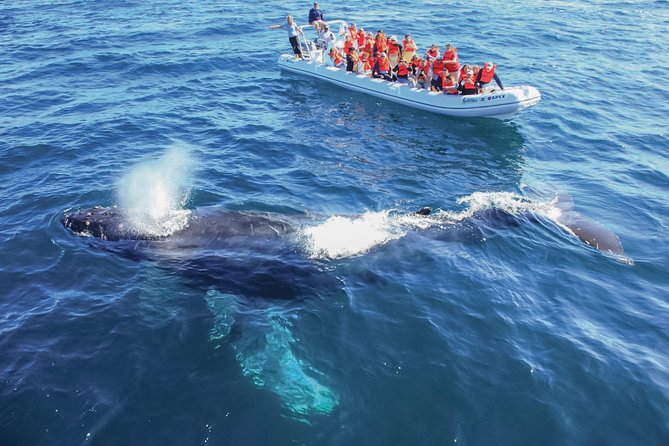
At $102.20 per person, this is not the cheapest way to look for whales. The value comes from the format: a two-hour trip, a boat limited to 20 people, a low viewing position, crew interpretation, drinks, water, and a toilet onboard.
You are also paying for a convenient Ka’anapali departure rather than adding transport to another harbor. If you are staying nearby, that can save time and make the outing easy to fit into a beach day.
The price makes the most sense if you care about the boat experience as much as the sighting count. You get a closer-feeling view, less crowding, and more direct contact with the crew. It makes less sense if your only goal is the lowest possible cost or if you strongly prefer a stable, dry vessel.
The operator is highly rated overall, with 99 percent of customers recommending the experience and a 4.9 rating from 142 reviews. Those numbers do not remove the normal risks of wildlife watching, but they match the repeated strengths of the trip: crew care, clear whale explanations, small groups, and close viewing.
Who should book this whale watch?
I would recommend it to couples, families, and solo visitors who want a personal boat ride and can handle a wet beach transfer. It suits people who enjoy animal behavior, photography, and a little motion on the water.
Families should consider the ages and confidence of their children. The boat is described as safe and built for Coast Guard standards, with seating for everyone, but boarding through a dinghy can be hard for small children. Adults should be ready to assist.
People with limited mobility should ask detailed questions before booking. The beach-to-dinghy-to-raft transfer is the main concern, not the time spent seated on the boat. The activity calls for a moderate level of physical fitness.
Book as far ahead as you can if your Maui dates are fixed. This experience is often reserved about 39 days in advance, which suggests that popular times can fill well before your holiday. You can cancel for a full refund up to 24 hours before departure. Inside 24 hours, changes and refunds are not accepted.
Should you book it?
Book this tour if your ideal whale watch means a small raft, close water-level views, sharp crew commentary, and a better chance to see the action without a crowd. The combination of a marine guide, flexible captain, and compact boat has produced some remarkable encounters, including breaches, calves, fin slaps, and whales passing beneath the raft.
Skip it if you need easy dock boarding, dislike spray, or are highly sensitive to motion. For everyone else, the $102.20 price is reasonable for a two-hour outing that combines a convenient Ka’anapali location with a genuinely personal wildlife experience. Keep your expectations realistic, dress for water, and let the whales decide how much of the show you get.
FAQ
How long is the whale watching experience?
The tour lasts approximately two hours and ends back at the Ka’anapali meeting point.
Where does the tour meet?
The meeting point is 2435 Kaanapali Parkway, Lahaina, Hawaii 96761, near Ka’anapali Beach and Whalers Village.
How many people can join the boat?
The maximum group size is 20 people.
Do I need to board from a dock?
No. You meet the crew on Ka’anapali Beach, ride a small dinghy through the water, and transfer to the raft-style boat.
Are drinks included?
Yes. Soda and bottled water are provided during the tour.
What happens if the weather is poor?
The experience requires good weather. If the company cancels because of poor conditions, you can choose another date or receive a full refund.
What is the cancellation policy?
You can cancel at least 24 hours before the start time for a full refund. Cancellations or changes made less than 24 hours before departure are not refunded or accepted.
Just added around Maui
- Whale Watch Sail Ma’alaea★ 4.9 · 27 reviews
- 2.5 Hour Whale Escape Tour★ 5.0 · 44 reviews
- VIP Premiere Whale Watch Kaanapali Beach MAX 12 PASSENGERS★ 5.0 · 78 reviews
- Whale Watch and Scenic Tour from Kayak★ 4.5 · 16 reviews
- Midmorning Whale Watch from Lahaina Harbor★ 3.5 · 3 reviews
- From Ma’alaea Harbor, Maui: Whale Watch Cruise Aboard Malolo★ 4.0 · 9 reviews
- Morning Whale Watch: Lahaina Harbor★ 5.0 · 19 reviews
- The Best 2.5 Hour Molokini Snorkel Tour & Whale Watch★ 5.0 · 57 reviews
Maui Whale Watching Tours, compared.
Maui Eco-Raft Tour: Eye-Level Whale or Dolphin Watching – Lahaina
Read our review →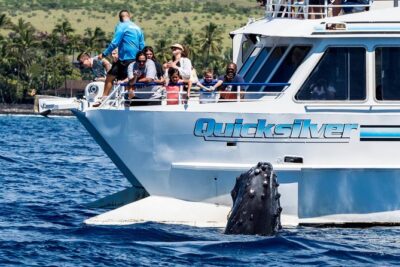
Maalaea: Whale Watching Tour Aboard the Quicksilver
Read our review →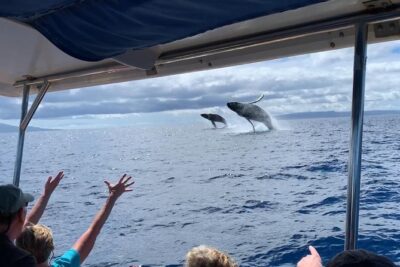
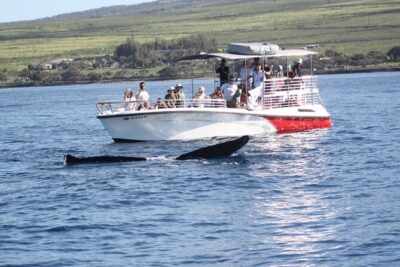
WHALES GUARANTEED Maui Whale Watching Makai Adventures
Read our review →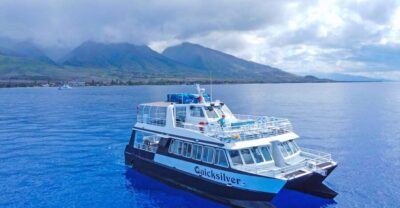
Ma’alaea Harbor: Whale Watching Tour Aboard Power Catamaran
Read our review →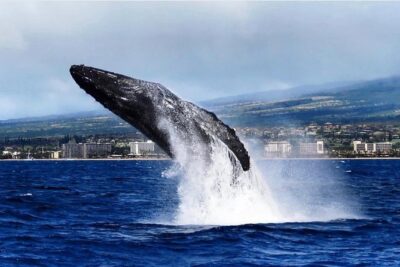
Maui: Whale Watching Cruise with Open Bar from Ka’anapali Beach
Read our review →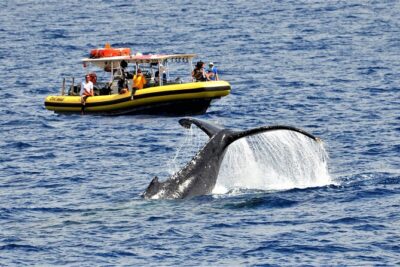
Whale Watching Maui: 2-Hour Small Group Raft Tour from Lahaina
Read our review →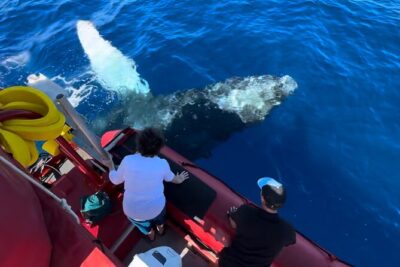
Browse the lists this tour appears in