
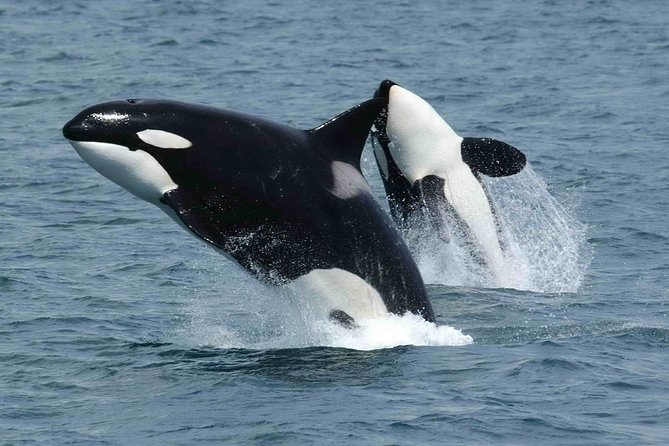
Review · SPAIN
Whale Watching
The best part of this Tarifa boat trip is the setting: you are sailing through the Strait of Gibraltar, where the Atlantic meets the Mediterranean and seven cetacean species share the same narrow waters. Pilot whales, bottlenose dolphins, and sperm whales are all possible sightings, and the captain may bring you close enough to hear a whale breathe.
I like the strong wildlife focus and the careful approach rules. I also like the practical second-chance promise if the first outing does not produce a sighting. The main drawback is simple: this is open-water boating, and rough conditions can mean seasickness, even when the wildlife is excellent.
Key points before you book
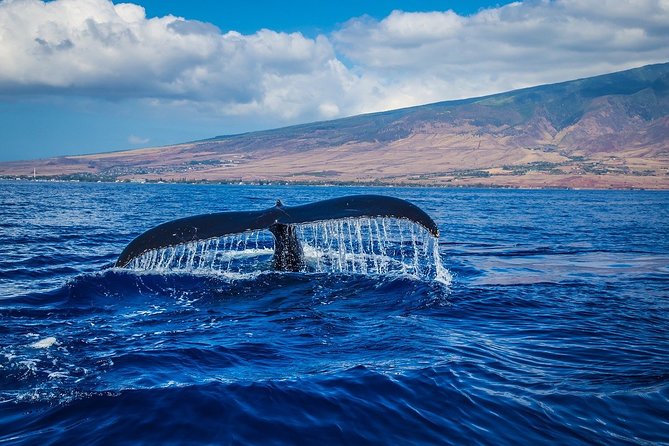
- Seven cetacean species may pass through the Strait: What you see depends on migration, food, and breeding seasons.
- Pilot whales and dolphins can approach the boat: The crew does not chase animals or force an encounter.
- Sperm whales are a real possibility: Seeing one surface and raise its tail before heading down is a memorable sight.
- The trip lasts about two and a half hours: That gives the boat time to search, but it also means a long period on moving water.
- The group can reach 50 people: You can move around the boat for different views, though it may not feel intimate at full capacity.
- Sea conditions matter: Take seasickness medicine before departure if you are prone to motion sickness, and bring a coat even on a warm Tarifa day.
Why the Strait of Gibraltar is such a good place for whale watching
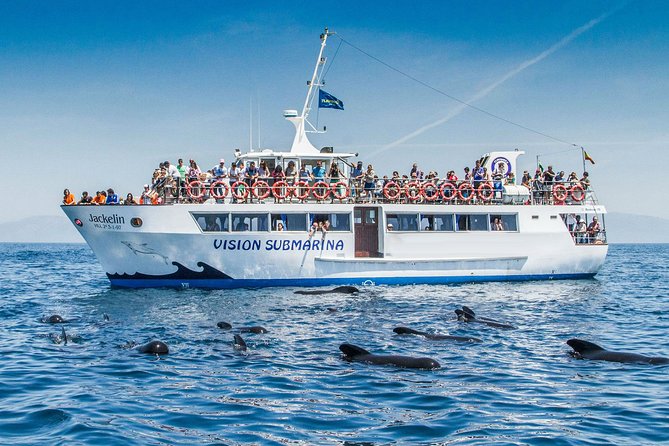
Tarifa sits at the narrow entrance to the Strait of Gibraltar. This is one of those rare places where geography does much of the work. The waterway links the Mediterranean Sea with the Atlantic Ocean, creating a busy marine corridor for animals following food and seasonal routes.
The area was declared an International Biosphere Reserve by UNESCO in 2006. That status does not guarantee a perfect wildlife encounter, but it explains why this stretch of water matters. You are not simply taking a sightseeing cruise along the coast. You are entering a protected marine zone where several cetacean species live or pass through.
The operator identifies seven possible species, with sightings changing according to migration, available food, and reproduction periods. That variety gives the trip more range than a dolphin-only outing. You may see a small group of bottlenose dolphins one day, then encounter pilot whales or sperm whales on another.
The company says the chance of a sighting is practically 100 percent, with a second outing offered in the rare event that the first attempt does not meet its goal. Treat that as a strong operating claim, not a promise that you will see every species. Wildlife remains wildlife, and the exact animals, distance, and viewing time cannot be controlled.
A few more whale trips around Spain worth a look
- Tenerife: Eco-Yacht Whale and Dolphin Watching and Swimming
★ 4.7 · 15,619 reviews - Los Cristianos Respectful No-Chase Whale and Dolphin Safari
★ 4.6 · 12,782 reviews - Costa Adeje: Whale & Dolphin Eco-Cruise with Snacks & Drinks
★ 4.6 · 5,096 reviews
What the two-and-a-half-hour trip feels like
The excursion begins at Calle Alcalde Juan Núñez in Tarifa and returns to the same meeting point. The listed operating period runs from April 1 through October 15, 2026, and from March 14 through October 30, 2027, with departures offered between 9:00 a.m. and 3:00 p.m.
The exact sequence on the water depends on animal movement. The boat heads into the Strait, and the captain and guide watch for blows, fins, and groups breaking the surface. When a sighting occurs, the boat may adjust its position so people on board can see from different angles.
That ability to move around matters. One reported trip encountered a pod of pilot whales, including young animals, and passengers could change position to watch the group. This is useful because a whale may appear on one side, disappear, then surface somewhere else moments later.
The trip can also include quiet stretches while the crew searches. Do not expect a constant show. The value is in being present when something appears, not in a tightly scripted series of stops. A two-and-a-half-hour duration gives the crew time to search a broad area, but you should be comfortable standing or sitting on a boat for that length of time.
At the end, the boat returns to the Tarifa meeting point. There is no separate land visit or coastal stop built into the experience, so plan this as a focused marine wildlife outing.
The animals you may see
Pilot whales
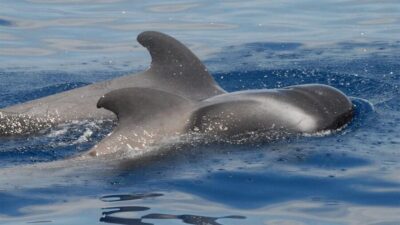
Pilot whales are among the sightings associated with this trip. They often travel in groups, which can make for a lively encounter when several animals surface together. Seeing adults and young whales in one pod gives the outing a particularly rewarding family scene.
The best moments may be brief. A group can surface beside the boat, move past, and then spread out. You will want to stay alert rather than assume the first appearance is the whole show.
Same water, a different way to meet the whales:
- Los Gigantes: Dolphin & Whale Watching Cruise with Swim Stop
★ 4.7 · 4,539 reviews - Morro Jable: Dolphin & Whale Watching Cruise, Drinks & Swim
★ 4.1 · 4,158 reviews - From Morro Jable: Dolphin and Whale Watching and Snorkelling
★ 4.6 · 3,687 reviews - Costa Adeje: Whale Watching Catamaran Tour with Drinks
★ 4.7 · 3,653 reviews
Bottlenose dolphins
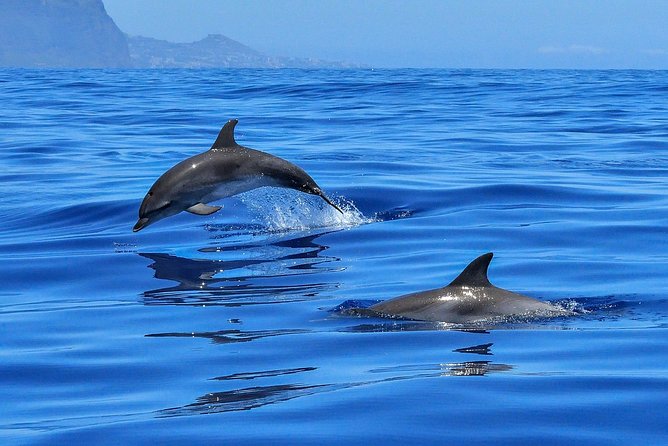
Bottlenose dolphins may come close to the boat, sometimes close enough for you to hear them breathe. The important detail is that the boat does not need to crowd them. The animals may choose to approach on their own, which is exactly the kind of encounter responsible wildlife watching should aim for.
Dolphins are often easier to spot than large whales because they move in groups and surface more frequently. Still, the Strait is open water, so visibility and animal behavior remain unpredictable.
Sperm whales
Sperm whales are a less certain but especially exciting possibility. A sighting can include the whale surfacing, producing a visible spout, and later raising its tail before heading down into deeper water.
That tail-lift moment is one of the most memorable sights you can have from a boat. It is also easy to miss if you are looking at the wrong side, so listen to the guide and watch the direction indicated by the captain.
The crew and guide may explain what you are seeing in English. That makes a difference when an animal appears for only a few seconds and you need quick help identifying it.
Responsible viewing rules are part of the experience
The trip follows approach distances, directions, and speeds recommended by Spanish law and ACCOBAMS regulations. The crew is expected to move away if an animal shows signs of disturbance.
You are not allowed to feed the animals, throw anything into the sea, scream, or run on the boat. These rules may sound basic, but they matter around wild cetaceans. A quiet, orderly boat gives the animals more control over the encounter and makes it easier for everyone to watch.
Please keep water bottles and other loose items inside your bag. On a moving boat, a bottle left on the deck can roll overboard. That is bad for the sea and avoidable with a little care.
This is not a petting experience and there is no guarantee that an animal will perform on cue. The best approach is to see yourself as an observer. The crew may find the animals, but the animals decide what happens next.
The crew and English guidance
English is offered, which helps if you do not speak Spanish. Guides Sofia, Alba, and Víctor have been specifically associated with the experience, and the guide may explain the species and behavior as the boat moves between sightings.
The captain’s skill matters just as much as the commentary. Spotting a whale at sea requires constant attention, and the captain has been praised for finding whales and dolphins. Crew members also assist when passengers feel unwell, which is useful on a trip where motion sickness can affect both adults and children.
The maximum group size is 50 people. That is not a small private boat, but it is still manageable for a wildlife trip if passengers follow instructions and move carefully. A larger group can make the deck busier, especially when an animal appears close by. On the other hand, more eyes can help spot a distant blow or fin.
Service animals are allowed, and the activity is described as suitable for most people. You should still consider how you handle moving boats before booking.
Weather, clothing, and seasickness
Bring sunscreen, a cap, a warm layer, and comfortable shoes. Tarifa can feel sunny and warm on land while the open water feels cool and windy. A coat is not overpacking here.
Sunscreen and a hat protect you during long periods outdoors, and comfortable shoes help you keep your footing as the boat moves. Keep your belongings secured inside a bag rather than leaving them on the deck.
Seasickness is the biggest practical concern. Several people on one outing became unwell on the return journey, while those who took motion sickness medicine beforehand had no trouble. If you know you are sensitive to boats, take your usual remedy before departure rather than waiting until you feel sick.
Weather can cancel the trip. If that happens, you are offered another date or a full refund. This is a fair policy because poor conditions are not just inconvenient. They can make wildlife viewing unsafe and unpleasant.
Is $69.77 a fair price?
At $69.77 per person, the trip is not the cheapest way to spend a morning in Tarifa. The value depends on what you want from the outing.
You are paying for about two and a half hours on the water, an English-speaking guide, a captain searching a protected marine area, and the possibility of seeing several species. The second-chance policy adds value if the first trip produces no target sighting, although you should confirm exactly how that repeat outing is arranged before you travel.
There is one pricing point worth checking carefully. A passenger reported seeing a lower standard price and paying an additional booking amount. Since the current listed price is $69.77, compare the final checkout total with the direct operator price if available. The difference may reflect booking fees or channel pricing.
I would consider the price reasonable for someone who specifically wants whale and dolphin watching in the Strait. It is less compelling if you are simply looking for a general boat ride or a short harbor cruise. The wildlife focus is what justifies the cost.
The trip is often booked about 26 days ahead on average. That suggests you should not leave it until the last minute during a busy Tarifa visit, especially if your schedule has little flexibility.
Who should book this outing
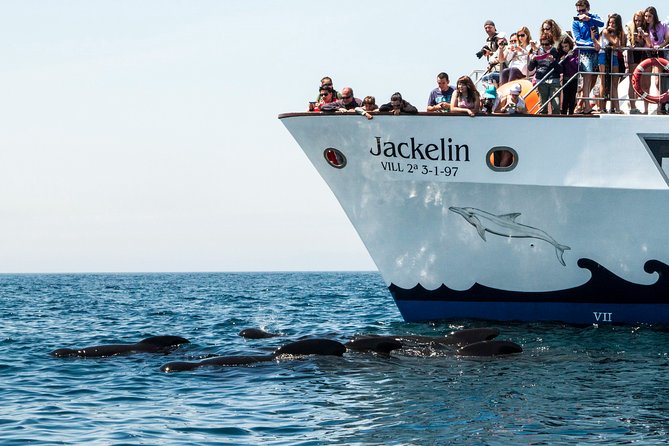
I would recommend it to wildlife fans, families with older children, and anyone who wants a clear reason to get out on the water. The chance of seeing dolphins, pilot whales, or sperm whales gives the trip a stronger purpose than a standard sightseeing cruise.
It also suits visitors who appreciate responsible animal encounters. The no-feeding rule, no-trash policy, speed limits, and willingness to move away from disturbed animals show the right approach.
I would be more cautious if you are very prone to seasickness, dislike wind, or need a fully predictable schedule. Nature may provide an excellent sighting, a short glimpse, or a long search. The crew can improve your chances, but cannot script the animals.
Families should explain the safety rules before boarding. No running and no shouting are not minor requests here. They protect the people on board and reduce pressure on the animals.
Booking and cancellation details
Confirmation is provided at the time of booking, and the activity is offered in English. You can cancel for a full refund up to 24 hours before the start time. Changes or cancellations made less than 24 hours ahead are not accepted for a refund.
The cutoff uses local Tarifa time. The trip also requires good weather and a minimum number of participants. If the operator cancels for either reason, you are offered a different date, another experience, or a full refund.
Should you book Whale Watching in Tarifa?
Book it if you want a serious chance to see marine wildlife in one of Europe’s most important straits and you can accept the uncertainty of nature. The strongest reasons are the wide range of possible species, the chance of close dolphin and pilot whale encounters, and the careful viewing rules.
Skip it if you want a calm, short cruise with guaranteed scenery or if motion sickness is a major problem. For everyone else, bring a coat, secure your water bottle, take seasickness medicine if needed, and keep your eyes on the water. The moment a sperm whale raises its tail or a pod of pilot whales surfaces nearby can make the whole outing worthwhile.
FAQ
Where does the whale watching trip start?
It starts at Calle Alcalde Juan Núñez, 11380 Tarifa, Cádiz, Spain.
Where does the activity finish?
The boat returns to the same meeting point in Tarifa.
How long does the trip last?
The experience lasts approximately two hours and 30 minutes.
What time is the activity available?
The listed opening hours are Monday through Sunday, from 9:00 a.m. to 3:00 p.m.
Which animals might I see?
Seven cetacean species live in or pass through the Strait, depending on migration, food, and breeding periods. Possible sightings include bottlenose dolphins, pilot whales, and sperm whales.
Is wildlife sighting guaranteed?
The operator states that the probability of a successful sighting is practically 100 percent and offers a second chance in the rare event of no sighting on the first outing. Specific species and viewing conditions cannot be promised.
Is the tour offered in English?
Yes. The activity is offered in English.
How many people can join the boat trip?
The maximum group size is 50 people.
Are service animals allowed?
Yes, service animals are allowed.
What should I bring?
Bring sunscreen, a cap, a coat, and comfortable shoes. If you are prone to seasickness, take motion sickness medicine before the trip.
Can I cancel for a refund?
Yes. You can cancel at least 24 hours before the start time for a full refund. Poor weather or failure to reach the minimum number of participants may also result in an alternative date or a full refund.
Just added around Spain
- Whale & Dolphin Watching With Mustcat Virgin Coast Trip On a Large Catamaran★ 4.0 · 3 reviews
- Whale watching and snorkelling in the whale sanctuary★ 5.0 · 14 reviews
- Whale Watching and Marine Science Tour★ 5.0 · 111 reviews
- Whale & Dolphin Watching in Tenerife (Puerto Colon) On a Large Catamaran★ 4.0 · 12 reviews
- Whale and Dolphin Watching EcoAdventure in Tenerife★ 5.0 · 78 reviews
- Tenerife : Whales and Dolphins with Food and Bath in Los Gigantes★ 4.0 · 3 reviews
- Whale Watching Catamaran to Los Gigantes & Masca (Including drinks & warm lunch)★ 4.0 · 55 reviews
- Whale & Dolphin Watching Boat Trip in Tenerife On a Sailing Boat (3 Hr)★ 3.5 · 10 reviews
Spain Whale Watching Tours, compared.
Tenerife: Eco-Yacht Whale and Dolphin Watching and Swimming
Read our review →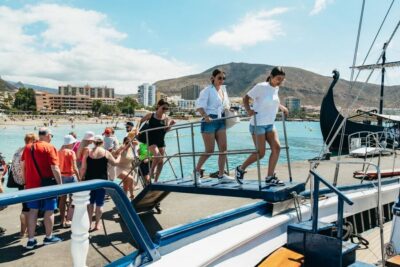
Los Cristianos Respectful No-Chase Whale and Dolphin Safari
Read our review →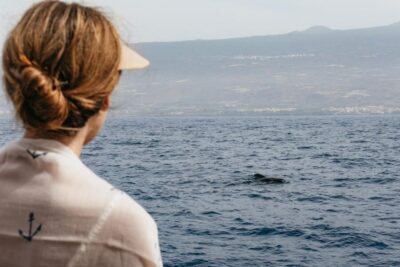
Costa Adeje: Whale & Dolphin Eco-Cruise with Snacks & Drinks
Read our review →
Los Gigantes: Dolphin & Whale Watching Cruise with Swim Stop
Read our review →
Morro Jable: Dolphin & Whale Watching Cruise, Drinks & Swim
Read our review →
Morro Jable: Dolphin and Whale Watching and Snorkelling
Read our review →
Costa Adeje: Whale Watching Catamaran Tour with Drinks
Read our review →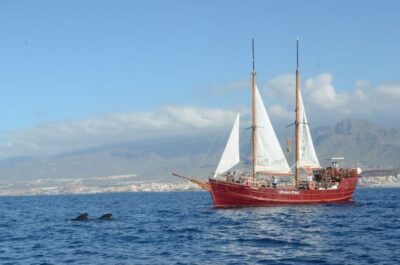
Tenerife: Whale & Dolphin Watching Cruise with Swim Stop
Read our review →Browse the lists this tour appears in