
Review · SOUTH AFRICA
Knysna: Close Encounter Whale Watching Tour by Boat
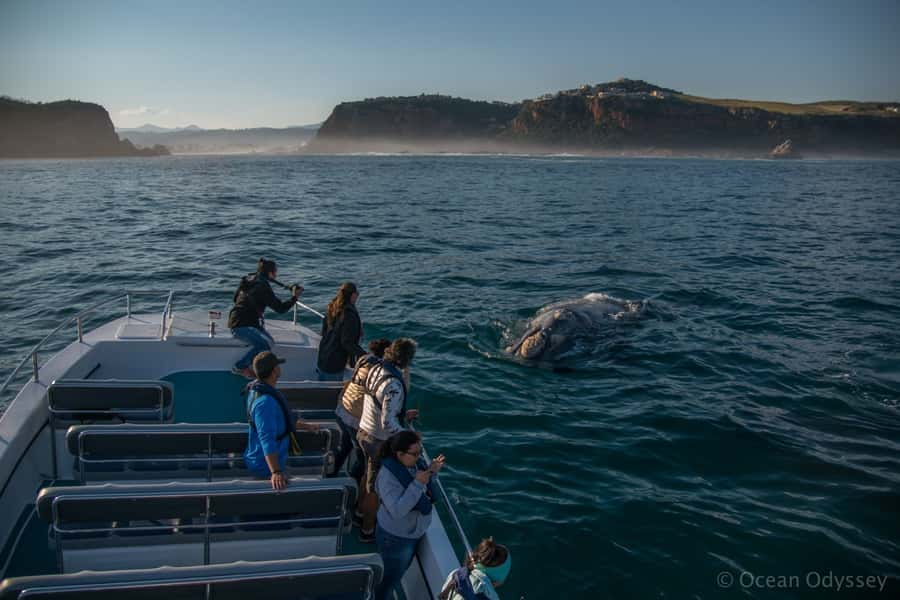
Knysna’s best wildlife action happens beyond the pretty lagoon, where the boat passes through the dramatic Knysna Heads and reaches open water. The shore-based whale spotter scans from a high viewpoint and radios the skipper toward sightings, a smart setup that gives this small-capacity trip a real purpose.
I like two things here: you get the scenery of the estuary and coastline even when the whales are quiet, and the crew works hard to find marine life rather than simply taking you offshore and hoping for luck. The main catch is the sea. The boat is fast, the ride can be rough, and seasickness is a genuine concern.
Key points before you book
- The whale spotter works from land: A dedicated spotter watches from an elevated viewpoint and directs the boat by radio.
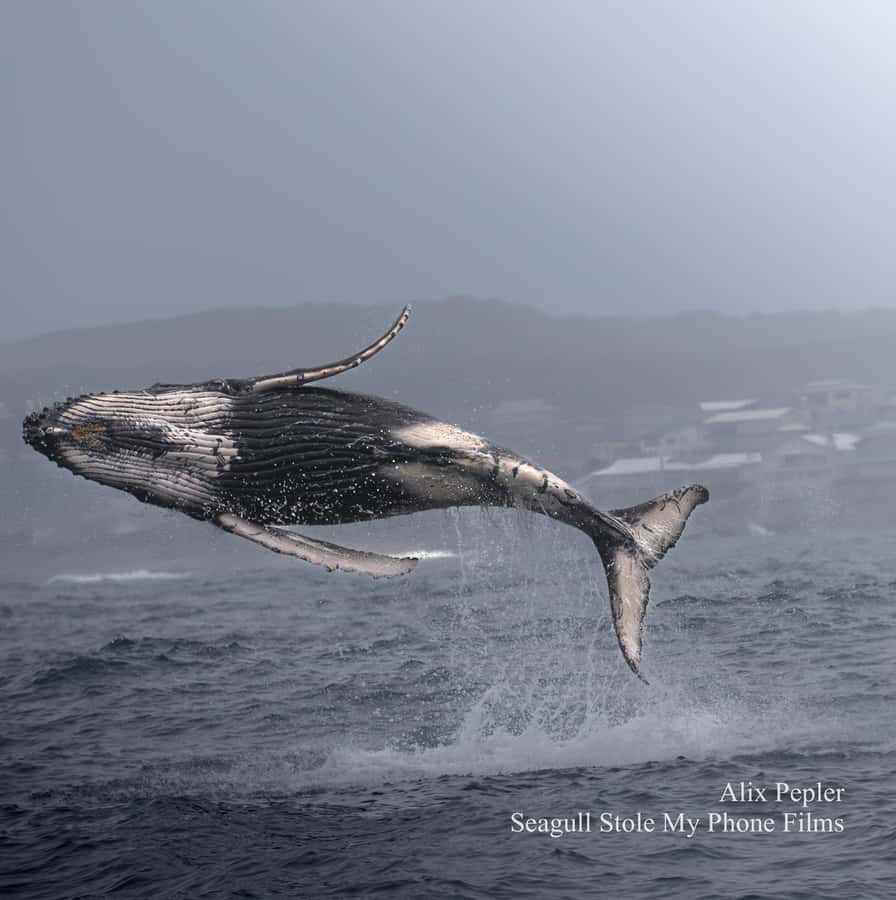
- Humpback whales are the main prize: Southern right whales are possible, but humpbacks are the species most often highlighted for this outing.
- The trip includes more than whale watching: You pass through the Knysna Estuary, the Heads, and along the coast.
- Small boats mean a more personal outing: Capacities are limited, so the guide and skipper can focus on the group.
- The ocean can be lively: Fast travel and choppy water have made the trip thrilling for some and uncomfortable for others.
- Wildlife sightings are never promised: This is a real marine environment, not a show with scheduled appearances.
Why this Knysna whale tour is different
Many whale trips are simply boat rides to a known viewing area. This one has a useful local advantage: a whale spotter stationed at a viewpoint watches the sea and sends directions to the vessel. That gives the skipper current information instead of relying only on a fixed route.
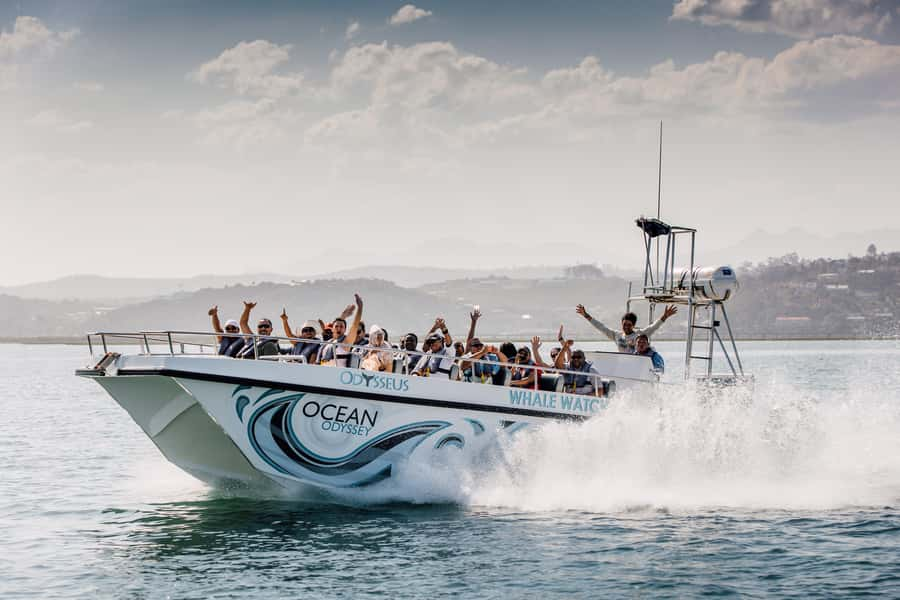
The company is described as Knysna’s only permitted whale watching operator and uses vessels approved for this work. That matters because the boat is not just taking a scenic cruise. The crew is working within a set approach to marine wildlife, with life jackets required and rules against touching animals, swimming, or using drones.
The outing lasts about two hours and costs $113 per person. That is not a cheap harbor cruise, but the price covers a small-capacity wildlife trip, a guide, skipper, life jacket, and mineral water. You also get the passage through the estuary and Heads, so the experience has value even if the animals keep their distance.
Still, you should book with the right expectation. You are paying for the chance to see wild whales, not a guarantee of a sighting. The company can be canceled or rescheduled at short notice if the sea or weather is unsafe, and the crew can only judge conditions properly on the day.
A few more whale trips around South Africa worth a look
- Hermanus: Boat Based Whale Watching Experience
★ 4.4 · 1,180 reviews - Hermanus: Whale and Dolphin Watching Boat Trip
★ 4.6 · 807 reviews - Whale, Dolphin & Penguin Island Cruise
★ 5.0 · 687 reviews
From Thesen Harbour Town to the Knysna Estuary
You meet at Ocean Odyssey Whale Watching, TH22 Long Street in Thesen Harbour Town. The starting area has a waiting space and clean restrooms nearby, useful details when you are preparing for a boat trip rather than a quick walk around town.
The crew supplies life jackets and helps passengers put them on. Life jackets are compulsory, which may feel a little formal at first, but it is the sensible rule for a fast boat heading through an inlet and out into open ocean.
The first section takes you across the Knysna Estuary. This is the calmest and most scenic part of the route, with the lagoon and surrounding hills creating a gentle start before the water becomes more exposed. You will have time to settle into the boat, listen to the guide, and keep an eye out for birds or other marine life.
I like this opening because it makes the tour feel like a complete Knysna outing rather than a single-minded search for whales. If the animals stay hidden, you still see the waterway that shapes the town and the famous entrance to the sea.
Bring warm clothes even if the day begins sunny. Wind feels much colder on a moving boat, and the return trip can be just as brisk as the journey out. A jacket, sunglasses, a sun hat, and biodegradable sunscreen are recommended. Food and drinks are not allowed, though mineral water is supplied.
Passing through the Knysna Heads
The boat then moves toward the Knysna Heads, the narrow entrance where the sheltered estuary meets the Indian Ocean. This is one of the most memorable parts of the ride because the water changes and the scale of the view opens up.
You hear gulls and the rush of the sea as the boat approaches the Heads. The crossing builds anticipation, but it also explains why the trip can become bumpy. The sea outside the inlet is not guaranteed to be smooth, and the boat may move quickly over the waves.
Several passengers have described the ride as fast and choppy, with a lively return over large waves. That can be great fun if you enjoy speed and rough water. If you are prone to seasickness, it can dominate the day. Motion sickness medicine is not included, so buy it at a pharmacy before the tour if you know you need it.
The route through the Heads is valuable even without a whale sighting. You see the contrast between the sheltered lagoon and open coast, and you get a scenic run along the shoreline while the crew searches for signs of animals.
Searching the Indian Ocean for whales
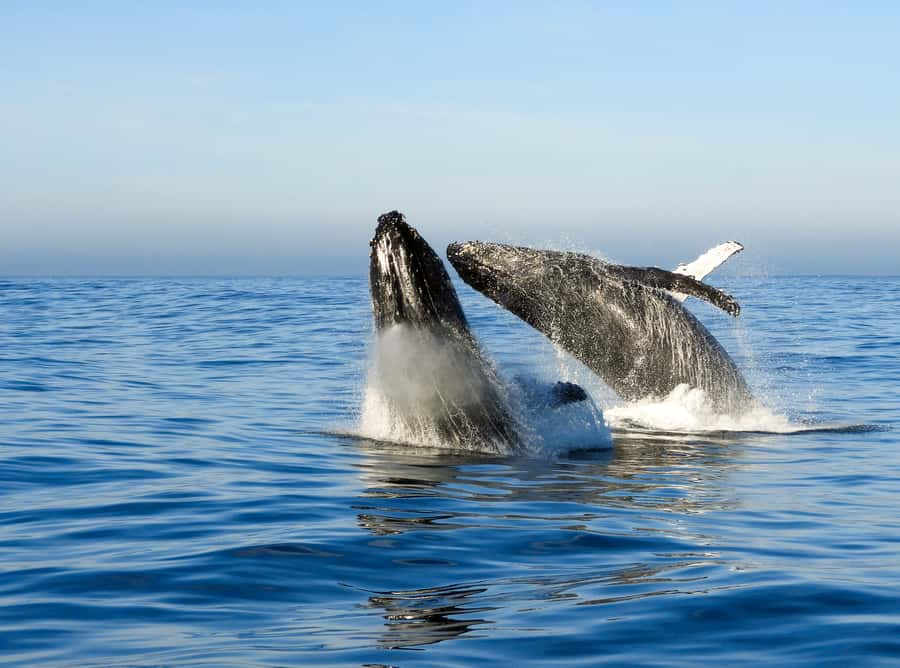
Once the boat reaches open water, the whale spotter becomes especially important. From a high viewpoint, the spotter scans for blows, fins, breaches, and other movement, then directs the skipper by radio. The boat may change course several times as the crew works toward the best available sighting.
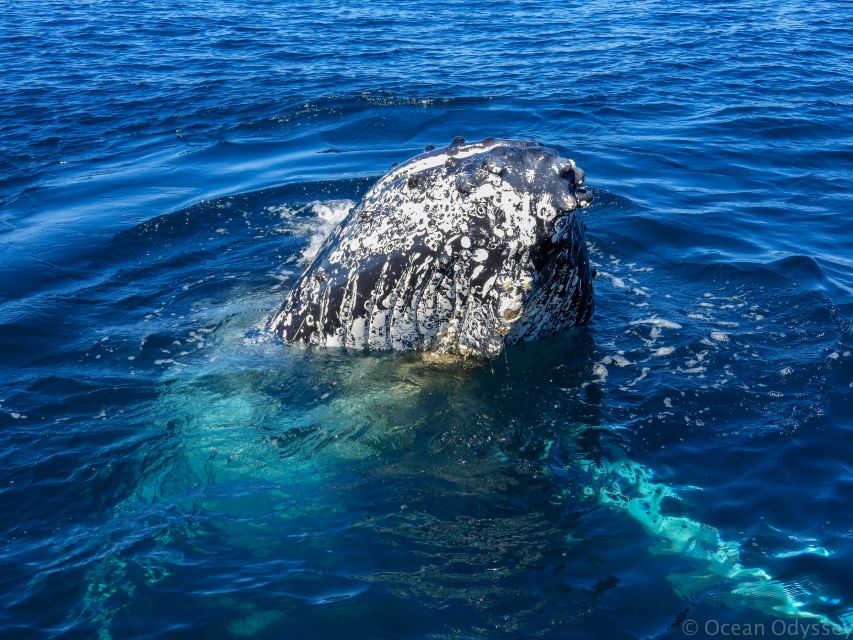
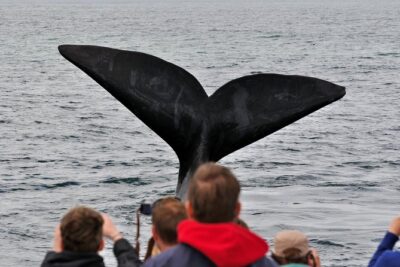
The main target is the humpback whale. These enormous animals migrate more than 3,000 kilometers from Antarctic waters to warmer areas where they mate and calve. Their size and active behavior make them especially rewarding to watch, and the trip description specifically highlights humpbacks as the whale you most want to see.
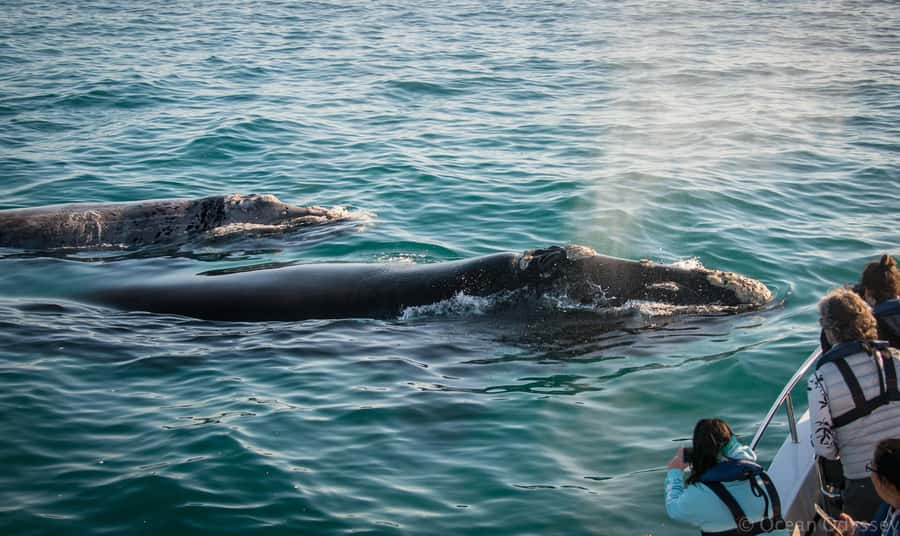
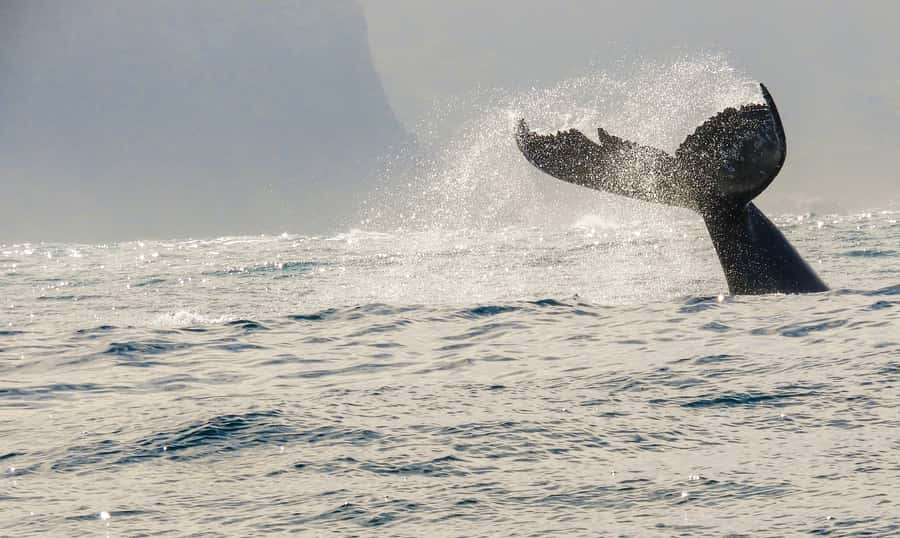
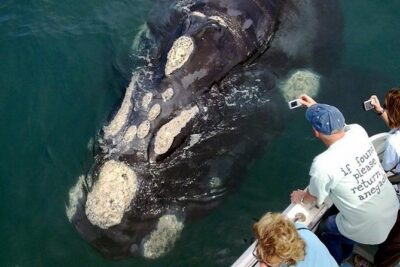
Southern right whales are also possible. The exact animals on a given day depend on the season, sea conditions, and where the whales happen to be. You might see a whale surface once and disappear, or you might be lucky enough to watch repeated blows, fin slaps, breaches, or a mother and calf moving together.
One outing produced repeated breaches from a mother and baby, while another had a Bryde’s whale surfacing only meters from the boat for around 25 minutes. Those moments cannot be promised, but they show the range of encounters possible in this stretch of coast.
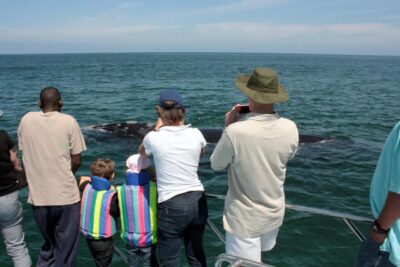
The boat may spend time following whales at a respectful distance, then move on when the spotter identifies another sighting. Keep your camera ready, but do not spend the whole trip staring at a screen. A whale can appear on one side of the boat and vanish before you have framed the shot.
Same water, a different way to meet the whales:
- From Cape Town: Hermanus Whale Watching Boat Trip
★ 4.4 · 378 reviews - Plettenberg Bay: Whale Watching Boat Cruise
★ 4.4 · 362 reviews - Whale Watching from Gansbaai
★ 5.0 · 327 reviews - Boat Based Whale Watching from Hermanus
★ 4.5 · 205 reviews
Dolphins, seals, penguins, and seabirds
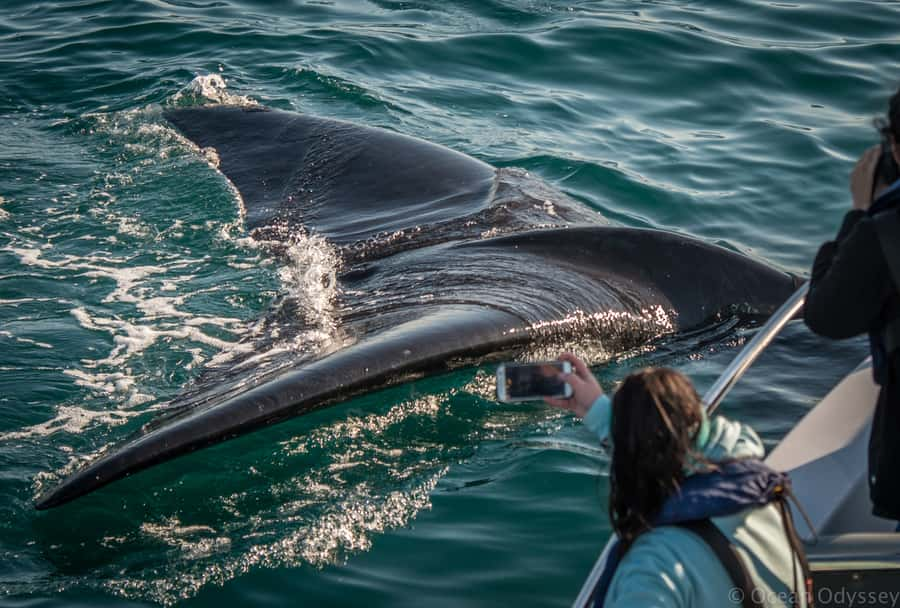
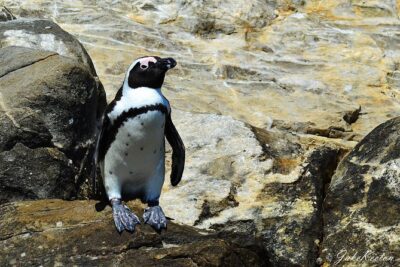
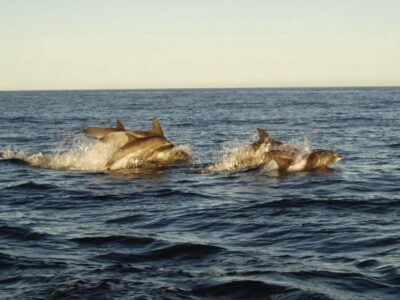
Whales are the headline act, but the wider marine cast can make the trip worthwhile. Bottlenose dolphins have been seen in large pods, and some outings have included seals, penguins, fish, and seabirds.
Dolphins can be harder to photograph than whales because they move quickly and may appear only briefly. You might see them alongside the boat, or you might get a short glimpse before the crew turns toward whales. The same applies to seals and penguins. Treat these animals as welcome extras, not part of a fixed checklist.
The variety is one reason I would choose this trip over a simple whale-only outing. On a lucky day, you could see several species in two hours. On a quieter day, the scenic boat ride and the search itself remain part of the experience.
The rules are straightforward: do not touch marine life, swim, bring a drone, or use alcohol or drugs. Food and drinks are also not allowed. These restrictions protect both passengers and animals, and they keep the outing focused on observation rather than interaction.
What the small capacity means for you
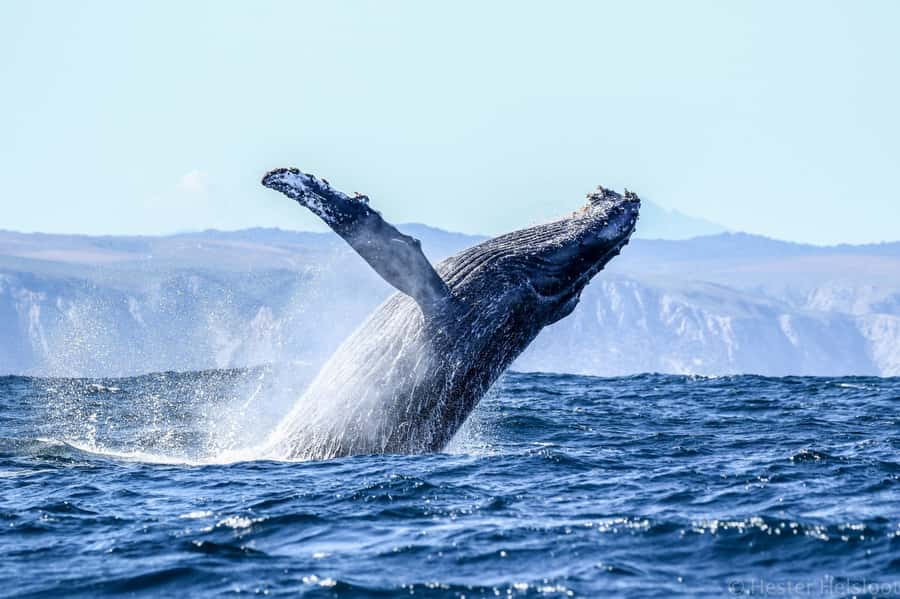
The small boat format gives the trip a more personal feel. You are not lost in a large crowd, and the guide and skipper can explain what they are seeing and respond to questions from the group.
That setup is especially useful when an animal appears at an angle that only part of the boat can see. The crew can help direct your attention and move the vessel when appropriate. The shore-based spotter adds another set of eyes, which is a real advantage when a whale is visible only for a few seconds.
There is a tradeoff. A smaller, faster vessel tends to feel more of the ocean than a large, heavy boat. Several passengers found the speed and rough water exciting, while others became seasick. You should value the wildlife access and close-to-the-water feeling more than absolute comfort.
Children under three are not accepted. The trip is also not suitable for people with back problems, wheelchair users, or people prone to seasickness. Baby strollers and carriages are not allowed.
Crew, safety, and the weather question
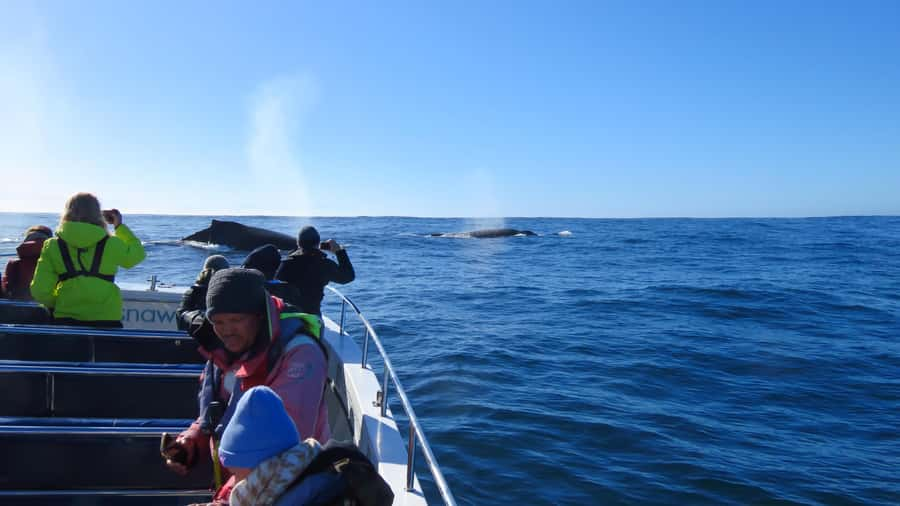
The crew’s role matters on a wildlife trip. The skipper must handle changing sea conditions, while the guide explains the animals and keeps the group focused. The crew also assists with life jackets and looks after passengers who feel unwell.
One particularly useful detail is that crew members have helped seasick passengers until they returned to shore. That does not remove the risk, but it shows why you should tell the team early if you are struggling. Sitting in the wrong place and trying to hide nausea rarely improves the ride.
Weather decisions are made on the day, sometimes just before departure. You may receive a cancellation or rescheduling message if conditions are not suitable. That can be inconvenient when your Knysna plans are tight, but it is better than pushing an unsafe boat trip into rough water.
The company requires at least four passengers for the activity to proceed. If that minimum is not reached, you will be notified beforehand. The guide service is available in English and Afrikaans.
Is $113 good value?
At $113, this is a premium two-hour outing, but the cost makes more sense when you look at what is included. You get the estuary cruise, the passage through the Heads, an open-ocean wildlife search, a live guide, a skipper, a dedicated whale spotter, life jacket, and mineral water.
The value rises sharply if you see multiple species or get close, repeated whale activity. A day with humpbacks, dolphins, seals, and seabirds can become one of the major memories of a South Africa trip. But you should not use a successful encounter as the price standard. Even a well-run tour can return without whales because these are wild animals.
I would consider the trip worthwhile for people who see marine wildlife as a highlight and can accept a little uncertainty. If you want a guaranteed attraction, a smooth ride, or a low-cost sightseeing cruise, this is not the best match.
Free cancellation up to 24 hours before departure and the option to reserve now and pay later make it easier to fit into a flexible schedule. They do not change the fact that weather-related changes can happen on the day.
How to prepare for a better ride
Wear layers rather than one heavy item. A warm top, jacket, and clothes that can handle spray are more useful than a short-sleeved outfit chosen only for the weather in town.
Take sunglasses and a sun hat, but hold onto them securely. Use biodegradable sunscreen, and bring motion sickness medicine from a pharmacy if you are at risk. Since food and drinks are not permitted, do not plan to eat aboard the vessel.
Keep your camera accessible, but protect it from water and sudden movement. You will want both wide views of the Heads and quick shots of whales or dolphins, so a camera that is easy to handle is better than equipment that takes time to set up.
Arrive ready for the possibility of a schedule change. Sea conditions can only be assessed properly on the day, and sometimes just before the boat leaves. If your itinerary allows it, leave some space around the tour so a rescheduled trip does not ruin the rest of your Knysna plans.
Who should book this boat trip?
This tour suits adults and older children who enjoy active boat rides, open water, and wildlife without a guarantee. It is particularly good for anyone who wants both the scenery of Knysna and a serious chance to see humpback whales.
It is less suitable if you have back problems, rely on a wheelchair, are prone to seasickness, or need a perfectly fixed schedule. The speed and waves are part of the experience, not an unfortunate exception.
If you are comfortable with those limits, I would book it. The whale spotter, small capacity, scenic route, and determined crew give you better reasons to choose this trip than a simple promise of whales. Just bring warm layers, prepare for a bumpy ride, and treat every animal sighting as a gift rather than a guarantee.
FAQ
Where does the whale watching tour start?
The tour starts at Ocean Odyssey Whale Watching, TH22 Long Street, Thesen Harbour Town, Knysna.
How long does the tour last?
The boat trip lasts two hours.
What whales might I see?
The main species are humpback whales and southern right whales. Bryde’s whales have also been seen during outings.
Are whale sightings guaranteed?
No. The whales live in their natural environment, so sightings are not guaranteed.
What other animals might I see?
You might see dolphins, seals, penguins, fish, and seabirds, in addition to whales.
What is included in the price?
A life jacket and mineral water are included. The tour also includes the live guide and boat trip.
Is motion sickness medicine provided?
No. Motion sickness tablets are not included. People prone to seasickness are advised to obtain medicine from a pharmacy before the tour.
Can children join the tour?
Children under three years old cannot join the activity.
Can the tour be canceled because of weather?
Yes. The tour operates only when sea and weather conditions are suitable. You may be contacted on the day if the trip must be canceled or rescheduled.
What languages are available?
The live tour guide service is available in English and Afrikaans.
Just added around South Africa
- Whale Watching Knysna – Close Encounter Experience Ocean Odyssey★ 4.5 · 65 reviews
- Hermanus Land based Whale Tour with Dave de Beer★ 5.0 · 24 reviews
- Hermanus Whales and Wine Full Day Private Tour★ 5.0 · 2 reviews
- Whale Watching Hermanus – Boat base★ 4.5 · 17 reviews
- Hermanus Whale Watching Day Trip from Cape Town★ 3.5 · 29 reviews
- Whale Watching Tour from Cape Town★ 3.5 · 9 reviews
- Hermanus Whale Watching & Penguins Shared Tour from Cape Town★ 4.0 · 14 reviews
- Private Tour: Whale Watching Shared Boat Trip from Cape Town★ 4.5 · 5 reviews
South Africa Whale Watching Tours, compared.
Hermanus: Boat Based Whale Watching Experience
Read our review →

Cape Town: Full Day Guided Hermanus and Whale Tour
Read our review →Browse the lists this tour appears in