
Review · HUSAVIK
Húsavík: Whale Museum Entry Ticket
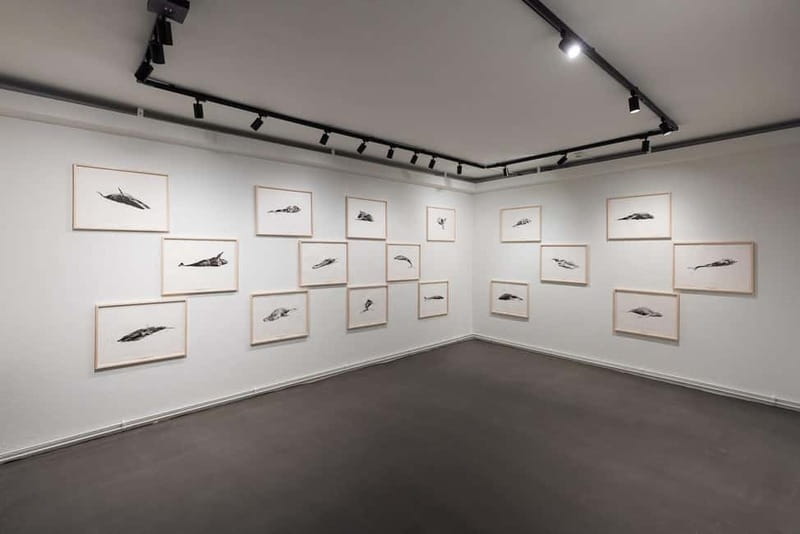
The Húsavík Whale Museum puts real scale in front of you. Its 13 whale skeletons make the size and structure of these animals easier to grasp than any photograph can. Inside eight exhibition spaces, you’ll move from whale evolution and biology to behavior, senses, mating patterns, and Iceland’s whaling past.
I like the clear focus on how whales experience the world, not just on naming species. I also like that your $21 admission supports a museum with conservation and education at its core. The main drawback is simple: the second floor is not wheelchair accessible, so some of the displays may be out of reach.
Key points to know before you go
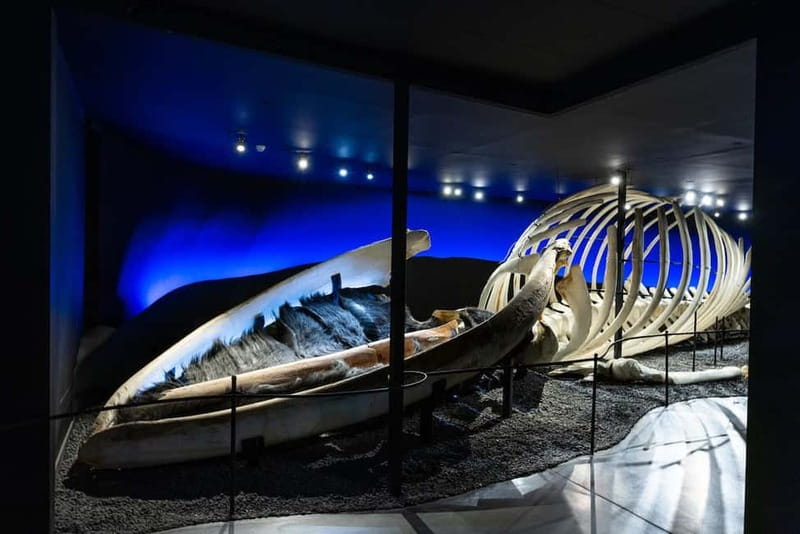
- Thirteen real skeletons: The museum’s largest displays give you a direct sense of whale size, bone structure, and anatomy.
- Eight exhibition spaces: You’ll find separate areas covering evolution, senses, behavior, mating, species, whaling, and conservation.
- A useful stop before a whale-watching trip: The exhibits give you context for understanding what you may see offshore.
- Icelandic whaling history included: The museum addresses the relationship between whales and Icelandic society, not only natural science.
- English-language visit: The host and museum information are available in English.
- Some access limits: The entrance, shop, and first floor are wheelchair accessible, but the second floor is not.
Why Húsavík is the right place for a whale museum
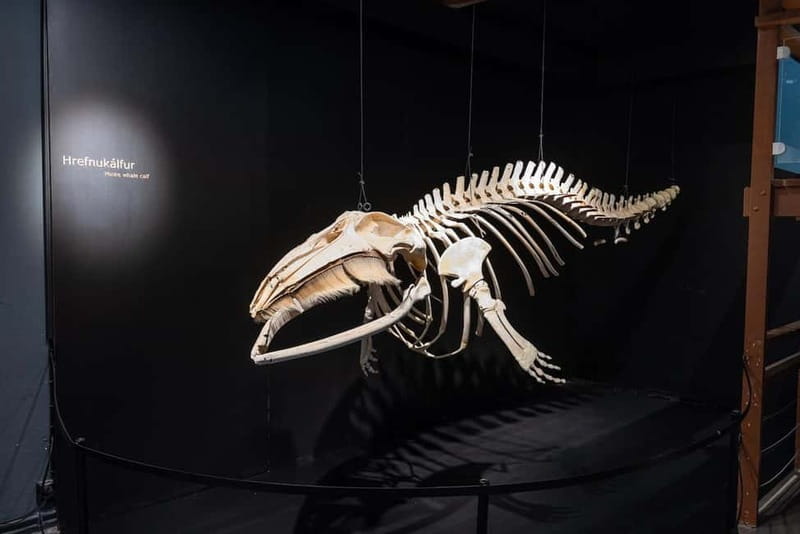
Húsavík is in northeastern Iceland, an area closely linked with whale watching and marine life. That makes the museum feel tied to its setting rather than like a general natural history display dropped into any town.
You can treat this as a one-day admission ticket, but the museum itself is a focused visit rather than an all-day activity. The value comes from how much context the displays add to your time in Húsavík. If you are also planning a whale-watching trip, the museum can help you understand the animals before you head out on the water.
I find that useful because whale watching often gives you only brief glimpses. A back, fin, tail, or blow may appear for a few seconds. At the museum, you have time to study the body, learn about behavior, and understand why different species move and feed in different ways.
The setting also gives the visit a sense of place. You are not simply reading about distant marine animals. You are learning about whales in a town where they are a major part of the local visitor experience and Icelandic coastal identity.
A few more whale trips around Iceland worth a look
- Reykjavik: Whales of Iceland Museum Entrance Ticket
★ 4.4 · 493 reviews - Reykjavik: Whale Watching Tour, Whales of Iceland Exhibition
★ 4.4 · 187 reviews - Reykjavik: Whale Watching Excursion & Whale Exhibition
★ 4.5 · 42 reviews
Entering the eight exhibition spaces
The museum’s permanent exhibition is organized around the main questions people have about whales. How did whales evolve? How do they sense their surroundings? How do they behave? How do they reproduce? Which species live in the Atlantic Ocean?
That structure makes the visit easy to follow. You do not need a specialist background in marine biology. The sections build from broad ideas to more specific details, so you can spend as little or as much time as your interest allows.
The evolutionary section explains the long development of whales as marine mammals. This is important because whales can seem completely separate from land animals when you see them in the ocean. The museum helps connect their present form with their biological past.
The biology displays then give you a closer look at how whales function. You’ll encounter information about body structure, behavior, and the ways these animals interact with their surroundings. The museum does not limit itself to the popular image of whales as large, calm creatures. It also presents them as highly adapted animals with specific needs and behaviors.
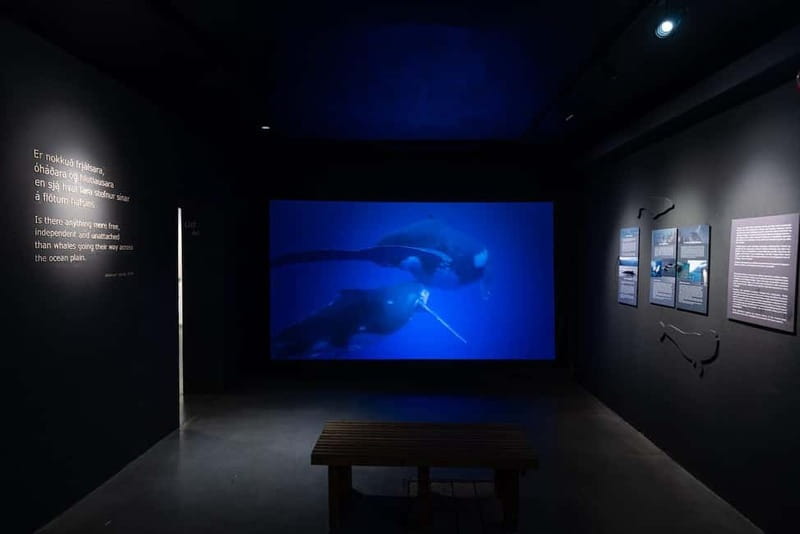
The exhibit on sensory perception is one of the more interesting parts for many visitors. Whales do not experience the ocean as we do. Their senses shape how they find food, communicate, move, and respond to their surroundings. Learning about that difference can change the way you watch whales later, both in the museum and at sea.
The 13 skeletons are the museum’s strongest feature
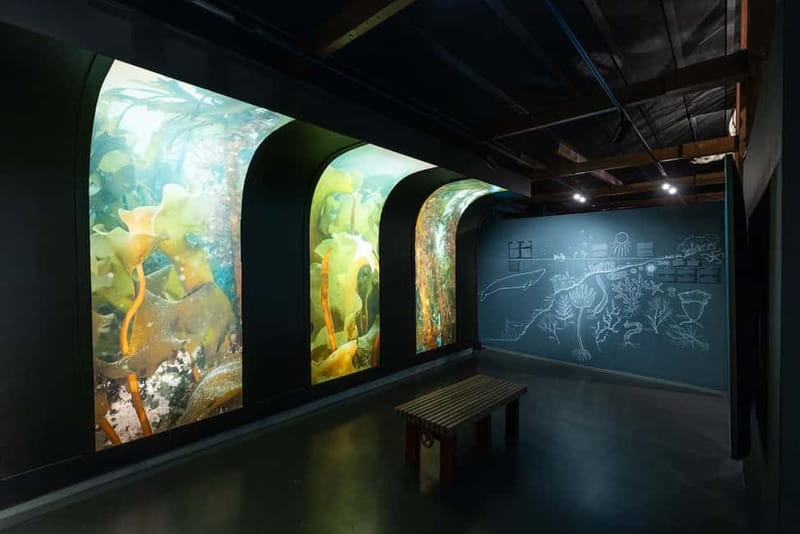
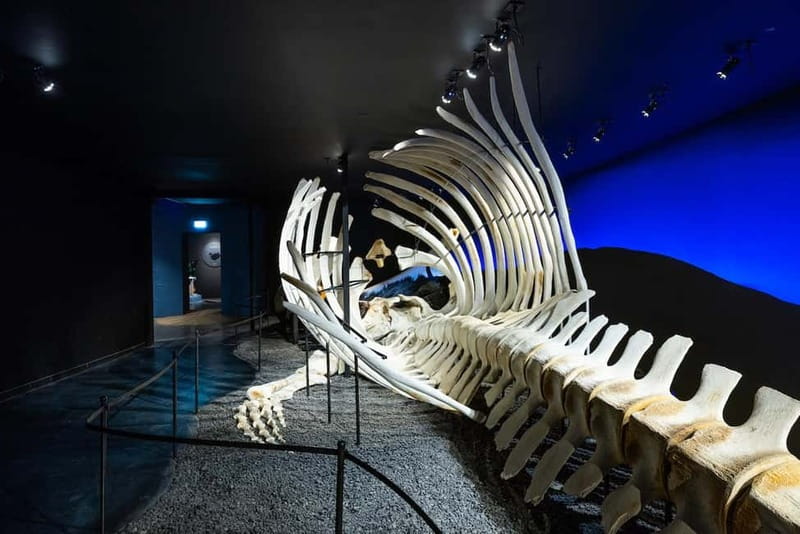
The real whale skeletons are the visual heart of the visit. Seeing 13 of them together gives you a much better idea of whale anatomy than a diagram alone.
A skeleton also corrects a common problem with whale photographs: scale is hard to judge. In a picture, a whale can look large, but the surrounding water and distance distort your sense of size. A full skeleton lets you study the length, shape, and proportions of the animal without guessing.
The bones also show that whale anatomy is not simply a giant version of a land mammal. The structure reflects life in the sea, movement through water, and the demands of feeding and swimming. You can connect what you see in the skeletons with the biological explanations in the surrounding displays.
One verified booking from May 2025 singled out the skeletons as impressive. That response makes sense, because they are the part of the museum you can understand instantly, even if you only have a short time. The displays are not just decorative. They make the science physical.
I would give the skeletons your full attention before moving quickly through the smaller information panels. If you have children with you, these large specimens may also give them a clear starting point before the more detailed sections on evolution and behavior.
Learning how whales sense and behave
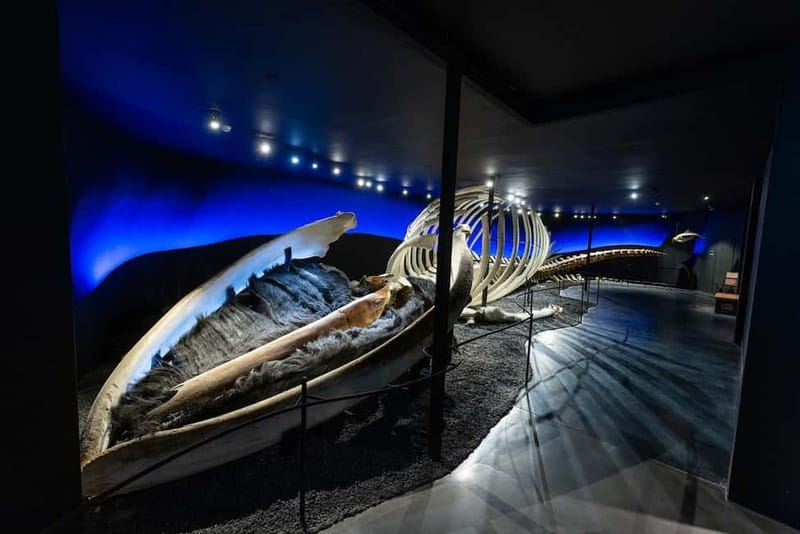
The museum gives special attention to whale senses and perception. This is a worthwhile focus because it moves the visit beyond a simple species checklist.
You’ll learn how whales perceive their surroundings and how their senses relate to behavior. That helps explain why whales communicate, travel, feed, and interact with one another in ways that may seem strange from a human point of view.
The behavior section covers more than movement. It includes patterns linked to social life and survival, while the mating section adds another layer to the story. These topics may sound technical, but they help you see whales as living animals with complex biological patterns rather than as scenery on a boat trip.
I like this approach because it gives you questions to carry outside the museum. If you later see a whale surface, you can think about what the animal may be doing, how it might be using its senses, and why it is moving in a particular way. You are not guaranteed to see any specific species or behavior on a separate whale-watching trip, but the museum gives you a better frame for interpreting what happens.
The information on Atlantic whale species is also practical. It connects the broad science with the animals associated with the surrounding ocean. The museum does not promise a wildlife encounter, and it should not replace a boat trip if you want to see whales alive. Its job is different: it explains the animals in a way that a brief sighting cannot.
Same water, a different way to meet the whales:
- Reykjavík: Whale Watching and Marine Life Cruise
★ 4.6 · 9,838 reviews - Akureyri: 3-Hour Classic Whale Watching Tour by Ship
★ 4.6 · 3,000 reviews - Reykjavík: Whale Watching Cruise on the Amelia Rose Yacht
★ 4.5 · 2,911 reviews - Húsavík: Whale Watching Tour with Guide
★ 4.6 · 2,761 reviews
Iceland’s whaling past and conservation work
The museum also examines the history of whaling in Iceland. That section adds needed context to a subject that can otherwise be reduced to a simple argument.
Whales have had an important place in Iceland’s coastal culture and economy, and the museum presents that relationship as part of the country’s story. At the same time, the museum’s educational work encourages appreciation and stewardship of the ocean and its animals.
For you, this means the visit is not only about beautiful creatures. It asks you to think about how humans have used marine resources, how attitudes toward whales have changed, and why conservation matters now. That broader view makes the museum more useful than a display focused only on spectacle.
You can support the museum’s conservation efforts by buying a souvenir in the shop. A purchase is optional, of course, but it gives you a direct way to support the institution after your visit. It also makes sense if you want a small reminder of Húsavík that connects to the museum’s work rather than a generic Iceland item.
The museum’s emphasis on education matters here. Conservation is easier to understand when you know something about whale biology, behavior, and the pressures these animals face. The exhibits build that base without requiring you to arrive with prior knowledge.
How long to allow and what the $21 price means
Admission costs $21 per person and is valid for one day. You receive entry to the Húsavík Whale Museum and access to all eight exhibition spaces.
I consider that a fair price if whales are a main reason you are visiting Húsavík or if you want a thoughtful indoor stop between outdoor activities. The skeleton collection alone gives the museum a strong visual appeal, while the biology and conservation displays add substance.
The value is less obvious if you are looking for a fast attraction with little reading. This is a museum visit, not a short photo stop. You will get more from the ticket if you take time with the panels and connect the sections together.
Because the ticket is valid for one day, you have some freedom in how it fits your schedule. The activity information says to check availability for starting times, so confirm the current time before planning the rest of your day. No transportation is included, and the ticket covers museum admission only.
The museum can work well in poor weather, which matters in northern Iceland. It gives you a dry, educational activity without pretending to offer the same experience as an outdoor whale encounter. I would see it as a useful part of a Húsavík day, not as a replacement for time on the water.
Accessibility and practical planning
The entrance, souvenir shop, and first floor are wheelchair accessible. The second floor is not wheelchair accessible, so anyone who needs step-free access should plan for only the accessible areas.
The available information does not identify a named guide. The host or greeter speaks English, and the activity is listed in English. Since this is a museum admission rather than a guided walking tour, much of your visit will involve moving through the displays at your own pace.
You do not need to fit into a fixed group itinerary. That can be helpful if you prefer to pause at the skeletons, read selected sections, or move quickly through familiar material. It also means the experience depends partly on how much attention you choose to give the exhibits.
The souvenir shop is part of the accessible area and offers another chance to support the museum’s conservation work. If you are visiting with a family, the large skeletons provide an immediate visual hook. If you are visiting alone or with an adult companion, the sections on senses, behavior, and whaling history may reward slower reading.
The museum’s host speaks English, but no other language service is listed. If you need information in another language, confirm what is available before booking.
Who will get the most from this museum?
I would recommend the museum to anyone with a serious interest in whales, marine biology, or Icelandic coastal culture. It is also a smart choice if you are already in Húsavík for whale watching and want to understand more than you can learn from a short sighting.
Families can benefit from the skeletons and visual displays, though the amount of written information may appeal more to older children and adults. The museum also suits curious visitors who want an indoor activity that has more substance than a quick attraction.
You may want to skip it if you have very little time in Húsavík and are only interested in seeing live whales. The museum cannot provide that experience. Its strength is explanation, anatomy, history, and conservation.
The 4.2 rating from seven reviews suggests a generally positive response, but the small number of ratings does not give you a broad measure of every visitor’s experience. I would base your decision on your interest in the subject and the value you place on seeing real skeletons, not on the rating alone.
Should you book the Húsavík Whale Museum?
Book it if you want a clear, well-organized introduction to whales and a closer look at 13 real skeletons. The $21 price is reasonable for access to eight exhibition spaces, especially when you have time to read the material and connect the biology with Iceland’s whaling history.
I would make the museum part of a Húsavík day rather than treat it as the only reason to visit town. It works especially well before or after a whale-watching activity, because it gives you the background to understand what you see offshore.
Skip it only if your schedule is extremely tight, you want an outdoor-only day, or wheelchair access to the second floor is essential. For most people interested in whales, this is a worthwhile and practical stop with one major selling point: the skeletons make the scale of these animals impossible to ignore.
FAQ
Where is the Húsavík Whale Museum located?
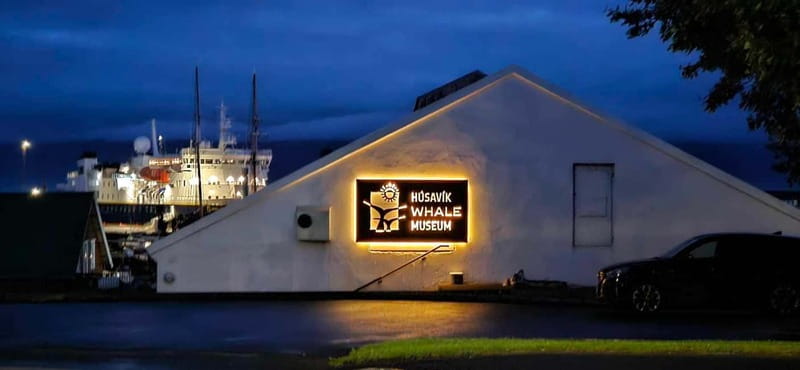
The museum is in Húsavík, in Iceland’s northeastern region.
What does the $21 ticket include?
The ticket includes entrance to the Húsavík Whale Museum and access to all exhibition spaces.
How many whale skeletons are displayed?
The museum displays 13 real whale skeletons.
How many exhibition spaces can I visit?
Your admission provides access to eight exhibition spaces.
What subjects does the museum cover?
The exhibits cover whale evolution, biology, sensory perception, behavior, mating patterns, Atlantic whale species, conservation, and the history of whaling in Iceland.
Is the museum visit available in English?
Yes. The host or greeter speaks English, and English is the listed activity language.
Is the museum wheelchair accessible?
The entrance, souvenir shop, and first floor are wheelchair accessible. The second floor is not wheelchair accessible.
How long is the ticket valid?
The ticket is valid for one day. Check availability for the current starting times.
Can I cancel the booking for a refund?
Yes. You can cancel up to 24 hours in advance for a full refund. You can also reserve now and pay later.
Just added around Iceland
- Akureyri: Whale Watching Shore Excursions★ 4.6 · 250 reviews
- Reykjavik: Whale Watching & Lava Show★ 5.0 · 4 reviews
- Akureyri: Whale Watching Tour & Forest Lagoon Entrance★ 3.8 · 4 reviews
- Reykjavik: Whale & Marine Adventure Tour★ 4.3 · 71 reviews
- Icelandic Horse Riding and Whale Watching Cruise from Reykjavík★ 4.0 · 14 reviews
- Whales Of Iceland Admission Ticket★ 4.0 · 239 reviews
- Whale Watching by RIB Speedboat from Downtown Reykjavik★ 4.5 · 26 reviews
- Whale Wonders Morning Expedition from Reykjavík★ 4.0 · 10 reviews
Husavik Whale Watching Tours, compared.

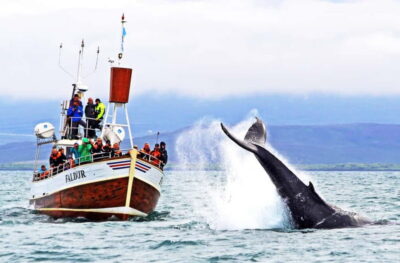

Húsavík: Whale Watching – Family Run with Indoor Seats
Read our review →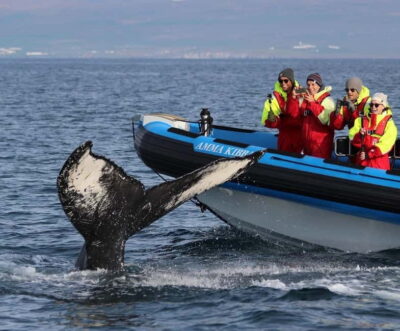
Húsavík: Original Big Whale Safari & Puffins by Speedboat
Read our review →
Húsavík: Big Whales and Puffin Island Speedboat Tour
Read our review →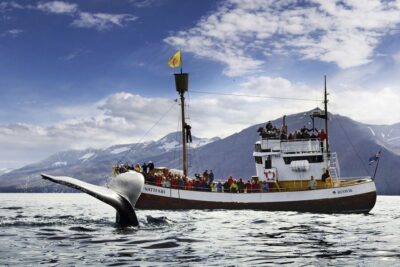
Húsavík: Whale-Watching Cruise and Puffins Guided Tour
Read our review →
Husavik: Whale Watching on a Carbon Neutral Oak Boat
Read our review →Browse the lists this tour appears in