
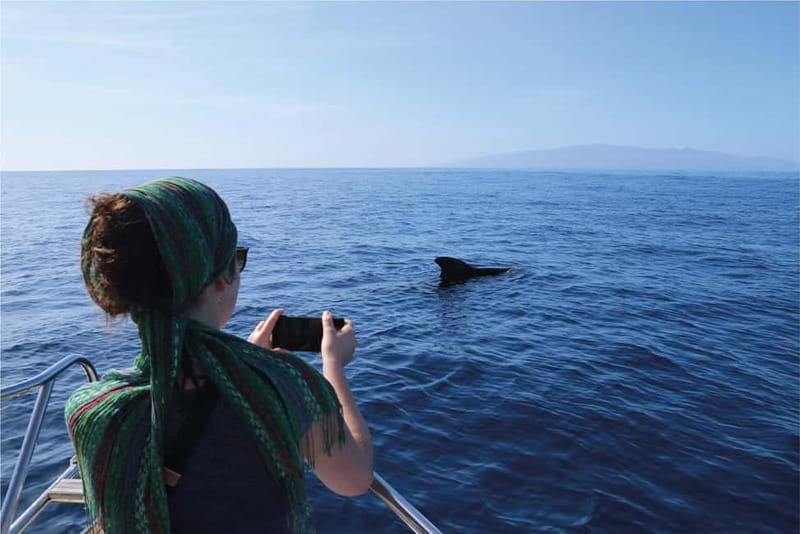
Review · TENERIFE
Costa Adeje: Whale Watching Eco Experience with Hydrophone.
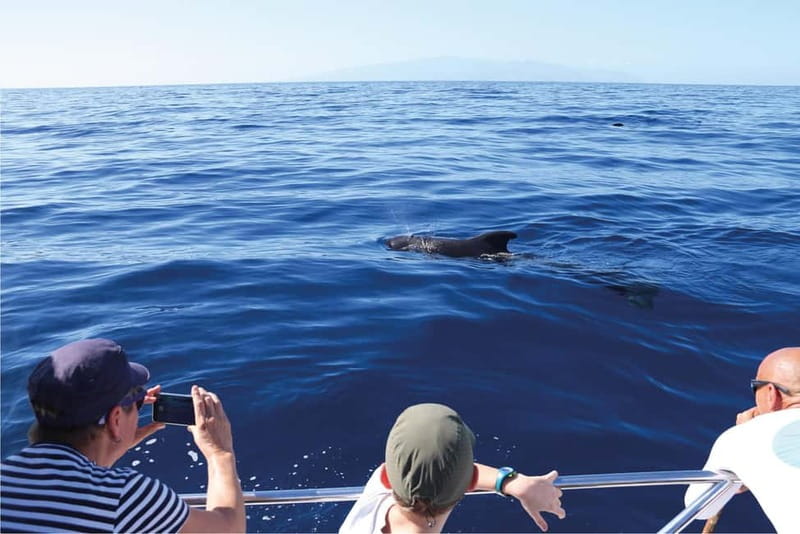
The most unusual part of this Costa Adeje boat trip is the hydrophone. When pilot whales or dolphins are nearby, the crew stops the motors and lowers an underwater microphone, letting you hear the sounds used to communicate and hunt. You get more than a quick look at a fin. You get a sense of the active world beneath the boat.
I like the small 10-person boat, which allows the two crew members to give closer attention, and I like the clear conservation work behind the trip. The crew keeps a safe distance, switches off the engines during sightings, helps with injured marine animals, and contributes to a pilot whale photo-identification project.
The main consideration is that this is a wildlife outing, not a guaranteed whale show. The 2.5-hour trip takes place on a small boat, and the exact animals and behavior you see will depend on what is in the sanctuary that day.
Key points to know before booking
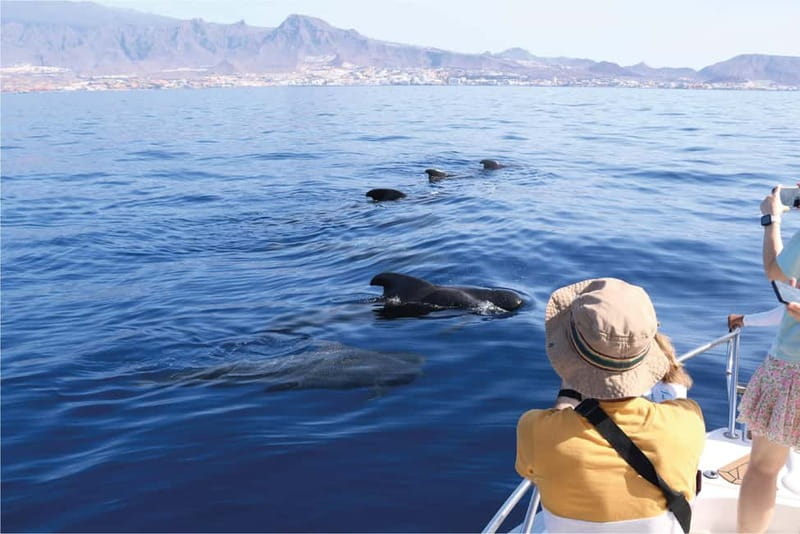
- Hydrophone listening: Hear cetacean sounds underwater after the engines are turned off.
- Papacho 2: Travel in a small boat with space for no more than 10 participants.
- Costa Adeje sanctuary: The trip operates in Europe’s only whale sanctuary, on Tenerife’s south coast.
- Marine biologist on board: Get explanations about local cetaceans, turtles, seabirds, and conservation.
- Wildlife-first approach: The crew keeps its distance and avoids interfering with natural behavior.
- Simple comfort: Drinks are included, and you should bring sunglasses, a hat, and sunscreen.
Setting out from Costa Adeje on Papacho 2
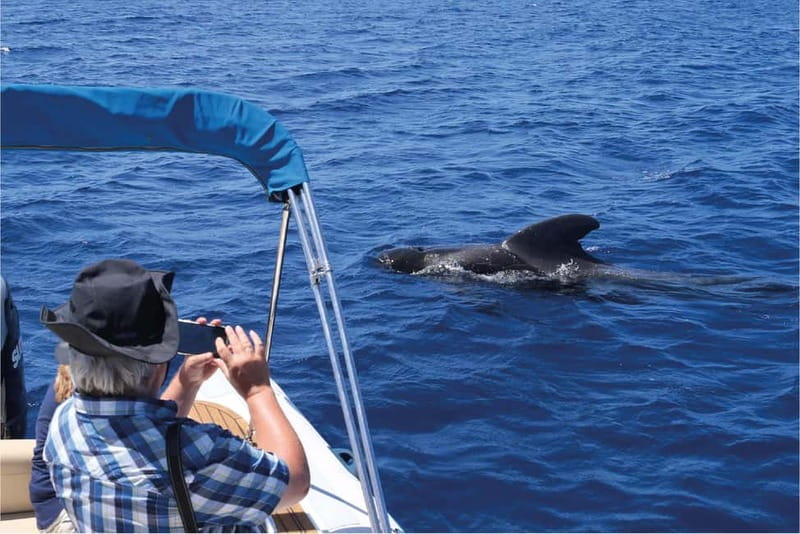
Atlantic Eco Experience runs this 2.5-hour trip from Costa Adeje, on Tenerife’s south coast. After meeting at the agreed point, you board Papacho 2, a boat limited to 10 people.
That capacity matters. Whale watching can feel hurried and crowded when several dozen people are packed along the rails. Here, the small group gives you a better chance to hear the explanations, ask questions, and follow what the crew is pointing out. You are also closer to the water, which suits this quieter style of wildlife outing.
The crew has two members, including a marine biologist. Before looking for animals, the biologist explains the marine life you may encounter and the basic ideas behind its protection. That introduction gives the outing some purpose. You are not simply scanning the sea for a dorsal fin. You are learning what the animals do and why the crew follows certain rules.
The trip is offered in English and Spanish. Drinks are provided on board, a useful touch during a two-and-a-half-hour outing, although the supplied information does not specify which drinks are available.
A few more whale trips around Tenerife worth a look
- Tenerife: Eco-Yacht Whale and Dolphin Watching and Swimming
★ 4.7 · 15,619 reviews - Los Cristianos Respectful No-Chase Whale and Dolphin Safari
★ 4.6 · 12,782 reviews - Costa Adeje: Whale & Dolphin Eco-Cruise with Snacks & Drinks
★ 4.6 · 5,096 reviews
Why the whale sanctuary setting matters
The boat works in the whale sanctuary off Costa Adeje, described as Europe’s only whale sanctuary. Its protected setting is central to the trip’s character. The goal is to see marine animals in their normal surroundings, rather than bring them close or encourage dramatic behavior.
The crew approaches groups of cetaceans, turtles, and seabirds while keeping a respectful distance. That approach may mean you do not get the closest possible photograph, but it also reduces pressure on the animals. The crew does not treat wildlife as a performance.
The sanctuary is also home to pilot whales, one of the animals most often associated with the outing. You may see other cetaceans as well, along with turtles and seabirds. The exact mix changes from one departure to the next, so I would book this for the quality of the observation rather than for a promise of one particular species.
This is especially useful for anyone who wants a more responsible wildlife trip. The company belongs to ACEST, the Association of Companies for the Sustainability of Tourism, and takes part in rescue work for injured marine animals. It also contributes to a photo-identification catalogue of pilot whales in the Canary Islands. Those efforts give the trip a research and conservation link beyond the two and a half hours on the water.
The hydrophone turns a sighting into a listening experience
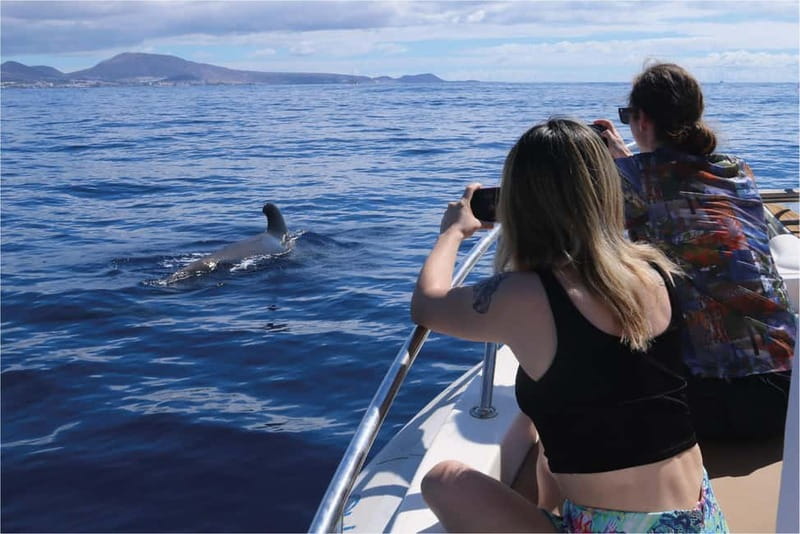
Many whale watching trips are built around what you can see. This one adds an important second sense. When the boat reaches a wildlife sighting, the crew turns off the engines and lowers a hydrophone into the sea.
The result is a pause from the boat’s normal noise. Instead of listening to a motor while watching the surface, you can hear the sounds made by cetaceans underwater. The crew uses the hydrophone to help you listen for communication and hunting sounds.
That moment is the heart of the trip for me. A whale may surface only briefly, but the underwater audio helps you understand that the animal’s activity continues below the surface. It makes the sea feel less like an empty stretch of water and more like a working habitat.
The engine-off policy also reflects the company’s stated concern for animal welfare. The boat does not keep running during the main observation. The crew combines the quiet boat with a safe distance, aiming to watch without changing the animals’ behavior.
This does mean the pace can feel slower than a high-energy sightseeing cruise. The boat is not racing from one sighting to the next. If you prefer loud commentary and constant movement, this may feel restrained. If you want time to watch and listen, it is a strong feature.
What you may see during the 2.5 hours
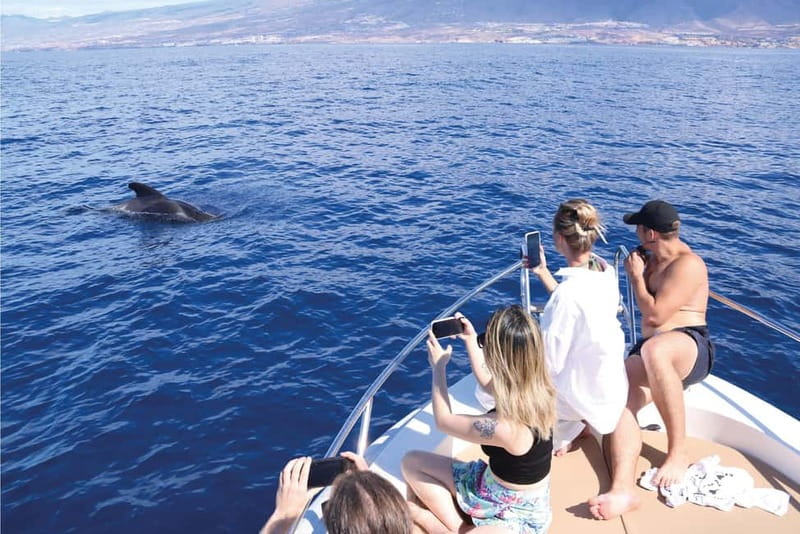
The itinerary is shaped by the animals, not by a list of fixed stops. The crew searches the sanctuary and approaches groups of marine life when conditions allow.
Same water, a different way to meet the whales:
- Los Gigantes: Dolphin & Whale Watching Cruise with Swim Stop
★ 4.7 · 4,539 reviews - Costa Adeje: Whale Watching Catamaran Tour with Drinks
★ 4.7 · 3,653 reviews - Tenerife: Whale & Dolphin Watching Cruise with Swim Stop
★ 4.7 · 3,227 reviews - Los Cristianos: Viking Cruise Whales & Dolphins Watching
★ 4.6 · 3,132 reviews
Pilot whales and other cetaceans
Pilot whales are a major draw. The company works with a photo-identification catalogue of pilot whales in the Canary Islands, so the trip has a direct connection to ongoing study of these animals.
You may see groups near the boat, as described by the experience details, but the crew’s method is not to crowd them. When a sighting develops, the guide explains the animals’ behavior and gives you time to watch. The hydrophone adds an underwater element that a standard visual tour lacks.
The trip also looks for other cetaceans. No fixed species list or sighting guarantee is provided, so you should keep your expectations open. The sensible way to view this outing is to value the search, the interpretation, and the careful approach along with the animals themselves.
Turtles and seabirds
Cetaceans receive the main attention, but turtles and seabirds are also part of the possible wildlife mix. These sightings add variety, particularly if the whales are spending more time below the surface.
The biologist helps interpret what you see. That matters because a fast glimpse of a bird or turtle can be easy to miss without someone explaining where to look and what behavior may mean. The crew’s aim is to interpret the animals with you, not simply point and move on.
There are no separate stops listed for turtles or seabirds. They are part of the open-water search, so the trip works best if you enjoy paying attention to small changes around the boat as well as waiting for a large animal to surface.
A conservation policy you can see in practice
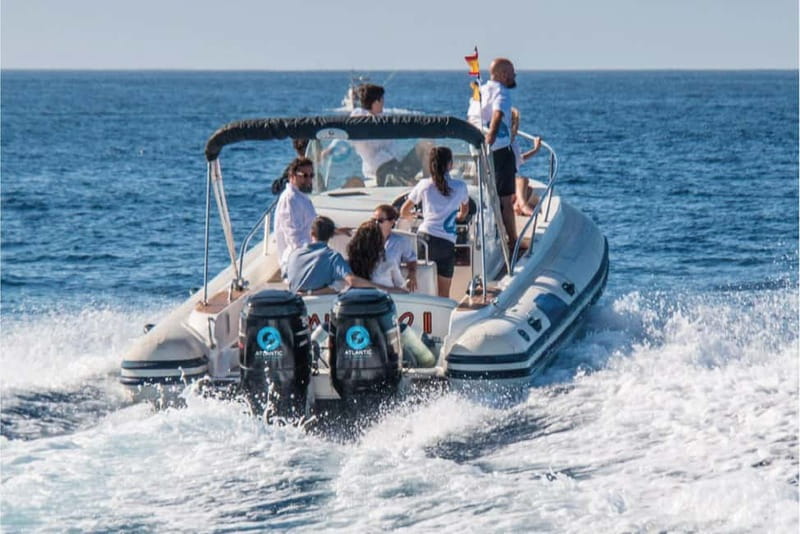
Sustainability is not just a line in the description here. Several parts of the outing affect what you actually do on the water.
The crew keeps a safe distance from animals. It does not interfere with their natural behavior. During sightings, the engines are completely switched off, and a hydrophone is used instead of relying only on surface observation.
Atlantic Eco Experience also takes part in rescue and rehabilitation work for injured marine animals. The goal is to help those animals recover and return to the ecosystem. That work may not be visible during your boat ride, but it gives meaning to the company’s wider role.
The photo-identification project is another useful link. By recording individual pilot whales, researchers can build a better picture of the animals in the Canary Islands. Your outing is not presented as a formal research trip, but it supports a company that contributes to this type of marine study.
For me, this is the best reason to choose the tour over a generic boat ride. You still get time on the water and the chance to see wildlife, but the company’s operating choices show respect for the place you have come to visit.
How the small group changes the outing
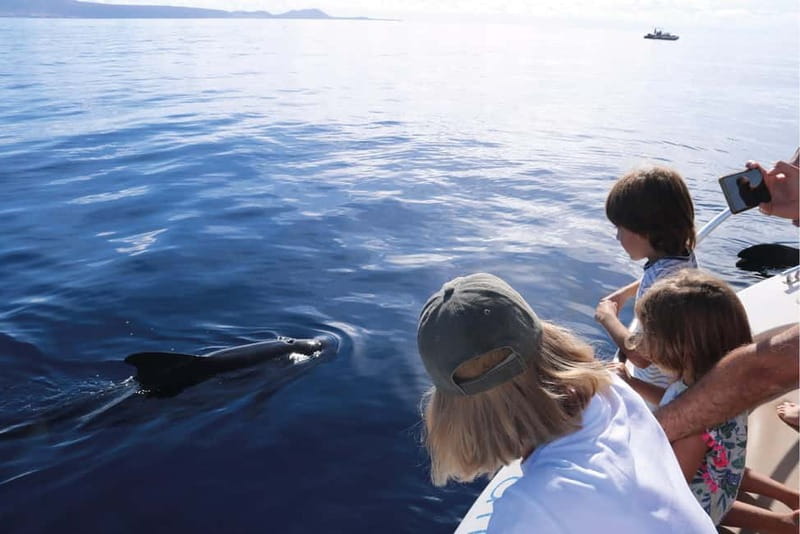
A maximum of 10 people is one of the clearest practical advantages. The boat should feel more personal than a large sightseeing vessel, and the two-person crew can keep an eye on the group while explaining the wildlife.
A small group also helps with the hydrophone session. Everyone has a better chance of hearing the audio and following the explanation. On a larger boat, the sound from the engine, conversations, and crowd could easily work against the quiet atmosphere this trip is trying to create.
The tradeoff is simple: Papacho 2 is not a large platform with lots of room to spread out. If you prefer a broad deck, indoor seating, or the facilities of a bigger cruise boat, check your comfort level before booking. The supplied information confirms the boat’s 10-person capacity but does not give further details about seating, toilets, or shade.
The small group suits families too. The information specifically indicates that the trip can work for families with small children. Still, children should be prepared for a patient wildlife outing rather than nonstop action. The most exciting moments may be short, followed by quiet watching and listening.
What the crew adds to the experience
The marine biologist is not just there to identify animals. The role includes explaining the fauna in the area and the reasons behind conservation measures.
That makes the trip a good choice if you want context with your wildlife viewing. You can learn how the crew approaches cetaceans, why the motors are turned off, and how the animals use sound. The experience is built around interpretation, not just transport.
The crew is also described as friendly and experienced, which fits the personalized format. Specific guide names are not provided, so do not book expecting a named host. Instead, focus on the two-person team and the chance for direct contact during the trip.
The language choice is English or Spanish. If you need another language, this experience may not suit you, as no other options are listed.
Value: what you are paying for beyond a boat ride
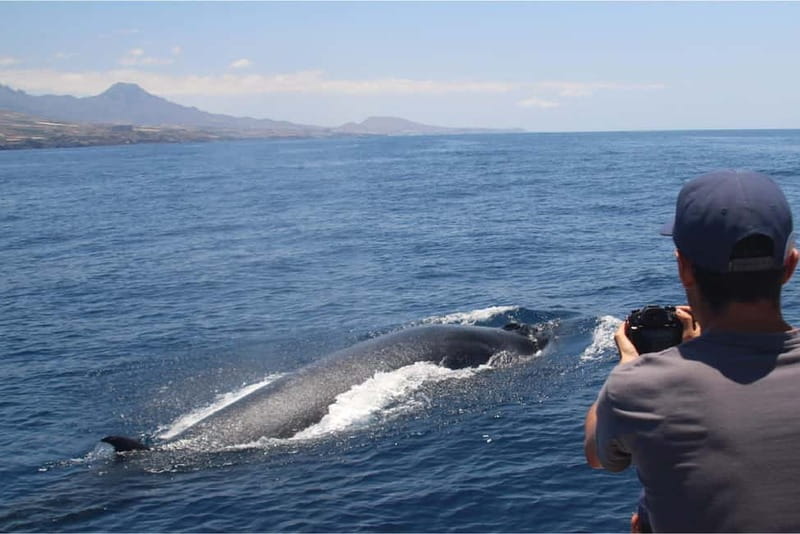
A price is not provided here, so I cannot judge the exact cost against other Costa Adeje excursions. I can still explain what gives this trip value.
You are paying for a limited group, a trained marine biologist, drinks on board, a 2.5-hour search in a protected marine area, and the hydrophone session. The conservation work and research connection add value if responsible wildlife viewing matters to you.
The small capacity is especially important. A cheaper, larger cruise may give you time at sea, but it may not offer the same access to the crew or the same quiet conditions for listening. On the other hand, a small boat does not guarantee more animals. You are paying for a better viewing method and a more personal setting, not certainty.
Flexible booking also helps. You can reserve now and pay later, and cancellation is free up to 24 hours before departure for a full refund. Check the available starting times when booking, since the exact departure schedule is not fixed in the information provided.
What to bring for the boat
Keep your packing simple:
- Sunglasses
- Sun hat
- Sunscreen
Drinks are supplied, but food is not listed as included, so do not assume a meal or snack is provided. The company does not list special clothing, but you should be ready for time outdoors on a boat and for strong sun.
The meeting point and exact departure time should be checked when you reserve. The tour lasts 2.5 hours, but the available starting times depend on the date.
Who should book this Costa Adeje whale watching trip?
I would choose this outing if you care about responsible wildlife viewing, prefer a small group, and like the idea of hearing animals as well as seeing them. It is also a good fit if you want a marine biologist to explain the behavior and conservation work rather than simply drive you offshore.
Families with small children can consider it, especially if the children can handle a quiet period while the crew searches for wildlife. The limited capacity keeps the setting more personal, but the natural pace may not suit a child who needs constant entertainment.
You may want a different kind of boat trip if your priority is a large deck, a party atmosphere, a meal, or a guaranteed close encounter. Those features are not part of the supplied details.
Should you book Atlantic Eco Experience?
Book it if the hydrophone, small group, and conservation approach appeal to you. The combination of engine-off sightings, marine interpretation, and possible pilot whale encounters makes this more thoughtful than a basic coastal cruise.
Go in with realistic expectations. The sanctuary is a natural setting, and the animals set the schedule. You may see pilot whales, dolphins, turtles, or seabirds, but the strongest part of the outing is the respectful way the crew searches, watches, and listens.
FAQ
How long is the Costa Adeje whale watching trip?
The experience lasts 2.5 hours.
Where does the whale watching trip take place?
It operates from Costa Adeje on the south coast of Tenerife, within Europe’s only whale sanctuary.
How many people can join the boat trip?
Papacho 2 has a maximum capacity of 10 passengers.
What animals might I see?
The crew looks for cetaceans, including pilot whales and dolphins, as well as turtles and seabirds.
What is the hydrophone used for?
The hydrophone lets you listen to underwater sounds made by cetaceans, including sounds used for communication and hunting.
Are the boat engines running during wildlife sightings?
The crew completely switches off the engines during sightings so it can observe the animals without disturbing them.
Which languages are available?
The live tour guide service is available in English and Spanish.
What should I bring?
Bring sunglasses, a sun hat, and sunscreen. Drinks are included on board.
Can I cancel the booking?
You can cancel up to 24 hours in advance for a full refund.
Can I reserve now and pay later?
Yes. The booking option allows you to reserve your place and pay later.
Just added around Tenerife
- Whale & Dolphin Watching With Mustcat Virgin Coast Trip On a Large Catamaran★ 4.0 · 3 reviews
- Whale watching and snorkelling in the whale sanctuary★ 5.0 · 14 reviews
- Whale Watching and Marine Science Tour★ 5.0 · 111 reviews
- Whale & Dolphin Watching in Tenerife (Puerto Colon) On a Large Catamaran★ 4.0 · 12 reviews
- Whale and Dolphin Watching EcoAdventure in Tenerife★ 5.0 · 78 reviews
- Tenerife : Whales and Dolphins with Food and Bath in Los Gigantes★ 4.0 · 3 reviews
- Whale Watching Catamaran to Los Gigantes & Masca (Including drinks & warm lunch)★ 4.0 · 55 reviews
- Whale & Dolphin Watching Boat Trip in Tenerife On a Sailing Boat (3 Hr)★ 3.5 · 10 reviews
Tenerife Whale Watching Tours, compared.
Tenerife: Eco-Yacht Whale and Dolphin Watching and Swimming
Read our review →
Los Cristianos Respectful No-Chase Whale and Dolphin Safari
Read our review →
Costa Adeje: Whale & Dolphin Eco-Cruise with Snacks & Drinks
Read our review →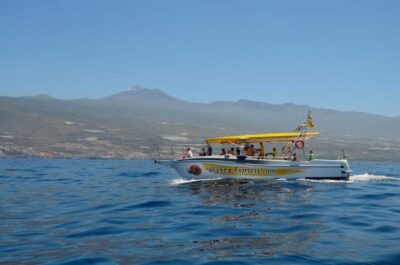
Los Gigantes: Dolphin & Whale Watching Cruise with Swim Stop
Read our review →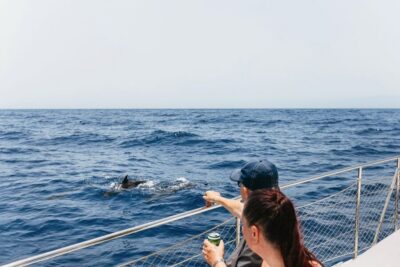
Costa Adeje: Whale Watching Catamaran Tour with Drinks
Read our review →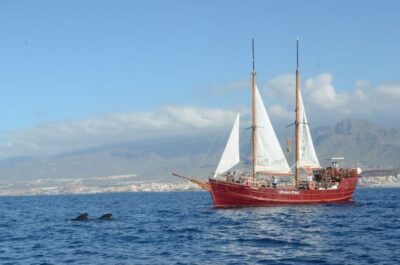
Tenerife: Whale & Dolphin Watching Cruise with Swim Stop
Read our review →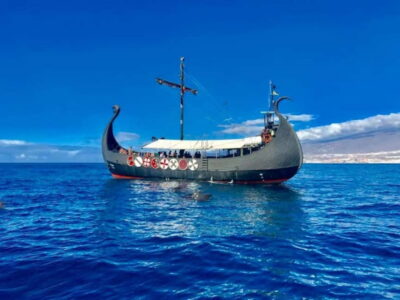
Los Cristianos: Viking Cruise Whales & Dolphins Watching
Read our review →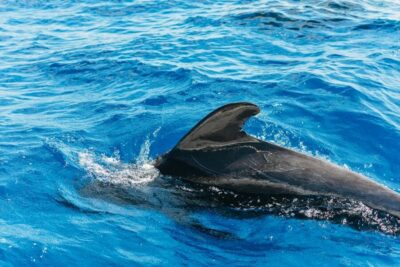
Tenerife: Whale & Dolphin Watching with Drinks and Snacks
Read our review →Browse the lists this tour appears in