
Review · TENERIFE
Costa Adeje | Cetacean sighting in Tenerife South
The best part of this Costa Adeje boat trip is its quiet, close-to-the-water approach. With no more than 10 people aboard Papacho 2, you can watch pilot whales and dolphins from a low boat instead of peering over a crowd. The crew cuts the engines near the animals and uses a hydrophone so you can hear them calling below the surface.
I like the mix of real marine biology and gentle wildlife watching. Guides such as David and Mirna explain what you are seeing, identify familiar whale families from their dorsal fins, and talk about conservation without turning the trip into a lecture. I also like the unhurried pace: the boat may simply drift and let the whales come to you.
The main consideration is the sea itself. A small boat gives you a fine view, but it also moves with the waves, and one person needed motion-sickness tablets and still became ill. Sightings are never guaranteed, and rough weather can cancel the trip.
Key points to know before booking
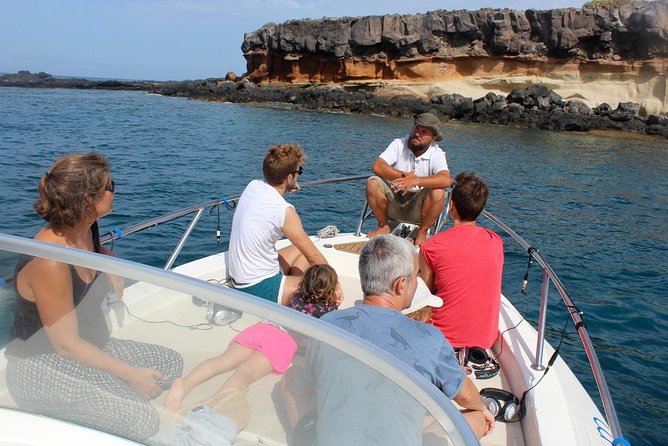
- Only 10 people maximum: The small boat makes it easier to see around the rails and ask direct questions.
- Hydrophone listening: When the engines are off, you may hear whales communicating or hunting beneath the boat.
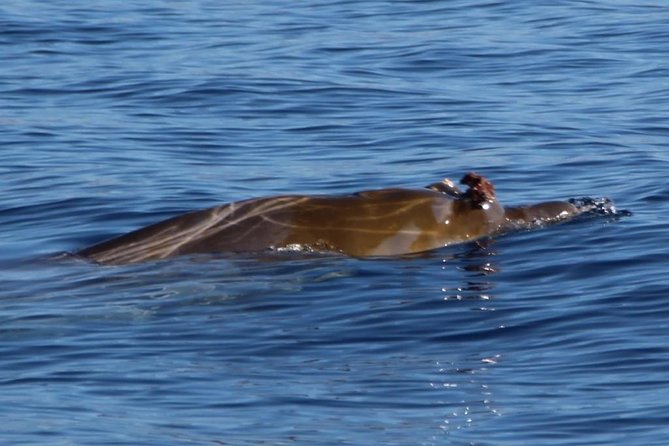
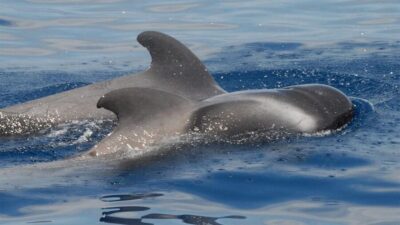
- Pilot whales are the main attraction: The waters off Tenerife are known for regular sightings of pilot whale families, with dolphins, turtles, and seabirds also possible.
- Guides record and identify wildlife: The crew uses photographs and dorsal-fin markings to recognize individual whale families.
- A conservation-first trip: The boat avoids chasing animals, leaves crowded viewing spots, and may collect floating plastic.
- Plan for sun and motion: Bring sun protection, water, and a hat with a chin toggle. The boat has toilet facilities and offers a cold drink.
A small boat and a very different kind of whale watch
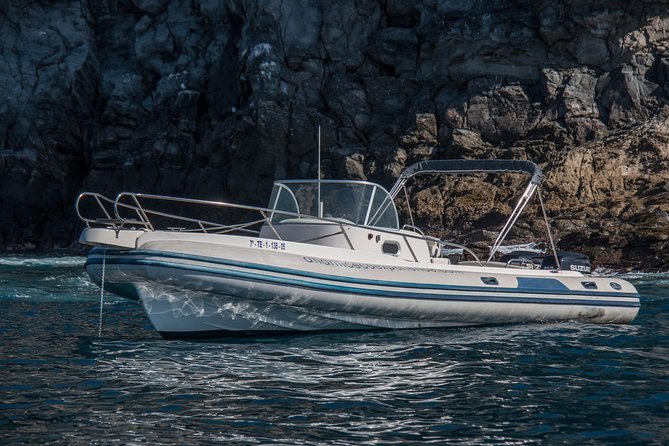
From the meeting point at Avenida de Colón, 4, you head to Puerto Colón Marina and Gate 4. The boat is Papacho 2, with space for up to 10 passengers. That number matters more than it may sound. On a large sightseeing boat, you may spend the trip looking for a gap at the rail. Here, you can shift sides, ask the guide a question, and keep watching without a wall of people in front of you.
The boat sits close to the water, which gives you an excellent view when a pilot whale surfaces nearby. You are also more exposed to sun and movement than you would be on a large vessel. If you tend to feel queasy at sea, take suitable motion-sickness medicine before departure, as one participant still became ill despite taking tablets.
The outing lasts about two and a half hours. That is long enough to search a broad stretch of Tenerife’s southern coast without turning the day into a major time commitment. The boat returns to the same meeting point, so you can fit the trip around a beach afternoon, dinner, or another Costa Adeje plan.
Other boats people book in Tenerife:
- Tenerife: Eco-Yacht Whale and Dolphin Watching and Swimming
★ 4.7 · 15,619 reviews - Los Cristianos Respectful No-Chase Whale and Dolphin Safari
★ 4.6 · 12,782 reviews - Costa Adeje: Whale & Dolphin Eco-Cruise with Snacks & Drinks
★ 4.6 · 5,096 reviews
Meeting David, Mirna, and the marine biology team
The trip begins with a short welcome and an explanation of the wildlife found in the waters around Tenerife. Guides named David and Mirna are frequently involved, while other crew members, including Marina or Claudine, may handle guiding, photography, or the boat depending on the departure.
The strongest feature of the crew is the way they connect science to what is happening in front of you. Instead of simply pointing and calling out whale, they explain how pilot whales live in family groups, how their dorsal fins help identify them, and how researchers keep track of familiar animals.
David is described as an energetic storyteller with a gift for making biology easy to follow. He may explain the remarkable life of short-finned pilot whales, including their ability to travel far below the surface in search of squid. The guide may also connect the animals to the island’s volcanic geography. Tenerife rises dramatically from the ocean floor, creating nearby waters with the depth that large cetaceans need.
This approach is especially useful if you are visiting with children. The trip has held the attention of a seven-year-old for the full two and a half hours, and the mix of stories, animal watching, and sound gives younger passengers more to do than simply wait for a fin to appear.
Searching the southern coast for pilot whales
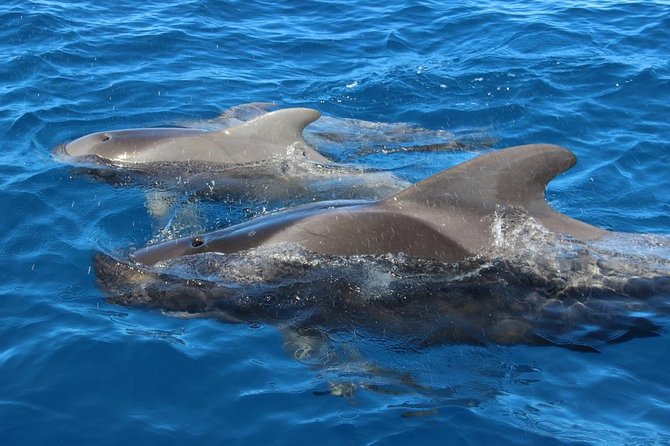
Once outside the marina, the crew begins looking for signs of marine life. Pilot whales are the most likely main event, and the boat may find several family groups during the outing. The crew has a photo catalogue of known whales, using the shape and marks on their dorsal fins to work out which family is nearby.
This is where the small-group format pays off. The boat can slow down, wait, and let the animals decide how close they want to come. The crew does not treat the whales like moving targets. If another boat has already gathered around a group, the captain may leave the area rather than add more pressure.
That choice can mean you spend less time beside one particular animal. It is also the right trade-off for a wildlife trip that claims to respect natural behavior. The aim is not to force a dramatic approach. It is to watch the whales as they surface, travel, rest, and interact on their own terms.
You might see whales close enough to notice their faces and breathing patterns. You might instead watch a group at a greater distance, with the sea between you and the animals. Both situations are part of a genuine encounter, and the crew’s calm pace makes the waiting feel purposeful rather than empty.
Hearing whales through the hydrophone
The hydrophone is one of the most memorable features of the trip. When the boat reaches a suitable viewing area, the crew switches off the engines and lowers the listening device into the sea. You then hear the sounds cetaceans use to communicate or search for food.
Seeing a whale surface is exciting. Hearing its clicks and calls adds another layer, because it reminds you that much of the animal’s life happens below the surface and out of sight. The sound can be haunting and surprisingly intimate, especially when the boat is floating quietly.
There is a practical side to this too. Turning off the engines reduces noise around the animals and gives the group a better chance to listen. It also creates a peaceful pause in the trip. Instead of rushing from one sighting to the next, you sit quietly and pay attention to a world that is usually hidden from people on shore.
The hydrophone does not guarantee a perfect recording or constant sound. Conditions, animal distance, and sea movement all matter. Still, it is a meaningful feature that sets this excursion apart from a standard boat ride.
Same water, a different way to meet the whales:
- Los Gigantes: Dolphin & Whale Watching Cruise with Swim Stop
★ 4.7 · 4,539 reviews - Costa Adeje: Whale Watching Catamaran Tour with Drinks
★ 4.7 · 3,653 reviews - Tenerife: Whale & Dolphin Watching Cruise with Swim Stop
★ 4.7 · 3,227 reviews - Los Cristianos: Viking Cruise Whales & Dolphins Watching
★ 4.6 · 3,132 reviews
Dolphins, turtles, seabirds, and the occasional surprise
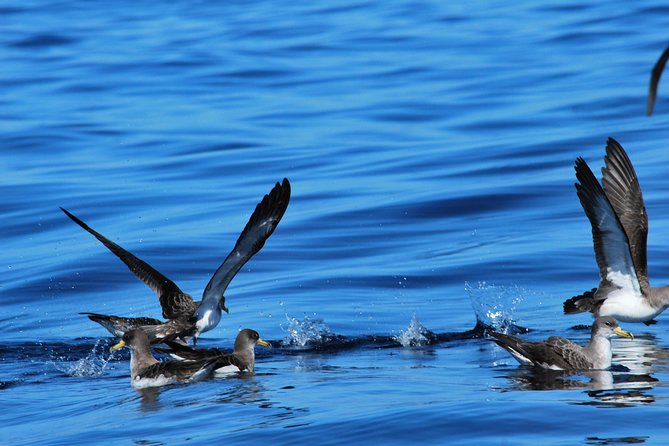
Pilot whales are not the only possible sightings. The crew looks for dolphins, porpoises, sea turtles, and seabirds, so the trip has several forms of wildlife interest even when the whales are quiet.
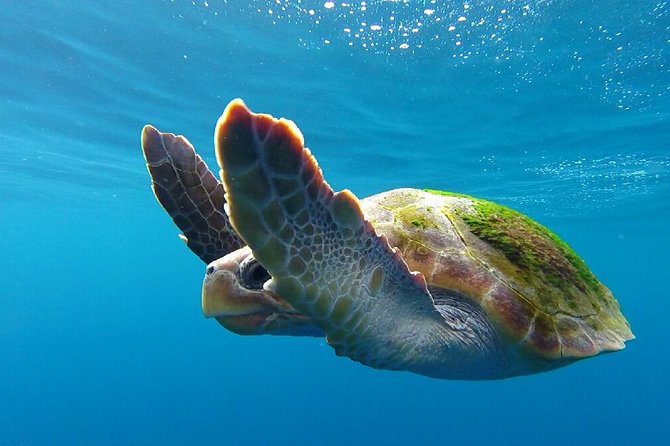
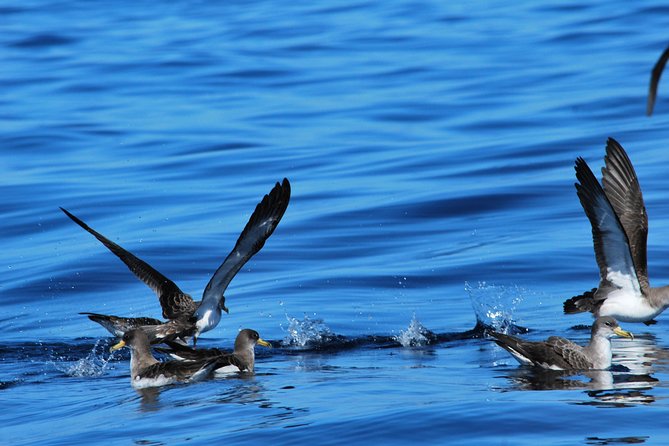
Past outings have included more than one kind of dolphin, loggerhead turtles, flying fish, and Cory’s shearwaters. A larger whale has also been seen, possibly a fin whale, and one unusual trip produced sightings of three orcas. Those are special possibilities, not promises, but they show how varied the open water around Tenerife can be.
The guide helps you understand the smaller sightings rather than treating them as filler. A flying fish, a seabird skimming low over the waves, or a turtle near the boat gives you another way to read the sea. If you are hoping only for a close dolphin encounter, you need to accept that nature sets the schedule.
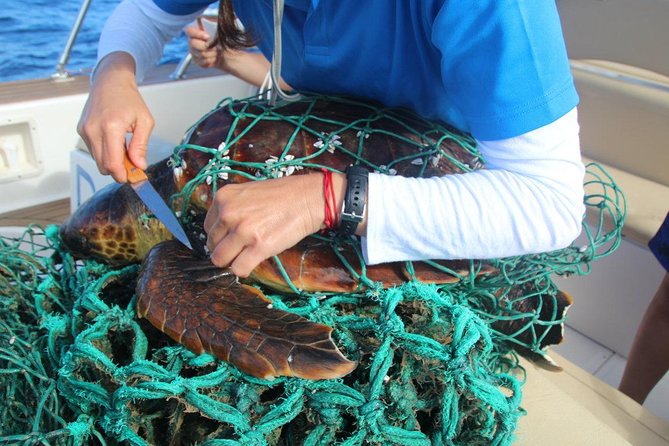
The crew may also stop to collect plastic floating in the water. That is a small action, but it fits the wider purpose of the trip. You are not simply being taken to see animals. You are also being shown the pressures they face.
Why the conservation rules matter
The operators describe the experience as an eco-focused outing, and the conduct on the water supports that claim. The boat keeps a respectful distance, avoids changing the animals’ behavior, and shuts down the engines during close observation.
The crew may move away if too many boats are already around the whales. That can disappoint anyone chasing the closest possible photograph, but it keeps the encounter calmer for the animals. You will get a more responsible experience than on a trip that races toward every fin.
A Blue Flag certified whale-watching organization is associated with the operation. The crew also gathers information about the animals and records sightings, which gives the trip a research-minded purpose. Photographs may later be shared through WhatsApp, and the images can help identify the whale families seen that day.
The conservation message is not separate from the fun. It changes how you watch. Instead of asking only how close the boat can get, you begin to notice whether the whales are relaxed, how the pod moves, and why the captain chooses to wait or leave.
The value of $71.35 for two and a half hours
At $71.35 per person, this is not the cheapest way to get on the water around Tenerife. You can find larger boat trips that may include food, drinks, music, or more space for a lower price.
The value here comes from the format. You are paying for a maximum of 10 people, two and a half hours on the water, a trained marine biology guide, the hydrophone, and an approach built around animal welfare. The smaller boat also means your questions are more likely to receive a proper answer, and you have a better chance of seeing the water from the side of the vessel rather than over a packed rail.
Do not book this if you want a party boat, a large lunch, or loud entertainment. One of the strengths of the trip is that it does not fill the quiet stretches with music. Book it if you want to understand the whales as well as see them.
The price is easier to justify for anyone who values small groups and conservation. It is also a good choice for families who want a focused activity rather than a full-day excursion. If your budget is tight and you are satisfied with a quick view of wildlife from a large boat, a cheaper option may suit you better.
What to bring for a sunny, moving boat
The southern coast of Tenerife can feel hot even when you are offshore. Bring sunscreen, sunglasses, water, and a sun hat with a toggle or chin strap. A loose hat can blow away quickly once the boat is moving.
Wear clothing that allows you to sit comfortably in direct sun for several hours. The information provided does not list a dress code, so practical outdoor clothing is the sensible choice. A cold drink is offered toward the end of the trip, but you should still carry water.
There are toilet facilities below deck. That is useful on a two and a half hour outing, especially for families. The boat is low to the water, so take care when moving around and follow the crew’s directions.
The trip is offered in English. Confirmation is sent within 48 hours of booking, subject to availability. The activity is usually booked about 17 days ahead, so reserving before your holiday is wise if this is a priority.
Who will enjoy this trip most
I would choose this experience if you want:
- A small boat instead of a crowded sightseeing vessel
- A serious explanation of whale behavior and marine conservation
- A quiet trip without music or party entertainment
- A chance to hear cetaceans through a hydrophone
- An activity that works for a mixed-age family
- Wildlife photography and help identifying individual whales
It may not suit you if you are highly prone to seasickness, need a guaranteed sighting, or prefer a stable, spacious boat. The ocean is unpredictable, and the operator cannot promise whales, dolphins, or calm conditions on every departure.
Most people can participate, and service animals are allowed. For reduced mobility, contact the company before booking. Access to the boat depends on the type of mobility limitation and the sea conditions, so this should be checked directly rather than assumed.
Cancellation and weather details worth knowing
You can cancel up to 24 hours before the start time for a full refund. Changes made less than 24 hours before departure are not accepted, and late cancellations are not refunded.
The trip requires suitable weather and a minimum number of participants. If poor weather or low numbers force a cancellation, you are offered another date or experience, or a full refund. Keep this in mind when planning the activity near the end of a short Tenerife visit.
Should you book the Costa Adeje cetacean trip?
Yes, if your idea of whale watching includes patience, good guidance, and respect for the animals. The small group, quiet boat, hydrophone, and conservation rules give you more than a quick sighting and a photograph.
I would book it early, bring serious sun protection, and take motion-sickness precautions if needed. You may see pilot whales, dolphins, turtles, seabirds, or something rarer, but the real strength is the way David, Mirna, and the wider crew help you understand whatever appears.
Choose another boat if you want music, a party atmosphere, or a guaranteed close encounter. Choose this one if you want a thoughtful two and a half hours on the Atlantic with people who care about what lives there.
FAQ
Where does the cetacean trip start?
The meeting point is Avenida de Colón, 4, 38660 Costa Adeje, Santa Cruz de Tenerife, Spain. The boat departs from Gate 4 at Puerto Colón Marina.
Where does the activity finish?
The activity returns to the original meeting point after the boat trip.
How long does the experience last?
The tour lasts approximately 2 hours and 30 minutes.
How many people can join the boat?
The boat has a maximum capacity of 10 passengers.
What animals might I see?
The crew looks for whales, dolphins, porpoises, sea turtles, and seabirds. Sightings can also include flying fish and different types of dolphins.
Will I definitely see whales or dolphins?
No specific animal sighting is guaranteed. The crew searches for marine life while respecting natural behavior and sea conditions.
Can I hear the whales?
Yes. The crew uses a hydrophone after switching off the boat’s engines, allowing you to hear sounds used by cetaceans to communicate or hunt.
Is the tour offered in English?
Yes. The activity is offered in English.
Is the boat suitable for people with reduced mobility?
Accessibility depends on the type of reduced mobility and the sea conditions. Contact the company before booking to ask about access to the boat.
What happens if the weather is poor?
The experience may be canceled in poor weather. You will then be offered a different date or experience, or a full refund.
Can I cancel for a full refund?
Yes. You can cancel at least 24 hours before the experience start time for a full refund. Cancellations made less than 24 hours before the start time are not refunded.
Just added around Tenerife
- Whale & Dolphin Watching With Mustcat Virgin Coast Trip On a Large Catamaran★ 4.0 · 3 reviews
- Whale watching and snorkelling in the whale sanctuary★ 5.0 · 14 reviews
- Whale Watching and Marine Science Tour★ 5.0 · 111 reviews
- Whale & Dolphin Watching in Tenerife (Puerto Colon) On a Large Catamaran★ 4.0 · 12 reviews
- Whale and Dolphin Watching EcoAdventure in Tenerife★ 5.0 · 78 reviews
- Tenerife : Whales and Dolphins with Food and Bath in Los Gigantes★ 4.0 · 3 reviews
- Whale Watching Catamaran to Los Gigantes & Masca (Including drinks & warm lunch)★ 4.0 · 55 reviews
- Whale & Dolphin Watching Boat Trip in Tenerife On a Sailing Boat (3 Hr)★ 3.5 · 10 reviews
Tenerife Whale Watching Tours, compared.
Tenerife: Eco-Yacht Whale and Dolphin Watching and Swimming
Read our review →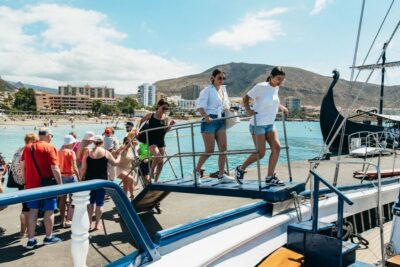
Los Cristianos Respectful No-Chase Whale and Dolphin Safari
Read our review →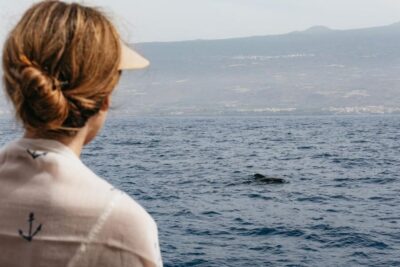
Costa Adeje: Whale & Dolphin Eco-Cruise with Snacks & Drinks
Read our review →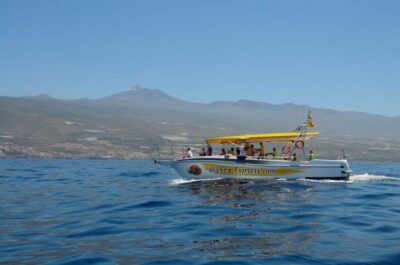
Los Gigantes: Dolphin & Whale Watching Cruise with Swim Stop
Read our review →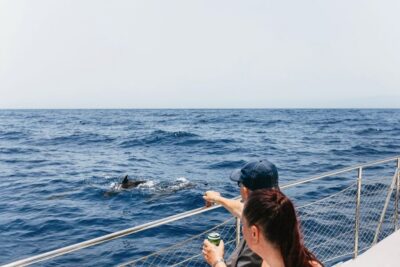
Costa Adeje: Whale Watching Catamaran Tour with Drinks
Read our review →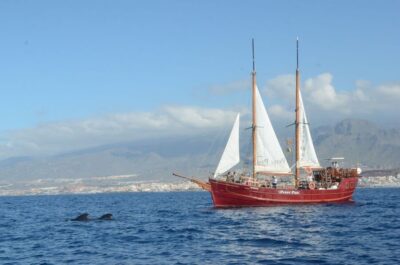
Tenerife: Whale & Dolphin Watching Cruise with Swim Stop
Read our review →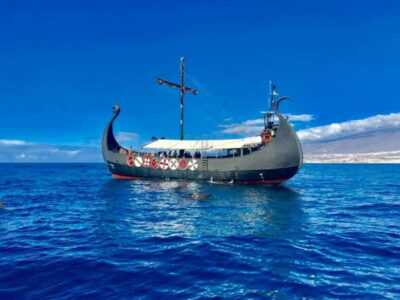
Los Cristianos: Viking Cruise Whales & Dolphins Watching
Read our review →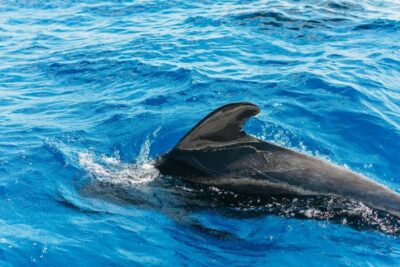
Tenerife: Whale & Dolphin Watching with Drinks and Snacks
Read our review →Browse the lists this tour appears in