
Review · SPAIN
Whalewatching La Gomera
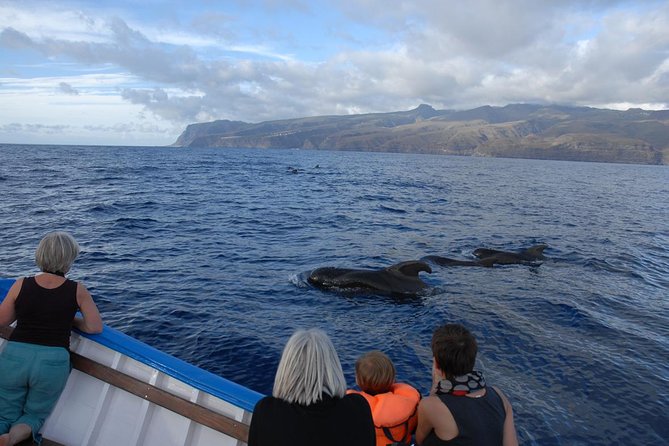
The best part of Whalewatching La Gomera is its small scale. You leave the harbour of Vueltas in a traditional Canarian fishing boat with no more than 10 people, then search the open water for whales and dolphins rather than watching from a crowded deck. The setting feels quiet and personal, with the volcanic coast of La Gomera behind you and marine life ahead.
I like two things in particular: the guides explain animal behavior and physiology as you go, and the crew treats the wildlife with care. Guides including Melanie, Nicole, Carmen, and Noel are praised for their warmth and enthusiasm. The crew has even stayed out longer when finding a whale family took extra time.
The tradeoff is comfort. This is a working-style fishing boat, not a large sightseeing vessel. One boat has no roof, and water is not always provided, so bring sun protection and your own drink. Sightings are never guaranteed, even with an advertised rate of about 90 percent.
Key points to know before you book
- Small boat, maximum 10 people: You get a quieter outing and a better chance to see the guide’s work, but less shelter and fewer onboard comforts.
- Three to four hours at sea: The outing leaves Vueltas and heads 2 to 3 nautical miles off La Gomera’s southwest coast in search of whales and dolphins.
- Wildlife stays wild: Sightings can include dolphins, pilot whales, other whales, turtles, and occasionally sharks, but no particular animal is promised.
- Guides speak three languages: The tour can be conducted in English, Spanish, or German, depending on the guide.
- Summer bathing stop on request: You may ask for a swim during summertime, if conditions and the crew allow it.
- Bring practical gear: Plan for sun, wind, sea spray, and boat movement. A moderate level of physical fitness is required.
Leaving Vueltas on a traditional fishing boat
Your outing begins at the harbour of Vueltas in Valle Gran Rey. The boat heads west or southwest into the ocean, moving away from the busy feel of the harbour and toward the waters where whales and dolphins are commonly found.
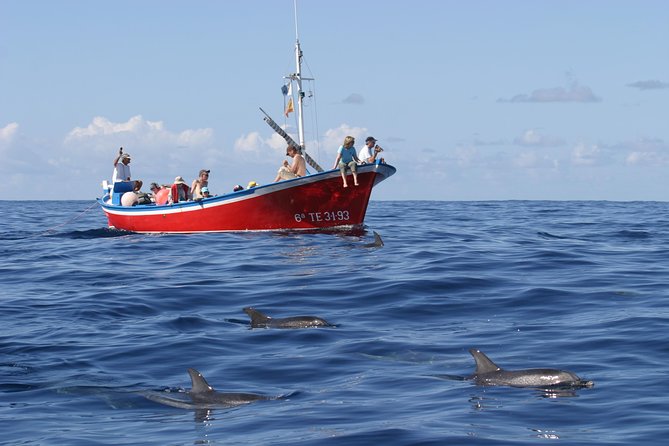
The boat itself is part of the appeal. This is a traditional Canarian fishing boat, not a high-capacity vessel built for dozens of people. With a maximum group of 10, you are close to the sea and close to the guide. That makes it easier to ask questions and watch for a blow, fin, or splash without a crowd blocking your view.
The same design creates the main limitation. The boat is simple, and at least one description points out that there is no roof and no water supplied for passengers. You should bring a refillable bottle, sunscreen, a hat that fits securely, and clothing that can handle spray. The operator does not include hotel pickup, drop-off, or transport to the harbour, so you need to arrange your own way to Vueltas.
The listed meeting address is Calle Carretera, 1A, 38870, Santa Cruz de Tenerife, while the actual route begins from the harbour of Vueltas on La Gomera. Because the information contains two location descriptions, confirm the precise meeting instructions and arrival point when your booking is confirmed. You are asked to provide a mobile number, which is useful if the crew needs to contact you about timing or weather.
Other boats people book in Spain:
- Tenerife: Eco-Yacht Whale and Dolphin Watching and Swimming
★ 4.7 · 15,619 reviews - Los Cristianos Respectful No-Chase Whale and Dolphin Safari
★ 4.6 · 12,782 reviews - Costa Adeje: Whale & Dolphin Eco-Cruise with Snacks & Drinks
★ 4.6 · 5,096 reviews
Three to four hours in the waters off La Gomera
Once the boat reaches the open water, the schedule is less about fixed stops and more about patient searching. The crew looks for signs of marine life, including movement on the surface, groups of birds, and the telltale blow of a whale.
The main search area is off the southwest coast, about 2 to 3 nautical miles from La Gomera according to the tour descriptions. You will spend much of the outing moving through this zone, pausing when the crew spots animals. That open-ended format is important. Wildlife does not keep to a timetable, so the best moments may come after a quiet stretch.
You might see several species on one trip. Sightings described from this outing include spotted dolphins, bottlenose dolphins, pilot whales, other whales, turtles, and a small shark. One especially memorable report involved a fresh pilot whale calf. Another outing had dolphins swimming beside the boat for more than an hour.
Those possibilities are exciting, but you should set the right expectation. The advertised sighting rate is approximately 90 percent, yet that does not mean you will see every animal or get a close look. One outing produced quite a few dolphins, one whale, and one small shark. On another, the guide spotted a whale’s blow but the group did not see the whale itself.
That uncertainty is part of the experience. You are watching animals in their own environment, not visiting a marine park with a scheduled show. If your main goal is simply to spend time on the ocean and learn about local wildlife, this format makes sense. If you need a guaranteed whale sighting, no responsible wild-animal tour can offer that.
What the guides add to the experience
The guide is more than a spotter. During the trip, you receive explanations of marine mammal physiology, behavior, and the way animals use the water around La Gomera. The exact guide can vary, but names associated with this experience include Melanie, Nicole, Carmen, and Noel.
Melanie is described as warm, enthusiastic, and highly engaged with the sea. Nicole is praised for explaining the animals and the island while keeping a respectful distance from the whales and dolphins. Carmen and Noel are also mentioned as part of a friendly crew. The language options are English, Spanish, and German, though the guide on your departure may be multilingual rather than fluent in every language at the same level.
Good guiding matters here because a fin appearing for two seconds can be easy to miss. A guide who knows where to look can help you understand what you are seeing instead of leaving you to stare at an empty stretch of water. The explanations also add value when wildlife is scarce. You still learn about the animals and the pressures they face, including the effect of ferry traffic on whales.
The tone is clearly conservation-minded. You are not promised a chase or a dramatic approach. The small boat allows the crew to observe without turning the trip into a noisy pursuit. That respectful method is a strong reason to choose this outing over a larger, faster boat if animal welfare matters to you.
Why the small group makes a difference
A limit of 10 people changes the feel of the trip. You can hear the guide without a microphone, ask questions without competing with a large crowd, and move your gaze from one side of the boat to the other. If dolphins approach, you have a realistic chance of seeing them rather than looking over several rows of heads.
The small group also helps the crew keep track of everyone. One family particularly appreciated the care given to a child. That does not mean the boat is designed as a children’s facility, but it suggests that the crew pays attention to families and individual needs.
You should still have moderate physical fitness. The outing lasts several hours, and the boat may move with the sea. Getting on and off a small fishing boat requires care. Anyone prone to motion sickness should think seriously about the conditions before booking, although the provided information does not specify whether medication or special seating is available.
There is no stated onboard meal or standard supply of drinking water. A separate account describes a rice dish on the return journey, but that should not be treated as a regular inclusion because food is not listed among the tour features. Plan as if you need to bring your own water and snacks.
Same water, a different way to meet the whales:
- Los Gigantes: Dolphin & Whale Watching Cruise with Swim Stop
★ 4.7 · 4,539 reviews - Morro Jable: Dolphin & Whale Watching Cruise, Drinks & Swim
★ 4.1 · 4,158 reviews - From Morro Jable: Dolphin and Whale Watching and Snorkelling
★ 4.6 · 3,687 reviews - Costa Adeje: Whale Watching Catamaran Tour with Drinks
★ 4.7 · 3,653 reviews
The return along La Gomera’s coast
After the wildlife search, the boat returns to the meeting point at Vueltas. Depending on the route and sea conditions, the return may offer a calmer look at the coast from the water. The trip ends where it began, with no hotel transfer included.
The return leg can be a pleasant change of pace after the excitement of a dolphin encounter or whale sighting. It also gives you time to think about the difference between seeing an animal in the wild and seeing one in a controlled setting. On a day with calm conditions, the simple boat and open sea are enough. On a breezier day, you may be more aware of the boat’s lack of a roof and limited comforts.
A summer bathing stop can be requested. This is not presented as a guaranteed part of every departure, so ask before setting out if swimming is important to you. The request will depend on the season and likely on conditions, but no additional rules are provided.
Price and value at $54.54
At about $54.54 per person, the tour sits at a reasonable price for a three to four-hour small-group boat outing. You are paying for the boat, a guide, and the chance to spend half a day searching the sea with only up to nine other people. The group limit gives this outing more personal space than a standard large-boat cruise.
The value is strongest if you care about the quality of the outing, not just the number of animals seen. A patient crew, clear explanations, and respectful viewing can make a quiet wildlife day worthwhile. The crew has stayed out longer when whales took time to locate, which suggests a flexible approach, although extra time should not be assumed for every departure.
The price does not include alcohol, hotel pickup, drop-off, or transport to and from the attraction. You also need to account for getting to the harbour and bringing your own water. If you want a polished boat with a covered deck, catering, and many facilities, this may not feel like the right value.
The tour is booked an average of 16 days ahead, so planning early is sensible, especially if your time on La Gomera is limited. Confirmation is sent within 48 hours, subject to availability. Prices and schedules can change at short notice, so check the current details before paying.
Weather, cancellations, and practical limits
The boat needs good weather. If poor conditions force a cancellation, you are offered another date or a full refund. If the minimum number of people is not reached, the operator offers another date or experience, or a full refund.
Your own cancellation terms are stricter. The booking is non-refundable and cannot be changed for any reason. That makes it wise to avoid scheduling the trip on the last possible day of your island stay, particularly if your plans are flexible.
The advertised sighting rate of approximately 90 percent is encouraging, but it is still a probability rather than a promise. Sea conditions, animal movement, and time spent searching all affect the result. I would book this for the experience of being at sea with a careful guide, with whales and dolphins as the hoped-for reward.
Who will enjoy this outing most
I would choose this trip if you prefer a small, personal boat to a large sightseeing vessel. It suits people who enjoy nature, can tolerate a little uncertainty, and want explanations about what they are seeing. It is also a good fit if you care about keeping a respectful distance from marine life.
Families may appreciate the small group and attentive crew, but parents should consider the lack of a roof and the need for moderate physical fitness. Children may enjoy dolphins beside the boat, though no specific age policy is provided.
This is less suitable if you require sheltered seating, onboard refreshments, guaranteed whales, or transport from your hotel. It may also be a poor fit if you dislike open-water conditions or need a fully fixed schedule. The tour is simple by design, and that simplicity is either its charm or its weakness.
Should you book Whalewatching La Gomera?
Book it if you want a quiet, low-capacity wildlife trip with a guide who explains the animals and respects their space. The chance to see dolphins swimming beside a traditional boat, pilot whales with a calf, turtles, or even a shark gives the outing real appeal, while the small group keeps it personal.
Go in with sensible expectations. You may see several species, or you may spend much of the time searching. Bring water, sun protection, and clothing for wind and spray. If that sounds like a fair exchange for three to four hours on the waters off La Gomera, this is a strong choice at $54.54. If comfort and certainty matter more than authenticity, choose a larger, more equipped boat instead.
FAQ
Where does the whale-watching tour begin?
The tour begins at the harbour of Vueltas in Valle Gran Rey, La Gomera. The provided meeting information also lists Calle Carretera, 1A, 38870, Santa Cruz de Tenerife, so confirm the exact meeting instructions after booking.
How long does the trip last?
The outing lasts approximately 3 to 4 hours.
How many people can join the boat?
The maximum group size is 10 people.
What type of boat is used?
You travel on a traditional Canarian fishing boat.
What animals might I see?
Possible sightings include whales, dolphins, pilot whales, spotted dolphins, bottlenose dolphins, turtles, and sharks. No specific animal is guaranteed.
Is whale or dolphin viewing guaranteed?
No. The stated sighting rate is approximately 90 percent, but wildlife remains in its natural environment and sightings can vary.
What languages are available?
The guide can speak German, Spanish, and English. The tour may be operated by a multilingual guide.
Is hotel pickup included?
No. Hotel pickup and drop-off, along with transport to and from the attraction, are not included.
Can I swim during the tour?
During summertime, a bathing stop is offered on request. It is not described as a guaranteed stop on every departure.
What happens if bad weather cancels the tour?
If poor weather causes cancellation, you are offered a different date or a full refund. If the minimum number of people is not reached, you are offered another date or experience, or a full refund.
Just added around Spain
- Whale & Dolphin Watching With Mustcat Virgin Coast Trip On a Large Catamaran★ 4.0 · 3 reviews
- Whale watching and snorkelling in the whale sanctuary★ 5.0 · 14 reviews
- Whale Watching and Marine Science Tour★ 5.0 · 111 reviews
- Whale & Dolphin Watching in Tenerife (Puerto Colon) On a Large Catamaran★ 4.0 · 12 reviews
- Whale and Dolphin Watching EcoAdventure in Tenerife★ 5.0 · 78 reviews
- Tenerife : Whales and Dolphins with Food and Bath in Los Gigantes★ 4.0 · 3 reviews
- Whale Watching Catamaran to Los Gigantes & Masca (Including drinks & warm lunch)★ 4.0 · 55 reviews
- Whale & Dolphin Watching Boat Trip in Tenerife On a Sailing Boat (3 Hr)★ 3.5 · 10 reviews
Spain Whale Watching Tours, compared.
Tenerife: Eco-Yacht Whale and Dolphin Watching and Swimming
Read our review →
Los Cristianos Respectful No-Chase Whale and Dolphin Safari
Read our review →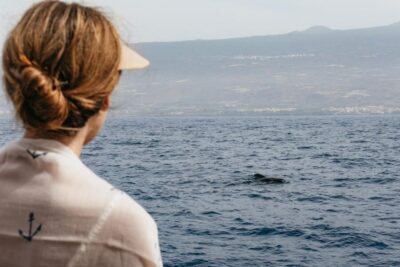
Costa Adeje: Whale & Dolphin Eco-Cruise with Snacks & Drinks
Read our review →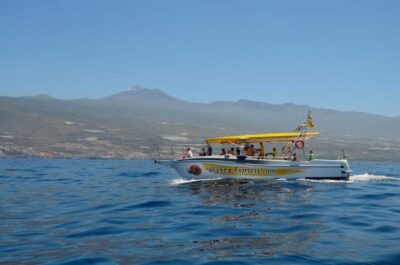
Los Gigantes: Dolphin & Whale Watching Cruise with Swim Stop
Read our review →
Morro Jable: Dolphin & Whale Watching Cruise, Drinks & Swim
Read our review →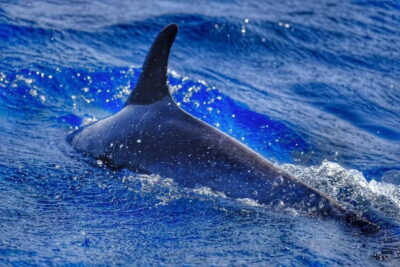
Morro Jable: Dolphin and Whale Watching and Snorkelling
Read our review →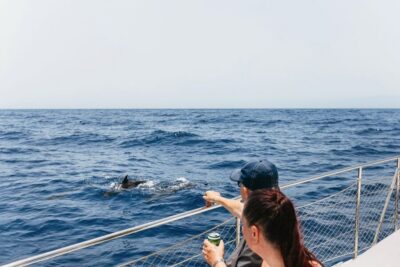
Costa Adeje: Whale Watching Catamaran Tour with Drinks
Read our review →
Tenerife: Whale & Dolphin Watching Cruise with Swim Stop
Read our review →Browse the lists this tour appears in