
Review · SPAIN
8-Hour Whale Watching in Barcelona
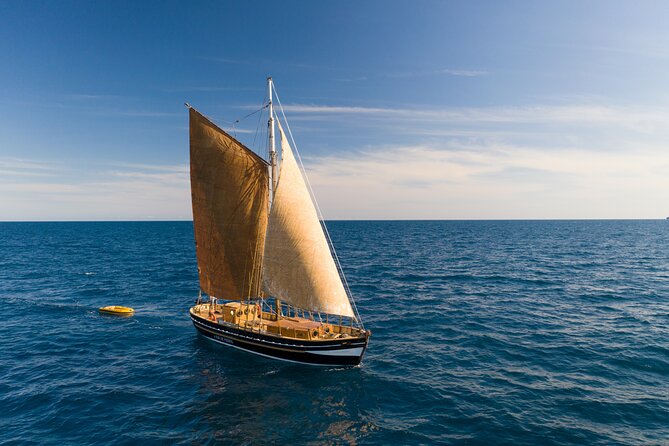
The best part of this Barcelona outing is that the boat itself is part of the adventure. You leave Port Olímpic on a traditional wooden vessel, head into the open Mediterranean, and spend the morning watching for whales, dolphins, sunfish, and other local wildlife with a marine biologist on board. On the way home, you help raise the sails by hand.
I like the small maximum of 10 people, which leaves room for questions and gives the crew time to guide your eyes toward the sea. I also like the mix of wildlife and sailing: Sergi and Julia bring biology and seamanship into the same outing. The main caution is simple: wildlife watching is never guaranteed, and eight hours on open water requires patience and decent weather.
- Traditional wooden boat: The vessel is an attraction in its own right, with a distinctive pirate-style character.
- Marine biology on the water: Learn about Mediterranean species and practical whale-watching techniques during the cruise.
- Real sailing work: Help hoist the sails the old-fashioned way, in time with the rest of the crew.
- Small group limit: A maximum of 10 people makes this more personal than a large sightseeing boat.
- Possible wildlife sightings: Whales are the headline hope, but dolphins and sunfish may also appear.
- Port Olímpic departure: Meet at Mar a la Vista, Moll de Mestral, for a 9:00 am start and return to the same point.
Setting Out From Port Olímpic at 9:00 am
Your morning begins at Mar a la Vista in Barcelona’s Port Olímpic, at Moll de Mestral. The tour starts at 9:00 am and ends back at the same meeting point, so you do not need to arrange a separate return from another harbor.
That fixed start matters. This is not an evening harbor cruise that fits neatly around dinner. It takes most of your day, so plan your Barcelona schedule around it rather than trying to squeeze in a major museum or timed attraction afterward.
The boat takes you away from the city and into open water. That change is the point. You trade Barcelona’s familiar shoreline for a wide view of the Mediterranean, where the crew can watch for movement at the surface and explain what you are seeing.
The group limit is 10 people. I consider that a strong feature for this type of activity. When a whale or dolphin appears, a small group makes it easier to share information quickly without a crowd blocking every view. It also gives you a better chance to ask the marine biologist about species, behavior, and the local ecosystem.
A Traditional Boat With Its Own Character
This is not simply a wildlife trip on a standard motorboat. You board a traditional wooden vessel, described as having a distinctive pirate-style appearance. The boat gives the day a clear sense of place and makes the sailing portion more than a short extra activity.
The tradeoff is that a traditional boat may feel less polished or predictable than a modern sightseeing craft. The available information does not give specific details about seating, shade, toilets, or protection from spray, so you should be ready for a genuine boat outing rather than a fully equipped floating lounge.
The crew includes a skipper and a marine biologist, with Sergi and Julia named as members of the team connected with the experience. Their roles bring two useful viewpoints. One helps you understand how to handle the boat, while the other explains the animals and the sea around you.
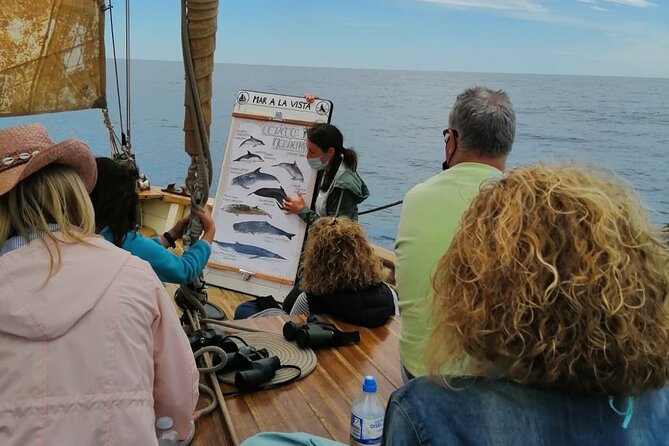
That combination is valuable because whale watching is not just a matter of pointing at the horizon. You learn where to look, how to scan the water, and why certain sightings are difficult. The marine biologist also talks about local species and the Mediterranean ecosystem, giving the search more meaning even during quiet stretches.
A few more whale trips around Spain worth a look
- Tenerife: Eco-Yacht Whale and Dolphin Watching and Swimming
★ 4.7 · 15,619 reviews - Los Cristianos Respectful No-Chase Whale and Dolphin Safari
★ 4.6 · 12,782 reviews - Costa Adeje: Whale & Dolphin Eco-Cruise with Snacks & Drinks
★ 4.6 · 5,096 reviews
How the Whale Watching Works
Once you are out at sea, patience becomes part of the plan. The crew follows sustainable whale-watching guidelines, which means the boat aims to reduce its impact during observation. That is important in a marine setting, where getting too close or changing direction too aggressively can disturb wildlife.
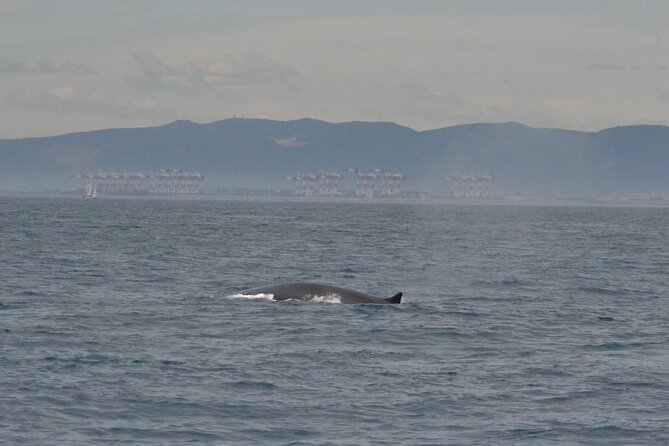
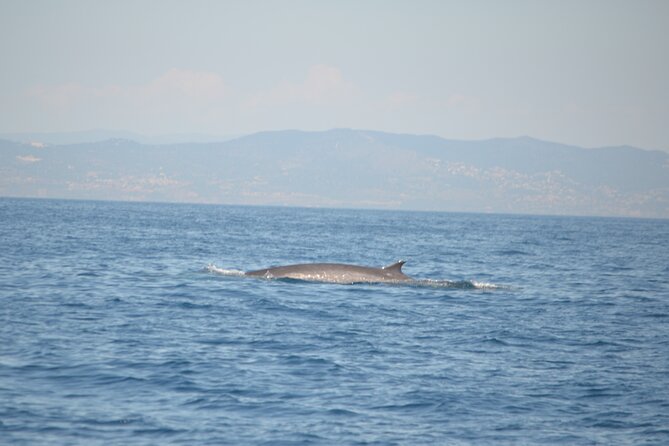
You may be hoping for the giant Mediterranean whale, but no responsible operator can promise one. The experience is built around watching carefully and accepting that the sea sets the schedule. A quiet period does not mean the trip has failed. It is part of learning how wildlife observation really works.
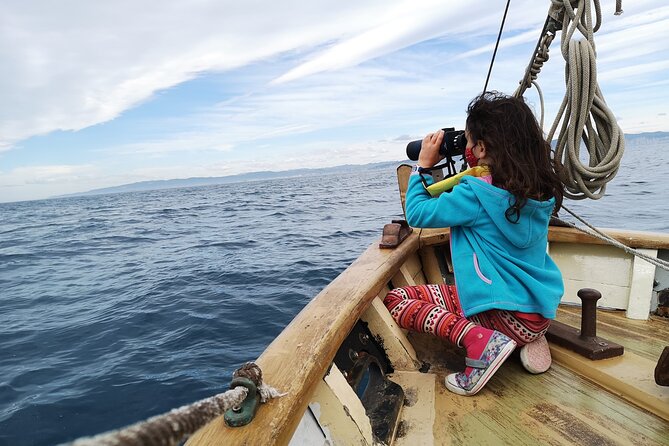
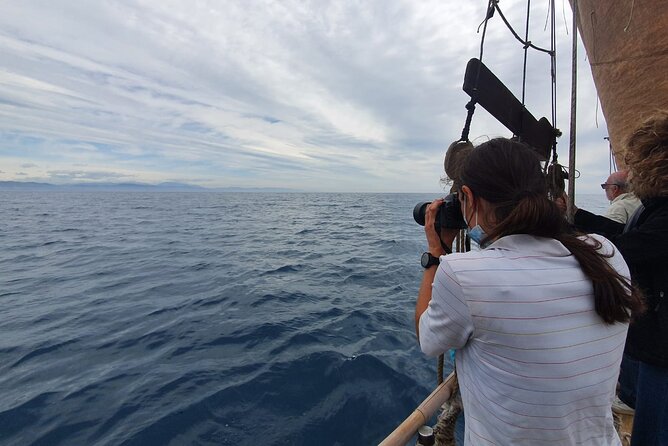
The marine biologist teaches practical spotting techniques, not just facts. You may be shown how to scan a large section of water, watch for changes at the surface, and pay attention to the captain’s directions. Those skills make you more useful to the group and can turn a distant movement into a proper sighting.
The wildlife possibilities include whales, dolphins, and sunfish. A sunfish, or pez luna, can be an especially memorable sight because its large, unusual body may appear briefly at the surface. One outing included dolphins in the final minutes and a glimpse of a sunfish, which shows why you should keep watching even when the return journey has begun.
That late sighting is a useful lesson. Do not pack away your attention as soon as the boat turns toward Barcelona. Wildlife can appear close to the end, and the last stretch may produce the day’s best moment.
Learning the Mediterranean Beyond the Big Animals
The value of the marine biologist is not limited to identifying a whale. You also get an explanation of the local species and the Mediterranean ecosystem. That context helps you understand that the sea is a working environment for many forms of life, not just a stage for one dramatic sighting.
I like this approach because it gives the day a purpose even if the largest animals remain out of view. You can still learn how the crew searches, what makes a sighting difficult, and how responsible observation protects the animals you came to see.
The available information does not list every species you might encounter. That is a good reason to treat the trip as an open-ended wildlife outing rather than a checklist. You could see several kinds of marine life, or you could spend much of the day studying the water and the sailing itself.
For children and adults who enjoy nature, this may be more rewarding than a fast sightseeing ride. It asks you to pay attention. It also provides a direct lesson in why wild animals cannot be scheduled like a museum entry time.
Raising the Sails on the Return Journey
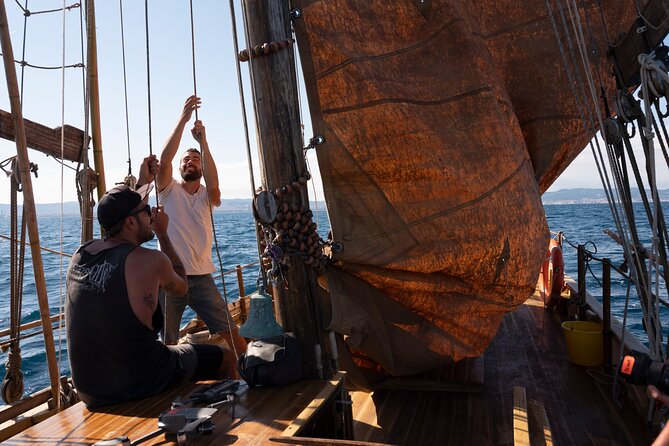
The hands-on sailing section gives the day a welcome change of pace. On the way back, you can help hoist the sails in the old-fashioned way, using your own hands and working in sync with the rest of the crew.
This is not a staged photo stop. You take part in moving the boat under sail, following the crew’s instructions and coordinating with the other people on board. That makes the traditional vessel feel functional rather than decorative.
I especially like this feature because it turns you from a passenger into a temporary member of the crew. You are not simply looking at maritime equipment. You are helping operate it, which makes the return journey more active after hours of scanning the horizon.
The sailing work may not suit someone who wants a completely restful cruise. It is also difficult to judge the physical effort in advance because the details of the sail-raising procedure are not specified. Still, the description makes clear that the crew will guide the process, and the group works together.
The boat’s pirate-style character adds a bit of fun, but the activity is not presented as a theatrical pirate show. Its appeal comes from the old wooden craft, the crew’s sailing instruction, and the feeling of doing a real task at sea.
Same water, a different way to meet the whales:
- Los Gigantes: Dolphin & Whale Watching Cruise with Swim Stop
★ 4.7 · 4,539 reviews - Morro Jable: Dolphin & Whale Watching Cruise, Drinks & Swim
★ 4.1 · 4,158 reviews - From Morro Jable: Dolphin and Whale Watching and Snorkelling
★ 4.6 · 3,687 reviews - Costa Adeje: Whale Watching Catamaran Tour with Drinks
★ 4.7 · 3,653 reviews
Why the Small Group Changes the Experience
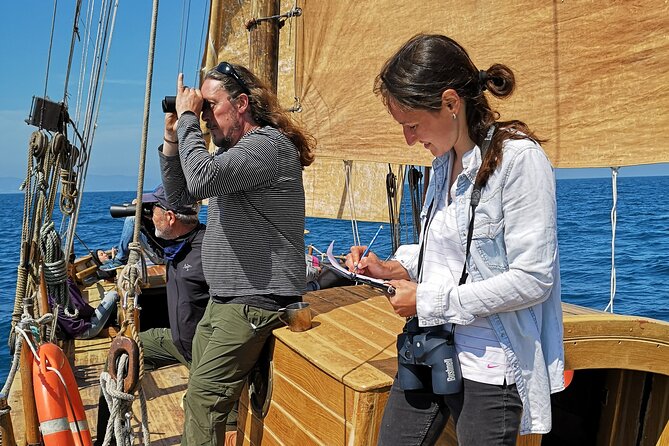
A maximum of 10 people is one of the strongest practical advantages here. On a wildlife outing, a small group can make communication easier. You can hear the marine biologist, respond quickly when the crew spots something, and get more room to look in the suggested direction.
A small group also matters during the sailing lesson. Raising sails requires coordination, and a crowded boat would make that harder. With fewer people, the experience can feel more like a shared crew task and less like a line of passengers waiting for a turn.
There is a social side, too. One member of the onboard team is a dog, described as an enthusiastic sailing companion who checked on people during the trip. The dog will not improve your odds of seeing a whale, of course, but it adds a friendly, informal touch to a long day at sea.
The group size does not remove the basic realities of open-water travel. You may still spend long periods watching the horizon, and the boat may feel intimate if you prefer personal space. If you dislike boats or get restless during quiet wildlife searches, the eight-hour duration deserves serious thought.
Food, Timing, and What You Need to Plan
Lunch is not included, but food can be purchased on board. The available details refer to breakfast and a typical seafood meal, so you have an option to buy something during the outing rather than treating the day as a bring-your-own picnic.
Because the activity begins at 9:00 am and lasts about eight hours, breakfast planning matters. You may want to arrive ready for a full morning on the water, then decide on board whether to purchase the available meal. The exact menu and prices are not provided, so ask the operator if those details affect your decision.
Passenger insurance is included. No other inclusions are listed, so do not assume that meals or extra services are part of the base booking.
The price itself is not provided in the information available here, so I cannot judge the exact cost. For value, compare it with what you are getting: a full day on the water, a small group, a marine biologist, a traditional wooden boat, wildlife observation, and supervised sailing participation. If you want a quick two-hour cruise, this will feel like too much. If you want a full activity with instruction and a chance to see wildlife, the format offers more than a standard harbor tour.
Weather and the Reality of Open Water
Good weather is required. If poor weather forces cancellation, you are offered another date or a full refund. That policy is fair, but it also tells you that conditions at sea matter to both safety and the quality of the outing.
The operator also requires a minimum number of participants. If that minimum is not reached, you can choose another date or experience, or receive a full refund. Since the group maximum is 10, the activity aims for a small-scale feel, but the exact number needed to operate is not provided.
For clothing and personal comfort, the supplied information does not give a packing list. I would treat this as a proper open-water day and prepare for changing conditions rather than dressing only for Barcelona’s streets. The boat, wind, and time at sea can feel different from the weather at the port.
The best mindset is flexible. You are booking an opportunity to look for wildlife, not a guaranteed whale encounter. The sustainable approach and the marine biology instruction make the outing worthwhile even when nature declines to perform.
Who Will Get the Most From This Experience
This trip suits you best if you enjoy wildlife without guarantees, hands-on activities, and a slower day outdoors. It is a particularly good match for people who want more than a city tour and who like learning how a boat and its crew work.
It also suits anyone who prefers a personal setting. The 10-person maximum, marine biologist, skipper, and sailing task create a more involved experience than a large commercial cruise.
Families may find the boat, wildlife search, dog, and sail raising appealing, although the available information only says that most people can participate. It does not give a specific age policy, so confirm age requirements if you are booking for young children.
This is less suitable if you need a guaranteed whale sighting, dislike spending many hours at sea, or want a short activity between fixed Barcelona reservations. It is also not the right choice for someone seeking a luxury cruise with a detailed list of included meals and amenities.
You can use a mobile ticket, service animals are allowed, and the meeting point is near public transportation. Confirmation is provided at booking. Cancellations made at least 24 hours before the 9:00 am start receive a full refund, while cancellations or changes within 24 hours are not refunded or accepted.
Should You Book the 8-Hour Barcelona Whale Watching Trip?
Book it if the combination of wildlife, marine science, and traditional sailing appeals to you more than a guaranteed sighting. The small group, responsible observation rules, and hands-on sail raising give the outing substance, while the chance of seeing dolphins or a sunfish adds excitement.
Skip it if you have only a few hours in Barcelona or want certainty about what you will see. Whales may appear, but the sea decides. For the right person, that uncertainty is part of the attraction, and the boat, crew, and sailing work give you plenty to engage with along the way.
FAQ
How long does the whale-watching experience last?
The outing lasts approximately eight hours.
Where does the boat leave from?
It starts at Mar a la Vista, Barcelona Port Olímpic, Moll de Mestral, 08005 Barcelona, Spain.
What time does the activity start?
The scheduled start time is 9:00 am.
Where does the tour end?
The activity ends back at the same meeting point at Port Olímpic.
How many people can join the boat?
The maximum group size is 10 people.
Is lunch included?
Lunch is not included, but breakfast and a typical seafood meal can be purchased on board.
What happens if bad weather cancels the trip?
You will be offered another date or a full refund. The same options apply if the minimum number of participants is not reached.
Just added around Spain
- Whale & Dolphin Watching With Mustcat Virgin Coast Trip On a Large Catamaran★ 4.0 · 3 reviews
- Whale watching and snorkelling in the whale sanctuary★ 5.0 · 14 reviews
- Whale Watching and Marine Science Tour★ 5.0 · 111 reviews
- Whale & Dolphin Watching in Tenerife (Puerto Colon) On a Large Catamaran★ 4.0 · 12 reviews
- Whale and Dolphin Watching EcoAdventure in Tenerife★ 5.0 · 78 reviews
- Tenerife : Whales and Dolphins with Food and Bath in Los Gigantes★ 4.0 · 3 reviews
- Whale Watching Catamaran to Los Gigantes & Masca (Including drinks & warm lunch)★ 4.0 · 55 reviews
- Whale & Dolphin Watching Boat Trip in Tenerife On a Sailing Boat (3 Hr)★ 3.5 · 10 reviews
Spain Whale Watching Tours, compared.
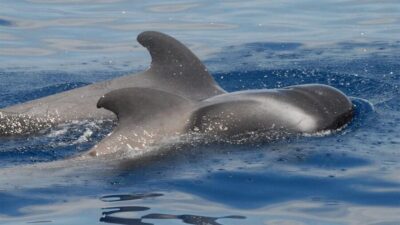
Tenerife: Eco-Yacht Whale and Dolphin Watching and Swimming
Read our review →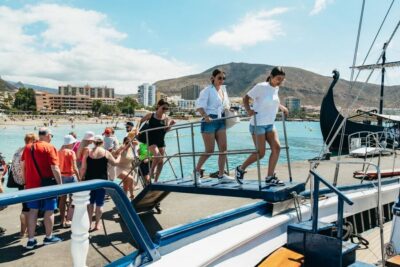
Los Cristianos Respectful No-Chase Whale and Dolphin Safari
Read our review →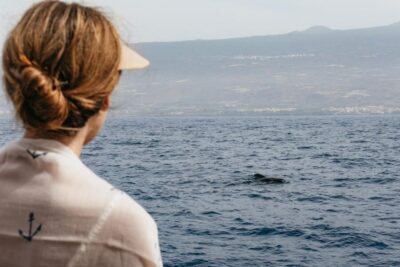
Costa Adeje: Whale & Dolphin Eco-Cruise with Snacks & Drinks
Read our review →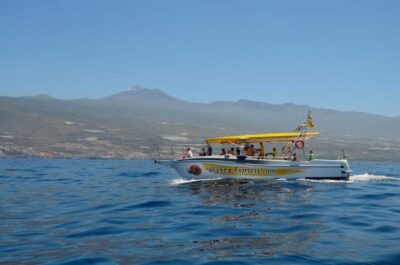
Los Gigantes: Dolphin & Whale Watching Cruise with Swim Stop
Read our review →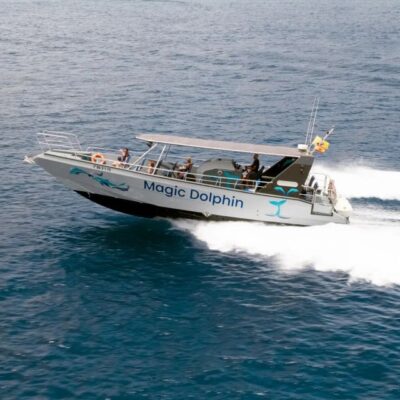
Morro Jable: Dolphin & Whale Watching Cruise, Drinks & Swim
Read our review →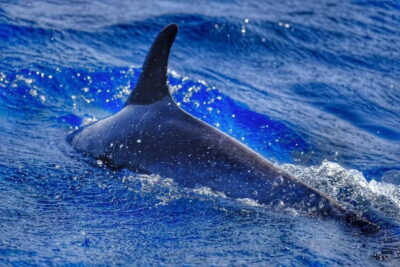
Morro Jable: Dolphin and Whale Watching and Snorkelling
Read our review →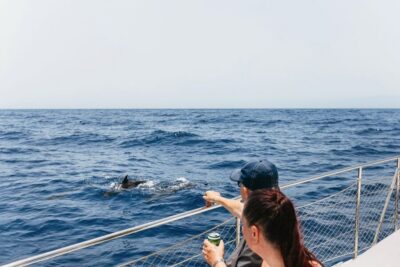
Costa Adeje: Whale Watching Catamaran Tour with Drinks
Read our review →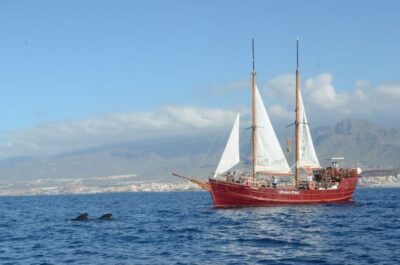
Tenerife: Whale & Dolphin Watching Cruise with Swim Stop
Read our review →Browse the lists this tour appears in